
Executive Overview
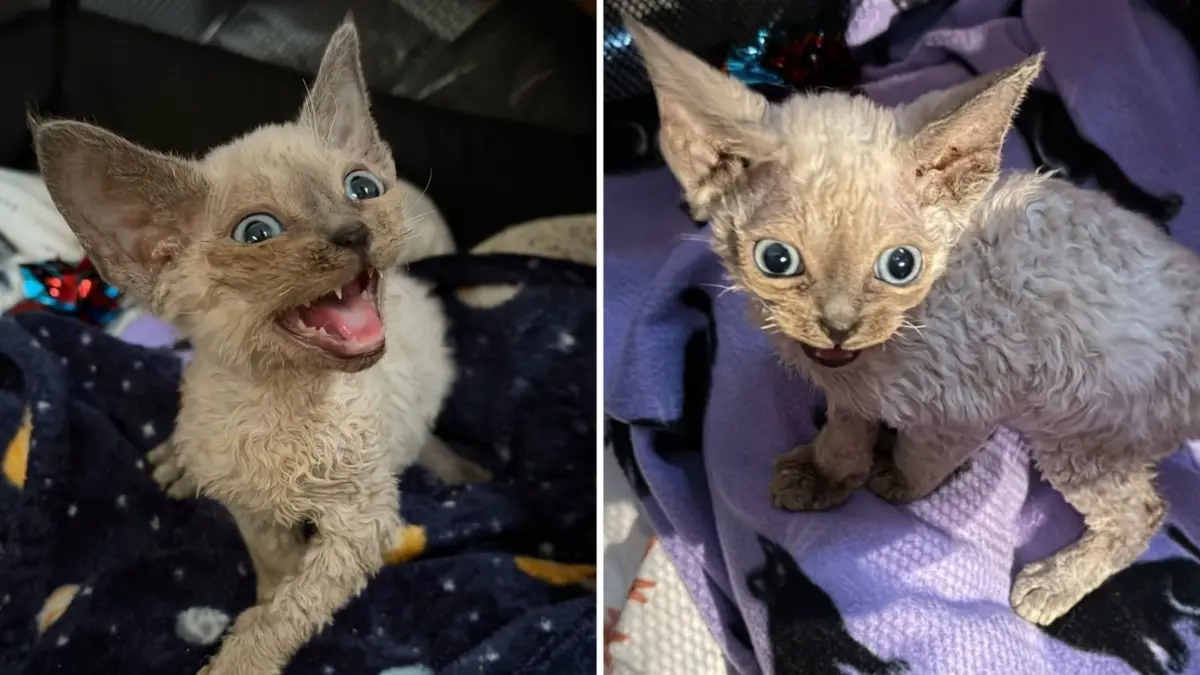
In the sprawling landscape of animal rescue, certain cases capture the collective imagination not merely through circumstance, but through an undeniable, striking presence. Such is the case of Grogu, a 10-week-old feline whose namesake evokes a galaxy far, far away, thanks to a pair of oversized, radar-dish ears and piercing blue eyes that command instant adoration. Yet, behind the internet-breaking visage and endearing appearance lies a sobering medical reality: Grogu is locked in a fierce, high-stakes battle for survival.
Weighing a meager 1.2 pounds, the Georgia-born kitten has been diagnosed with persistent right aortic arch (PRAA), a rare and severe congenital vascular defect. This anomaly forms a strangulating ring around his esophagus, making the simple act of eating a physiological hazard rather than a source of nourishment. Left untreated, the condition culminates in megaesophagus, perpetual regurgitation, and a profound risk of fatal aspiration pneumonia.
Stepping into the breach is Happy Tailz Cat Rescue, Inc., a dedicated organization spearheading a complex, multi-tiered medical intervention plan. With anticipated specialized veterinary costs soaring past $10,500—encompassing advanced imaging, specialist consultations at institutions like the University of Florida, intricate thoracic surgery, and potential feeding tube placement—Grogu’s journey is as financially daunting as it is clinically intricate. This comprehensive investigative report chronicles Grogu’s medical odyssey, the physiological mechanics of his condition, the logistical challenges facing his rescue team, and the collaborative campaign to secure his future.
Detailed Chronology: From a Shuttered Cattery to Specialized Care
The story of Grogu begins on August 14, deep within the confines of a commercial cattery in the state of Georgia. Born into an environment that would ultimately shutter its doors, Grogu’s early weeks were marked by the quiet vulnerabilities shared by many kittens navigating commercial breeding setups. When the facility closed, Grogu found himself adrift among a population of displaced felines, his unique medical needs hidden beneath the veil of kittenhood.
Intervention and Discovery
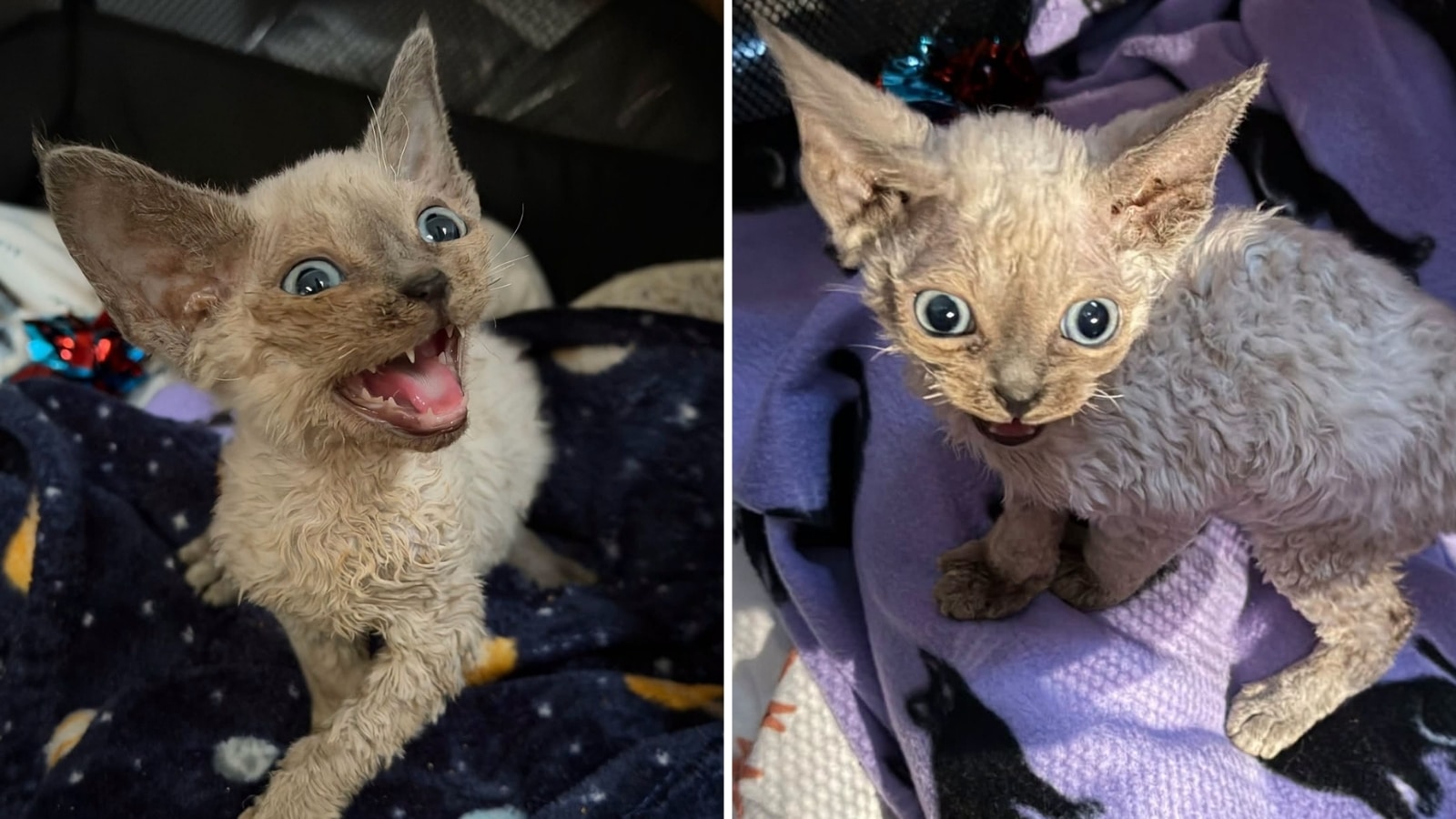
The turning point arrived when a compassionate Good Samaritan intervened, recognizing that the tiny kitten required intervention far beyond the scope of a standard shelter environment. They reached out to Happy Tailz Cat Rescue, Inc., an organization known for taking on complex medical cases. Upon intake, the rescue team was immediately struck by the kitten’s appearance. His cartoonish proportions—specifically ears that seemed destined never to fit his skull—inspired his Star Wars-themed moniker.
However, the lighthearted moniker quickly gave way to clinical gravity. While routine viral screenings yielded encouraging results—Grogu tested entirely negative for both feline immunodeficiency virus (FIV) and feline leukemia virus (FeLv)—his feeding patterns raised immediate red flags. Every attempt at normal feeding was met with distress, regurgitation, and a failure to thrive.
Diagnostic Confirmation
Recognizing that systemic failure to gain weight in a young kitten constitutes an acute medical emergency, Happy Tailz initiated a diagnostic workup. Veterinarians administered a barium X-ray study, a specialized imaging technique where the patient ingests a radiopaque contrast agent to highlight the contours of the gastrointestinal tract.
The results of the barium study confirmed the rescue’s worst fears: a structural obstruction within the esophagus. Rather than passing smoothly into the stomach, the contrast medium pooled and dilated above an obstruction point near the heart. This diagnostic milestone provided a name for Grogu’s invisible enemy—persistent right aortic arch—and set in motion a frantic race to secure specialist consultations before irreversible esophageal damage could take hold.
Supporting Context & Metrics: Decoding Persistent Right Aortic Arch (PRAA)
To understand the immense clinical hurdle facing Grogu, one must examine the intricate embryology and anatomy of the mammalian cardiovascular and digestive systems. PRAA is a congenital anomaly that originates during fetal development, long before a kitten takes its first breath.
The Embryological Misfire
In a normally developing feline fetus, a series of embryonic blood arches form around the primitive trachea and esophagus. Typically, the fourth left aortic arch develops into the permanent aorta, while the right counterpart regresses and disappears.
In patients with PRAA, this developmental script is inverted: the fourth right aortic arch persists to become the aorta, while the left arch regresses. Consequently, the aorta, pulmonary artery, and the ligamentum arteriosum (a fibrous remnant of a fetal blood vessel) form a complete, rigid vascular ring encircling both the trachea and the esophagus.
[Normal Development]                [PRAA Anomaly]
Left Aortic Arch Develops --------> Aorta forms on Left
Right Aortic Arch Regresses ------> Left Aortic Arch Fails to Regress
                                    Vascular Ring Forms Around Esophagus
                                    Result: Esophageal Constriction & Megaesophagus
The Domino Effect: Megaesophagus
Because the esophagus passes directly through this vascular ring, it becomes tightly constricted. As the kitten grows and attempts to ingest solid foods, the muscular tube cannot push food past the rigid bottleneck created by the abnormal blood vessels.
Over time, the chronic accumulation of food and liquid above the constriction causes the muscular walls of the esophagus to stretch, weaken, and lose their motility—a secondary condition known as megaesophagus.
- Nutritional Deficit: At 1.2 pounds, Grogu lacks the body fat and energy reserves to combat prolonged malnutrition. Calories cannot reach the stomach efficiently, stunting overall growth.
- Aspiration Risk: Food pooling in the megaesophagus can easily spill over into the trachea, introducing foreign material into the lungs and precipitating aspiration pneumonia, a frequently fatal complication in neonatal and juvenile cats.
Official Statements and Clinical Roadmap
The management of a 1.2-pound kitten with a vascular ring anomaly requires a coordinated team of general practitioners, diagnostic imaging specialists, and board-certified veterinary surgeons. Happy Tailz Cat Rescue has maintained active communication with high-level referral facilities, including prospective consultations through the University of Florida in Gainesville.
The Surgical Protocol
According to veterinary surgical consensus, the definitive treatment for PRAA involves thoracic surgery to sever the vascular ring, relieving the mechanical pressure on the esophagus.
- Thoracotomy: Surgeons perform an incision between the ribs (typically the fourth or fifth intercostal space on the left side) to access the thoracic cavity.
- Division of the Ring: The surgeon isolates and meticulously dissects the ligamentum arteriosum, cutting the restrictive band to release the esophagus from its vascular trap.
- Lysis of Strictures: Any surrounding fibrous scar tissue or bands binding the esophagus are carefully released to restore luminal diameter.
Nutritional Interventions and Pre-Surgical Stabilization
Before any scalpel touches tissue, Grogu must achieve a physiological threshold of stability. At 1.2 pounds, anesthesia carries profound risks. To bridge the nutritional gap without triggering aspiration, the medical team has evaluated the implementation of specialized feeding protocols, including vertical feeding methods (where the kitten is held upright for 15 to 30 minutes post-meal to use gravity), and the potential placement of a percutaneous endoscopic gastrostomy (PEG) tube.
A PEG tube delivers blended nutrition directly into the stomach, bypassing the compromised esophagus entirely. This intervention minimizes aspiration risks while allowing the kitten to gain the necessary mass to withstand major thoracic surgery.
Financial Breakdown & Resource Allocation
The pursuit of canine and feline advanced medicine carries steep financial realities that routinely strain grassroots rescue organizations. Happy Tailz Cat Rescue, Inc. has transparently outlined the projected costs required to shepherd Grogu from his current precarious state to a recovered, thriving juvenile.
| Expense Category | Description | Estimated Cost (USD) |
|---|---|---|
| Surgical Correction | Thoracotomy, vascular ring dissection, and post-op ICU care | $5,500 – $7,000 |
| Advanced Diagnostics | CT angiogram, specialist consultations, serial lab work | $2,000 – $2,500 |
| Nutritional Support | Potential PEG tube placement, specialized diets, intensive feeding | $1,500+ |
| Total Estimated Need | Comprehensive medical rehabilitation | $10,500+ |
For a modest rescue network operating primarily on donations and volunteer labor, raising over $10,500 for a single animal represents an extraordinary fiscal mountain. Yet, the leadership at Happy Tailz emphasizes that the calculus of rescue is driven by quality of life and individual potential rather than ledger balances.
Future Outlook: Guarded Optimism for a Tiny Survivor
The prognosis for kittens undergoing surgical correction for persistent right aortic arch depends heavily on the timing of the intervention and the degree of permanent esophageal damage already incurred.
- The Best-Case Scenario: If the vascular ring is successfully divided before irreversible esophageal atony sets in, many juvenile patients experience a dramatic reduction in regurgitation. Over time, the esophagus can regain a degree of motility, allowing the animal to transition toward a near-normal diet and lifestyle.
- The Clinical Caveats: Even after successful surgical decompression, some patients retain a degree of esophageal dysmotility. These animals often require lifelong management modifications, such as eating specialized slurries from elevated platforms and remaining upright post-prandial.
For Grogu, every immediate milestone—gaining ounces on the scale, clearing diagnostic hurdles without incident, and enduring anesthesia—represents a step toward that brighter horizon. His rescuers report that despite the discomfort and the intensive medical routines, the little kitten maintains a remarkably sunny disposition, greeting handlers with the resilient spirit that characterizes true survivors.
How the Public Can Help
The journey ahead for Grogu is complex, requiring a synchronized effort between veterinary specialists and an engaged animal-loving community. Happy Tailz Cat Rescue is actively calling upon the public to support the "Grogu Fund." Contributions directly offset the escalating costs of his diagnostic imaging, surgical suite time, and round-the-clock intensive care.
As Grogu’s story resonates across digital platforms, his oversized ears serve as a literal and figurative beacon—drawing attention not just to his undeniable charm, but to the quiet, persistent triumphs of veterinary science and grassroots animal welfare working in tandem. Whether he ultimately commands a galaxy of his own or simply a warm lap and a stable bowl of food, this 1.2-pound feline has already proven that the most formidable obstacles are met not by magic, but by relentless compassion.