
EXECUTIVE OVERVIEW
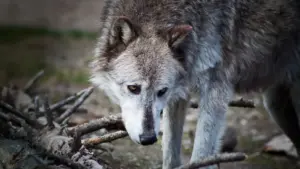
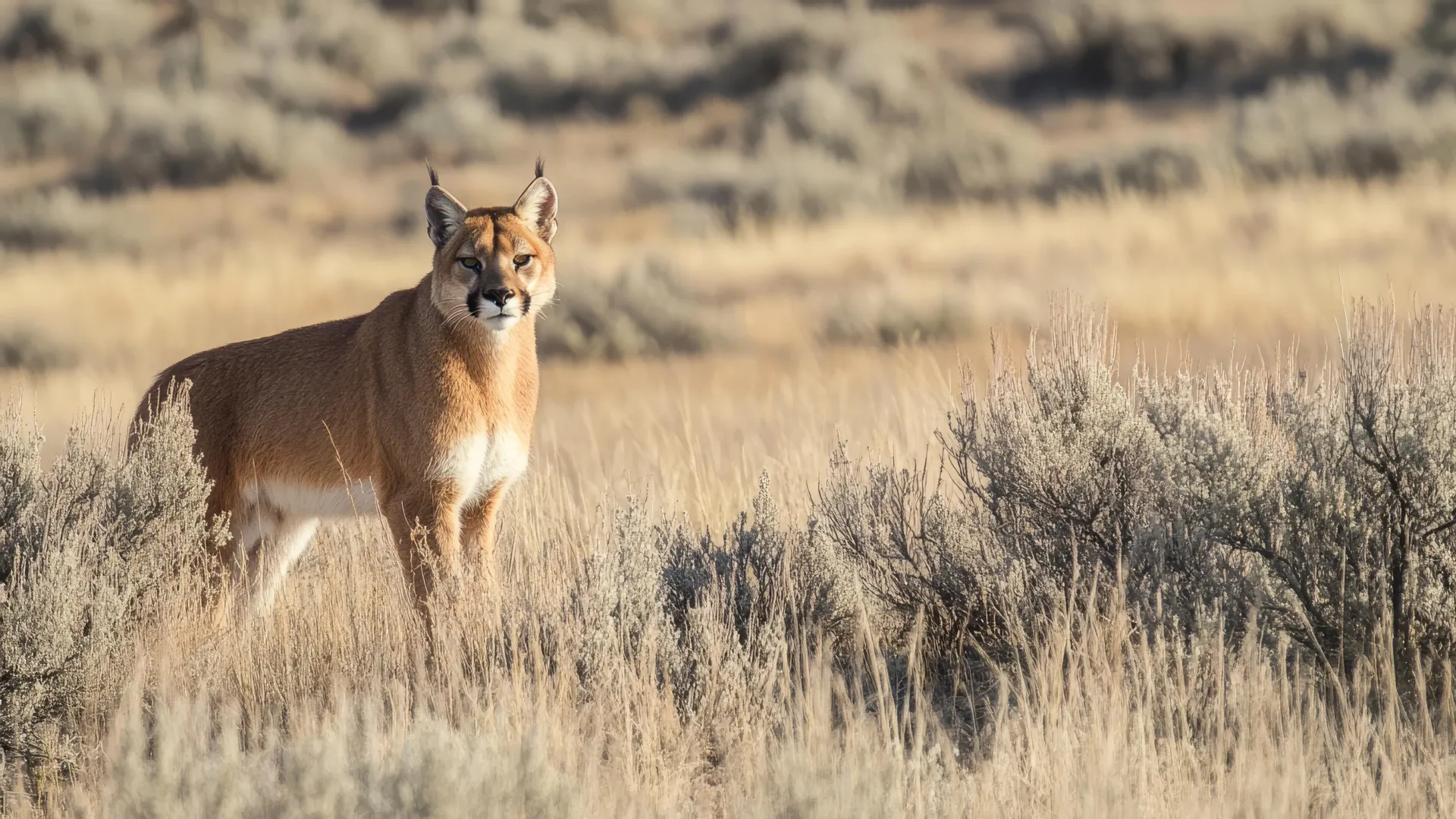
Deep within the high-altitude wilderness of Yellowstone National Park, a silent, high-stakes game of survival is playing out across the rugged topography. As two of North America’s most formidable apex predators—the gray wolf (Canis lupus) and the cougar (Puma concolor)—reclaim overlapping territories across the western United States, biologists have gained unprecedented insight into the tense dynamic governing their coexistence.
A landmark study published this week in the Proceedings of the National Academy of Sciences (PNAS) reveals that the foundation of this coexistence is not shaped merely by the sheer abundance of prey, but by a delicate choreography of landscape architecture, prey diversity, and behavioral adaptation.
Drawing upon an exhaustive nine-year dataset of high-resolution GPS tracking and exhaustive field investigations at nearly 4,000 potential kill sites, researchers have mapped the asymmetrical power struggle between solitary feline hunters and cooperative canine packs. The findings show that cougars have fundamentally altered their foraging habits and spatial behavior to minimize deadly encounters. By shifting their predatory focus from massive elk to smaller, easily consumed deer, and by clinging fiercely to vertical escape terrain—such as rocky outcroppings and climbable trees—cougars are navigating a landscape increasingly dominated by packs of wolves.
The research sheds vital light on the future of carnivore communities across the globe, offering conservationists a clearer blueprint for managing ecosystems where large, overlapping predators are making a historic return.
DETAILED CHRONOLOGY: A DECADE-LONG INVESTIGATION INTO PREDATOR DYNAMICS
To understand how wolves and cougars negotiate their shared environment, a collaborative team of scientists from Oregon State University, the University of Minnesota, and the Yellowstone Center for Resources embarked on a multi-year, high-tech tracking effort starting in the mid-2010s.
The Foundation of Fieldwork (2016–2024)
The empirical bedrock of the PNAS study spans nearly a decade of intensive fieldwork. Wesley Binder, a doctoral student at Oregon State University and lead author of the study, spent years immersed in the harsh northern range of Yellowstone. Before beginning his doctoral studies in 2022, Binder spent a decade on the ground monitoring the park’s cougar population through the Yellowstone Cougar Project. This hands-on conservation work included deploying 140 remote camera traps across the park’s rugged northern tier, capturing elusive wild felines, and fitting them with advanced GPS tracking collars.
Simultaneously, researchers collared packs of wolves, allowing the scientific team to monitor the minute-by-minute movements of both species simultaneously. When spatial analysis indicated that a predator had lingered in a specific location for an extended period—a strong indicator of a successful hunt—field crews hiked into the wilderness to investigate. Across the nine-year span, scientists meticulously analyzed nearly 4,000 potential kill sites, verifying the species hunted, the conditions of the kill, and any evidence of interspecies conflict.
The Advent of Machine Learning in Wildlife Ecology
Managing and interpreting millions of GPS coordinate points is a monumental task. To extract meaningful ecological patterns from this mountain of data, the research team deployed advanced machine learning models.
By training algorithms on confirmed field-verified kill site data, the researchers successfully combined high-resolution GPS movement patterns with predictive spatial models. This technological leap allowed the team to reconstruct predator behavior with high precision, accurately matching predator movements with probable feeding events and pinpointing the exact temporal and spatial windows where wolves and cougars were most likely to cross paths.
The machine learning outputs laid bare a striking imbalance in the predator hierarchy:
- 42% of all recorded wolf-cougar spatial interactions occurred at predicted sites where a cougar had successfully made a kill and was attempting to feed.
- Only a single recorded interaction took place at a site where a wolf pack had secured prey and a cougar attempted to scavenge.
This profound asymmetry underscores a one-way street of ecological dominance. While wolves routinely usurp cougar kills, cougars almost never scavenge from wolf packs, highlighting the inherent risks and unequal stakes of their shared landscape.
SUPPORTING CONTEXT & METRICS: THE GEOGRAPHY OF FEAR AND SURVIVAL
The ecological relationship between wolves and cougars is defined by an inherent structural disadvantage: wolves are cooperative, pack-hunting social carnivores, whereas cougars are solitary stalkers. In many mammalian predator systems, subordinate carnivores accept the mortal risk of scavenging from dominant predators to gain high-value calories. Cougars, however, buck this trend; they are extraordinarily proficient independent hunters and almost never scavenge from wolves, leaving scientists to puzzle over what truly dictates their behavioral adjustments.
The new study provides definitive answers, breaking down the tactical maneuvers cougars use to survive in a wolf-saturated landscape.
The Elk-to-Deer Shift
For decades, elk served as the primary caloric staple for Yellowstone’s cougars. However, as regional elk numbers experienced historical declines due to multiple ecological pressures—including wolf predation, human hunting outside the park, and changing environmental conditions—cougars executed a strategic pivot.
They began focusing heavily on mule deer and white-tailed deer. This dietary shift had cascading benefits for cougar survival:
- Reduced Handling Time: Deer are significantly smaller than elk. A cougar can consume a deer carcass in a fraction of the time it takes to finish an elk.
- Minimized Vulnerability Window: By reducing the time spent guarding a carcass, cougars dramatically lower the probability that roaming wolf packs will detect the scent of fresh blood and home in on the feeding site.
- Spatial Avoidance: Cougars systematically steer clear of areas where wolf packs have recently made kills, effectively mapping out a dynamic "landscape of fear" that changes daily.
The Lifesaving Role of Escape Terrain
When conflicts do occur, the physical environment dictates life or death. Between 2016 and 2024, researchers documented 12 adult cougar deaths within the study area. Of those, exactly two were confirmed to have been killed by wolves.
Crucially, both fatal encounters shared a single, dangerous common denominator: the complete absence of nearby escape terrain.
In both fatal instances, the cougars were caught out in open expanses far from rocky bluffs, cliffs, or large, climbable trees. Overwhelmed by numbers, the cougars fell victim to the wolf packs. In a grim twist that highlights the nature of these resource battles, the wolves did not consume the fallen cougars; instead, they drove the cats away to claim the elk carcasses the cougars had originally hunted.
Conversely, during that same eight-year monitoring window, researchers recorded 90 wolf deaths across the park. Zero of these wolf mortalities were attributed to cougars. The vast majority of wolf deaths were linked to natural intraspecific pack warfare, disease, old age, or human-related mortality outside park borders.
HISTORICAL PERSPECTIVE: REBUILDING THE AMERICAN WEST’S CARNIVORE GUILDS
To fully appreciate the significance of the Yellowstone study, one must view it through the lens of a century of sweeping conservation policy shifts across the American West.
The Eradication Era
For the vast majority of the 20th century, aggressive federal and state eradication programs—driven by livestock protection policies and fear of large carnivores—pushed both wolves and cougars to the absolute brink of extinction across the United States. By the mid-1900s, gray wolves had been functionally eradicated from the contiguous United States, and cougar populations were severely decimated, surviving only in deeply isolated pockets of rugged wilderness.
The Recovery Era
The tide began to turn during the environmental awakening of the 1960s and 1970s. State-level legal protections were extended to cougars, recognizing them as valuable game and ecosystem components, which allowed their populations to gradually rebound across western mountain ranges.
The turning point for wolves arrived in 1995 with one of the most famous ecological experiments in modern history: the federal reintroduction of gray wolves into Yellowstone National Park and central Idaho.
Over the subsequent three decades, both species have successfully expanded their ranges, reclaiming historic territories in parts of the western United States where they had been absent for generations. This modern overlap is what drives the current ecological questions.
"You’ve had these places that in the last 20, 30 years have had cougars come back, and now wolves are coming back as well," lead author Wesley Binder noted. "There are a lot of people asking questions like, ‘What are our ecological communities going to look like now that we have both of these large carnivores back on the landscape?’"
OFFICIAL STATEMENTS: INSIGHTS FROM THE RESEARCH TEAM
The complexity of these apex predator interactions requires a nuanced scientific approach, blending boots-on-the-ground naturalism with cutting-edge data science. The study’s authors emphasize that the findings carry profound implications that extend far beyond the borders of Yellowstone National Park.
"In North America and worldwide, carnivore communities are undergoing major changes," said Wesley Binder, doctoral student at Oregon State University and lead author of the study. "Our research provides insight into how two apex predators compete, which informs recovery efforts."
The collaborative nature of the research is underscored by its distinguished roster of co-authors from Oregon State’s College of Agricultural Sciences and College of Engineering, as well as the University of Minnesota and the Yellowstone Center for Resources.
The co-author team includes:
- Joel S. Ruprecht, Oregon State University
- Rebecca Hutchinson, Oregon State University (College of Engineering & College of Agricultural Sciences)
- Taal Levi, Oregon State University
- Jack Rabe, University of Minnesota and Yellowstone Center for Resources
- Matthew Metz, Yellowstone Center for Resources
- Daniel Stahler, Yellowstone Center for Resources
Together, the team’s diverse expertise in wildlife ecology, spatial statistics, and machine learning allowed them to bridge the gap between raw GPS telemetry and behavioral ecology. Their findings demonstrate that peaceful coexistence among top-tier predators is fundamentally tied to ecological heterogeneity—specifically, a rich diversity of prey species and complex topography that offers weaker or solitary predators a fighting chance via safe escape routes.
FUTURE OUTLOOK: MANAGING ECOSYSTEMS OF THE FUTURE
As wildlife management agencies across North America grapple with the continued expansion of both wolf and cougar populations into human-wildlife interfaces and working landscapes, the lessons learned from Yellowstone’s northern range offer vital guidance.
The research confirms that successful conservation is not merely a numbers game of stocking landscapes with game animals. Instead, maintaining balanced, biodiverse carnivore communities requires preserving structural habitat complexity:
- Protection of Corridors and Refuges: Conservation frameworks must prioritize the preservation of vertical escape terrain—cliffs, rocky outcrops, and mature forests—that allow subordinate carnivores to evade dominant pack hunters.
- Support for Prey Diversity: Ensuring robust and varied prey populations, ranging from large ungulates like elk down to smaller deer species, provides large carnivores with flexible foraging options that reduce direct territorial friction.
- Proactive Landscape Planning: As human development encroaches on wildlife corridors, understanding how apex predators negotiate space with one another helps wildlife managers anticipate human-wildlife conflicts, livestock depredation risks, and recreational safety issues.
The shadow war of Yellowstone reminds us that nature is endlessly adaptable. Even in the face of dominant packs and shifting resource landscapes, solitary hunters like the cougar continue to carve out their niche through behavioral plasticity, environmental awareness, and a profound mastery of the terrain. As these apex predators reclaim their ancestral domains, science continues to illuminate the intricate mechanisms that allow wild ecosystems to self-regulate, adapt, and endure.