
Executive Overview
For millennia, dogs have occupied a unique niche in human society. Often hailed as "man’s best friend," their capacity to navigate human emotion has long been treated as an accepted, albeit scientifically unmeasured, truth. Owners routinely look into the eyes of their pets and see empathy, joy, or concern reflected back at them. Dogs readily sense when their human companions are grieving, celebrate their moments of triumph, and slink away in sympathetic sorrow when reprimanded.
Yet, for all the anecdotal evidence gathered across generations, the precise biological and neurological mechanisms that allow our canine companions to read the human face have remained largely elusive. Why are they so astonishingly adept at interpreting a furrowed brow or an upturned mouth? What happens inside a dog’s brain when they encounter human expressions of extreme joy or sudden rage?
A landmark study published on August 7 in the prestigious Cell Press journal iScience has begun to lift the veil on these evolutionary mysteries. Spearheaded by an international team of researchers—primarily based at the University of Vienna, alongside contributions from the National Autonomous University of Mexico and Eötvös Loránd University in Hungary—the study offers an unprecedented look inside the canine brain.
Using advanced functional neuroimaging and machine learning techniques, researchers monitored the brain activity of dogs as they were exposed to a variety of human facial expressions. The findings are nothing short of revolutionary: not only do human smiles trigger distinct, measurable patterns of neural activity in specific regions of the canine brain, but the data also provides the first empirical evidence that dogs can accurately distinguish between multiple negative human emotions, including anger, fear, and sadness.
This comprehensive investigation goes far beyond simply proving that dogs "understand" us. It sheds critical light on the evolutionary pressures of domestication. Unlike non-human primates, which share a common evolutionary ancestor with humans, dogs took an entirely divergent path. Through thousands of years of living alongside humanity, they developed specialized social and cognitive toolkits capable of bridging the gap between two entirely different species.
Ultimately, this research challenges us to rethink the depth of our connection with companion animals. By mapping the neurological pathways through which dogs perceive our emotional states, scientists are opening new doors to improved animal welfare, enhanced communication, and a profound appreciation of the emotional intelligence pulsating just beneath the fur of our household pets.
Detailed Chronology: Unraveling the Science of Canine Perception
To understand how researchers finally managed to map the canine emotional processing center, one must look at the step-by-step chronology of the study. The path from initial hypothesis to definitive neurological proof required meticulous experimental design, cutting-edge brain-scanning technology, and advanced computational modeling.
Phase One: Establishing the Baseline with Happy and Neutral Faces
The research team, led by first author Raúl Hernández-Pérez and senior author Laura Cuaya, began their investigation by focusing on human happiness. Previous behavioral studies had suggested that positive human expressions carry disproportionate significance for dogs, acting as powerful social cues that guide behavior. But what did this look like neurologically?
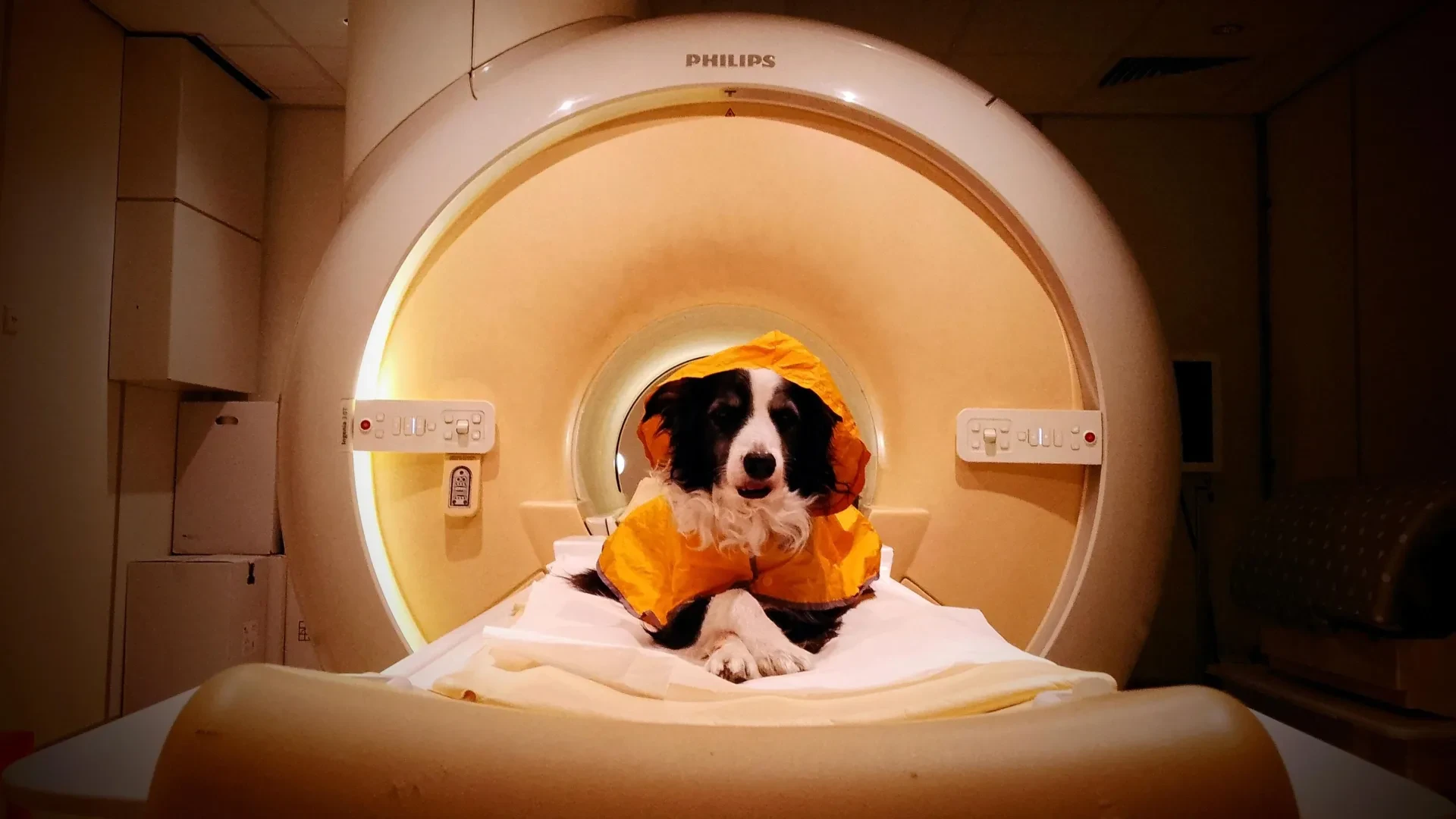
To answer this, the researchers selected a cohort of eight family dogs. These dogs were trained to remain still inside a functional magnetic resonance imaging (fMRI) scanner without the use of physical restraints or sedation—a testament to the rigorous preparation required for animal neuroimaging.
While inside the scanner, the dogs were shown a series of static images depicting unfamiliar humans displaying either happy expressions (smiles) or neutral expressions. As the images flashed before the dogs, the fMRI captured the minute-by-minute fluctuations in blood oxygenation level-dependent (BOLD) signals across the animals’ brains.
The results of this first phase were immediate and revealing. When the dogs viewed happy human faces, researchers observed a significant spike in neural activity within two distinct brain regions: the temporal cortex and the caudate nucleus.
The temporal cortex is widely known in both human and animal neurology to be involved in higher-level cognitive processing, including the visual integration of complex social stimuli. The caudate nucleus, on the other hand, is a critical node in the brain’s dopaminergic reward pathway. In mammals, this region lights up when the subject anticipates or experiences something inherently rewarding, such as food, play, or social approval.
"The activity in the caudate nucleus is particularly interesting," explains Laura Cuaya. "It suggests that happy human faces may not just be processed as visual information; they carry genuine emotional and rewarding significance for dogs."
Phase Two: Expanding the Emotional Palette
Having established that smiles activate reward and cognitive processing centers, the research team sought to determine whether these same brain regions reacted differently to a broader spectrum of emotions. Specifically, they wanted to know if dogs could differentiate between a smile and various negative human expressions, or if the canine brain simply lumped all negative emotions into a single generalized category of "threat" or "displeasure."
For this second phase, the sample size was expanded to 12 dogs. The subjects were once again introduced to the fMRI environment, where they viewed images representing four distinct human emotional states: happiness, anger, fear, and sadness.
To make sense of the complex webs of data generated by the whole-brain scans, the researchers deployed sophisticated machine learning algorithms. These computational models were trained to analyze the patterns of neural activity and determine whether the canine brain could reliably separate one emotion from another based solely on the visual input of a human face.
Phase Three: Machine Learning and the Differentiation of Negative Emotions
The application of machine learning yielded breakthroughs that surpassed the researchers’ initial expectations. The computational models revealed that the dogs did not process all negative expressions uniformly.
When analyzing the neural pathways involving the temporal cortex and the caudate nucleus network, the machine learning algorithms found that responses to happy faces were remarkably distinct. This made it relatively straightforward for the computer models—and by extension, the dogs’ brains—to separate smiles from anger, fear, and sadness.
More importantly, a deeper whole-brain analysis uncovered subtle, unique patterns of neural activity when the dogs were exposed to fearful faces compared to angry or sad ones. This distinction is paramount. For years, skeptics argued that dogs merely react to the tense body language or lowered voice tones associated with human distress without truly parsing the specific emotion. This study provides the first definitive neural evidence that dogs can tell the difference between specific negative human emotional expressions simply by looking at a human face.
Supporting Context & Metrics: The Evolutionary and Experimental Landscape
To fully grasp the magnitude of the iScience study, one must examine the experimental parameters, the physiological metrics involved, and the broader evolutionary context that separates dogs from other animal species.
Experimental Design and Controls
| Experimental Parameter | Phase One | Phase Two |
|---|---|---|
| Cohort Size | 8 family dogs | 12 family dogs |
| Stimuli Presented | Happy and neutral human faces | Happy, angry, fearful, and sad human faces |
| Imaging Technology | fMRI (functional Magnetic Resonance Imaging) | fMRI combined with Machine Learning analysis |
| Key Brain Regions Targeted | Temporal cortex, Caudate nucleus | Whole-brain analysis with focus on temporal/caudate network |
| Primary Finding | Smiles activate cognitive and reward centers | Dogs can neurologically distinguish between specific negative emotions |
The rigorous controls implemented by the University of Vienna team ensured that the results were not skewed by familiarity bias or confounding variables. All images featured unfamiliar human subjects to prevent the dogs’ responses from being driven by memories of their specific owners. Furthermore, the use of awake, unrestrained dogs trained through positive reinforcement guaranteed that stress-induced artifacts did not contaminate the fMRI data.
The Evolutionary Anomaly: Dogs vs. Primates
From an evolutionary standpoint, the cognitive abilities of dogs present a fascinating anomaly. When scientists study how primates process social and emotional cues, they are examining traits inherited
from a common ancestor shared with humans. The evolutionary lineage is direct, linear, and deeply rooted in millions of years of shared primate heritage.
Dogs tell a completely different evolutionary story. Diverging from a wolf-like ancestor tens of thousands of years ago, canids followed an evolutionary trajectory completely separate from primates. Yet, through the crucible of domestication, they achieved a level of social competence regarding human signals that rivals—and in some contexts surpasses—that of our closest primate relatives, such as chimpanzees and bonobos.
[Common Primate Ancestor] ---> Primates (Direct evolutionary lineage to humans)
[Wolf-like Ancestor]      ---> Domestication Process ---> Canis lupus familiaris (Convergent social skills)
This remarkable adaptation is a prime example of convergent evolution driven by human intervention. As early humans began to tolerate, adopt, and eventually breed wolves that displayed cooperative traits, selection pressures favored animals that could read human intentions, interpret gazes, and decode facial expressions. The iScience study illustrates that this adaptation is not merely behavioral—it is hardwired directly into the neurobiology of the modern domestic dog.
Official Statements and Expert Perspectives
The publication of this research has sent ripples through the scientific community, prompting leading researchers to reflect on what these findings mean for the future of human-animal interactions.
Raúl Hernández-Pérez, the study’s first author, emphasizes the precision with which both humans and dogs process facial architecture:
"Humans are really good at picking up small details on the face, and so are dogs. This makes dogs very interesting. By studying their brains, we can understand what adaptations have developed to support their remarkable social and emotional understanding of humans."
Senior author Laura Cuaya expands on the evolutionary implications, urging a paradigm shift in how society views our canine companions:
"When we compare humans with primates, we are looking at abilities that may have come from a common ancestor. With dogs, the story is totally different. They followed a very different evolutionary path, yet through domestication, they developed the social abilities needed to understand and cooperate with us."
Cuaya also highlights the practical message she hopes the public takes away from the research:
"I would like people to see dogs as emotional beings. They have evolved with us to understand our expressions and cooperate with us, and recognizing that can change how we communicate with and care for them."
Other cognitive ethologists not directly involved in the study have praised its methodological rigor. By combining non-invasive fMRI scans of awake dogs with advanced machine learning classifiers, the researchers have set a new gold standard for neuro-behavioral studies in veterinary science and animal cognition.
Future Outlook: The Next Frontier in Canine Cognition
While the findings published in iScience mark a monumental leap forward, the researchers are quick to point out that this is only the beginning. Static 2D images displayed on a screen represent a highly artificial environment, far removed from the rich, multisensory reality of the everyday world.
Moving Beyond Still Images
In the wild—or even in a suburban living room—dogs rarely interpret human emotion based on facial expressions alone. Real-world communication is multisensory, combining visual expressions, body posture, vocal tone, and olfactory cues.
Future studies currently being planned by the research team will take a more holistic, dog-centered approach. Scientists aim to explore how dogs integrate multiple streams of sensory information simultaneously. For example, how does a dog process a happy face paired with an angry tone of voice, or a fearful expression accompanied by a familiar scent?
Expanding Demographics: Pet vs. Free-Ranging Dogs
Another critical avenue for future research involves expanding the demographic scope of the subjects. All the dogs participating in the current study were pets—domesticated animals living closely with human families in urban or suburban environments.
Free-ranging dogs, village dogs, and feral canids experience an entirely different social landscape. They interact with humans on a transactional or avoidance-based level rather than as household companions. Researchers are keen to investigate whether these free-ranging populations possess the same neurological capacity to decode human facial expressions, or if this skill is sharpened—or even entirely dependent upon—the intensive environment of domestication and lifelong human exposure.
Comparative Processing: Dogs vs. Humans
Finally, the research team plans to run comparative studies analyzing how dogs and humans process the exact same emotional datasets. By directly comparing human and canine neural outputs when viewing identical stimuli, scientists hope to map the exact neurological overlaps and divergences that make cross-species communication so uniquely successful.
Conclusion
The study published in iScience bridges a long-standing gap between heartfelt human intuition and hard scientific data. We no longer have to rely purely on observation and empathy to know that our dogs understand us. The fMRI scans and machine learning models have spoken: when a dog looks at a human smile, its brain lights up with the warmth of cognitive recognition and reward. When a dog encounters fear, anger, or sadness, its mind registers the nuance, distinguishing one negative emotion from another with surprising neurological precision.
As we look to the future, this research serves as both a scientific milestone and an ethical reminder. Dogs are not merely furry automata reacting to basic survival stimuli; they are finely tuned neuro-social partners that have co-evolved with us over millennia. Acknowledging this profound emotional literacy should transform how we train, communicate with, and care for the animals that share our homes and our lives.