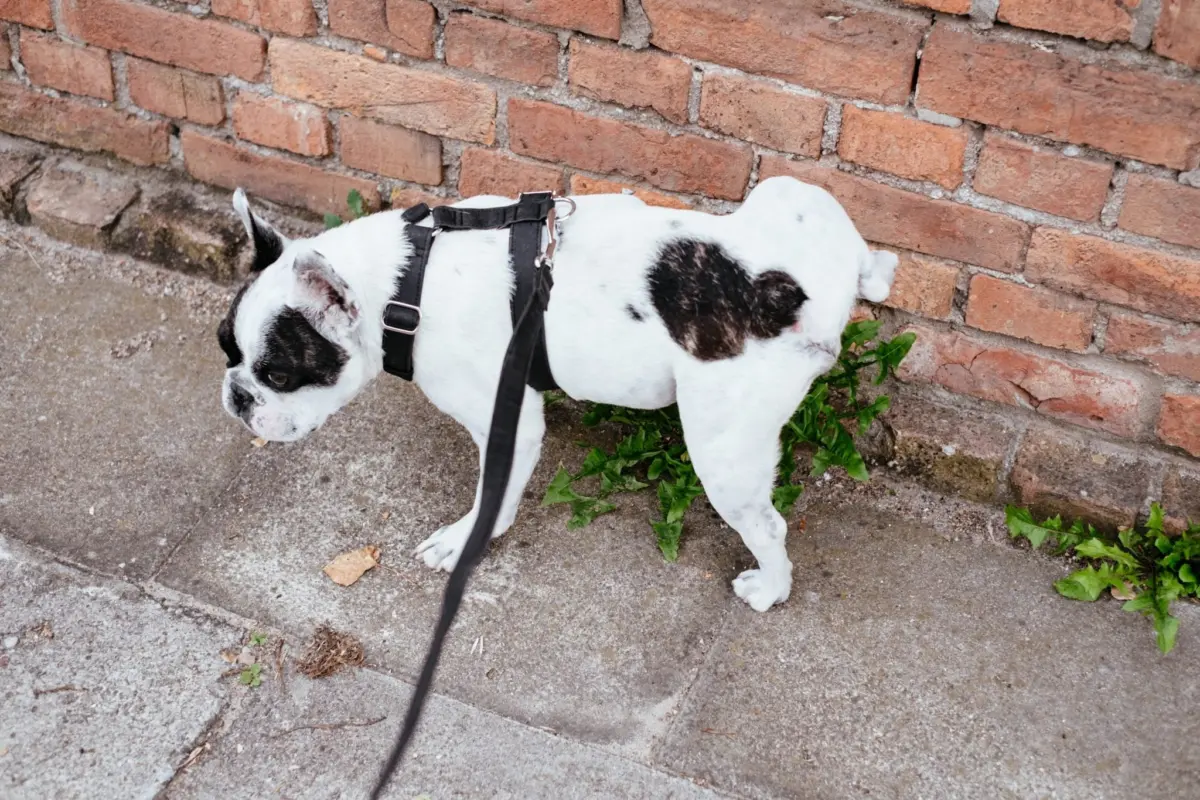
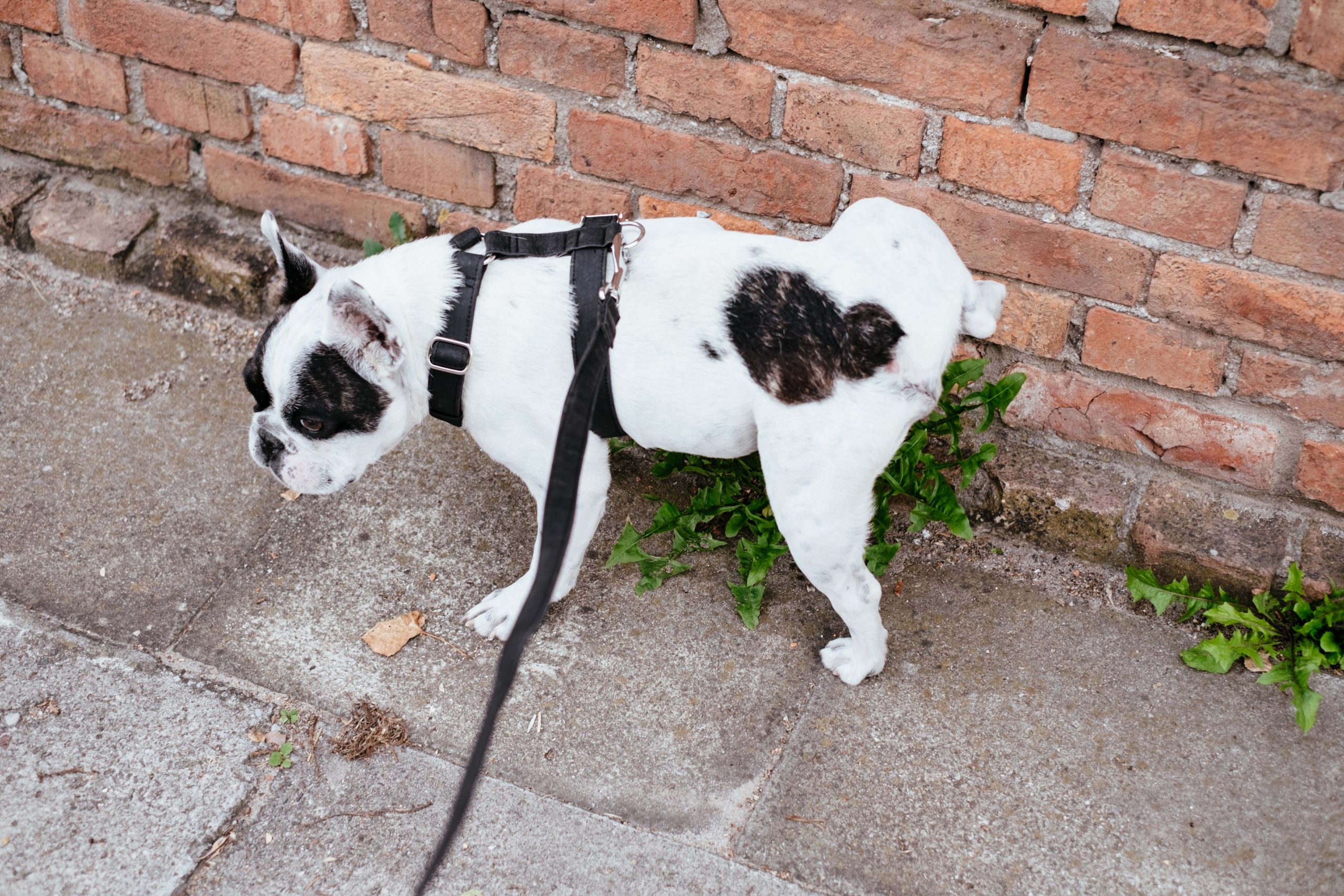
For millions of suburban homeowners and property managers, maintaining a pristine, green lawn is a point of pride. However, dog ownership presents a persistent agronomic challenge: localized turfgrass necrosis, commonly known as "dog urine spots" or "grass burn." Far from being a mere aesthetic inconvenience, these yellow and brown patches represent a localized chemical overload within the soil ecosystem.
Canine urine contains elevated concentrations of nitrogenous waste products, primarily urea, along with soluble salts and metabolic byproducts. When deposited repeatedly or in concentrated doses, urine acts like an extreme over-application of synthetic nitrogen fertilizer, triggering osmotic stress, root dehydration, and cellular death in turfgrasses.
As pet ownership rates continue to surge globally, the consumer lawn care sector has seen a rapid expansion of specialized remediation products. These remedies range from seed-and-mulch matrices designed to re-establish vegetation to microbial spray neutralizers and upstream dietary water filters. This analysis evaluates the chemical mechanisms behind lawn burn, investigates leading market solutions, presents agronomic and veterinary insights, and outlines preventative strategies for maintaining healthy lawns alongside canine companions.
Biochemical Analysis & Systematic Chronology of Solutions
Understanding lawn burn requires examining the nitrogen cycle within domestic turfgrass ecosystems. When a dog urinates, it delivers a dense solution of urea ($textCO(NH_2)_2$) directly to the grass blade and soil substrate. Soil-dwelling microbes produce urease enzymes that hydrolyze urea into ammonium ($textNH_4^+$), which is subsequently converted by nitrifying bacteria into nitrate ($textNO_3^-$).
While grass requires nitrogen for chlorophyll production and foliage growth, excessive local concentrations spike the electrical conductivity (EC) of the soil solution. This creates a hypertonic environment around the root zone, drawing moisture out of the root cells through reverse osmosis—effectively burning the plant.
Over the past two decades, product development has shifted from basic re-seeding to sophisticated soil bio-remediation and preventative interventions. Below is a detailed breakdown of the primary operational approaches and leading commercial products currently available.
1. Seed & Soil Matrix Restoration
When grass root systems suffer severe burn, the turf dies, leaving bare patches susceptible to weed invasion. Traditional topsoil top-dressing has evolved into all-in-one patch repair systems.
Scotts EZ Seed Dog Spot Repair (Sun & Shade): This approach combines agronomic re-vegetation with physical soil protection. The product integrates grass seed cultivars selected for sun and shade adaptability, high-absorption wood-fiber mulch, soil conditioners, and protective tackifiers. The mulch absorbs up to six times its weight in water, creating a protective moisture barrier around the germinating seed while neutralizing residual salt burn in the immediate topsoil layer. It is formulated to repair up to 100 individual burn sites per package.
2. Bio-Enzymatic & Microbial Soil Neutralizers
Rather than waiting for grass to die and re-seeding, biological neutralizers focus on accelerating the breakdown of excess nitrogen and flushing accumulated salts from the root zone.
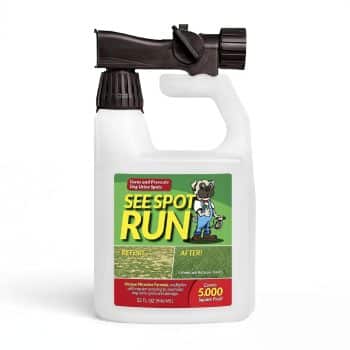
See Spot Run Dog Urine Neutralizer: Manufactured in the United States, this liquid formulation connects directly to a standard garden hose for broad application. Unlike historic remedies that attempted to alter a dog’s internal urinary pH through systemic pills—a practice now discouraged by veterinarians—See Spot Run works strictly within the soil. It utilizes natural organic compounds and microbial strains to metabolize residual soil nitrogen, allowing surviving grass roots to recover. While it cannot revive dead leaf tissue, it restores soil equilibrium so surrounding grass can fill in the void.
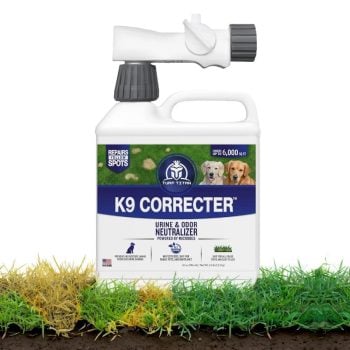
Turf Titan K9 Correcter: Operating on a similar biochemical principle, Turf Titan K9 Correcter combines specialized beneficial bacteria, active enzymes, and eco-friendly surfactants. The 32-ounce concentrate covers up to 6,000 square feet via a hose-end attachment. The surfactants reduce soil surface tension, allowing water to penetrate compacted dirt and flush concentrated urea deep beneath the active root zone. Meanwhile, the enzymatic blend breaks down odor-causing compounds and converts excess nitrogen into less harmful gas or bio-available nutrients.
3. Topical Visual Correctives & Eco-Sprays
For high-visibility residential properties, sports turf, or municipal greenspaces, waiting for biological recovery may be too slow.
NaturVet Yellow to Green Lawn Pet Spot Remover Spray: Formulated by veterinary and agricultural specialists, this non-toxic, water-based solution acts as both a lawn conditioner and an aesthetic corrective. It delivers instant visual masking of yellow patches without harming surrounding flora, while organic soil penetrants help leach residual salts away from shallow root systems.
4. Upstream Water Filtration & Mineral Interventions
A unique preventative category seeks to alter the chemical composition of canine urine before deposition, without modifying the dog’s systemic biochemistry.
Dog Rocks Lawn Burn Preventative: Composed of naturally occurring paramagnetic igneous rock, this product is placed directly into a pet’s water bowl. The porous mineral structure functions as a natural ion exchanger, filtering out dissolved nitrates, trace ammonia, and heavy minerals from tap water prior to consumption. By reducing the overall mineral load ingested by the animal, the resulting urine contains lower levels of concentrated salts, reducing the severity of lawn burn over time. Each 200-gram pack remains active for up to two months and presents no known side effects for multi-pet households.
The severity of dog urine burn depends on several variables, including the sex of the dog (females typically concentrate urine in a single spot, whereas males mark multiple vertical surfaces), diet, hydration levels, and grass species.
Turfgrass Type
Climate Classification
Nitrogen Tolerance Threshold
Recovery Mechanism
Kentucky Bluegrass
Cool-Season
Moderate
Rhizomes (Spreads laterally)
Perennial Ryegrass
Cool-Season
Low to Moderate
Bunch-type (Requires re-seeding)
Tall Fescue
Cool-Season
High
Deep root system, high drought tolerance
Bermudagrass
Warm-Season
Very High
Stolon/Rhizome (Aggressive self-repair)
Zoysiagrass
Warm-Season
Moderate
Slow lateral expansion
Understanding the Burn Pattern
A classic canine urine spot features a dead, brown center surrounded by a ring of dark green, fast-growing grass.
The Core Zone: Direct exposure to high urea concentrations exceeds the turf’s salt index limit, causing complete tissue desiccation.
The Perimeter Ring: As urine diffuses outward through the soil, nitrogen levels dilute to a concentration that acts as a beneficial fertilizer, stimulating growth and chlorophyll synthesis.
       [ Outer Ring: Diluted Nitrogen -> Lush Green Growth ]
   (  [ Inner Core: High Urea/Salt -> Tissue Burn & Death ]  )
       [ Outer Ring: Diluted Nitrogen -> Lush Green Growth ]
Q1: What are the primary product categories for managing dog urine burn?
Lawn care solutions generally fall into four categories:
Soil flushes & surfactants: Liquid sprays designed to dissolve salts and carry urea past root depths.
Bio-enzymatic neutralizers: Microbial products that metabolize excess nitrogen into stable organic matter.
Re-seeding patches: Combined seed, mulch, and fertilizer matrices formulated for bare-spot restoration.
Water filtration media: Mineral additives placed in drinking bowls to reduce ingested nitrate levels.
Q2: How should homeowners select the appropriate treatment strategy?
Selection depends on damage severity and turf goals:
Active, dead brown spots: Require physical removal of dead thatch followed by seed-and-mulch repair products (e.g., Scotts EZ Seed).
Widespread yellowing across a large lawn: Best addressed with broadcast hose-end liquid neutralizers (e.g., Turf Titan K9 or See Spot Run).
Preventative maintenance: Ideal for mineral water inserts (e.g., Dog Rocks) combined with aggressive daily watering.
Q3: Are internal pH-altering dietary supplements safe for dogs?
Veterinarians strongly advise caution regarding dietary supplements that claim to modify urine pH (alkalizing or acidifying pills). Altering a dog’s urinary pH can increase the risk of bladder stones, urinary tract infections, and metabolic imbalances. Soil-focused treatments or external water filtration methods are significantly safer.
Q4: How long does it take to see visible recovery in burned turf?
Bio-neutralizer sprays: Typically show soil stabilization within 7 to 14 days, with surrounding grass filling in within 3 to 4 weeks during peak growing season.
Seed repair patches: Germination usually occurs within 7 to 21 days depending on seed species and soil temperature.
Mineral water inserts: Require 3 to 5 weeks of continuous usage to show measurable reductions in lawn spot frequency.
Q5: Can natural remedies effectively repair dog urine spots?
Yes. Immediate deep-watering (flushing the spot with a garden hose within 8 hours of deposition) is the most effective natural remedy. This dilutes the urea concentration below toxic thresholds. Additionally, applying fine horticultural gypsum ($CaSO_4$) helps displace sodium and ammonia salts from soil particles, improving drainage and soil structure.
Agronomic & Veterinary Perspectives
Leading experts across agronomy and veterinary medicine emphasize an integrated approach to managing pet-induced turf stress.
"The core issue behind dog urine burn is not acidity—a common misconception—but rather nitrogen density and salt concentration," states Dr. Aris Thorne, Senior Extension Turf Scientist. "Treating the lawn requires managing osmotic pressure in the soil. When homeowners use soil-penetrating surfactants and high-capacity mulches, they effectively dilute that localized salt load and allow the soil microbiome to recover."
From a veterinary toxicology standpoint, maintaining safe environmental boundaries is paramount:
"We routinely caution dog owners against feeding their pets chemical supplements designed to change urinary pH or protein metabolism purely for lawn preservation," notes Dr. Elena Rostova, DVM, Veterinary Internal Medicine Specialist. "Preventative strategies should focus on encouraging canine hydration, utilizing passive filtration like natural igneous rock, and treating the turf externally. Healthy kidneys and a balanced urinary tract must always take priority over lawn aesthetics."
Strategic Prevention Protocols & Future Outlook
Integrated Lawn-and-Pet Management Protocol
To maintain a healthy turfgrass canopy without restricting pet movement, property managers and pet owners should adopt a multi-layered management system:
Hydration Optimization: Ensure dogs have constant access to fresh, clean water. Adding water to dry kibble or incorporating wet food increases total fluid intake, diluting urine output naturally.
Designated Potty Areas: Train dogs to utilize specific, high-durability areas lined with pea gravel, crushed granite, or specialized synthetic turf designed with high-flow drainage backing.
Immediate Dilution: Keep a watering can or hose accessible near pet exits. Drenching urine spots with 1 to 2 gallons of water immediately after urination disperses nitrogen deep below the root zone.
Regular Soil Bio-Remediation: Apply hose-end microbial neutralizers on a monthly schedule during spring and summer to maintain high populations of nitrogen-metabolizing soil microbes.
Future Outlook & Industry Innovations
The landscape industry is moving away from synthetic, chemical-heavy lawn treatments in favor of ecological solutions. Innovations on the horizon include:
Genetically Selected Turfgrass Cultivars: Plant breeders are developing cold- and warm-season grass cultivars engineered with elevated salt tolerance and robust rhizomatous growth patterns, allowing turf to naturally withstand higher urea concentrations.
Probiotic Soil Sprays: Next-generation lawn care relies on targeted consortia of broad-spectrum probiotics that rapidly convert volatile ammonia into organic matter before root damage occurs.
Smart Irrigation Integration: Automated smart sprinklers integrated with outdoor pet-tracking sensors are being developed to automatically deploy brief, localized rinse cycles over areas where a dog has recently spent time.
By combining scientific soil management, safe biological neutralizers, and smart pet care practices, property owners can achieve a vibrant, green lawn while keeping their dogs happy and healthy.