
Executive Overview
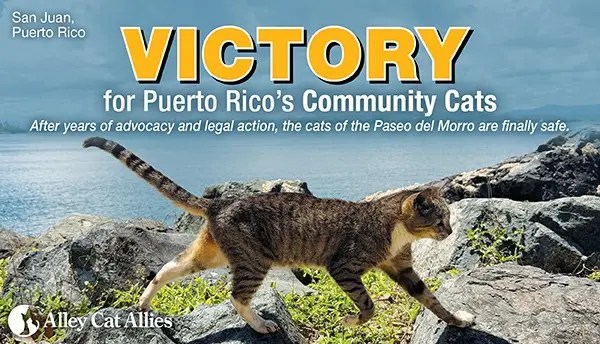
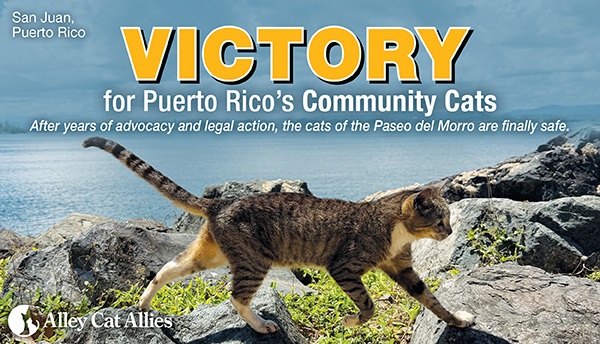
In a landmark triumph for animal welfare, advocacy groups and local residents have officially secured the safety of the famous community cats residing along the historic Paseo del Morro in Old San Juan, Puerto Rico. Following a high-stakes, multi-year legal battle against the U.S. National Park Service (NPS), animal advocacy organization Alley Cat Allies, alongside the local Puerto Rican nonprofit Save A Gato, finalized a binding agreement that completely removes the threat of lethal removal and eradication for these iconic felines.
The dispute began in late 2023 when the NPS released a controversial resource management proposal targeting the free-roaming cats inhabiting the scenic walkway leading to the historic El Morro fortress. The plan explicitly permitted lethal control methods, putting beloved neighborhood cats—such as Bella, Llorin, Naranja, and DF—in imminent danger of being destroyed by as early as October 2024.
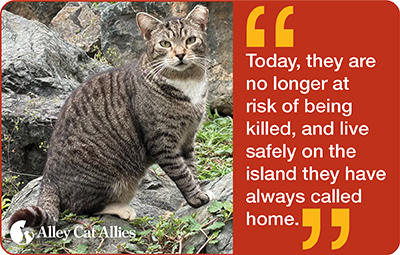
However, the proposal ignited a fierce, international backlash. Driven by grassroots activism, legal action, and widespread public condemnation of lethal management strategies, the coalition forced federal authorities to the negotiating table. Today, the cats are permanently safe, living out their days on the island they have called home for generations. Furthermore, this high-profile victory has served as a catalyst for systemic, progressive animal welfare reforms across San Juan, paving the way for expanded Trap-Neuter-Return (TNR) initiatives and long-term community cat protection policies.
Detailed Chronology of the Conflict and Legal Battle
Late 2023: The Threat Emerges
The crisis unfolded in the final months of 2023 when the U.S. National Park Service announced a sweeping management plan for the historical grounds surrounding the Castillo San Felipe del Morro (El Morro) in San Juan. While the stated goal of the NPS was to protect local wildlife and historical infrastructure, the methodology outlined in the draft proposal included the catastrophic option of lethal removal for the population of community cats that had lived along the Paseo del Morro for decades.
For tourists, the cats were a picturesque and welcoming part of the coastal walkway. For the people of San Juan, however, the cats were far more than a tourist attraction: they were recognized as living threads in the rich cultural tapestry of the historic district, deeply embedded in the daily lives of local residents who fed, monitored, and cared for them out of their own pockets.
Early 2024: Escalation and Federal Litigation
Recognizing the immediate and lethal peril facing the felines, Alley Cat Allies mobilized its legal and advocacy teams. In early 2024, Alley Cat Allies took direct legal action, filing a federal lawsuit against the NPS plan to halt any implementation of lethal control. They were swiftly joined in the legal challenge by Save A Gato, a dedicated local feline rescue and advocacy organization operating on the ground in San Juan.
Concurrently, the legal maneuver was backed by an unprecedented wave of public outcry. Residents, local business owners, and international animal lovers flooded the NPS public comment portals with hundreds of submissions fiercely opposing the eradication plan. Demonstrations and rallies took place on the streets of San Juan, where advocates proudly championed the cats as vital, protected members of the community.
Summer 2026: The Landmark Settlement
After months of intense legal maneuvering, expert advocacy, and strategic negotiations, a breakthrough was achieved in the summer of 2026. Alley Cat Allies finalized a formal, amicable agreement with the National Park Service that permanently rescinded the provisions allowing for lethal control of the Paseo del Morro cats.
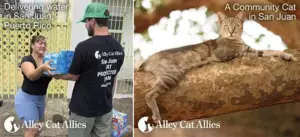
The settlement marked the definitive conclusion of the legal battle and established a humane framework for managing the feline population. Rather than rounding up and killing the animals, the agreement facilitated a collaborative, on-the-ground management strategy. Alley Cat Allies, working hand-in-hand with local San Juan veterinarians and advocates, strategically relocated feeding stations to guide the cats away from sensitive historical zones and into safer, more ideal habitats within Old San Juan. Today, cats like DF can be seen lounging peacefully in the tall grass, entirely shielded from the existential threat they faced just years prior.
Supporting Context & Metrics: Cultural Heritage Meets Modern Animal Welfare
The conflict at Paseo del Morro was never merely about local pest control or wildlife management; it was a profound clash of philosophies regarding how modern society values community animals.
Cultural Integration of Community Cats
In Puerto Rico, free-roaming cats are deeply woven into the island’s socio-cultural fabric. Generations of San Juan families have grown up alongside these animals, integrating them into the urban ecosystem of Old San Juan. The cats serve as natural rodent deterrents while simultaneously offering a comforting, soulful presence that defines the aesthetic and emotional landscape of the historic district.
The public response to the NPS proposal revealed overwhelming solidarity. Hundreds of public comments submitted to federal regulators underscored a singular, unified message: the cats belong to the people of Puerto Rico, and their lives are non-negotiable. One resident eloquently summarized the public sentiment in their comment: "This is our island, and our cats mean the world to us."
The Failure of Lethal Control
The successful defense of the Paseo del Morro cats reinforces a growing body of scientific evidence demonstrating that lethal removal is not only inhumane, but entirely ineffective. When cats are removed or eradicated from an area, a phenomenon known as the "vacuum effect" occurs: surviving cats from neighboring areas migrate into the newly available territory, or remaining populations quickly rebound through unchecked reproduction.
Conversely, the alternative implemented in San Juan—supported by Alley Cat Allies and Save A Gato—utilizes science-based, humane population management. By combining targeted feeding, veterinary care, and sterilization through Trap-Neuter-Return (TNR), the population stabilizes naturally without the need for cruel eradication policies. The international attention garnered by the Paseo del Morro case sent an unmistakable message to government agencies worldwide: lethal action against community cats is increasingly obsolete and socially unacceptable in modern society.
Official Statements and Stakeholder Perspectives
The resolution of the Paseo del Morro dispute was heralded by political leaders, community activists, and animal welfare executives alike, all of whom emphasized the importance of community-driven conservation and compassion.
-
Congressman Pablo José Hernández (representing Puerto Rico in Washington, D.C.) offered sharp criticism of the initial federal proposal while championing the local sentiment:
"NPS’s plan ignores the cultural and historic importance of the community cats of the Paseo. My constituents have expressed their support for the community cats of the Paseo."
-
Linda Rodriguez, a resident and passionate cat caregiver in San Juan, reflected on the deep emotional ties the community shares with the animals:
"Those cats belong here. They are part of the culture, part of our hearts, and we don’t want them to leave."
-
Miriam Pabón, President of Save A Gato, highlighted the broader regional impact of the legal victory and cooperative framework:
"Alley Cat Allies’ years of support have made a difference not only for the Paseo cats, but for cats across San Juan. Puerto Rico is facing many challenges, but we take strength in our love for our island and for our cats. And I believe when we improve our policies for them, we improve our home for us all."
Future Outlook: A New Paradigm for Animal Welfare in Puerto Rico
While the immediate safety of Bella, Llorin, Naranja, DF, and their feline companions has been permanently secured, the legacy of the Paseo del Morro victory extends far beyond a single walkway in Old San Juan. The successful campaign has laid a robust foundation for systemic, long-term improvements in animal welfare infrastructure throughout Puerto Rico.
Expansion of Trap-Neuter-Return (TNR)
Emboldened by the success of the legal defense, Alley Cat Allies, in direct partnership with local advocates, San Juan Animal Services, and municipal leaders, is actively expanding comprehensive Trap-Neuter-Return (TNR) programs. These initiatives are designed to stabilize feline populations humanely across the entire municipality of San Juan, drastically reducing shelter intake and euthanasia rates while improving the overall health and wellbeing of community cats.
Increasing Access to Veterinary Care and Resources
A core component of the future outlook for San Juan involves bolstering local resources. This includes ensuring consistent access to high-quality cat food, preventative medical care, and spay/neuter surgeries. By empowering local caregivers with the tools, training, and institutional support they need, San Juan is transforming into a model city for progressive, humane animal management within the Caribbean.
A Call to Action and Global Solidarity
Founded in 1990, Alley Cat Allies has spent over three decades leading the global movement to protect and improve the lives of all cats and kittens. Today, with a dedicated network of over 1.8 million supporters worldwide, the organization continues to set the benchmark for evidence-based, compassionate animal policy.
The victory at Paseo del Morro stands as a testament to what can be achieved when grassroots advocates, legal experts, and compassionate citizens unite under a common banner. It proves that advocacy works, and that persistent, organized resistance can alter the trajectory of public policy in favor of the voiceless.
As Alley Cat Allies and local partners look toward the future, the mission remains clear: to build a world where every cat is valued, and every community possesses the policies, resources, and compassion necessary to defend them.
To learn more about the ongoing initiatives in Puerto Rico and how you can support the mission to protect community cats, visit alleycat.org/PuertoRico.