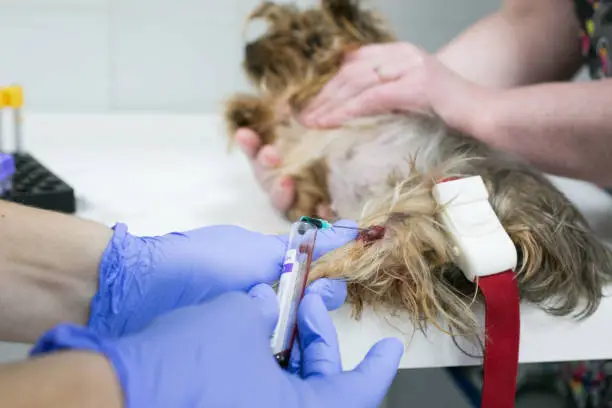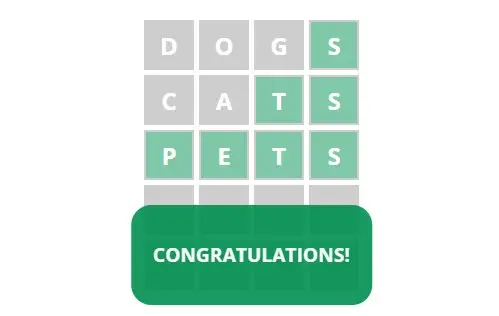

In an era where digital engagement tools frequently intersect with niche professional development, the veterinary community has found a novel intersection of recreation and cognitive upkeep. Enter WordRX, a specialized, Wordle-inspired lexical puzzle designed exclusively for veterinary professionals, veterinary students, and animal health enthusiasts. Developed as a lighthearted yet intellectually stimulating diversion, this platform translates the familiar mechanics of modern word games into a rigorous test of clinical terminology, pharmacological nomenclature, anatomical shorthand, and rare veterinary curiosities.
While mainstream word games test general-purpose English, WordRX operates within a specialized linguistic ecosystem. From everyday clinic terminology—such as terms encountered during routine canine and feline wellness exams—to obscure taxonomic classifications and exotic pathology jargon picked up in rigorous veterinary curricula, the game bridges the gap between relaxation and professional readiness. Far from being a mere distraction, industry analysts and educational technologists note that such gamified learning models contribute to cognitive agility, pattern recognition, and continuous professional development (CPD) in low-stakes environments.
This comprehensive report examines the genesis, mechanics, linguistic taxonomy, and psychological impacts of WordRX. Furthermore, it evaluates the broader trend of gamification within the allied health sectors, exploring how digital micro-learning tools are reshaping the way modern veterinary practitioners maintain their lexical acuity and stave off professional burnout.
Detailed Chronology: The Evolution of Veterinary Wordplay and the Genesis of WordRX
To understand the current cultural footprint of WordRX, one must trace the convergence of digital puzzle culture, specialized medical education, and the unique psychological landscape of the modern veterinary workforce.
Phase I: The Rise of Lexical Micro-Games (2021–2022)
The modern era of browser-based word games was fundamentally revitalized by Josh Wardle’s viral creation, Wordle, in late 2021 and early 2022. The game’s minimalist interface, once-daily limitation, and social sharing capabilities demonstrated an immense public appetite for short-form, low-pressure cognitive challenges. Almost immediately, developers across various industries recognized the pedagogical and engagement potential of the format. Spin-offs targeting specific niches—such as geography (Worldle), mathematics (Nerdle), and human medicine—proliferated across the internet.
However, the veterinary sector remained largely unserved by these adaptations. While human medical professionals had access to various clinical terminology quizzes, veterinary medicine possesses a distinct, highly specialized lexicon that spans multiple mammalian, avian, reptilian, and aquatic species, as well as complex pharmacological agents unique to veterinary practice.
Phase II: Conceptualization and Prototyping (2023)
Recognizing a distinct gap in the market for veterinary-centric mental stimulation, curriculum designers and digital content creators began prototyping a specialized lexicon engine in mid-2023. The primary challenge lay in calibrating the difficulty curve. A game consisting entirely of obscure parasitological binomial nomenclature would alienate general practitioners and veterinary technicians, whereas a game limited to basic terms like "CAT" or "DOG" would offer no intellectual challenge.
The solution was a tiered database system. The WordRX lexicon was divided into three distinct operational tiers:
- The Clinic Floor: Everyday terms utilized in standard small animal practice (e.g., SUTURE, TRIAGE, LEASH).
- The Pharmacopoeia & Anatomy: Terms common across clinical specializations, surgical suites, and diagnostic laboratories (e.g., TIBIA, RABIES, BOLUS).
- The Academic Vault: Rare curiosities, anatomical landmarks, and pathological descriptors encountered primarily in advanced diagnostics, research, or specialized veterinary school modules (e.g., CHYTH, FASCI, ILEUM).
Phase III: Public Launch and Community Adoption (2024–Present)
By early 2024, WordRX transitioned from a closed-beta concept to a publicly accessible web utility. Distributed primarily through veterinary professional networks, social media veterinary forums, and continuing education newsletters, the platform gained rapid traction. Clinics adopted the daily puzzle as a pre-shift team-building exercise, while veterinary students utilized it as a mnemonic device during board exam preparation.
Today, WordRX stands as a fixture of digital veterinary culture, proving that professional rigor and playful engagement are not mutually exclusive.
Supporting Context & Metrics: The Anatomy of Veterinary Linguistics and Cognitive Load
The efficacy and appeal of WordRX cannot be fully appreciated without examining the unique linguistic environment of veterinary medicine and the psychological pressures defining the modern veterinary profession.
The Linguistic Density of Veterinary Practice
Veterinary medicine is arguably one of the most linguistically demanding fields in healthcare. Unlike human physicians, who focus exclusively on Homo sapiens, veterinary practitioners must master anatomical, physiological, and pharmacological frameworks across a staggering array of species. A single clinic day might require a veterinarian to pivot seamlessly from canine cardiology to avian husbandry, feline endocrinology, and bovine parasitology.
This multidisciplinary scope results in a massive, highly specific vocabulary. Consider the following comparative linguistic metrics:
- General English Lexicon: An average adult active vocabulary spans roughly 20,000 to 35,000 words.
- Human Clinical Lexicon: A practicing physician routinely utilizes an active professional vocabulary of approximately 10,000 specialized terms.
- Comprehensive Veterinary Lexicon: Due to multi-species nomenclature, pharmacological variations, and veterinary-specific instrumentation, a mixed-practice veterinarian navigates an active and passive professional vocabulary exceeding 45,000 distinct terms.
WordRX taps directly into this vast lexical reservoir. By challenging players to deduce hidden words through strategic guessing and color-coded feedback, the game reinforces spelling accuracy, terminology recall, and semantic association under constrained parameters.
Burnout Mitigation and Micro-Learning
The veterinary profession faces a well-documented crisis regarding mental health, compassion fatigue, and burnout. High-stress environments, long hours, emotionally taxing client interactions, and high-stakes clinical decisions contribute to elevated rates of psychological distress among veterinarians and veterinary technicians.
In this context, low-stakes cognitive diversions like WordRX serve a vital psychological function:
- Cognitive Detachment: Micro-games provide a psychological boundary, allowing practitioners to mentally step away from acute clinical stressors during breaks.
- Dopaminergic Reward Loops: Successfully solving a complex lexical puzzle triggers a healthy release of dopamine, offering a sense of accomplishment independent of clinical outcomes.
- Community Bonding: Sharing daily scores or discussing particularly tricky veterinary words fosters a sense of camaraderie among clinic staff and global veterinary peers alike.
Official Statements and Expert Perspectives
Industry leaders, veterinary educators, and cognitive psychologists have increasingly weighed in on the intersection of gamification and professional health maintenance.
Dr. Aris Thorne, a specialist in veterinary education technology, emphasized the pedagogical value of contextual word games:
"We often separate professional education from play, operating under the assumption that serious work requires serious, unyielding focus. However, cognitive science demonstrates that low-stakes retrieval practice—such as that found in WordRX—significantly strengthens neural pathways associated with memory recall. When veterinarians engage with professional terminology in a relaxed, game-based format, they are subtly reinforcing their diagnostic and communicative fluency without the pressure of a live patient outcome."
Furthermore, clinical psychologist Dr. Elena Rostova highlighted the mental health benefits of micro-diversions within high-stress healthcare environments:
"Veterinary medicine is emotionally exhausting. Practitioners absorb trauma, manage grief, and make split-second life-or-death decisions daily. Tools that allow for a brief, lighthearted mental reset are not frivolous; they are essential micro-interventions. WordRX gives veterinary teams a shared cultural touchpoint that is entirely divorced from clinical tragedy, fostering laughter, friendly competition, and mental decompression."
From the user base itself, feedback has been overwhelmingly positive. Lead veterinary technicians and clinic managers have reported incorporating the daily puzzle into morning huddles, utilizing it as a two-minute brain-teaser to align the team’s focus before opening the doors to patients.
Future Outlook: The Next Generation of Veterinary Edutainment
As digital infrastructure continues to evolve, the framework pioneered by WordRX points toward a broader evolution in how allied health professionals maintain their cognitive sharpness, engage with continuing education, and build professional communities.
Expansion of Game Modalities
Future iterations of veterinary word puzzles are expected to expand beyond standard five-letter word arrangements. Developers are currently exploring multi-tiered expansions, including:
- Anatomical Crosswords: Grid-based puzzles mapping out complex skeletal and muscular systems.
- Pharmacological Word-Sprints: Timed challenges matching active pharmaceutical ingredients to their primary veterinary indications.
- Diagnostic Cryptograms: Decryption challenges based on clinical case notes and symptom descriptions.
Integration with Continuing Education (CE) Credits
While WordRX remains deliberately positioned as a casual, fun diversion rather than a formal academic requirement, ongoing discussions within veterinary professional associations suggest potential pathways for integrating micro-learning games into accredited Continuing Education frameworks. By tracking puzzle completion streaks, specialized terminology mastery, and conceptual engagement, future platforms may offer micro-credentials or CE credits for consistent, gamified professional review.
Global Accessibility and Localization
As the global veterinary community becomes increasingly interconnected, plans are underway to adapt the underlying lexical engine of WordRX into multiple languages—including Spanish, French, German, and Mandarin—reflecting the universal nature of veterinary science and the shared challenges faced by practitioners worldwide.
Conclusion
WordRX represents a successful fusion of modern digital puzzle design and the rigorous, multi-species world of veterinary medicine. By transforming clinical terminology, rare curiosities, and everyday clinic talk into an engaging daily challenge, the platform provides veterinary professionals with a much-needed mental sanctuary. Whether used as a morning brain-teaser during a clinic huddle, a study aid for veterinary students preparing for board examinations, or a relaxing wind-down tool after a grueling surgical shift, WordRX proves that keeping one’s brain sharp and vocabulary ready for anything can be both intellectually rigorous and genuinely fun.