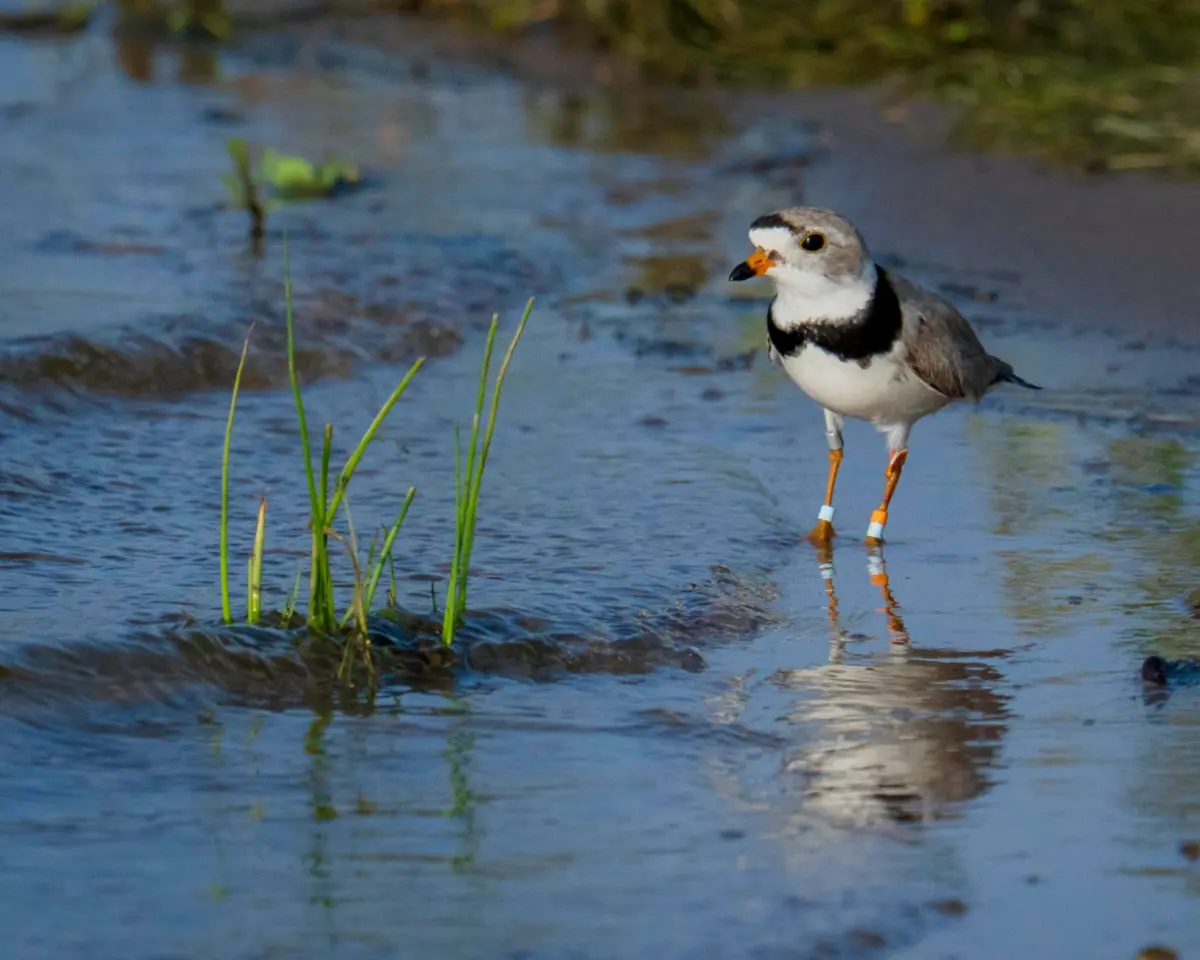

Decades ago, the Great Lakes piping plover (Charadrius melodus) teetered on the absolute precipice of extinction. By 1990, the regional population of this diminutive, sand-colored shorebird had plummeted to a precarious dozen breeding pairs, isolated entirely within the confines of northern Michigan. Habitat destruction, human encroachment, and rising predation pressures had systematically dismantled a species that once frequented shorelines across the entire North American freshwater basin.
Today, that narrative of imminent loss has transformed into one of the most remarkable conservation triumphs in modern Midwestern ecology. During the 2026 breeding season, the Great Lakes piping plover population shattered previous milestones, recording its fifth consecutive year of historic growth. A total of 99 breeding pairs nested across the expansive geography of the Great Lakes basin, successfully producing an unprecedented 184 fledged chicks. This output surpasses the 88 pairs counted in 2025 and establishes the highest population total recorded since the species was formally listed under the federal Endangered Species Act in 1986.
This milestone is not merely a stroke of ecological luck; it is the physical manifestation of sustained persistence by the Great Lakes Piping Plover Conservation Team. Encompassing federal, state, provincial, and Tribal agencies, alongside universities, zoological institutions, non-profit conservation groups, land managers, and an army of dedicated field volunteers, this coalition exemplifies the potential of multi-jurisdictional environmental stewardship. By merging rigorous scientific monitoring, intensive habitat restoration, specialized captive-rearing protocols, and community-based education, these conservationists have steadily steered a dying population back from the brink.
With the long-term federal recovery goal set at 150 breeding pairs sustained for five consecutive years—including at least 50 pairs nesting outside of Michigan—the 2026 season brings the population nearly two-thirds of the way toward full recovery. Yet, as conservationists celebrate this watershed moment, they remain acutely aware of the systemic vulnerabilities that still threaten the species. From severe weather events to shifting predator dynamics, the road ahead requires unyielding vigilance.
Detailed Chronology: The 2026 Breeding Season
The journey toward the 2026 milestone began long before the first migratory plovers arrived on northern beaches in the spring. Field preparations, habitat assessments, and coalition-building laid the groundwork for what would become an extraordinary nesting cycle.
When the birds returned to the basin, monitors and field biologists immediately sprang into action. Across the diverse shorelines of the Great Lakes, field teams documented a total of 101 nests and 84 wild broods. As the spring progressed into early summer, the inherent volatility of coastal ecosystems quickly asserted itself. The season was not without significant challenges and setbacks; field staff documented 17 failed nests, driven primarily by nine incidents of adult predation and four separate nests lost to sudden spring washouts and severe storms.
Despite these environmental pressures, chick survival remained remarkably robust throughout the core of the breeding season. The high survival rates allowed conservationists to translate a record-breaking pair count into an unprecedented number of young birds successfully entering the global population. Sixty-five wild broods ultimately yielded 160 wild fledglings, resulting in an average productivity rate of 1.6 wild fledglings per pair. This figure comfortably surpassed the established annual recovery target of 1.5, improving upon the metrics of the preceding two seasons.
When factoring in the vital contributions of the captive-rearing program—which successfully integrated 24 captive-reared fledglings into the wild population—the final tally reached 184 fledged birds, or an exceptional 1.9 chicks per pair. This dynamic interplay between natural wild brooding and intensive human intervention underscored the resilience of the 2026 season, proving that modern wildlife management can successfully buffer endangered populations against localized environmental failures.
Supporting Context & Metrics: Science, Captive Rearing, and Habitat Restoration
The steady upward trajectory of the Great Lakes piping plover is underpinned by a multi-pronged scientific strategy. No single intervention could have rescued the species from the brink; rather, success relies on an intricate matrix of partial beach closures, protective fencing, specialized nest exclosures, predator management, public outreach, and habitat restoration.
The Critical Role of Captive Rearing
When environmental catastrophes or biological disruptions threaten vulnerable clutches, captive rearing serves as an indispensable safety net. Piping plovers share incubation duties equally between males and females. If one adult falls victim to predation or abandonment, the remaining eggs are left critically exposed. Furthermore, violent spring storms frequently wash out beach nests before the embryos can reach hatching age.
In these high-stakes scenarios, trained field teams collect viable eggs and transport them to the dedicated captive-rearing facility located at the University of Michigan Biological Station in Pellston, Michigan. During the 2026 season, this program accepted 36 eggs. Through meticulous incubation and neonatal care, 26 chicks hatched successfully, leading to the release of 24 captive-reared fledglings back into the wild. This operational success relied on the collaborative network of 13 accredited zoos participating nationwide. Without this intervention, these 24 birds would have perished, cementing captive rearing as an essential pillar of contemporary population management.
These captive-reared juveniles are strategically released at sites already occupied by wild plovers or broods. This placement facilitates their natural behavioral transition to coastal life while simultaneously reinforcing the genetic diversity and numerical strength of the wild population.
+-------------------------------------------------------+
|              2026 BREEDING SEASON METRICS             |
+---------------------------+---------------------------+
| Metric                    | Count / Value             |
+---------------------------+---------------------------+
| Total Nesting Pairs       | 99 pairs                  |
| Total Nests Documented    | 101 nests                 |
| Wild Broods               | 84 broods                 |
| Wild Fledged Chicks       | 160 chicks                |
| Captive-Reared Fledglings | 24 chicks                 |
| Total Fledged (Combined)  | 184 chicks                |
| Wild Productivity Rate    | 1.6 fledglings / pair     |
| Combined Productivity     | 1.9 fledglings / pair     |
| Annual Recovery Target    | 1.5 fledglings / pair     |
+---------------------------+---------------------------+
Decades of Banding and Behavioral Insights
Long-term avian banding forms the backbone of the scientific research governing the recovery effort. In 2026, a specialized banding crew from the Smithsonian Migratory Bird Center banded 43 adult plovers and 204 wild chicks.
These unique, alphanumeric leg bands allow researchers to track individual birds across their complex life cycles—from localized breeding beaches to distant wintering grounds along the Gulf of Mexico and Atlantic coasts. Over more than three decades, the data harvested from this banding program has yielded profound insights into annual survival rates, reproductive success, site and mate fidelity, and the precise nutritional requirements chicks need during their first vulnerable weeks of life. These data-driven insights allow land managers to dynamically adjust protective measures, safeguarding critical feeding zones just as the chicks prepare for their autumn migration.
Engineering Ecosystems: The Return to Cat Island
Habitat restoration remains a foundational requirement for sustainable population recovery. Since 2017, piping plovers have successfully nested across all five Great Lakes, re-establishing a basin-wide presence. While Michigan remains the primary stronghold for the species, achieving the long-term recovery goal requires robust breeding populations distributed outside state lines.
A crowning achievement of the 2026 season occurred on Cat Island in lower Green Bay, Wisconsin. Following extensive, multi-year engineering and ecological restoration work to rebuild portions of the eroded Cat Island chain, piping plovers returned to nest on the island for the first time in 75 years. During the 2026 season, two distinct broods successfully fledged five chicks at the site. This milestone illustrates the transformative potential of strategic habitat restoration in breathing new life into degraded landscapes.
Financial catalysts, particularly funding distributed through the Great Lakes Restoration Initiative (GLRI) since 2010, have supercharged these habitat initiatives. GLRI investments have enabled expansive coastal restoration projects, creating and enhancing the dynamic, open-sand beaches and isolated gravel islands that piping plovers require to nest and forage.
Official Statements and Community Stewardship
While advanced ecological science and government funding provide the structural framework for conservation, the day-to-day survival of the piping plover depends heavily on grassroots participation and community stewardship.
"Local volunteers continue to play a vital role, contributing many hours of their personal time to monitoring, outreach, and education," noted Jillian Farkas, U.S. Fish and Wildlife Service lead biologist for Great Lakes piping plovers. "With 99 pairs nesting in 2026, we remain hopeful that it’s possible for these plovers to reach their recovery goal of 150 breeding pairs."
Across the basin, civilian volunteers commit thousands of hours to monitoring nests, educating curious beachgoers on responsible coastal recreation, and reporting banded birds to researchers. This human element is critical in balancing public access to popular freshwater beaches with the strict environmental boundaries required by endangered wildlife.
The ecological significance of basin-wide collaboration was further underscored by Tom Prestby, Wisconsin Conservation Manager at Audubon Great Lakes, who reflected on the historic return of the species to Green Bay:
"Seeing Piping Plovers return to Cat Island after decades of absence demonstrates what’s possible when habitat restoration and long-term conservation investment come together."
Future Outlook: Challenges and the Path to Full Recovery
Despite the immense cause for celebration provided by five consecutive years of record-breaking growth, conservation scientists emphasize that the journey toward full species recovery is far from complete.
The ultimate long-term recovery metric established for the Great Lakes piping plover requires sustaining at least 150 breeding pairs for five consecutive years, with a mandated minimum of 50 pairs residing outside the boundaries of Michigan. While the current count of 99 pairs brings the population nearly two-thirds of the way toward this numeric objective, continued progress remains vulnerable to external shocks.
Persistent Threats on the Horizon
- Predation: Natural predators—including gulls, raptors, and mammalian mesopredators—pose a constant threat to incubating adults, fragile eggs, and flightless chicks.
- Extreme Weather: Severe, unpredictable storm events driven by changing climatic patterns can cause sudden lake-level spikes and violent wave action that washes out beach nests.
- Vegetation Encroachment: Without natural hydrological cycles and dynamic ice scouring to keep shorelines clear, invasive plants and heavy dune vegetation can rapidly choke out the open-sand nesting habitats plovers require.
- Recreational Pressures: Human disturbance from foot traffic, unleashed domestic pets, and off-road vehicle use on public beaches can disrupt feeding patterns, cause adults to abandon nests, or crush camouflaged chicks.
Addressing these challenges demands an unflagging commitment to the multifaceted strategies that have brought the species this far. Maintaining long-term monitoring networks, refining captive-rearing protocols, actively managing predator populations, and restoring dynamic coastal shorelines will remain non-negotiable priorities for the conservation coalition.
Ultimately, the story of the Great Lakes piping plover stands as an inspiring testament to human determination. It proves that when federal, state, and tribal agencies, scientific institutions, zoos, non-profits, and local volunteers unite under a shared ecological vision, even the most endangered species can be pulled back from the brink. With every restored beach, successfully monitored nest, protected chick, and educated beachgoer, the Great Lakes piping plover inches closer to a secure and enduring future along our freshwater shores.