
The modern pet economy is saturated with products designed to solve the perpetual friction points of domestic animal care. Yet, few categories have remained as stubbornly utilitarian, aesthetically offensive, and environmentally taxing as indoor canine relief systems. For decades, the standard protocol for managing puppy house-training, geriatric canine incontinence, or emergency indoor relief has relied on single-use, disposable plastic-and-paper pee pads. These items, while functional, present a glaring paradox for urban pet owners and design-conscious households: they introduce visual clutter, generate mountains of non-biodegradable waste, and frequently fail to integrate into modern interior aesthetics.
This investigative review examines the paradigm shift toward sustainable, design-forward pet care through the lens of a ubiquitous household challenge: managing dog urinary accidents without transforming living spaces into sterile clinical environments. Centering on the NomoHaus Ellie Pad—alongside competitive alternatives like the Peepeego Non-Slip Dog Pad and Pupiboo Washable Pee Pads—this report explores how reusable, machine-washable textiles are modernizing the pet accessories market. Backed by professional dog trainer insights, consumer psychology, and rigorous home-use testing, we evaluate whether these elevated alternatives can truly replace traditional disposable methods without sacrificing hygiene, odor control, or floor protection.
Detailed Chronology: The Journey from Disposables to Sustainable Design
The Adoption Reality and the Initial Mess
The journey toward alternative indoor pet solutions often begins not with a proactive lifestyle choice, but with the humbling reality of shelter pet adoption. When Mabel—a rescue dog advertised with the classic adoption-site triumvirate of "house-trained," "kid-friendly," and "loves other dogs"—settled into her new home, her definitions proved vastly different from the shelter’s promotional copy. In practice, Mabel’s interpretation of house-training proved flexible, her tolerance for children dubious, and her territorial instincts toward passing street dogs fierce.
More pressingly, while Mabel understood the basic concept of relieving herself outdoors, her physiological makeup introduced compounding complications. Prone to excited bladder leaks and recurring urinary tract infections (UTIs), she routinely left unexpected, dribbled reminders across living room rugs.
For the first few weeks, the daily routine settled into an exhausting cycle of scrubbing, sanitizing, and laundering. Seeking an immediate mitigation strategy, a bulk pack of pharmacy-grade disposable pee pads was introduced to lighten the load. However, for an apartment dweller sensitive to visual clutter and fiercely opposed to single-use consumption, the reality of paper-covered floors quickly proved unsustainable. The aesthetic penalty of plastic-backed disposables—coupled with their environmental footprint—prompted an active search for a durable, aesthetically tolerable alternative.
Discovery of the NomoHaus Ellie Pad
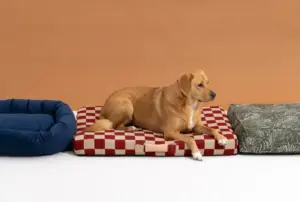
The turning point arrived with the discovery of the NomoHaus Ellie Pad, a reusable, machine-washable potty pad engineered to challenge the clinical stigma of traditional puppy pads. Unlike its disposable predecessors, the Ellie Pad was designed with interior styling in mind, featuring pattern choices like red-and-blue stripes, brown-and-cream polka dots, and a distinctive scalloped border.
Over a six-month testing period, the pad was subjected to daily use, frequent washing, and rigorous durability checks. The transition from disposable sheets to a permanent, textile-based fixture in the living room altered not only the physical cleanup routine but also the psychological friction associated with managing a dog with medical and behavioral quirks.
Supporting Context & Metrics: The Anatomy of Modern Pet Sanitation
Why Dogs Need Indoor Relief Systems
While professional trainers universally agree that the gold standard for canine house-training is exclusive outdoor elimination, the modern urban environment and specific physiological conditions often necessitate indoor infrastructure. Certified professional dog trainer Kaia Wilson emphasizes that indoor pads should be utilized in "any circumstance where it would help better the quality of life for both the human and dog."
The primary user bases for these systems include:
- Puppies: Young dogs with underdeveloped bladders who cannot physically hold urine through the night or during long workdays.
- Senior and Incontinent Dogs: Aging canines suffering from canine cognitive dysfunction, sphincter weakness, or degenerative joint disease that impedes rapid outdoor access.
- Medically Compromised Pets: Dogs battling UTIs, kidney disease, or recovering from surgical procedures.
- Urban and Extreme Weather Dwellers: Pets residing in high-rise apartments where elevator trips take vital minutes, or those facing extreme weather conditions (such as severe winter storms or dangerous heatwaves) that render outdoor walks hazardous.
Material Engineering and Performance Metrics
The engineering behind high-end reusable pads relies on multi-layer textile technology to balance absorption, waterproof integrity, and odor containment. The NomoHaus Ellie Pad utilizes a tripartite structural design:
- Top Layer (Polyester Flannel): Engineered for rapid moisture-wicking, ensuring the surface dries quickly so the dog’s paws do not track liquid across hardwood or carpeted floors.
- Inner Core (Cotton Layer): Provides high-capacity absorption, locking in significant volumes of liquid to handle larger dogs or heavy-flow accidents without pooling.
- Bottom Barrier (Waterproof Plastic Backing with Grippy Beads): Acts as an impermeable shield protecting underlying carpets and hardwood floors from seepage, while tiny silicone or rubberized beads prevent the pad from sliding during vigorous canine stepping.
Odour control remains a critical metric for apartment dwellers. Traditional disposable pads often trap ammonia odors within cheap plastic layers that break down over time. Conversely, the dense cotton and flannel matrix of quality reusable pads locks in moisture molecules effectively, containing typical urine odors for hours until the household notices and initiates a laundering cycle.
Comparative Market Analysis
While the NomoHaus Ellie Pad positions itself as a luxury lifestyle item for pets—often compared by interior enthusiasts to pieces from brands like Anthropologie—the broader market offers competitive alternatives tailored to different aesthetic and budgetary preferences:
- NomoHaus Ellie Pad: Retails at a higher price point, offering designer patterns, scalloped edges, and premium aesthetic integration. Price per unit decreases when purchasing multi-packs for multi-room coverage.
- Peepeego Non-Slip Dog Pad: A functional, minimalist gray option that retails for roughly $10 to $15 less than the Ellie Pad, prioritizing discretion and neutral tones over bold patterns.
- Pupiboo Washable Pee Pads for Dogs: Features rug-inspired patterns aimed at blending into floor decor at a mid-tier price point, serving as an effective bridge between utility and interior design.
Official Statements & Expert Guidance
Professional Training Insights
Navigating the transition from disposable training pads to reusable textiles—or introducing a pad to a dog later in life—requires structured behavioral guidance. Kaia Wilson outlines a step-by-step methodology to ensure successful adaptation:
"To encourage your dog to use a pad, set up several of them in designated areas of your home. Lead your dog to a pad at common bathroom times—such as immediately after waking up, following a meal, or after vigorous play—and use a consistent verbal cue like ‘go potty.’ Once your dog finishes their business, provide immediate and enthusiastic positive reinforcement."
Wilson notes that while some dogs, like Mabel, adapt quickly after a few rounds of positive association, others may require patience and consistency to break old elimination habits on household rugs.
Maintenance and Longevity Protocols
Maintaining hygiene standards with reusable textile pads is straightforward but requires adherence to proper laundering protocols. To prevent bacterial buildup and lingering ammonia smells:
- Pre-Rinse or Shake: Shake out any solid debris or pre-rinse heavy liquid loads in utility sinks if necessary.
- Machine Washing: Wash the pad on a regular or heavy-duty cycle in the washing machine, either alone or alongside other durable dog items (such as blankets or canvas toys).
- Detergent Selection: Use a high-quality laundry detergent capable of breaking down organic proteins and neutralizing odors without leaving heavy chemical residues that might deter the dog from reusing the pad.
- Drying: Air-drying is widely recommended by manufacturers to preserve the integrity of the waterproof backing, though low-heat tumble drying is often supported. Field tests indicate that high-end pads like the Ellie Pad can withstand being washed several times a week for over six months without showing structural degradation, fraying, or loss of absorbency.
Future Outlook: The Evolution of Aesthetic Pet Care
The rise of design-forward pet products reflects a broader cultural shift in how humans view their animal companions. Pets are increasingly treated as permanent family members whose living requirements are integrated into—rather than hidden away from—sophisticated home decor.
As consumer awareness grows regarding the environmental toll of single-use plastics, the market for disposable puppy pads faces mounting scrutiny. Disposables contribute significantly to landfill waste, taking hundreds of years to decompose while offering zero architectural or aesthetic value to the home. The future of indoor canine sanitation clearly points toward circular, washable, and multi-functional textiles.
Furthermore, the utility of these pads extends far beyond bathroom management. Versatile reusable pads are increasingly repurposed by savvy pet owners as:
- Water Bowl Splash Guards: Placed underneath heavy ceramic or stainless-steel bowls to catch chronic drips and slobber from large-breed dogs.
- Travel and Carrier Liners: Slipped into wire crates, hard-sided carriers, or car seats to provide a soft, absorbent, and easily washable barrier during veterinary visits or road trips.
- Portable Cafe Mats: Rolled out to give dogs a clean, comfortable, and familiar resting spot on cold or dirty pavement at outdoor, dog-friendly dining establishments.
Ultimately, living with dogs requires embracing imperfection. Whether dealing with a rescue dog’s unpredictable medical quirks, an aging senior’s declining bladder control, or the unpredictable weather of an urban winter, compromises must be made. The modern generation of reusable, beautifully patterned potty pads proves that practicality and style no longer need to be mutually exclusive—offering a welcome relief for both human nervous systems and household floors.