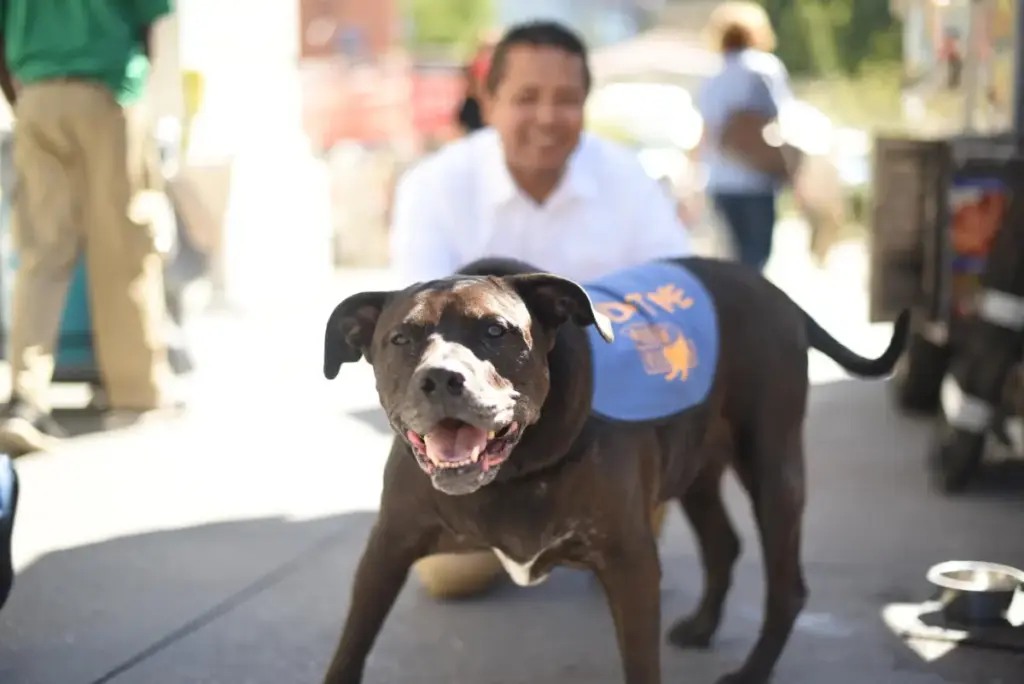

For the vast majority of domestic canines, the expression of joy is an energetic, high-octane affair. Dogs typically signal excitement through rapid tail-wagging, vocalizations, frenetic bursts of energy—often referred to as "zoomies"—or physical bouncing. However, for a unique Doodle named Toast, the manifestation of happiness triggers a radically different physiological response. Rather than escalating into hyper-activity, moments of intense joy and anticipation cause Toast’s nervous system to abruptly shut down, plunging him into an immediate, involuntary state of sleep.
While this behavior might initially appear to be a humorous quirk or a charming idiosyncrasy, it is actually the clinical manifestation of canine narcolepsy, a rare and complex neurological disorder. Whenever Toast experiences an overwhelming surge of positive emotion, his body bypasses the typical stages of winding down and collapses directly into deep sleep. Whether he is eagerly awaiting his dinner, preparing to play in fresh snow, or engaging with his canine companion, Toast is subject to sudden, involuntary bouts of muscle atonia and somnolence.
This investigative report explores the daily life of Toast, details the clinical mechanics of canine narcolepsy, examines the vital role of environmental management and companion animal dynamics, and outlines the veterinary medical consensus on managing this life-altering but non-fatal neurological condition.
Detailed Chronology: A Day in the Life of a Narcoleptic Canine
The daily routine for Toast and his owner, Laura, is defined by a unique rhythm of excitement, sudden collapse, brief rest, and immediate recovery. Unlike typical dogs who maintain sustained periods of wakefulness throughout the day, Toast’s wake-sleep cycle is fragmented by dozens of sudden neurological interruptions. According to Laura, Toast can experience upwards of 100 distinct sleep episodes on any given day, each triggered by ordinary occurrences that elevate his emotional baseline.
[Trigger Event: Excitement/Joy]
       │
       ▼
[Rapid Loss of Muscle Tone (Cataplexy)]
       │
       ▼
[Immediate Deep Sleep (REM Phase)]
       │
       ▼
[External Stimulus / Brief Rest]
       │
       ▼
[Abrupt Awakening & Return to Activity]
The Mealtime Challenge
One of the most consistent triggers for Toast’s narcolepsy is food anticipation. The arrival of his dinner bowl represents a peak emotional event. The sequence of events typically unfolds as follows:
- Anticipation: Toast exhibits standard excitement behaviors as his food is prepared.
- Onset: As the bowl is placed on the floor, the neurological trigger is pulled.
- Collapse: Within seconds, or after taking only a few bites, Toast’s head begins to droop, his limbs lose tension, and he collapses gently over or directly into his food bowl.
- Intervention: To prevent airway obstruction or accidental inhalation of food, Laura must actively monitor his feeding sessions. She frequently has to physically support or reposition his head to ensure he can breathe safely during these brief episodes.
- Recovery: After a short period of unconsciousness, Toast wakes up, immediately regains motor control, and resumes eating as if no interruption had occurred.
Social Dynamics and the Role of Laney
Another major catalyst for Toast’s episodes is social play, particularly with his canine sister, Laney. Toast is deeply attached to Laney, and his desire to interact with her frequently pushes his emotional state into the threshold that triggers cataplexy (the sudden loss of muscle tone).

During play sessions, Toast will wrestle enthusiastically until his neurological limits are reached. He will suddenly collapse, sometimes landing directly on top of Laney. Rather than reacting with confusion or aggression, Laney has developed an extraordinary level of patience and tolerance. She will remain still, allowing Toast to use her as a pillow, chew gently on her ears in a semi-conscious state, or simply sleep pressed against her until his episode passes. Once Toast wakes, the play session resumes seamlessly.
Supporting Context & Metrics: The Clinical Science Behind Canine Narcolepsy
To fully comprehend Toast’s daily experience, it is necessary to examine the underlying science of canine narcolepsy. While relatively rare in the general dog population, the condition is well-documented in veterinary neurology.
Understanding Hypocretin and Neurological Pathways
At the core of narcolepsy is a profound disruption in the brain’s ability to regulate sleep-wake cycles. In healthy animals, a neuropeptide known as hypocretin (also referred to as orexin), produced in the hypothalamus, is responsible for maintaining wakefulness and regulating REM (Rapid Eye Movement) sleep.
In narcoleptic dogs, there is a severe deficiency in hypocretin signaling. This is often caused by a mutation in the hypocretin receptor 2 gene ($HCRTR2$), which was famously mapped in Doberman Pinschers and Labradors by researchers at Stanford University. When hypocretin receptors do not function correctly, the brain cannot sustain stable wakefulness. Consequently, the transition between being awake and entering REM sleep—which normally takes a controlled path through light sleep stages—becomes highly unstable and can occur instantaneously.
Clinical Presentation: Narcolepsy vs. Cataplexy
Canine narcolepsy is frequently accompanied by cataplexy, and the two terms, while distinct, describe overlapping phenomena in affected dogs:
| Feature | Narcolepsy | Cataplexy |
|---|---|---|
| Primary Character | Sudden, uncontrollable onset of deep sleep. | Sudden, transient loss of voluntary muscle tone. |
| Neurological State | Loss of consciousness; entry into REM sleep. | Consciousness is often maintained initially, though it can transition to sleep. |
| Triggers | Monotonous environments, boredom, or post-excitement. | Positive emotions (play, food, greeting owners, running). |
| Physical Signs | Slack muscles, rapid eye movement, whimpering/twitching. | Buckling of hind limbs, drooping jaw, complete collapse to the floor. |
| Reversibility | Highly reversible via external sensory stimuli (sound, touch). | Resolves quickly once the emotional stimulus subsides or is interrupted. |
For Toast, the act of collapsing during moments of joy is a classic presentation of cataplexy triggering a subsequent narcoleptic sleep state. During these episodes, his muscles go entirely slack, and observers can often witness rapid eye movements (REM), indicating that he has entered a deep dream state within seconds of collapsing.

Official Statements: Caregiver and Veterinary Perspectives
The management of Toast’s condition relies heavily on the synergy between dedicated home care and established veterinary guidelines.
The Owner’s Perspective: Laura’s Daily Stewardship
In interviews with animal advocacy media outlet The Dodo, Laura detailed the reality of managing a dog with such a high frequency of episodes. Rather than viewing the condition as a debilitating tragedy, she has reframed it as an operational routine that requires vigilance and minor environmental adjustments.
"Toast has to be wherever Laney is. He is obsessed with her. [Laney] allows him to lie on her and chew on her ears while she rests or occupies herself with a toy… He can fall asleep at least 100 times on an average day."
— Laura, Toast’s Owner (via The Dodo)
Laura’s observations underscore a critical aspect of managing canine narcolepsy: the necessity of a calm, supportive home environment. Because Toast’s episodes are so frequent, the presence of a calm, stable companion dog like Laney serves as an invaluable natural support system, helping Toast navigate his transitions between high excitement and sudden rest without panic or injury.
Veterinary Consensus: VCA Animal Hospitals’ Guidance
According to clinical resources provided by VCA Animal Hospitals, understanding the boundaries of the disease is vital for owners of narcoleptic pets. Veterinary neurologists emphasize that while the sudden collapses can look alarming—resembling cardiovascular syncope (fainting) or epileptic seizures—the condition itself is fundamentally benign.

Key clinical takeaways from VCA Animal Hospitals include:
- Non-Life-Threatening Nature: Narcolepsy does not cause pain, physical suffering, or long-term cognitive decline. It is a chronic, manageable state rather than a progressive, degenerative disease.
- Stimulus Reversibility: A defining diagnostic feature of a narcoleptic episode is that the dog can typically be woken up immediately by a physical touch, a loud sound, or a direct verbal command. This is in stark contrast to seizures, where an animal cannot be easily snapped back to consciousness.
- Injury Prevention: The primary clinical risk associated with narcolepsy is secondary physical injury. A dog that collapses suddenly can strike its head on hard edges, fall down stairs, or drown if an episode occurs near open water.
Future Outlook: Prognosis and Quality of Life Management
The long-term outlook for dogs diagnosed with canine narcolepsy is overwhelmingly positive, provided their caregivers implement appropriate lifestyle modifications. Because the condition is chronic and currently has no cure, management focuses on safety, behavioral adaptation, and, in severe cases, medical intervention.
                  [Patient: Toast the Doodle]
                               │
            ┌──────────────────┴──────────────────┐
            ▼                                     ▼
   [Behavioral Management]               [Medical Intervention]
   - Remove sharp objects                - Tricyclic Antidepressants (Imipramine)
   - Block stairs & pools                - Selective Serotonin Reuptake Inhibitors
   - Supervise feeding times             - Reserved for severe, disruptive cases
   - Foster stable companion relationships
Environmental and Behavioral Modifications
For the majority of narcoleptic dogs, lifestyle management is sufficient to ensure a high quality of life. Key strategies include:
- Securing the Environment: Removing sharp-edged furniture from play areas, blocking access to staircases with baby gates, and strictly supervising any outdoor activity near swimming pools or bodies of water.
- Supervised Feedings: As demonstrated by Laura, monitoring meals ensures that the dog does not experience airway obstruction if they collapse directly into their food or water bowl.
- Social Stabilization: Maintaining a consistent, calm routine and pairing the affected dog with a patient companion animal can dramatically reduce the stress of sudden waking transitions.
Pharmacological Options
In cases where the frequency or severity of cataplectic attacks severely impacts a dog’s ability to function or results in self-injury, veterinary neurologists may prescribe medical therapy.
- Tricyclic Antidepressants (TCAs): Drugs such as imipramine are commonly used in veterinary medicine to manage cataplexy. These medications work by blocking the reuptake of neurotransmitters like serotonin and norepinephrine, which helps suppress REM sleep mechanisms and reduces the frequency of sudden muscle collapse.
- Selective Serotonin Reuptake Inhibitors (SSRIs): Medications like fluoxetine may also be utilized to help regulate emotional thresholds and minimize the dramatic spikes in excitement that trigger episodes.
For Toast, his current management plan relies successfully on behavioral adaptations, environmental safety, and the patient companionship of Laney. Despite his fragmented days, Toast’s quality of life remains exceptionally high. He continues to experience a life filled with play, affection, and outdoor adventures—simply with a few more rest stops along the way.