
Date: October 22, 2026
Originally featured in the Alley Cat Action® 2026 Fall Newsletter. Read the full newsletter edition here.
Executive Overview
On October 16, 2026, animal advocates, municipalities, and compassionate citizens across the globe united to observe Global Cat Day and National Feral Cat Day. Spearheaded by Alley Cat Allies, the annual observance serves as a powerful reminder that compassion for felines transcends geographic, cultural, and political borders. Under the defining rallying call—Cats Are Community™—this year’s celebrations emphasized a fundamental truth: community cats live everywhere human beings do, weaving themselves into the daily fabric of neighborhoods worldwide.
From bustling urban centers to arid desert landscapes, community cats share our spaces. Yet, their presence often sparks complex policy debates regarding population management, animal welfare, and municipal responsibility. While outdated, lethal control methods continue to plague certain jurisdictions, a progressive shift is taking hold globally. Forward-thinking cities are increasingly adopting humane, science-backed strategies—most notably, Trap-Neuter-Return (TNR)—to manage, protect, and coexist with outdoor cat populations.
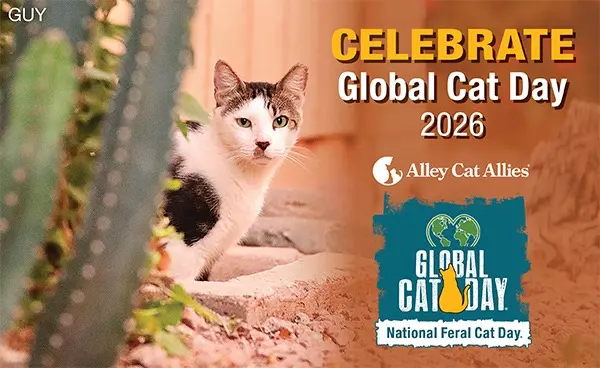
A shining example of this paradigm shift can be found in Tempe, Arizona, where extreme environmental conditions test the limits of survival. There, a resilient tabby cat named Guy navigates scorching temperatures exceeding 100 degrees Fahrenheit, supported by a progressive, government-funded TNR initiative. Tempe’s municipal approach demonstrates how local governments can successfully partner with dedicated advocates and caregivers to create sustainable, humane environments for community cats. This report explores the broader implications of Global Cat Day 2026, examines the mechanics of successful community-based programs, details the lived reality of cats like Guy, and outlines the future outlook for feline advocacy on the global stage.
Detailed Chronology: The Evolution and Impact of Global Cat Day
To understand the significance of the 2026 celebrations, it is necessary to examine the historical trajectory that brought community cat advocacy into the global mainstream.
From Grassroots Push to International Movement
National Feral Cat Day was originally established decades ago by Alley Cat Allies to shine a light on the plight of outdoor cats and challenge the prevailing shelter norms that routinely resulted in the unnecessary euthanasia of healthy feral felines. Over the years, as grassroots participation exploded across North America, the initiative expanded its reach. Recognizing that unowned outdoor cats face similar challenges—and share the same vital need for protection—regardless of national boundaries, the event evolved into Global Cat Day.
The 2026 Campaign Rollout
The lead-up to October 16, 2026, involved months of coordination by animal advocacy networks, shelter directors, and field volunteers.
- Early October 2026: Digital toolkits, educational webinars, and promotional assets were distributed to municipal shelters and grassroots organizations worldwide. The core messaging centered on the Cats Are Community™ philosophy, challenging communities to view outdoor cats not as nuisances, but as integrated members of the local ecosystem deserving of humane treatment.
- October 16, 2026: The official day of action featured virtual symposiums, community-led TNR clinics, and the release of specialized video content highlighting international rescue efforts. Advocates shared stories from diverse corners of the earth—showcasing how communities from European alleyways to American desert cities protect their feline populations.
- Post-Event Reflection (Late October 2026): Organizations like Alley Cat Allies utilized the momentum of the event to publish autumn newsletters and impact reports, reinforcing the message that animal care is a year-round commitment requiring institutional backing and public education.
Supporting Context & Metrics: The Science of Survival and Municipal Success
The success of modern feline advocacy rests on empirical evidence. To appreciate why programs like Tempe’s government-funded TNR initiative are expanding, one must analyze the data, environmental factors, and ecological dynamics governing outdoor cat populations.
Adapting to Extremes: The Case of Tempe, Arizona
In the Sonoran Desert city of Tempe, environmental survival is a daily test. For much of the year, ambient temperatures regularly soar well above 100 degrees Fahrenheit. Yet, community cats have established a niche within this demanding urban ecosystem.
Take Guy, a resilient tabby cat whose daily routine mirrors that of countless desert-adapted felines. During the blistering peak daylight hours, Guy ducks out of view, finding shelter behind sun-baked cacti, dense architectural overhangs, and shaded desert bushes. As the searing sun sets and temperatures drop to manageable levels, Guy and his feline peers venture out to hunt, patrol, and explore their territory.
While nature has equipped these animals with behavioral adaptations for survival, their long-term well-being in urban and desert environments is heavily dependent on human infrastructure and municipal policy. Without intervention, outdoor cat populations can experience overpopulation, resource competition, and vulnerability to disease.
The Mechanics and Metrics of Trap-Neuter-Return (TNR)
Trap-Neuter-Return is universally recognized by animal behaviorists, veterinarians, and welfare organizations as the only humane and effective method for managing community cat populations.
- The Process: Cats are humanely trapped, transported to a veterinary clinic where they are spayed or neutered, vaccinated against rabies and other diseases, and ear-tipped (a universal sign of a sterilized community cat) before being returned to their outdoor homes.
- Population Stabilization: Unlike traditional catch-and-kill policies—which create a "vacuum effect" where new cats move in to take advantage of available food sources—TNR stabilizes the population. Sterilized cats no longer reproduce, leading to a natural, gradual decline in colony numbers over time.
- Behavioral Benefits: TNR eliminates the disruptive and noisy behaviors associated with unspayed and unneutered cats, such as yowling, fighting, and territorial spraying. This drastically improves the relationship between community cats and their human neighbors.
Municipalities that invest in government-funded TNR programs report dramatic reductions in shelter intake numbers and euthanasia rates. Tempe’s program serves as a benchmark for municipal integration, proving that government entities can successfully allocate resources to support volunteer caregivers and nonprofit advocacy groups.
Official Statements and Expert Perspectives
The philosophy underpinning Global Cat Day 2026 emphasizes collaborative stewardship. Leaders within the animal advocacy sector have continuously stressed that protecting community cats is a shared community responsibility.
"Global Cat Day and National Feral Cat Day are all about the love for cats that crosses all borders," notes leadership at Alley Cat Allies. "Under the rallying call that Cats Are Community™, we celebrate and support community commitment to cats the world over. And community cats really do live everywhere in the world we do!"
Veterinary professionals and municipal leaders echo these sentiments, noting that public policy must evolve past outdated eradication models. Modern animal control is increasingly focused on public health education, low-cost spay/neuter access, and legislative protections for outdoor caregivers. By empowering citizens to care for local colonies, cities foster a culture of empathy that extends far beyond animal welfare, strengthening community cohesion as a whole.
Future Outlook: The Path Forward for Global Feline Advocacy
As the celebrations of October 2026 conclude, the focus of the animal advocacy community shifts toward sustaining momentum and expanding legislative protections in the years ahead.
Key Priorities for the Future:
- Expansion of Municipal TNR Funding: Advocates are actively lobbying local governments worldwide to transition away from archaic animal control contracts and reallocate budgets toward proactive, non-lethal population management programs like those seen in Tempe.
- Strengthening Legal Protections: Ensuring that caregivers who feed and monitor outdoor cat colonies are protected from legal harassment or unwarranted animal cruelty citations remains a legislative priority.
- Public Education and Outreach: Campaigns utilizing digital platforms—such as GlobalCatDay.org—will continue to educate the public on the realities of outdoor cat life, dismantling myths about feral cats and promoting coexistence.
- Climate Resilience Planning: As global temperatures rise, programs supporting desert and urban outdoor cats must increasingly incorporate hydration stations, shaded shelters, and emergency response plans for extreme weather events.
The success of Global Cat Day 2026 proves that the global community is increasingly ready to embrace a compassionate, scientifically grounded approach to animal welfare. Whether observing a tabby cat resting behind a desert cactus in Arizona or participating in a neighborhood TNR clinic across the globe, humanity is slowly but surely learning to live in harmony with the cats that share our world.