
Executive Overview
It is a familiar scene across grocery store aisles, airport terminals, restaurant dining rooms, and city sidewalks: a calm, exceptionally focused canine companion moving in seamless synchronization with its handler. To the casual observer, these dogs are naturally appealing. Their poised demeanor, immaculate grooming, and steady obedience often spark an immediate, well-meaning impulse to offer a pat, a kind word, or a designation of being a "good boy" or "good girl."
However, beneath the outward appearance of a friendly animal lies a high-stakes working partnership. Service dogs are not pets enjoying a public outing; they are highly trained, specialized medical and mobility equipment on four legs. When well-intentioned members of the public attempt to pet, whistle at, or otherwise distract a working service dog, they introduce a hazardous variable into a delicate operational system.
Understanding and practicing proper service dog etiquette is not merely a matter of social politeness—it is a critical public safety imperative. A single moment of distraction can disrupt a dog’s focus, potentially compromising navigation for a visually impaired individual, delaying a vital medical alert for someone with a hidden disability, or threatening the overall physical independence of the handler. This comprehensive report examines the legal definitions, psychological impacts, proper public behaviors, and institutional responsibilities surrounding service dog interactions, establishing a clear roadmap for how society can better support these life-changing partnerships.
Detailed Chronology & Evolution of the Working Dog Partnership
The integration of working dogs into human society has undergone a profound structural and legal evolution over the past century. To understand why modern service dog etiquette is so rigid, one must examine how these remarkable animals transitioned from utilitarian working roles to recognized civil rights partners.
The Pre-20th Century Foundations
Historically, dogs have assisted humans in hunting, guarding, and herding for millennia. The intentional training of dogs to assist individuals with specific sensory disabilities, however, is largely a product of the 20th century. While sporadic, individualized accounts of canine assistance existed earlier—such as rudimentary guide work documented in Europe during the Middle Ages—systematic training programs did not emerge until the aftermath of World War I.
The Post-WWI Milestone (1916–1930s)
The modern service dog movement traces its roots directly to the battlefields of Europe. In Germany, Dr. Gerhard Stalling pioneered the systematic training of German Shepherds to guide blinded veterans returning from World War I. This initiative demonstrated that dogs could be conditioned to perform complex, life-saving navigational tasks in chaotic public environments.
In the United States, this movement gained national visibility in the late 1920s when a wealthy American dog breeder named Dorothy Harrison Eustis traveled to Switzerland, witnessed the work of German guide dog schools, and published an enthusiastic feature in The Saturday Evening Post (1927). Shortly thereafter, Eustis established "The Seeing Eye" in Morristown, New Jersey, institutionalizing the formal breeding, training, and matching of guide dogs with visually impaired individuals.
The Expansion Beyond Visual Impairment (1970s–1980s)
For decades, public perception of assistance dogs was synonymous exclusively with guide dogs for the blind. However, by the late 20th century, animal trainers and medical professionals realized that specialized canine intelligence could be harnessed to assist individuals with a broader spectrum of disabilities.
During the 1970s and 1980s, organizations began training dogs to pull wheelchairs, retrieve dropped items, open doors, and provide stability for individuals with physical mobility impairments. This era marked the birth of the "service dog" as an inclusive category, moving far beyond the traditional "guide dog" paradigm.
The Americans with Disabilities Act (1990)
The legal landscape shifted dramatically with the passage of the landmark Americans with Disabilities Act (ADA) of 1990. The ADA provided federal civil rights protections to individuals with disabilities, explicitly guaranteeing them the right to be accompanied by their service animals in all areas where the general public is permitted.
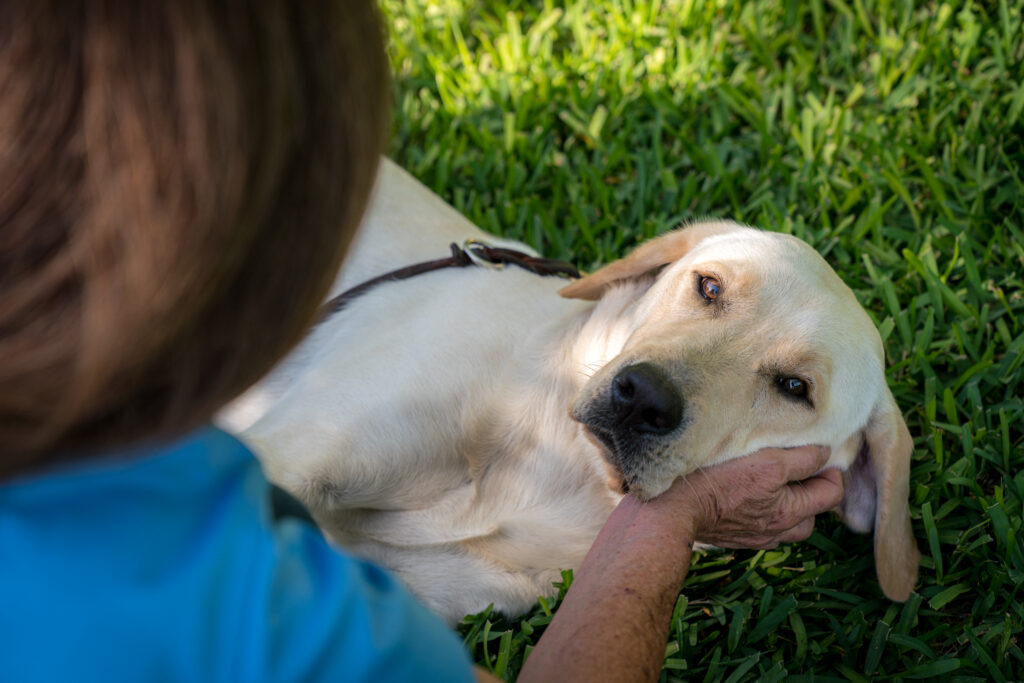
Crucially, the ADA established a legal definition that separated genuine service dogs—which are individually trained to do work or perform tasks for the benefit of an individual with a disability—from pets, emotional support animals (ESAs), and therapy animals. This distinction laid the groundwork for modern public expectations regarding the behavior, control, and protection of working animals.
Supporting Context & Metrics: The Anatomy of a Working Partnership
To appreciate why public interference carries such heavy consequences, it is vital to examine what a service dog actually is, how they are categorized, and the sheer scope of tasks they perform.
Defining the Service Dog Under Federal Law
Under Title II and Title III of the ADA, a service dog is defined strictly as a dog that has been individually trained to do work or perform tasks for the use and benefit of an individual with a disability, including a physical, sensory, psychiatric, intellectual, or other mental disability.
The tasks performed by the dog must be directly related to the person’s disability. Examples include:
- Guiding individuals who are blind or have low vision.
- Pulling a wheelchair and providing balance support.
- Alerting a person with diabetes to dangerous fluctuations in blood sugar levels.
- Reminding a person with mental health conditions to take prescribed medications.
- Calming a person with Post-Traumatic Stress Disorder (PTSD) during an anxiety attack.
- Retrieving dropped items, opening doors, or turning on lights for individuals with limited dexterity.
The Crucial Distinction: Service Dogs vs. Pets and ESAs
A common point of public confusion involves the blurred lines between service dogs, emotional support animals (ESAs), and household pets.

- Pets provide companionship and entertainment but possess no specialized training for public access.
- Emotional Support Animals provide therapeutic comfort through their presence alone, but under federal law, they do not possess public access rights because they are not trained to perform specific, active tasks related to a disability.
- Service Dogs are elite working professionals. They undergo rigorous, multi-year training regimens that cost tens of thousands of dollars and require thousands of hours of socialization, obedience conditioning, and task-specific instruction.
Metrics of Distraction: The Hidden Cost of "Just a Pet"
Behavioral studies on working canines indicate that even a minor interruption can derail a dog’s concentration for a significant period. When a stranger makes eye contact, whistles, tosses a piece of food, or reaches out to touch a working dog:
- Chemical and Behavioral Shifts: The dog’s brain shifts instantaneously from a hyper-focused "working state" to a distracted "engagement state."
- Missed Cues: For medical alert dogs, a split-second distraction can mean missing the subtle scent or behavioral changes that signal an oncoming seizure or hypoglycemic event.
- Compromised Navigation: For guide dogs, a momentary head turn to acknowledge a stranger can cause the dog to veer off course, leading a visually impaired handler directly into physical obstacles such as construction barriers, pillars, or traffic.
Official Guidelines: Rules of Engagement for the Public
Navigating public spaces alongside a service dog team requires adherence to established protocols. Organizations specializing in service dog training emphasize a simple, uniform code of conduct.
+-------------------------------------------------------------------------+
|                    THE SERVICE DOG PUBLIC CODE                          |
+-------------------------------------------------------------------------+
|  1. TALK TO THE PERSON, NOT THE DOG                                     |
|     Direct your communication entirely to the human handler.            |
+-------------------------------------------------------------------------+
|  2. ALWAYS ASK BEFORE INTERACTING                                       |
|     Permission must be explicitly granted before any approach.          |
+-------------------------------------------------------------------------+
|  3. NEVER OFFER FOOD OR TREATS                                          |
|     Unsolicited food ruins training protocols and poses health risks.   |
+-------------------------------------------------------------------------+
|  4. RESPECT THE BOUNDARIES OF A WORKING TEAM                            |
|     Never make kissing noises, wave items, or stare aggressively.       |
+-------------------------------------------------------------------------+
Common Public Missteps to Avoid
Even individuals with the best of intentions frequently commit operational errors when encountering a service dog team. These errors include:
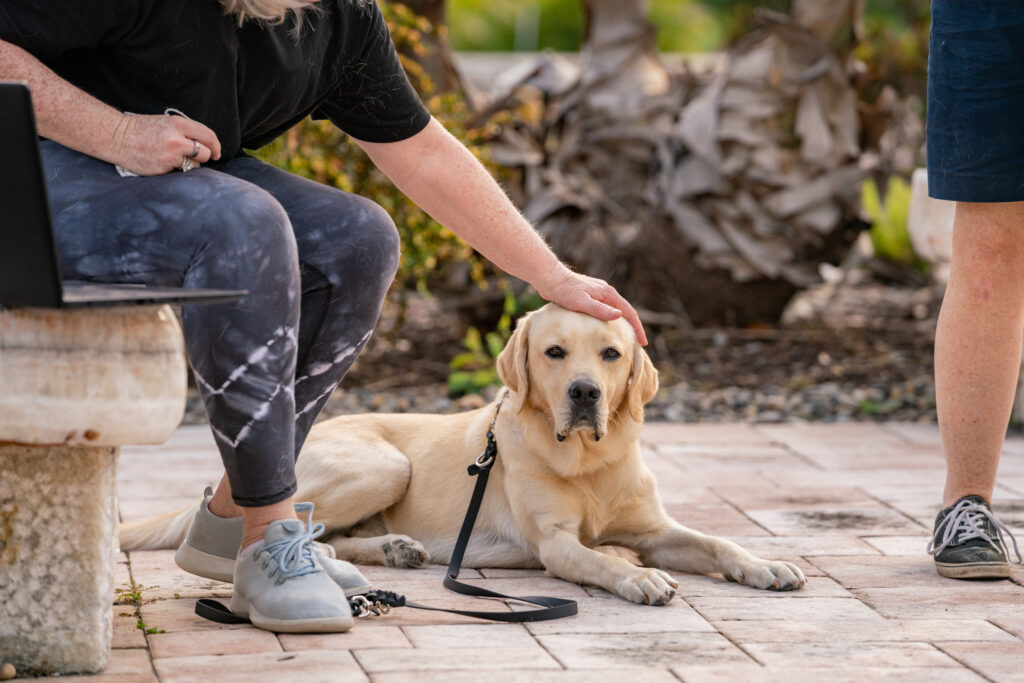
- Making High-Pitched Noises: Whistling, cooing, or making verbal overtures designed to attract the dog’s attention.
- Allowing Pet Dogs to Approach: Bringing an untrained pet dog close to a service dog can provoke defensive reactions, trigger behavioral regression, or startle the working animal.
- Taking Photographs Without Consent: Photographing or video-recording a service dog and its handler without permission invades personal privacy and introduces distracting flashes or movements.
- Arguing with the Handler: If a handler politely declines a request to pet their dog, accepting the answer immediately without questioning, prying into their medical history, or showing offense is paramount.
Business and Corporate Etiquette
Employees in retail, hospitality, food service, and healthcare environments carry a distinct responsibility. Under the ADA, business staff are legally permitted to ask only two questions if the disability is not obvious:
- Is the dog a service animal required because of a disability?
- What work or task has the dog been trained to perform?
Staff must never request medical documentation, require a special ID card, or ask the handler to demonstrate the dog’s tasks. Furthermore, employees should treat service dog handlers just like any other valued patron—welcoming them warmly while deliberately ignoring the working animal to maintain an undisturbed workspace.
Future Outlook: Education, Advocacy, and the Path Forward
As public awareness campaigns expand, the societal landscape surrounding service dogs is steadily improving. However, significant challenges remain, particularly regarding the proliferation of fake service animal gear sold online and the general public’s lack of foundational education regarding invisible disabilities.
The Rise of Public Education Initiatives
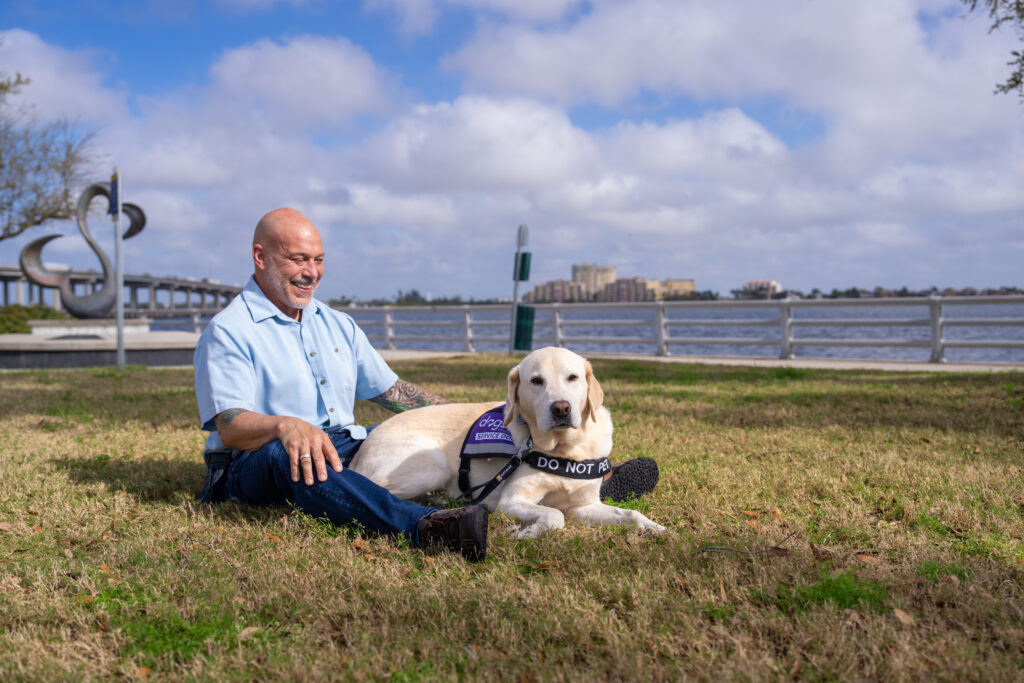
Organizations such as Dogs Inc and other leading training institutions are ramping up community outreach efforts. Educational modules are increasingly being introduced into primary school curricula, teaching children early in life that working dogs must be admired from a distance. By fostering a culture of respect during childhood, future generations will naturally view service dogs as essential professional partners rather than public petting opportunities.
Combating Misinformation and "Fake" Service Dogs
The commercial market has unfortunately enabled individuals to purchase fraudulent vests, harnesses, and certification papers online for untrained pets. This phenomenon creates hostility and skepticism among business owners and the general public, inadvertently harming legitimate handlers. Future legislative efforts are expected to tighten enforcement against fraudulent representations of service animals while safeguarding the privacy and civil rights of genuine disabled handlers.
Conclusion: A Legacy of Independence
Service dogs represent the pinnacle of the human-canine bond, transforming raw animal intelligence and loyalty into tangible, life-saving independence. They enable individuals with profound physical and psychological challenges to navigate the world with dignity, safety, and unwavering confidence.
The next time you encounter a service dog in a bustling airport, a quiet library, or a crowded grocery store, remember the rigorous years of training, the deep bond of trust, and the vital daily tasks resting upon those four paws. By exercising restraint, respecting boundaries, and always asking first—or better yet, choosing not to interrupt at all—you play an active role in supporting the safety and success of the remarkable individuals who rely on them every single day.