
Executive Overview
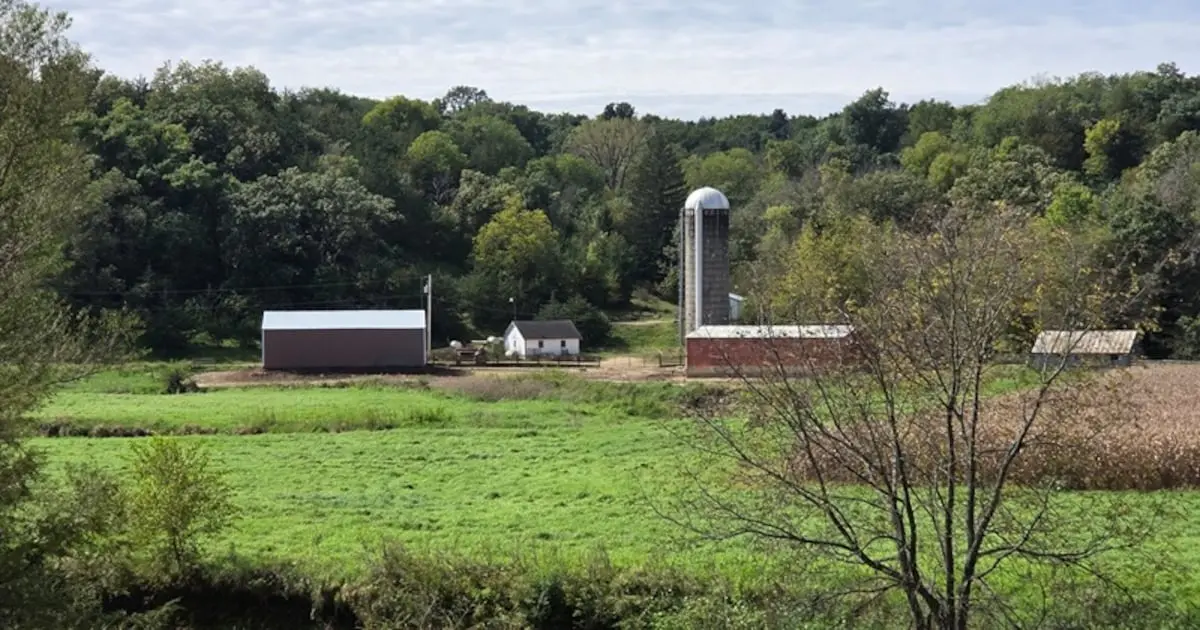
Across the picturesque, glacier-skipped valleys of the Midwest’s Driftless Region, autumn serves a dual purpose. For multi-generational agricultural operations, the season is defined not merely by the physical labor of the harvest, but by a high-stakes economic pivot toward agritourism. As crisp October air settles over the rolling hills of northwestern Illinois, families migrate from urban centers to rural enclaves, seeking an authentic taste of rural life. Among the region’s premier destinations is Dittmar Farms & Orchard, located in Elizabeth, Illinois, just sixteen miles southeast of historic Galena.
Spanning 287 acres of fertile, undulating terrain, Dittmar Farms represents a masterclass in modern agricultural endurance. Originally cultivated by German immigrants who arrived in the United States in 1854, the land has remained under the stewardship of the same family for over a century and a half. Today, the operation is carefully managed through a corporate Limited Liability Company (LLC) structure—a legal strategy engineered to prevent generational parcel fragmentation, facilitate capital investment, and ensure enduring operational revenues.
Yet, what distinguishes Dittmar Farms in an increasingly saturated agritourism market is its delicate balancing act. While many contemporary pumpkin patches have evolved into commercialized, high-octane amusement parks, co-owner and local history educator Mike Dittmar remains fiercely committed to preserving an unvarnished, rustic experience. Visitors can still navigate pumpkin fields on traditional hayrides winding past local creeks, pluck apples directly from the orchard boughs, and sample classic artisanal treats ranging from fresh apple cider donuts to small-batch popcorn.
Beneath this pastoral facade, however, lies an aggressive modernization strategy. Dittmar Farms is quietly transforming itself into a hybrid operation—seamlessly blending 1950s-era mechanical nostalgia with cutting-edge agtech, sustainable soil conservation practices, and an expanding regional retail footprint. As the farm scales its specialty yellow and mushroom popcorn production to meet surging midwestern demand, it offers an instructive case study in how heritage farms can thrive in the twenty-first century without losing their soul.
Detailed Chronology: From 1854 Roots to Modern Agritourism
To understand the operational philosophy of Dittmar Farms, one must trace its journey through the milestones of American agricultural history. The foundational chapter of the farm was written in 1854, when the original Dittmar family emigrated from Germany, seeking economic opportunity and fertile soil in the burgeoning American Midwest. Settling in the rugged topography of Jo Daviess County—part of the unique Driftless Area spared by the flattening ice sheets of the last glacial period—they established a diversified family homestead.
For generations, the farm operated as a conventional multi-use enterprise, producing staple grains and livestock typical of the era. However, by the late twentieth century, the economic realities of American farming shifted dramatically. The idyllic agrarian lifestyle depicted by mid-century family lore—where every urban relative had an uncle or grandfather farming nearby—was steadily fading from cultural memory.
Recognizing this cultural shift, the family faced a critical juncture. Rather than selling off parcels to larger industrial conglomerates, the descendants of the original pioneers formalized their collective ownership in the late twentieth and early twenty-first centuries. By establishing an LLC, the family consolidated ownership rights, streamlined decision-making, and opened formal channels for shared investment. This legal innovation allowed the family to capitalize on an emerging cultural phenomenon: the suburban yearning for authentic farm experiences.
As the agritourism initiative gained momentum, the farm diversified its revenue streams. Autumn visits transitioned from a mere byproduct of seasonal labor to a core economic driver. The development of pick-your-own pumpkin patches, apple orchards, and scenic hayrides transformed the working farm into an educational and recreational destination.
Parallel to its tourism expansion, the farm doubled down on specialty crop production, most notably corn destined for popping. What began as a localized novelty gradually evolved into a sophisticated wholesale and retail enterprise. Today, Dittmar-grown popcorn is a fixture across fifteen retail locations throughout the Midwest, anchoring a diversified business model that safely insulates the farm from the catastrophic commodity price swings plaguing traditional corn and soybean producers.
Supporting Context & Metrics: Operations, Conservation, and Technology
Operating 287 acres in the Driftless Region presents a distinct set of geographical and environmental challenges. Unlike the flat, uniform prairies of central Illinois, the topography of Jo Daviess County features steep slopes, complex drainage patterns, and fragile topsoils susceptible to water erosion. Consequently, Dittmar Farms operates under a sophisticated matrix of traditional methods, modern technological integrations, and aggressive conservation initiatives.
Land Management and Conservation Mechanics
Currently, a portion of the farm’s 287 acres is actively managed by the family, while other sections are rented out to neighboring farmers. However, the land retained directly under family stewardship is subject to rigorous environmental controls. Among the most notable is the implementation of 200-foot-wide filter strips flanking the farm’s creeks.
These buffer zones are integrated into the federal Conservation Reserve Program (CRP), an initiative administered by the Farm Service Agency that financially compensates agricultural producers for voluntarily retiring environmentally sensitive land from intensive crop production. According to Mike Dittmar, the financial compensation provided by the CRP program frequently surpasses the net revenue that could be generated by farming these erosion-prone slopes. More importantly, these expansive filter strips dramatically reduce agricultural runoff, trap sediment, and protect local aquatic ecosystems from chemical and nutrient loading.
Furthermore, the farm relies heavily on cover cropping—planting secondary crops such as rye or clover during the off-season to anchor topsoil, suppress weed germination, and enhance microbial soil health.
The Technology Paradox: From 1950s Shellers to Drones
The operational heartbeat of Dittmar Farms is defined by an intriguing paradox. While the enterprise aggressively adopts advanced technologies where efficiency demands it, it deliberately preserves vintage mechanical systems for specialty processing.
- Digital Planning and Agtech: To prepare for the annual onslaught of autumn agritourism, the farm utilizes advanced software mapping to plan, design, and execute its complex corn mazes. Drone technology is periodically deployed to monitor crop health, assess canopy density, and survey topography across difficult-to-reach acreage.
- Precision Harvest Transition: Historically, the farm’s specialty popcorn has been harvested using a conventional corn picker, followed by processing through a vintage 1950s John Deere corn sheller. The shelled corn is subsequently shipped to an external distributor who manages approximately 95% of the farm’s popcorn logistics and packaging. However, due to expanding commercial demand, the farm is actively transitioning toward a modern combine harvester. This operational upgrade will necessitate rigorous, real-time monitoring of grain moisture levels to prevent kernel damage during mechanical threshing.
- Specialty Crop Focus: The farm specializes in two primary corn varieties: standard yellow popcorn and the sought-after "mushroom" popcorn. Unlike traditional butterfly popcorn—which shatters into irregular, winged flakes upon expansion—mushroom popcorn pops into a robust, spherical ball shape. This structural characteristic makes it exceptionally durable and favored by commercial caramel-corn and kettle-corn manufacturers.
Agronomic Pressures: The War on Superweeds
Despite its successes, Dittmar Farms remains on the front lines of an escalating biological conflict: the proliferation of herbicide-resistant weeds. Mike Dittmar points to Roundup-resistant water hemp as an increasingly aggressive threat to regional agronomy.
Water hemp’s ability to proliferate rapidly, combined with its resistance to standard glyphosate applications, poses severe challenges for row-crop farmers. Compounding the issue for diversified operations like Dittmar’s is the extreme sensitivity of specialty crops. Commonly utilized broadleaf herbicides such as dicamba and 2,4-D—frequently deployed in conventional row-crop production—are notoriously volatile and can easily drift or volatilize, causing catastrophic mortality in adjacent pumpkin patches and orchards.
Faced with these chemical dead-ends, Dittmar advocates for a return to historical agronomic fundamentals. As chemical efficacy wanes against resistant biotypes, the farm anticipates a necessary industry-wide regression toward mechanical cultivation and integrated pest management strategies until biotechnology or alternative herbicides offer viable solutions.
Official Statements and Perspectives
The philosophy driving Dittmar Farms is articulated most clearly through the observations of co-owner and educator Mike Dittmar, whose dual perspective as a commercial grower and a local history teacher provides unique insight into the evolving relationship between modern society and agriculture.
Reflecting on the cultural transformation of the American farm over the past half-century, Dittmar emphasizes the psychological necessity of agritourism:
"In the 1960s and ’70s, everyone had a grandpa or uncle that still had a farm, and they would go out there in the fall and visit it. And now they don’t. We don’t have those, and so that’s why you have pumpkin patches… Some of them become so commercialized, they’re almost amusement parks. We try to keep the farm feel."
This commitment to authenticity is not merely sentimental; it is a calculated brand identity designed to offer urban and suburban visitors a genuine respite from commercialized leisure. Families traversing the property are invited to experience agriculture as a living, breathing ecosystem rather than a sanitized theatrical set.
Regarding the farm’s integration of operational tools—balancing the archaic with the advanced—Dittmar captures the paradoxical nature of contemporary farming with dry pragmatism:
"Technology is the greatest thing ever. We adapt all of it, but we use 1950 technology to do our popcorn — go figure."
This pragmatic adaptability extends to the farm’s environmental stewardship. Discussing the financial and ecological calculus of the Conservation Reserve Program, Dittmar notes that government-backed conservation is often more economically viable than marginal crop production on difficult terrain:
"The money received from the filter strip program offsets the cost of maintaining them, and they can pay more than farming the land."
Finally, addressing the looming agronomic crisis posed by herbicide-resistant weeds, Dittmar issues a sobering reality check to the agricultural community regarding the limits of chemical dependency:
Water hemp “is already a problem. It’s getting worse and worse every year. The solution is farmers are going to have to go back to cultivation until they can figure out a way to kill this super weed.”
Future Outlook: Scaling Heritage for the Regional Market
As Dittmar Farms & Orchard looks toward the horizon, its trajectory is defined by deliberate, calculated expansion balanced against a fierce protection of its foundational heritage. The immediate future centers on scaling the popcorn enterprise to capture a larger share of the burgeoning Midwest snack food market.
Currently, Dittmar-branded popcorn is distributed across fifteen distinct retail locations throughout the region, bolstered by strategic B2B partnerships with local culinary landmarks such as the Great American Popcorn Company in Galena. To sustain this momentum, the farm plans to incrementally convert portions of its land—currently rented out to external grain farmers—into dedicated acreage specifically for yellow and mushroom popcorn production.
This expansion will require capital investment in harvesting and post-harvest handling infrastructure, specifically managing the transition from vintage shellers to high-capacity combines while safeguarding the structural integrity of the popcorn kernels. Simultaneously, the farm will continue to refine its agritourism offerings, leveraging software-driven corn mazes and drone-assisted field management to optimize visitor flow and crop yields without sacrificing the rustic ambiance that draws thousands of families to Jo Daviess County every autumn.
Ultimately, Dittmar Farms & Orchard serves as a compelling blueprint for the twenty-first-century family farm. By honoring its 1854 German-pioneer roots through legal structural protection, embracing the economic lifeblood of agritourism, deploying pragmatic agtech, and committing to rigorous land stewardship, the operation demonstrates that historical survival in American agriculture requires both deep roots and a forward-looking vision.