
Executive Overview
When members of the general public encounter a service dog navigating a grocery store aisle, sitting quietly in a restaurant booth, or waiting near a departure gate at an airport, a familiar behavioral script often plays out. People notice the animal’s exceptional composure, its unwavering focus, and its friendly demeanor. It feels entirely natural to want to offer a gentle scratch behind the ears, whisper a term of endearment, or call out that the dog is a "good boy."
However, beneath this widespread impulse lies a fundamental misunderstanding of the working relationship between a service dog and its handler. While the underlying intentions are almost universally kind, the most appropriate and supportive way to interact with a working service dog is, simply put, not to interact at all.
Understanding proper service dog etiquette is not merely a matter of social politeness; it is a critical practice that directly safeguards the physical safety, mental focus, and professional integrity of both the canine and the human they assist. Across increasingly crowded public landscapes—ranging from retail hubs and corporate offices to bustling transit networks—cultivating basic awareness regarding service dog protocols ensures that individuals with disabilities can navigate their communities with dignity, security, and uninterrupted independence.
Detailed Chronology: The Evolution of Service Animal Access and Public Awareness
The landscape of service animal utilization and public recognition has undergone a profound transformation over the past several decades, evolving from an informal, highly localized accommodation model into a strictly defined legal framework protected by federal statute.
The Pre-Legislation Era (Mid-20th Century)
Historically, the use of specialized working dogs was largely confined to guiding individuals with visual impairments. During this period, guide dogs were rare sights in everyday commercial establishments. Public interactions were governed almost entirely by ad-hoc social norms, and handlers frequently faced physical barriers entering restaurants, hotels, and public transportation networks. The concept of formal "etiquette" was virtually nonexistent because the general public rarely encountered working teams outside of specialized training facilities or urban metropolitan centers.
The Landmark Passage of the Americans with Disabilities Act (1990)
A monumental shift occurred with the enactment of the Americans with Disabilities Act (ADA) of 1990. For the first time, federal law codified the rights of individuals with disabilities to be accompanied by service animals in all areas where the general public is permitted to go.
As legal protections expanded, the classification of service animals broadened beyond guide dogs for the blind. Over the subsequent decades, the scope of tasks performed by these animals multiplied exponentially. Dogs began training to mitigate mobility impairments, alert individuals to impending medical crises such as epileptic seizures or severe hypoglycemic episodes, retrieve dropped objects, stabilize veterans experiencing post-traumatic stress disorder (PTSD), and assist those with hearing impairments.
The Contemporary Era: Rising Public Visibility and the Modern Etiquette Crisis
Today, service dogs are far more visible in mainstream society. This increased integration, while a triumph for accessibility and civil rights, has inadvertently introduced a new set of challenges.
With more service dogs in the public eye, the frequency of well-meaning public interference has skyrocketed. The proliferation of digital media, viral pet content, and a general cultural fondness for dogs has created an environment where the boundary between a household pet and a highly specialized medical assistant is frequently blurred. Organizations such as Dogs Inc and other elite training institutions now find themselves dedicating substantial educational resources to public awareness campaigns, emphasizing that as service dog integration grows, public restraint must evolve in tandem.
Supporting Context & Metrics: The Mechanics of a Working Partnership
To fully appreciate why public restraint is essential, one must examine the rigorous preparation, neurological focus, and operational demands placed upon a modern service dog.
Defining a Service Dog under the ADA
Under Title III of the Americans with Disabilities Act, a service dog is strictly defined as a dog that has been individually trained to do work or perform tasks for the benefit of an individual with a disability, including a physical, sensory, intellectual, or mental disability.
Crucially, the law distinguishes service animals from emotional support animals (ESAs). While emotional support animals provide therapeutic comfort simply through their presence, service dogs are specifically conditioned to execute active, goal-oriented tasks that directly mitigate the functional limitations of their handler’s disability.
The Anatomy of a Distraction
Service dogs undergo years of intensive socialization and task-specific training before graduating to work alongside a human partner. They learn to suppress natural canine instincts—such as investigating novel scents, reacting to sudden noises, or seeking out attention from strangers—to maintain an unbroken chain of concentration.
When an uninitiated member of the public attempts to pet, whistle at, talk to, or feed a working service dog, they introduce a powerful external stimulus that fractures this concentration. Even a momentary lapse in focus can have cascading consequences:
- Interrupted Task Execution: If a dog is tracking subtle physiological changes to provide a medical alert, a sudden distraction can delay or entirely obscure the warning signal.
- Compromised Navigation: Guide dogs for the visual impaired calculate clearance, overhead obstacles, and pedestrian traffic continuously. A diverted dog may misjudge a hazard, placing the handler directly in harm’s way.
- Behavioral Regression: Allowing unauthorized interactions can inadvertently reward the dog for breaking its "heel" or "stay" commands, slowly eroding months or years of professional conditioning.
Common Public Missteps
Public engagement with service dog teams frequently involves well-intentioned but disruptive behaviors, including:
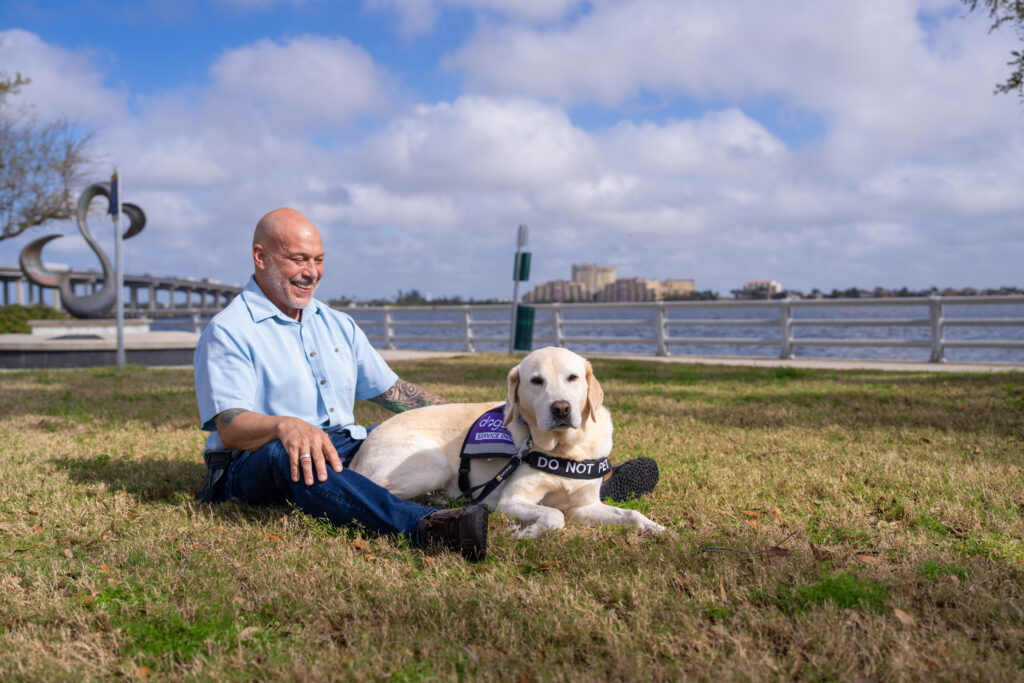
- Direct Verbal Engagement: Making kissing noises, baby talk, or calling the dog’s name.
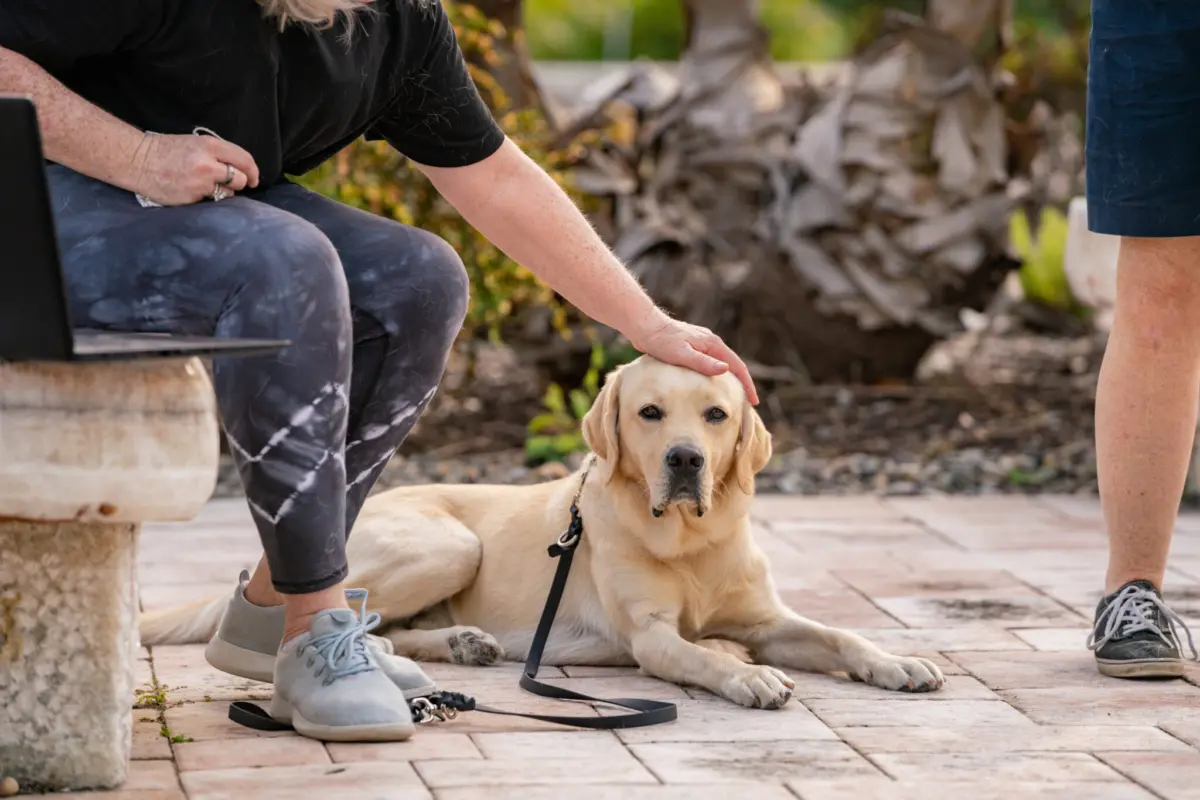
- Physical Contact: Reaching out to pet, stroke, or pat the animal without prior authorization.
- Offering Sustained Eye Contact or Gestures: Waving hands in front of the dog’s face or crouching down to entice it.
- Soliciting Interaction via Food: Attempting to feed the dog table scraps, treats, or offering water from a personal container.
- Ignoring the Handler: Directing questions or comments exclusively to the animal rather than the human partner.
Official Statements and Industry Insights
Leading advocacy groups, assistance dog providers, and accessibility experts emphasize that public education is the cornerstone of maintaining safe and inclusive communities.
"A service dog is not merely a companion animal enjoying a day out; it is an indispensable medical lifeline and working partner," notes an accessibility coordinator from Dogs Inc. "When people interfere with a working dog, they are directly interfering with a person’s independence, mobility, and medical safety. Our primary message to the public is simple: always look, admire from a distance, but let them work."
Legal and disability rights advocates frequently echo this sentiment, stressing that the autonomy of the handler must always take precedence over public curiosity.
"The golden rule of service dog etiquette is ‘talk to the person, not the dog,’ and ‘always ask before touching,’" explains a national disability policy advisor. "Too often, handlers find themselves forced to act as educators in the middle of grocery stores or transit stations when all they want to do is go about their daily lives. Respecting the boundary of the working team is an act of fundamental inclusion."
Childhood educators and institutional leaders also highlight the vital role of early intervention in shaping public behavior. Teaching children to recognize the visual cues of a working dog—such as specialized vests, harnesses, and focused body language—instills a lifelong respect for accessibility rights and personal boundaries.

Future Outlook: Cultivating a Culture of Conscious Accessibility
As society continues to evolve toward greater inclusivity, the intersection of public spaces and service animal utilization will demand proactive education, thoughtful urban planning, and heightened community awareness.
Technological and Educational Horizons
Looking ahead, the future of service dog integration relies heavily on multi-channel educational campaigns deployed across schools, corporate onboarding programs, and retail service training modules. By embedding service dog etiquette into standard customer service training, businesses can ensure that employees not only welcome service dog teams legally but also actively support them socially by discouraging patron interference.
Furthermore, advancements in public signage within airports, transit hubs, and entertainment venues are expected to incorporate clear, universally understood graphics regarding working animal protocols. These visual reminders will serve to gently curb impulsive public reactions before they manifest as disruptive interactions.
The Collective Responsibility of Communities
Ultimately, the success of the service dog partnership depends upon the collective consciousness of the communities in which they operate. When patrons in a restaurant ignore a resting service dog, when children are taught to admire a guide dog from a respectful distance, and when business owners treat service teams with ordinary, unostentatious hospitality, the entire ecosystem thrives.
By reframing our reaction to these extraordinary animals—shifting from an urge to pet to a mindset of respectful observation—we honor the vital labor they perform. In doing so, we help preserve the safety, autonomy, and confidence of the individuals who rely on them every single day, ensuring that our public spaces remain genuinely accessible to all.