
Published originally as a featured story in the Alley Cat Allies® 2026 Fall Newsletter
Date: October 22, 2026
Executive Overview
Extreme weather events have increasingly become the frontline of animal welfare advocacy. During the summer of 2026, a compounding series of meteorological extremes—highlighted by record-shattering heatwaves across the United States mainland and a debilitating, infrastructure-strained drought in Puerto Rico—created a life-or-threatening landscape for outdoor and community cats. While community cats possess natural resilience and an innate understanding of their outdoor territories, the severity of modern climate anomalies outpaces traditional survival mechanisms.
Enter the Alley Cat Allies Rapid Response Team. Mobilized during some of the hottest weeks of the year, the organization spearheaded a multi-state and international intervention. From Richmond, Virginia, and Jackson, Florida, to the drought-plagued neighborhoods of San Juan, Puerto Rico, the campaign delivered critical resources: thousands of meals of hydrating wet food, emergency bottled water, and logistical support for overwhelmed local caregivers.
This comprehensive report details the scope of those summer interventions, the logistical hurdles overcome by animal advocates, the vital role of hydration in feline heat safety, and the broader implications of climate stress on community cat management infrastructure.
Detailed Chronology of the Crisis and Response
A Fiery Fourth of July: Scorching Temperatures Disrupt Independence Day
As communities across the United States gathered to celebrate the Fourth of July in 2026, meteorological conditions turned hazardous. Record-breaking heat indexes gripped multiple states, turning traditional summer festivities into a public health and animal welfare emergency.
While community cats are remarkably adept at navigating urban and rural landscapes to find pockets of shade, subterranean breezes, and cooler microclimates, the sheer intensity of the 2026 heat domes pushed feline adaptability to its absolute limits. Prolonged exposure to extreme heat leads rapidly to dehydration, heat exhaustion, heatstroke, and organ failure—conditions that can prove fatal to outdoor animals within hours if water sources evaporate or dry up.
Recognizing the acute danger, the Alley Cat Allies Rapid Response Team deployed immediately. Rather than waiting for local shelters to report localized crises, the team preemptively targeted regions with historically vulnerable outdoor cat populations.

Ground Zero: Richmond and Jackson
Two primary flashpoints for the Fourth of July deployment were Richmond, Virginia, and Jackson, Florida. In both cities, high humidity compounded soaring ambient temperatures, creating a stifling environment.
The Rapid Response Team coordinated directly with local community cat caretakers and animal food banks. The operational strategy focused on a powerful, often overlooked tool in feline summer care: wet cat food.
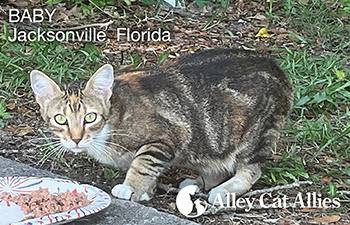
Beyond providing essential caloric intake, high-moisture wet food is one of the most effective dietary methods to supplement a cat’s hydration levels. Because many outdoor cats do not actively seek out standing water sources when stressed or displaced by heat, incorporating moisture directly into their primary food source ensures critical fluid intake. Across Richmond and Jackson, the team stocked local food banks with thousands of wet food meals, ensuring that caregivers like those tending to young cats—such as Baby, a rescued kitten who became a symbol of the summer relief effort—had immediate access to life-saving supplies.
Shifting South: The Water Crisis in Puerto Rico
While mainland cities grappled with heat indexes, Puerto Rico faced an even more catastrophic convergence of extreme weather and systemic infrastructure failure.
Longstanding water shortages—worsened by a historic, prolonged drought and years of deferred maintenance on the island’s water distribution grids—peaked during the summer months. As municipal water supplies dwindled, local governments instituted strict water rationing programs. Residents across the island were forced to severely limit their daily water consumption for basic human needs, drinking, and sanitation.
In this high-pressure environment, the welfare of community cats faced an impossible dilemma. For compassionate caregivers in San Juan and surrounding municipalities, cutting back on water usage meant making agonizing choices between human survival and the survival of the colonies they managed. Leaving dependent cats without water was never an option, yet the physical and financial burden of securing water became nearly insurmountable.
Supporting Context & Metrics: The Science of Feline Heat Stress and Drought
To fully understand the magnitude of the Alley Cat Allies 2026 intervention, one must examine the physiological vulnerabilities of cats during extreme weather events, as well as the unique socioeconomic factors governing community cat care in disaster zones.
Feline Physiology in High Temperatures
Unlike dogs, which regulate body temperature primarily through panting, cats possess a more limited thermoregulatory toolkit. They cool themselves primarily through minor sweating via their paw pads and through grooming, which allows saliva to evaporate from their fur. However, in high-humidity environments—such as those recorded in Jackson, Florida, and San Juan, Puerto Rico—evaporative cooling becomes profoundly inefficient.
- Dehydration Thresholds: A cat can suffer permanent renal damage or death if it loses as little as 10% to 15% of its body weight in water. During heatwaves, evaporation rates accelerate rapidly.
- The Wet Food Advantage: Standard dry kibble contains approximately 10% moisture, whereas wet canned food typically contains 70% to 80% moisture. Feeding wet food during a heatwave dramatically reduces the volume of freestanding water a cat must actively locate and consume to maintain homeostasis.
The Scale of Community Cat Colonies
Caring for outdoor cats is rarely a casual hobby; it is a systematic, nightly commitment undertaken by dedicated grassroots volunteers. Colony sizes can range from a handful of animals to dozens, requiring meticulous daily organization.
During the Puerto Rican water crisis, the logistical reality of colony management was laid bare. Caregivers were not merely feeding a few pets; they were sustaining large, complex social structures of feral and semi-feral animals spread across urban and semi-rural sectors. Without external intervention from organizations like Alley Cat Allies, these localized safety nets risked total collapse under the weight of municipal rationing.
Official Statements and Voices from the Frontlines
The human element of animal rescue is defined by the resilience, sacrifice, and deep compassion of community caregivers. The summer 2026 crisis brought these frontline heroes into sharp focus.
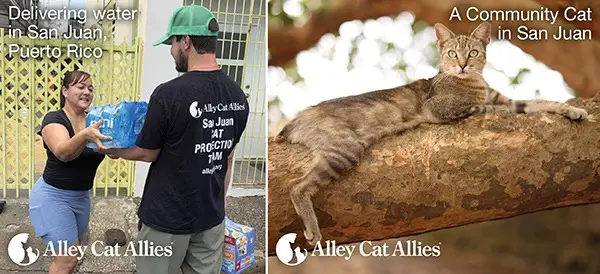
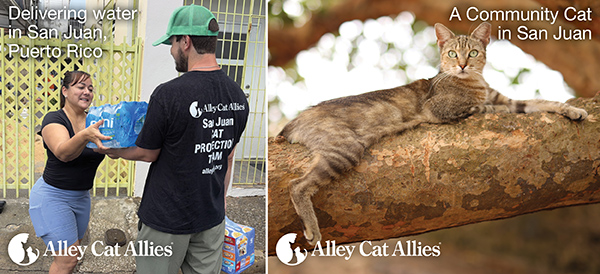
Estrella Zerpa, a dedicated community cat caregiver in San Juan, Puerto Rico, captured the immense emotional and physical toll of the drought, as well as the immediate relief brought by the intervention. Speaking to the Alley Cat Allies response crew after receiving a vital delivery of emergency bottled water and wet food, Zerpa described the daunting reality of her nightly routine:
"It means a lot, because the colonies are big. There are about 120 cats that we feed every night," Zerpa explained, gesturing toward the cases of water loaded into her vehicle. "I have to fill up about 10 gallons of water daily just for the cats."
For caregivers like Zerpa, the threat of the drought was not abstract; it was an exhausting daily race against time and scarcity. Before the intervention, rationing water for her own household meant difficult compromises at the feeding stations. With the infusion of emergency supplies provided by Alley Cat Allies, the immediate crisis was averted. Zerpa and numerous fellow caregivers were able to resume their rigorous, lifesaving routines without the crushing strain of resource scarcity.
Spokespersons for Alley Cat Allies emphasized that rapid deployments during climate emergencies are foundational to modern animal advocacy. When municipal systems break down—whether through grid failures on the mainland or infrastructural neglect on the island—grassroots networks and national rapid response units serve as the ultimate line of defense for vulnerable animals who have no voice in policy or disaster planning.
Future Outlook: Preparing for a Warming World
The events of the summer of 2026 underscore a sobering reality for animal welfare organizations worldwide: extreme weather events are no longer anomalies; they are recurring, intensifying operational realities.
As global climate patterns continue to shift, heatwaves, droughts, and sudden meteorological disruptions will pose escalating threats to outdoor animal populations. Protecting community cats requires a proactive, forward-thinking paradigm that merges emergency response readiness with long-term infrastructure support.
Key Takeaways for Future Disaster Preparedness:
- Pre-Positioned Supply Chains: Animal advocacy organizations must establish regional hubs stocked with shelf-stable wet food, hydration supplements, and portable watering stations well in advance of peak summer months.
- Empowering Local Caregivers: The most effective disaster response leverages existing grassroots networks. Supporting caregivers financially, logistically, and materially ensures that aid reaches the animals immediately, bypassing bureaucratic bottlenecks.
- Infrastructure Resilience: In regions prone to chronic water insecurity—such as Puerto Rico—long-term solutions must incorporate sustainable, decentralized watering stations for community cat colonies that do not draw exclusively from strained municipal drinking water supplies.
- Public Education Campaigns: Educating the general public on how to assist outdoor cats during heatwaves—such as leaving out shaded water bowls and checking outdoor shelters—amplifies the reach of organized rescue teams.
The Alley Cat Allies 2026 Fall Newsletter story stands as a testament to what can be achieved when rapid action meets deep-seated compassion. From the humid streets of Richmond and Jackson to the resilient neighborhoods of San Juan, the summer of 2026 proved that no community cat is forgotten, and no caregiver stands alone when crisis strikes.