
Executive Overview
Across the globe, an invisible yet resilient population of felines shares our urban landscapes, alleyways, parks, and suburban neighborhoods. These community cats—often referred to as feral or stray cats—are uniquely adapted to outdoor survival, yet their long-term well-being relies heavily on the compassion, infrastructure, and progressive policies of human societies.
On October 16, 2026, advocates, municipal leaders, and animal welfare organizations worldwide observed Global Cat Day and National Feral Cat Day. Spearheaded by organizations such as Alley Cat Allies, the annual observance serves as a focal point for a unifying message: Cats Are Community. This rallying cry challenges outdated, lethal methods of animal control and champions a paradigm shift toward humane, science-based stewardship.
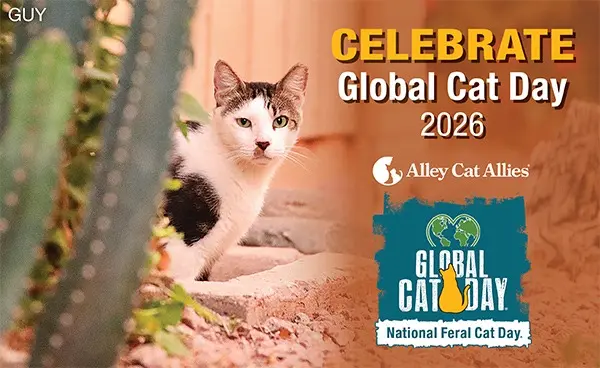
At the core of this year’s global observance is a fundamental recognition that community cats inhabit every corner of the human world, thriving in environments as diverse as the arctic tundra and the blistering Sonoran Desert. To highlight this universal presence, welfare advocates spotlighted the story of Guy, a resilient tabby cat navigating the extreme climate of Tempe, Arizona. Guy’s daily life—dodging triple-digit heat behind desert flora before emerging into the cool evening desert air—encapsulates the adaptability of community cats. More importantly, Guy’s story underscores the vital safety net provided by forward-thinking municipalities. Tempe’s government-funded Trap-Neuter-Return (TNR) program stands as a gold standard in modern municipal animal services, protecting thousands of cats through institutionalized compassion and community-driven caregiving.
This report examines the broader landscape of community cat advocacy, drawing upon insights from the Alley Cat Action® 2026 Fall Newsletter. It explores the administrative mechanics of successful TNR programs, the cultural evolution of global feline protection, and the ongoing policy battles required to secure a sustainable future for outdoor cats everywhere.
Detailed Chronology: The Evolution of Global Cat Day and Modern TNR
To understand the current state of community cat advocacy, one must examine the historical trajectory that transformed animal control from a punitive, lethal enterprise into a progressive, community-centered science.
The Origins of National Feral Cat Day
For decades, municipal animal control agencies relied almost exclusively on catch-and-kill policies to manage outdoor cat populations. Operating under the flawed assumption that removing cats would permanently reduce nuisance complaints, shelters euthanized millions of healthy, unsocialized felines annually.
In the late 20th century, grassroots advocates began challenging this status quo, introducing the concept of Trap-Neuter-Return (TNR). TNR involves humanely trapping community cats, sterilizing them, vaccinating them against rabies, ear-tipping them for easy identification, and returning them to their outdoor homes. To amplify this movement and educate the public, Alley Cat Allies established National Feral Cat Day on October 16, 2001.
Expansion to Global Cat Day
Over the next two decades, the movement outgrew its national boundaries. Recognizing that outdoor cats face identical challenges whether they live in rural Ohio, downtown London, or the sprawling deserts of the American Southwest, advocates expanded the observance into Global Cat Day.
The evolution of the day marked a strategic shift in international advocacy. It connected local caregivers in disparate parts of the world, fostering a global network of knowledge-sharing. By 2026, Global Cat Day had become the premier international platform for highlighting innovative urban wildlife management policies, sharing veterinary advancements in high-volume spay/neuter surgeries, and celebrating grassroots volunteerism.
The 2026 Observance and the Story of Guy
The 2026 campaign placed a special emphasis on regional adaptability, demonstrating how community cats integrate into vastly different ecosystems. The featured narrative of Guy, a tabby cat living in Tempe, Arizona, brought this global philosophy down to a local, relatable level.
In Tempe, where summer temperatures frequently soar past 100 degrees Fahrenheit, outdoor feline survival requires behavioral adaptation and environmental resourcefulness. As documented in the Alley Cat Action® 2026 Fall Newsletter, cats like Guy navigate extreme heat by seeking refuge beneath desert bushes, in shaded alcoves, and around irrigated landscaping during peak daylight hours. They conserve their energy during the blistering afternoon and emerge as the sun sets to forage, socialize, and patrol their territory.
However, survival in such an unforgiving climate requires more than instinct; it requires municipal partnership. Tempe’s integration of a government-funded TNR program represents a critical milestone in the chronology of Southwest animal welfare. By bridging the gap between municipal resources and the tireless efforts of local colony caregivers, Tempe has transformed its approach to community cats, creating a model that other desert municipalities are actively studying and replicating.
Supporting Context & Metrics: The Science and Economics of Trap-Neuter-Return
The widespread adoption of TNR is not merely a sentimental choice; it is backed by decades of demographic data, ecological studies, and economic analyses. Understanding the mechanics of community cat populations clarifies why traditional removal methods fail and why TNR succeeds.
The Vacuum Effect
For decades, animal control agencies attempted to solve cat overpopulation through "catch and remove" protocols. Ecologists and animal behaviorists refer to the inevitable consequence of this strategy as the Vacuum Effect.
When cats are removed from a specific territory—whether through relocation or euthanasia—a biological void is created. Unsterilized cats from surrounding areas quickly move into the vacant territory to take advantage of available food sources and shelter. These newcomers rapidly reproduce, driving population numbers right back to, or even exceeding, their original levels. Furthermore, newly arrived cats often exhibit nuisance behaviors, such as loud mating vocalizations and territorial spraying, that established, sterilized colonies do not display.
How TNR Stabilizes Populations
Trap-Neuter-Return permanently halts the reproductive cycle without triggering the Vacuum Effect. Sterilized cats continue to occupy their territory, utilizing resources while preventing new, unsterilized felines from moving in. Over time, natural attrition gradually and humanely reduces the size of the colony.
- Public Health Benefits: Every cat that goes through a TNR program receives a rabies vaccination, creating a vital biological buffer that protects both the feline population and human residents from zoonotic disease.
- Behavioral Improvements: Spaying and neutering drastically reduce or eliminate undesirable feline behaviors associated with mating, including roaming, fighting, and alleyway noise.
- Economic Efficiency: Government-funded TNR programs cost significantly less per capita than traditional shelter intake, holding, and euthanasia cycles, freeing up municipal tax dollars for other public services.
Comparative Program Metrics
To evaluate the efficacy of municipal interventions, animal welfare researchers track several key performance indicators (KPIs). The table below illustrates the contrasting outcomes between traditional removal policies and modern TNR frameworks based on municipal case studies from 2020 through 2026:
| Metric | Traditional Catch-and-Remove | Government-Funded TNR (e.g., Tempe Model) |
|---|---|---|
| Colony Population Trend | Fluctuates wildly due to the Vacuum Effect | Steady, long-term population decline via attrition |
| Shelter Euthanasia Rates | High; un-socialized cats face routine euthanasia | Low; community cats are protected and returned |
| Nuisance Complaints | Persistent; new cats constantly replace removed ones | Decreases; sterilized cats are quieter and less mobile |
| Public Expenditure | High recurrent costs for impoundment and sheltering | Cost-effective initial surgery investment with lasting stability |
| Rabies & Disease Control | Inconsistent coverage among transient populations | High immunization saturation across stable colonies |
Official Statements and Perspectives from the Front Lines
The success of programs like Tempe’s government-backed TNR initiative relies on active collaboration between municipal leaders, veterinary professionals, and dedicated community volunteers.
The Voice of Advocacy: Alley Cat Allies
In statements released for Global Cat Day 2026, leadership at Alley Cat Allies emphasized that community commitment is the ultimate determinant of animal welfare success.
"Global Cat Day and National Feral Cat Day are powerful reminders that our responsibility to animals extends beyond our household pets," stated a representative from Alley Cat Allies. "Under the banner of Cats Are Community, we celebrate the millions of people worldwide who look out for outdoor cats. Whether weathering sub-zero winters or blazing desert heat like Tempe’s tabby cat Guy, community cats belong to our neighborhoods. When city governments step up to fund Trap-Neuter-Return, they are not just managing an animal population—they are honoring the compassion of their residents."
Municipal and Caregiver Collaboration
In regions like Tempe, Arizona, the day-to-day execution of TNR relies heavily on "colony caregivers"—unsung heroes who feed, monitor, and trap cats for veterinary processing. Municipal agencies that embrace these volunteers find that public compliance and community morale improve dramatically.
According to municipal animal services reports from partnering jurisdictions, government-funded TNR transforms adversarial relationships between residents and local government into collaborative partnerships. Rather than calling animal control to demand the removal of outdoor cats—an action that historically led to lethal outcomes—residents now coordinate with local TNR groups to ensure neighborhood felines are vaccinated, sterilized, and returned to their outdoor homes.
Future Outlook: The Next Frontier in Feline Advocacy
As the animal welfare community looks beyond 2026, the horizon for community cat advocacy is shaped by technological innovation, legislative reform, and cultural shifts toward compassionate coexistence.
Legislative and Policy Advancements
The primary goal for animal advocates in the coming decade is the universal codification of TNR as the standard operating procedure for municipal animal services. While cities like Tempe have successfully integrated government funding into their programs, many jurisdictions still cling to outdated ordinances that penalize caregivers or restrict the return of sterilized cats.
Advocacy groups are actively pushing for "Shelter-Neuter-Return" (SNR) and TNR ordinances at state and federal levels, ensuring that municipal shelters are legally mandated to sterilize and return healthy community cats rather than euthanizing them. Furthermore, legal protections for colony caregivers are expanding, shielding individuals who provide food and medical care from unwarranted municipal citations.
Technological Innovations in Cat Management
Technology is also transforming how welfare organizations monitor and manage community cat populations:
- Microchipping and Ear-Notching Enhancements: Improved visual identification methods and localized GPS tracking for managed colonies allow researchers to gather precise demographic data on population longevity and health.
- Telemedicine and Mobile Surgery Units: Advances in mobile veterinary clinics enable high-volume spay/neuter operations to reach remote rural areas and extreme climates, ensuring that even the most isolated cat populations have access to preventative care.
- Digital Engagement Platforms: Campaigns utilizing digital hubs—such as GlobalCatDay.org—allow advocates from Tokyo to Toronto to share best practices, educational toolkits, and fundraising strategies instantaneously.
Cultural Shift: Felines as Valued Community Members
Ultimately, the future of community cat advocacy rests on a cultural transformation. The core philosophy of Cats Are Community challenges human societies to view outdoor cats not as pests or interlopers, but as an integral, accepted part of the urban and rural ecosystem.
As climate extremes test the adaptability of both human and animal populations—exemplified by cats like Guy thriving in the Arizona heat—our institutions must rise to meet them with intelligence, empathy, and systemic support. Through the continued expansion of government-funded Trap-Neuter-Return, public education, and global solidarity, the vision of a world where every community cat is protected, respected, and valued draws ever closer to reality.