
Executive Overview
On August 3, 2000, an ordinary day at a local pet grooming salon transformed into a high-stakes medical emergency that underscores the critical importance of emergency preparedness in the pet care industry. When Max, a dog with a history of being dismissed by other grooming establishments due to behavioral challenges, suddenly collapsed during a routine grooming session, immediate and decisive action was required. Thanks to certified Pet Tech training, salon leadership executed textbook cardiopulmonary resuscitation (CPR), successfully reviving the animal before emergency veterinary transport.
This incident offers a powerful case study in the value of hands-on pet safety education. In an industry where groomers, handlers, and kennel operators routinely work with animals experiencing high stress, underlying medical conditions, or behavioral unpredictability, medical emergencies can strike without warning. The miraculous outcome of the Max incident demonstrates that theoretical knowledge alone is insufficient; practical, muscle-memory-building CPR and first-aid training can mean the difference between life and death.
Authored by Thom Somes—co-founder of Pet Tech and widely known as "The Pet Safety Guy"—this report explores the mechanics of the rescue, the vital debrief with the attending veterinarian, the reactions of the pet parents, the technological validation provided by newly installed security cameras, and the broader implications for safety standards across the professional pet care landscape.
Detailed Chronology: The Incident and Immediate Response
To fully understand how a routine grooming appointment escalated into a life-or-death crisis, one must examine the timeline of events that unfolded inside the salon.
The Escalation
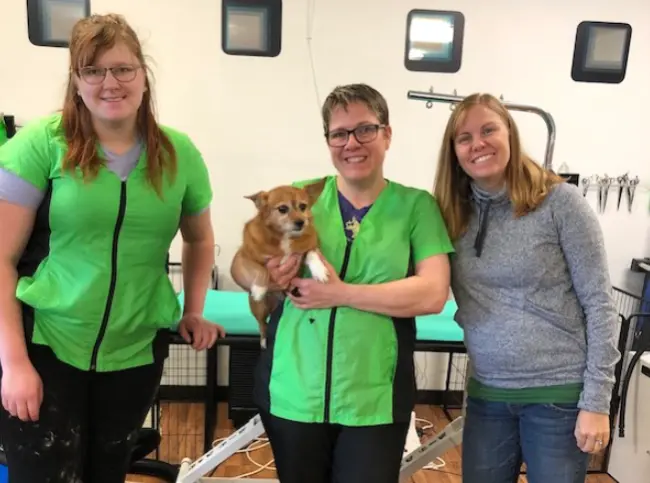
The grooming session began like any other. Elizabeth, a professional groomer at the facility, was working with Max—a dog whose behavioral history was well-documented. Max had previously been "fired" from multiple other grooming salons in the local area due to high anxiety, reactivity, or uncooperativeness. Because of this reputation, handling Max required patience, professional skill, and a calm environment.
Midway through the grooming process, however, the situation shifted dramatically. Without prior warning, Max suffered a catastrophic medical event, collapsing and losing consciousness on the grooming table.
Instant Recognition and Action
Panic is the natural human reaction to a medical crisis, but professional training is designed to override panic with protocol. Recognizing that the dog was unresponsive, salon leadership—specifically Lara—stepped in immediately. Drawing directly upon her rigorous, hands-on Pet Tech CPR training, Lara initiated emergency protocols without hesitation.
Unlike online tutorials or read-only manuals, physical Pet Tech training installs a kinetic response in safety professionals. Lara’s training kicked in immediately: assessing responsiveness, checking airways, and administering precise chest compressions tailored to the animal’s physiological specifications.
The turning point of the intervention occurred during a critical manipulation of the airway. As Lara reached into Max’s mouth to pull his tongue past his canines to clear the airway, the dog flinched. That single muscular response signaled the return of neurological function.
"When you see me pick him up and say ‘get my keys,’ it’s because when I went to pull his tongue out past the canines, he flinched," Lara recounted during a follow-up interview. "He started coming to after that and was totally awake in route."
Swift Veterinary Transport
Following the initial resuscitation, there was no time to waste. Max was loaded into a vehicle for immediate transport to a nearby veterinary clinic. Remarkably, the dog was fully conscious and alert by the time they arrived at the medical facility—a testament to the speed and accuracy of the on-site CPR intervention. Upon arrival at the vet, Max even displayed normal behavioral engagement, interacting amicably with Lara despite the trauma he had just experienced.
Supporting Context & Metrics: Uncovering the Root Cause
Every medical emergency leaves behind questions that require clinical investigation. Following Max’s stabilization, comprehensive veterinary diagnostics were performed to determine why a routine grooming session triggered a sudden loss of consciousness.
Diagnostic Findings
Veterinary professionals conducted a thorough physical examination, including post-resuscitation X-rays to ensure that the chest compressions administered during CPR had not caused secondary trauma, such as rib fractures.
The imaging yielded critical diagnostic insights:
- Rib Integrity: The X-rays confirmed that Max’s ribs and internal thoracic structures were completely normal, validating the precise, controlled nature of the chest compressions delivered by the trained staff.
- Tracheal Abnormality: The diagnostic imaging revealed an underlying anatomical anomaly. Max’s trachea appeared abnormally small at the point where it enters the lungs.
Medical professionals concluded that this congenital or acquired tracheal constriction was a primary contributing factor and the underlying root cause of Max’s sudden collapse. The physical exertion and mild stress associated with the grooming process likely exacerbated his compromised respiratory efficiency, leading to acute oxygen deprivation and subsequent syncope (fainting/loss of consciousness).
The Value of Technological Oversight
Adding another layer of validation to the incident, the salon had installed closed-circuit security cameras just one week prior to the event. While the primary motivation for installing the surveillance system was business security and liability protection, it inadvertently served an invaluable clinical and operational purpose.
Upon reviewing the footage, salon management was able to analyze the incident frame-by-frame. The review provided 100% confirmation that Elizabeth, the groomer handling Max at the time of the collapse, had executed her duties properly and committed no errors.
"I got the cameras mainly to protect the salon, but this showed another reason to have them," Lara noted. For Elizabeth, who was understandably shaken up by the ordeal, reviewing the footage offered psychological reassurance. It affirmed that she was working within a supportive, knowledgeable environment where management relied on objective evidence rather than assigning misplaced blame.
Official Statements and Stakeholder Perspectives
An incident of this magnitude ripples across multiple stakeholders: the pet care professionals, the veterinary team, and the animal’s owners. Each perspective provides unique insight into the ecosystem of pet safety.
The Veterinary Response
The intersection between pet groomers and veterinary clinics is vital for animal welfare. In this case, the response from the veterinary staff shifted as facts came to light.
Initially, the attending veterinarian on duty—who was not Lara’s regular point of contact at the clinic—approached the situation with skepticism and confusion. However, the dynamic shifted profoundly when Lara’s primary veterinarian arrived at the clinic. Known for being highly receptive to professional groomers and frequently referring complex, difficult-to-groom pets to Lara’s shop, the primary vet immediately understood the gravity of the situation.
Upon reviewing the facts, the primary vet embraced Lara, offering emotional support and opening a constructive dialogue about other challenging dogs the clinic had referred to the salon—animals that had been rejected by every other groomer in the region. Once the primary vet contextualized Lara’s professionalism and skill, the examining veterinarian’s demeanor changed entirely, transforming skepticism into profound respect.
The Pet Parents’ Reaction
When pets experience medical emergencies in commercial settings, anxiety often fuels friction between owners and service providers. However, Max’s owners demonstrated remarkable composure and gratitude.
Upon being informed of the incident, their immediate concern was practical: "Did he bite someone?" Knowing Max’s history of behavioral challenges and rejection by other establishments, they anticipated that he may have triggered the crisis through aggression. Once assured that it was a purely medical event stemming from his physical condition, their reaction shifted entirely to relief and appreciation.
They expressed profound gratitude that the salon staff possessed the emergency skills necessary to keep their dog alive. Demonstrating immense trust and accountability, the pet owners even offered to pay for the grooming services that had been interrupted by the medical emergency.
The Pet Safety Authority’s Perspective
Weighing in on the incident, Thom Somes—President and Co-Founder of Pet Tech and widely recognized as "The Pet Safety Guy"—emphasized that Max’s survival was no accident. It was the direct result of deliberate, high-quality educational preparation.
"This is an amazing video to watch," stated Somes. "This is a perfect example of why hands-on, in-person training—involving skill practice with coaching—has always been the ideal way to learn the skills and techniques of pet CPR and First Aid. Pet Tech teaches in such a way that when needed in the event of a pet medical emergency, you will be able to access the skills and jump into action."
Somes, an international speaker, best-selling author, and advocate for preventative pet care, has dedicated his career to bridging the gap between everyday pet ownership and emergency medical response. His philosophy centers on empowering both pet parents and commercial pet care professionals with the tools needed to extend and enrich the lives of their four-legged family members.
Future Outlook and Industry Implications
The successful resuscitation of Max serves as a watershed moment for the pet grooming and pet care industries, highlighting several essential takeaways for the future of animal care.
1. The Mandate for Hands-On Training
As the pet care industry professionalizes, the baseline expectations for safety are evolving. Relying on passive online video tutorials for emergency medical response is no longer adequate. The physical mechanics of performing CPR—determining compression depth, managing airway obstruction, and maintaining composure under acute stress—require tactile, muscle-memory training. Industry advocates are increasingly pushing for mandatory, certified hands-on first-aid training for all commercial pet grooming personnel.
2. Strengthening Groomer-Veterinarian Partnerships
The initial friction experienced at the veterinary clinic highlights a historical communication gap between veterinary medicine and professional grooming. Incidents like this prove that when groomers are well-trained and capable of stabilizing animals during acute crises, they act as critical frontline medical responders. Fostering collaborative relationships between veterinary clinics and grooming salons ensures a continuum of care that benefits the health and safety of companion animals.
3. Redefining Salon Risk Management
Salon owners invest in security cameras, insurance policies, and liability waivers to protect their businesses from financial ruin. However, as Lara’s experience demonstrates, technology and safety protocols serve a dual purpose: protecting the emotional well-being of staff and providing objective accountability during critical incidents. Integrating emergency response protocols with modern salon infrastructure creates a safer, more transparent work environment.
4. Conclusion
Max’s story concludes with a happy ending, but it serves as a sobering reminder of the unpredictable nature of animal care. As Lara noted, moving forward, only she will groom Max—a precautionary measure to monitor his specific respiratory sensitivities closely. More broadly, the incident stands as an enduring testament to the mission championed by Pet Tech: through education, preparation, and professional dedication, human intervention can alter the course of tragedy and preserve the bond between families and their beloved pets.