
Executive Overview
The journey of animal rescue is frequently fraught with heartbreaking setbacks, bureaucratic hurdles, and emotional tolls for both the caretakers and the vulnerable creatures involved. Yet, occasionally, a narrative emerges that transcends the typical parameters of pet adoption, offering a profound testament to resilience, mutual healing, and the unpredictable nature of interspecies companionship. This is the definitive account of Chicken—an extraordinary rescue cat whose life transformed from a harrowing past of neglect and displacement into a heartwarming saga of domestic royalty.
Originally rescued from a severe hoarding environment, Chicken faced a compounding series of instabilities when an initial adoption fell through, returning him to the uncertain limbo of the shelter system. To many, a shy cat with a disrupted history might have presented an unappealing prospect. However, when an adopter named Paulina encountered his case, an instantaneous and immutable bond was forged.
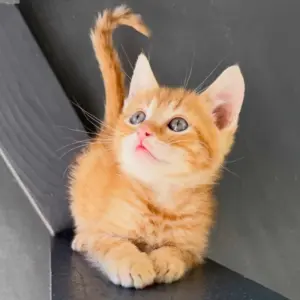
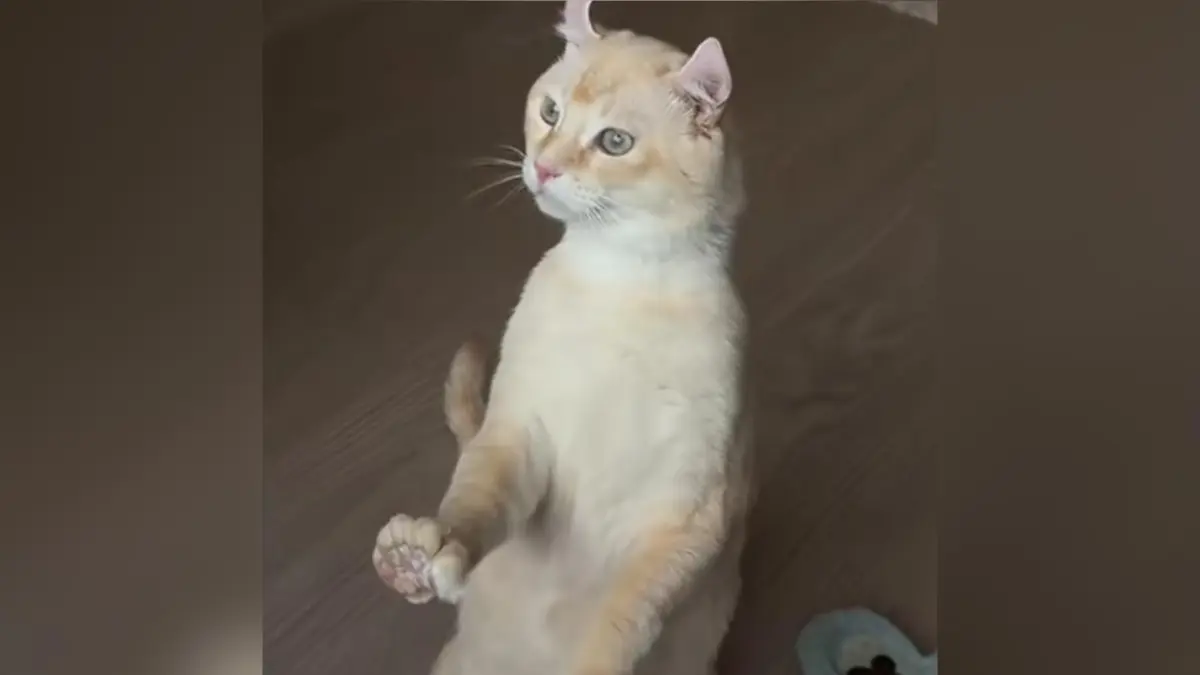
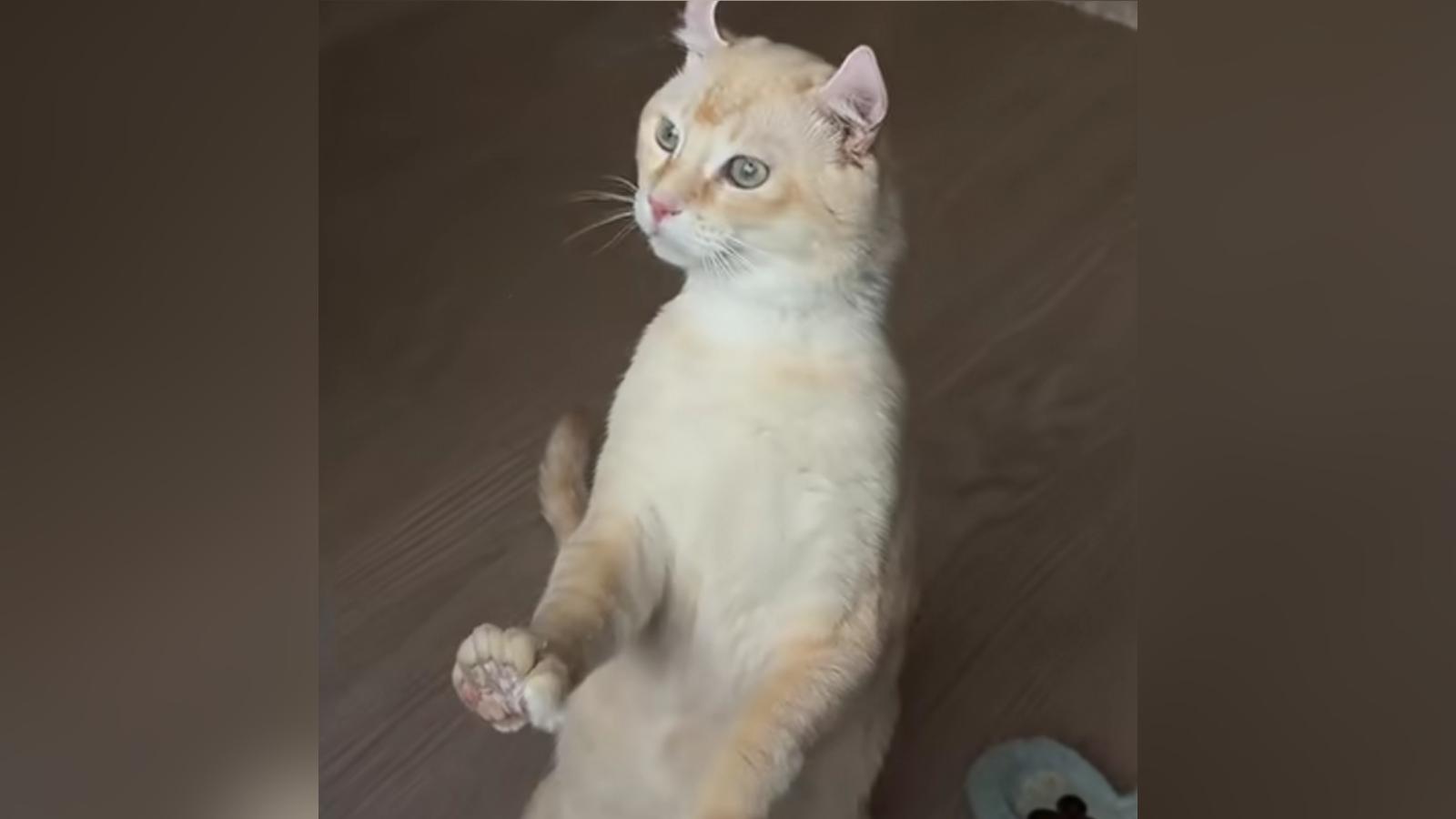
What followed was not merely an adjustment period, but a radical unfurling of personality. Chicken—distinguished by his striking orange-creamsicle coat, signature American Curl ears, and hand-like polydactyl paws featuring six digits on every foot—quickly defied his timid origins. Revealing an eclectic array of eccentricities, from an anomalous fondness for the shower to an intensely vocal demand for punctuality at mealtime, Chicken transitioned from a frightened survivor into an authoritative, deeply cherished household ruler.
This investigative feature explores the comprehensive chronology of Chicken’s rescue, analyzes the biological and behavioral characteristics that make him a physiological marvel, contextualizes the broader landscape of feline rescue and polydactyly, and examines the profound psychological transformation he catalyzed in his adoptive home.
Detailed Chronology
Phase I: The Shadows of Neglect and Rejection
Long before he ever stepped foot into Paulina’s life, Chicken’s existence was defined by precarity. Felines extracted from hoarding situations frequently suffer from complex psychological trauma, chronic stress, and socialization deficits. Deprived of the secure, individualized attention necessary for healthy feline development, Chicken learned early on to navigate a world characterized by resource scarcity, overwhelming sensory stimuli, and competition with numerous other animals.
When he was finally pulled from the hoarding environment by animal welfare advocates, it marked the first step toward a rehabilitation that would prove agonizingly slow. Shelters, despite the heroic efforts of staff and volunteers, remain inherently stressful environments. For a cat possessing an innately sensitive disposition, the persistent cacophony of barking dogs, shifting human schedules, and confined quarters serves as a compounding trauma.
Yet, a glimmer of hope appeared when an adoption application was approved. For a brief window, Chicken experienced the stability of a permanent residence. Tragically, this placement proved ephemeral. For reasons that often underscore the disconnect between human expectations and animal behavior, the adoption failed. Chicken was returned to the shelter system—a devastating psychological blow for a cat already struggling to anchor his trust in humanity. In the feline behavioral spectrum, being returned from a home is often internalized as abandonment, reinforcing deep-seated fears and rendering subsequent socialization exponentially more difficult.
Phase II: The Fateful Intersection
It was during this secondary period of sheltering, while Chicken sat quietly in the background of the adoption floor as a shy and unassuming candidate, that Paulina entered the picture. Reviewing his intake notes and absorbing the sobering details of his trajectory—the hoarding recovery, the initial placement, the subsequent return—Paulina experienced an immediate visceral reaction.
In journalism and behavioral psychology, this phenomenon is rarely quantifiable, yet it consistently drives the most successful human-animal bonds. It is an empathetic resonance. Rather than viewing Chicken’s history of displacement as a red flag, Paulina interpreted his struggles as a call to action. The thought of a creature enduring the indignity of a failed home after already surviving severe neglect weighed heavily on her conscience.
With quiet determination, Paulina made a definitive choice: Chicken’s transient lifestyle was over. She completed the adoption paperwork, prepared her living space for a traumatized feline, and brought him home. What she anticipated was a protracted, multi-month rehabilitation project requiring infinite patience, closed doors, and minimal stimulation. What she received, however, was a masterclass in feline resilience.
Phase III: The Unfurling of Personality
Almost immediately upon crossing the threshold of his new permanent residence, Chicken began subverting expectations. While initial caution was to be expected, the duration of his timidity was surprisingly brief. Driven by an innate curiosity that had long been suppressed by survival instincts, Chicken initiated a methodical reconnaissance of his new environment.
He investigated hallways, tested the textures of various rugs, and engaged with the enrichment toys Paulina had thoughtfully provided. But the true turning point of his integration occurred in the most unexpected of locations: the bathroom.
While conventional feline wisdom dictates an instinctive aversion to water, Chicken demonstrated an immediate, profound fascination with the shower. Far from fleeing the sound of running water or hiding from moisture, he displayed a relaxed, inquisitive comfort around it. Behavioral specialists note that water interaction in cats—when self-initiated—often points to high sensory intelligence and a unique sense of physical security. For Paulina, watching a once-terrified rescue cat casually investigate a stream of water was both humorous and deeply moving. It signaled that the armor of trauma was beginning to melt away.
Supporting Context & Metrics: The Anatomy and Biology of Chicken
Beyond his behavioral evolution, Chicken commands attention through his remarkably distinct physical architecture. He is a living showcase of rare genetic traits that elevate him from a standard domestic shorthair lookalike to a subject of physiological fascination.
+-----------------------------------------------------------------+
                 CHICKEN'S PHYSIOLOGICAL PROFILE
+-----------------------------------------------------------------+
| Trait Category        | Specific Manifestation                  |
+-----------------------------------------------------------------+
| Coat & Coloring       | Orange Creamsicle, Bobcat-like visage   |
| Ear Morphology        | Distinctive American Curl (curled back) |
| Digit Architecture    | Polydactyl: 6 toes on EVERY single paw  |
| Vocalization Index    | Extremely high; rigorous mealtime alerts|
| Behavioral Autonomy   | Strictly self-governed affection rules  |
+-----------------------------------------------------------------+
The Polydactyl Phenomenon: An Excess of "Beans"
The most striking feature of Chicken’s anatomy is his paws. While a standard cat possesses a total of 18 toes—five on each front paw and four on each back paw—Chicken is a fully expressed polydactyl, boasting an impressive six toes on every single paw.
Polydactyly, colloquially referred to as having "mittens" or "snowshoes," is a genetic mutation resulting in an autosomal dominant trait. Historically popularized by author Ernest Hemingway—whose former residence in Key West, Florida, remains populated by dozens of his multi-toed feline descendants—polydactyly is caused by a variation in the zone of polarizing activity (ZPA) during embryonic limb development.
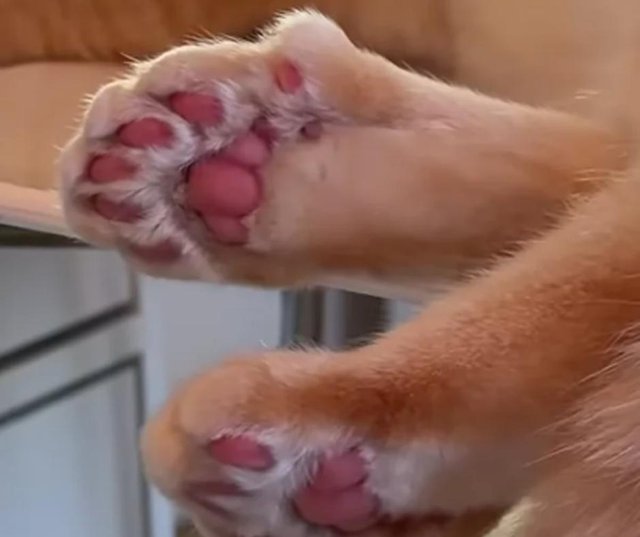
While most polydactyl cats exhibit extra digits exclusively on their front paws, cases where all four paws are uniformly affected, as seen in Chicken, represent a more balanced, albeit functionally identical, genetic expression. Far from being a medical handicap, these extra digits give Chicken’s paws a remarkably broad, hand-like dexterity. He uses them to manipulate objects, secure a firmer grip during play, and add an unmistakable visual charm to his daily routines.
The American Curl Influence
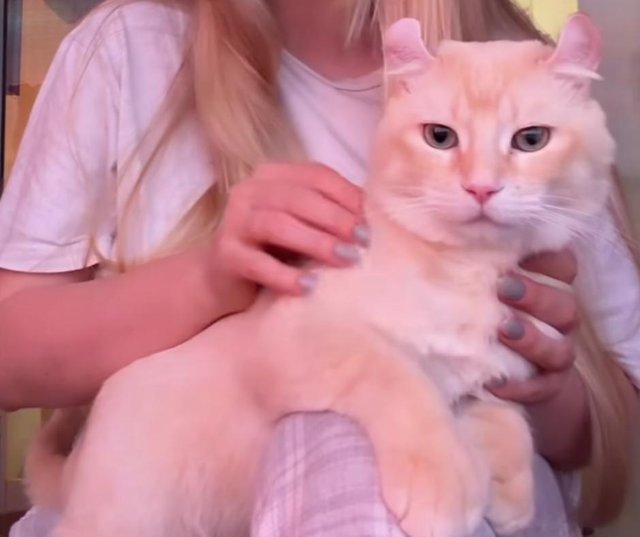
Complementing his multi-toed status are Chicken’s ears. Exhibiting the characteristic backward-curling phenotype associated with the American Curl breed, his ears frame a face that Paulina accurately likens to a miniature bobcat. The American Curl mutation affects the ear cartilage, causing it to stiffen and curl in a graceful arc away from the face. This combination of curled ears, bobcat-like facial structure, and a vibrant orange creamsicle coat gives Chicken an appearance that is simultaneously wild and endearingly domestic.
Behavioral Dynamics: Boundaries, Boundaries, and Breakfast
As Chicken settled into his role as master of the household, his complex personality emerged in full clarity. He is a cat governed by absolute autonomy, operating strictly under a philosophy of mutual respect and clear boundaries.
The Rules of Engagement
Affection with Chicken is not a passive or forced enterprise. Paulina quickly learned that attempting to lift him into her arms for a spontaneous cuddle is met with immediate, polite resistance. He does not appreciate being manhandled—a reasonable boundary for any rescue animal with a history of displacement.
However, if Paulina yields the initiative to him, the dynamic shifts entirely. Within minutes of being granted his preferred personal space, Chicken will approach of his own volition, ascending her chest to settle into a warm, rhythmic posture of contentment. Similarly, his bedtime routines are self-scheduled; he insists upon sleeping beside her, but strictly on the condition that he initiates the deployment.
This need for control extends to socialization with outsiders. During a recent visit by friends, Chicken displayed a uncharacteristic flash of defensive timidity, retreating to the safety of Paulina’s feet and maintaining a low profile. Rather than viewing this as a behavioral regression, Paulina recognized it as a vital communicative act. Chicken was explicitly defining his comfort zone, trusting his human to understand and respect his boundaries.
The Tyranny of the Food Bowl
If Chicken’s affection is granted selectively, his opinions on gastronomy are expressed with unyielding volume. Chicken is an intensely vocal feline, and his primary political platform is the prompt delivery of meals.
[Morning Alarm Rings]
       │
       ▼
[0.5 Second Delay in Human Response]
       │
       ▼
[CHICKEN ACTIVATES VOCALIZATION PROTOCOL]
       │
       ▼
[Choruses of Complaints & Leg-Jumping Maneuvers Initiated]
       │
       ▼
[Breakfast Successfully Expedited]
To Chicken, breakfast and dinner are not merely nutritional necessities; they are sacred social contracts subject to strict scheduling. Should Paulina awake in the morning without immediately executing the breakfast protocol, Chicken deploys a sophisticated campaign of vocal complaints. Accompanied by his signature move—jumping surprisingly high against her thigh to deliver a tactile reminder of his presence—he ensures that no delay goes unremarked.
When Paulina returns home late from her daily engagements, Chicken is there to greet her, shadowing her footsteps from the entryway to the washroom. These daily rituals—the chatter, the athletic leaps, the affectionate persistence—have woven themselves into the immutable fabric of their shared life.
Future Outlook: Redefining the Concept of Rescue
The narrative of Chicken and Paulina challenges the conventional paradigm of animal rescue. For decades, the cultural narrative surrounding pet adoption has been framed primarily through the lens of human benevolence: the human saves the animal, acting as a charitable benefactor to a helpless victim.
However, the reality experienced by Paulina—and echoed by countless adopters of special-needs, senior, or traumatized rescue animals—is far more reciprocal. As Paulina reflected during her feature appearance on GeoBeats, the initial premise of their relationship has been utterly inverted.
"I thought I was giving him a home," Paulina mused, summarizing an emotional realization shared by many who open their hearts to complex rescue animals. In reality, it was Chicken who fundamentally transformed Paulina’s understanding of what a home actually is.
Broader Implications for Animal Welfare
Chicken’s story offers several key takeaways for animal shelters, rescue organizations, and prospective pet parents:
- Patience Pays Dividends: Animals labeled as "shy" or "traumatized" in shelter environments frequently require only a low-pressure environment and structural stability to reveal vibrant, multifaceted personalities.
- Embrace the Imperfect: Polydactyl cats, special-needs pets, and animals with failed adoptions in their history often possess an extraordinary capacity for loyalty once secure attachments are formed.
- Mutual Healing: The psychological benefits of pet adoption extend profoundly in both directions. The structure, routine, and unconditional (albeit boundary-governed) affection provided by animals like Chicken serve as powerful anchors for human well-being.
As Chicken continues his daily patrols of Paulina’s home—inspecting the shower, evaluating his food bowl with critical precision, and gracing her with his six-toed presence—he stands as an ambassador for every shy, overlooked shelter animal waiting for their turn. He is proof positive that when the right human meets the right cat, the scars of the past dissolve into a future defined by laughter, mutual respect, and an unbreakable bond of love.