
Executive Overview: The Disparity Between Frequency and Volume
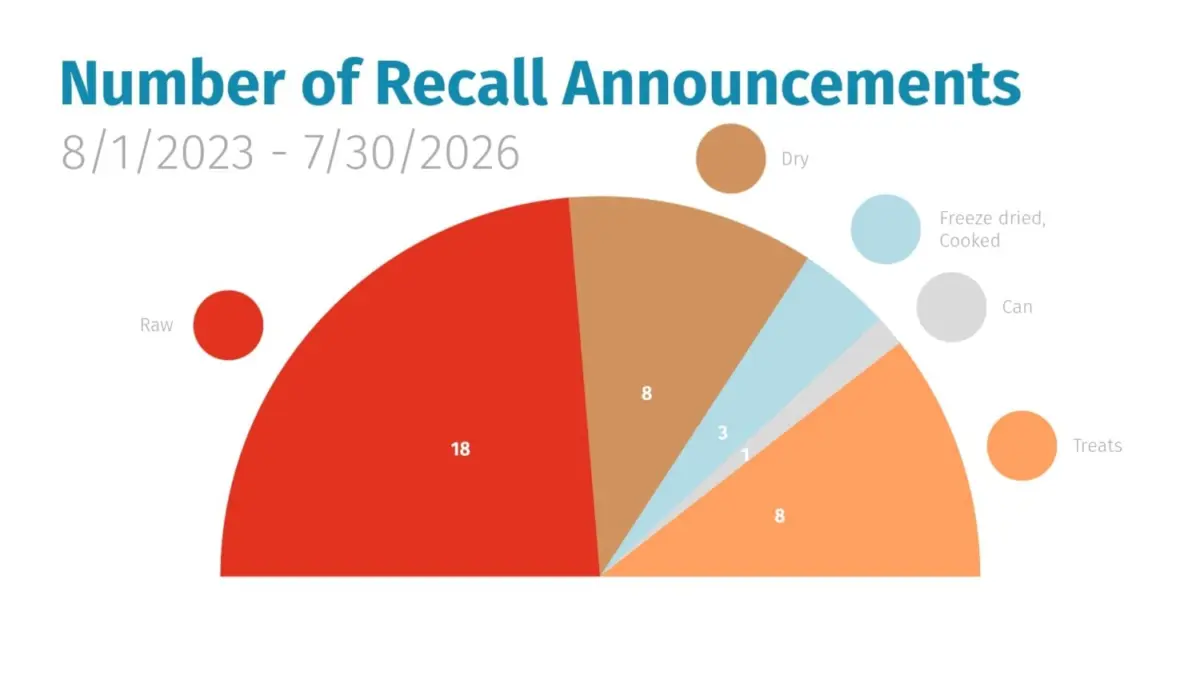
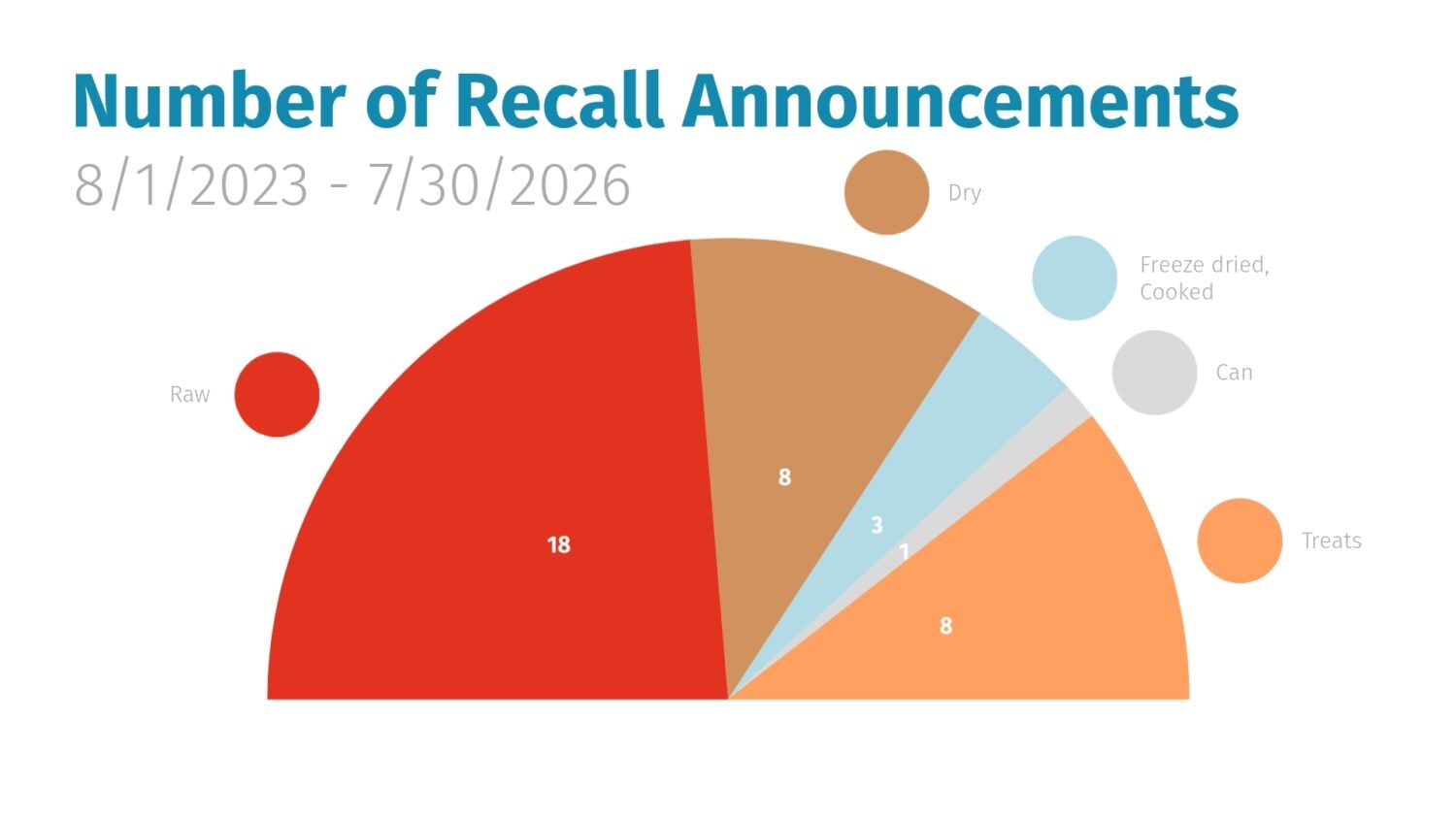
Between August 1, 2023, and July 30, 2026, the United States pet food industry logged 38 distinct product recalls. While 38 incidents over a three-year span might suggest a modest rate of industrial disruption, an investigation into federal enforcement data reveals a far more serious reality: these events resulted in the removal of more than 237 million pounds of commercial pet food from supply chains, retail shelves, and consumer homes.
The disparity between the total number of recall announcements and the physical volume of product affected highlights a critical vulnerability in modern pet food manufacturing. Public safety alerts issued by corporate brands often detail isolated product lines or specific batch numbers. However, an analysis of official regulatory data demonstrates that industrial consolidation and large-scale manufacturing models can quickly turn a single contamination point into an environmental and public health crisis affecting millions of animals and their owners.
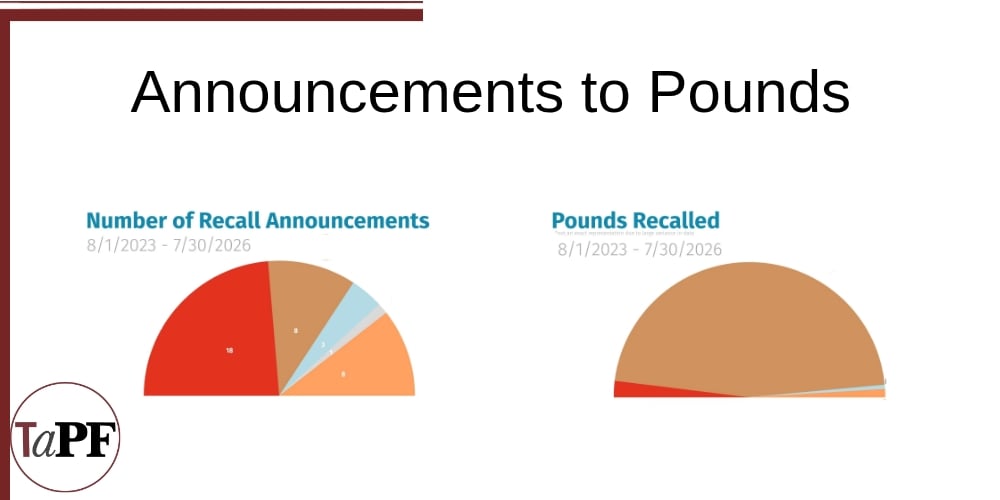
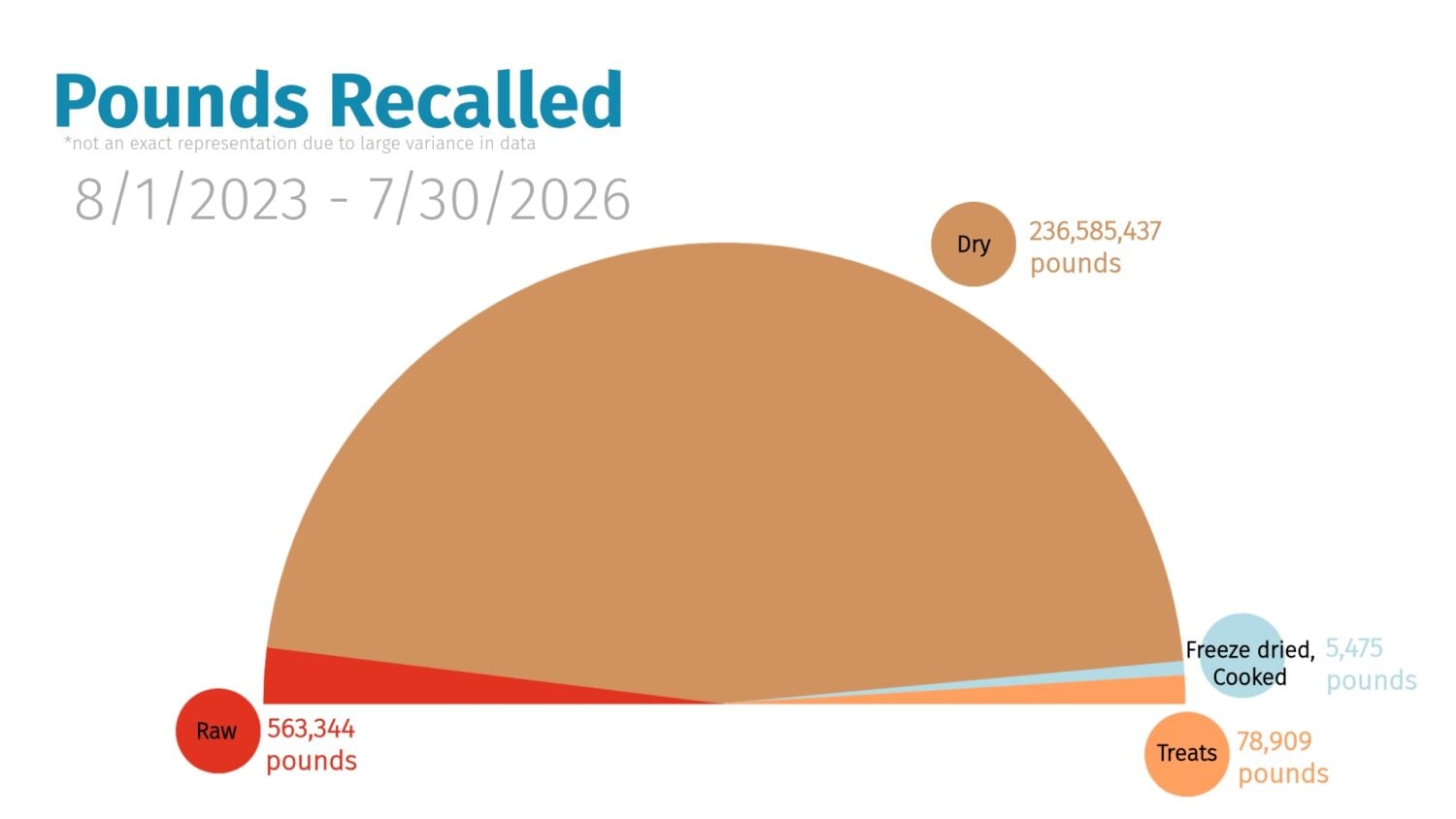
Data compiled from U.S. Food and Drug Administration (FDA) Enforcement Reports confirms that while alternative feeding formats—including raw, freeze-dried, gently cooked diets, and treats—frequently draw regulatory scrutiny, traditional dry kibble accounts for virtually the entire volume of recalled product by mass. Driven by systemic contamination events at large-scale co-manufacturing facilities, dry pet food was responsible for 99.7% of all recalled tonnage over the three-year period analyzed.
Detailed Chronology: Major Recalls and Systemic Failure (2023–2026)
========================================================================================
                      THREE-YEAR PET FOOD RECALL METRICS AT A GLANCE
========================================================================================
 Timeframe Analyzed:                August 1, 2023 – July 30, 2026
 Total Recall Events:               38 Incidents
 Total Volume Recalled:             > 237,000,000 Pounds
 Primary Contaminant:               Pathogenic Bacteria (Salmonella, Listeria)
 Kibble Share of Total Tonnage:     99.7%
========================================================================================
The Mid America Pet Food Mega-Recall
The primary catalyst behind the extraordinary weight volume recorded between 2023 and 2026 began in late autumn 2023. On October 30, 2023, Texas-based manufacturer Mid America Pet Food initiated a voluntary recall for three specific lots of its flagship Victor Super Premium Dog Food (Beef Meal & Rice Formula) following routine sample testing that detected Salmonella.
Within ten days, epidemiological tracking conducted by the FDA and the Centers for Disease Control and Prevention (CDC) linked the manufacturing plant to multiple human cases of salmonellosis, predominantly among infants and young children exposed to dry dog food in their households.
On November 9, 2023, the scope of the incident expanded dramatically. Mid America Pet Food issued a comprehensive recall encompassing all pet food brands manufactured at its Mount Pleasant, Texas, facility bearing "Best By" dates prior to October 31, 2024. This expanded action pulled dozens of popular product lines off the market, including various formulations of Victor, Wayne Feeds, Eagle Mountain, and Member’s Mark.
Subsequent details published in the FDA Enforcement Report (Product Entry #204018) documented the true scale of the event:
- Total Units Recalled: 9,508,943 individual bags.
- Estimated Mass: Approximately 190 million pounds.
This single corporate expanded recall represented over 80% of all pet food recalled in the United States over the entire three-year monitoring window, underscoring how centralized extrusion facilities can amplify food safety failures.
Pedigree Foreign Object Contamination and Regulatory Opacity
While biological hazards dominated total recall volume, physical contaminants also triggered significant market disruptions. A prominent example occurred when Mars Petcare US announced a voluntary recall of select lots of Pedigree wet dog food—specifically two lots of Pedigree Choice Cuts in Gravy Can High Protein Chopped Chicken & Duck Flavor.
The recall was initiated after routine maintenance uncovered metal fragment contamination within the production line, posing potential oral, esophageal, and gastrointestinal laceration risks to canine consumers.
However, this incident highlighted a recurring limitation in regulatory transparency: the corresponding FDA Enforcement Report (Product Entry #221409) failed to publicly disclose the exact total tonnage or unit count involved in the market withdrawal. Consequently, official foreign object metrics remain understated within baseline government reports, illustrating ongoing gaps in public reporting mechanisms.
Supporting Context & Metrics: Volume vs. Format Risks
========================================================================================
                    RECALLED VOLUME BREAKDOWN BY PRODUCT CATEGORY
========================================================================================
 Category                          Percentage of Total Tonnage      Volume Impact
 ---------------------------------------------------------------------------------------
 Dry Pet Food (Kibble)             99.700%                          ~236.29 Million Lbs
 Raw Pet Diets                      0.200%                          ~474,000 Lbs
 Treats                             0.030%                          ~71,000 Lbs
 Freeze-Dried / Gently Cooked       0.002%                          ~4,700 Lbs
========================================================================================
Kibble’s Industrial-Scale Exposure
Public discussions regarding pet food safety often center on raw meat-based diets due to inherent microbiological risks associated with uncooked animal proteins. However, analyzing recall data by weight yields a starkly different perspective from analyzing recalls by headline frequency.
       RECALL FREQUENCY VS. RECALLED VOLUME (2023–2026)

       By Incident Count               By Total Tonnage (Lbs)
      +-----------------+             +---------------------+
      | Raw / Fresh     |             | Kibble              |
      | High Frequency  |             | 99.7% of Volume     |
      | Low Tonnage     |             | (>236 Million Lbs)  |
      +-----------------+             +---------------------+
While raw pet food producers faced multiple small-batch recalls between 2023 and 2026, their localized distribution models and smaller batch sizes limited the total volume of impacted product. Raw diets accounted for roughly 0.2% of all recalled tonnage (approximately 474,000 pounds). Commercial treats represented 0.03% (roughly 71,000 pounds), while freeze-dried and gently cooked formulations comprised just 0.002% (approximately 4,740 pounds).
By contrast, ultra-processed dry kibble accounted for 99.7% of all recalled product by weight. Dry kibble is produced using industrial extrusion systems operating at high volumes. When a facility experiences cross-contamination—whether through post-processing fat application systems, compromised raw material hoppers, or persistent environmental pathogens within air filtration networks—the resulting volume of compromised food rapidly climbs into tens or hundreds of millions of pounds before systemic testing catches the issue.
Etiology of Recalls: Primary Causes Analyzed
The three-year dataset reveals five primary categories of structural failure leading to federal enforcement action:
========================================================================================
                       RECALL VOLUMES BY CAUSATIVE HAZARD
========================================================================================
 Cause / Primary Hazard              Volume Impact (Lbs)     Primary Risk Factors
 ---------------------------------------------------------------------------------------
 Pathogenic Bacteria                 > 237,000,000           Salmonella, Listeria
 Mislabeling / Undeclared Ingredients     177,122            Allergen cross-contact
 Foreign Material Contamination           28,018*            Metal fragments, plastics
 Avian Influenza (H5N1)                    5,244             Raw poultry supply chains
 Nutrient Imbalance (Vitamin/Mineral)       4,712             Premix dosing errors
========================================================================================
*Excludes unquantified Pedigree wet food recall entries.- Pathogenic Bacteria Contamination (>237 Million Lbs): Salmonella enterica and Listeria monocytogenes represented the vast majority of all recalled volume. Aside from causing severe gastrointestinal illness and septicemia in pets, these pathogens present secondary contamination risks to human handlers via direct contact with kibble or contaminated dust.
- Mislabeling and Ingredient Omissions (177,122 Lbs): Inaccurate labeling practices routinely triggered actions under the Food, Drug, and Cosmetic Act. Failures included unannounced formulation changes, missing allergen declarations, and incorrect species-specific target labeling (e.g., adult maintenance formulas packaged as puppy food).
- Foreign Material Inclusion (28,018 Lbs quantified): Manufacturing equipment wear and tear resulted in physical contaminants entering product lines. Ingested metal shards, hard plastics, and rubber components pose acute risk of internal damage to companion animals.
- Avian Influenza Virus (5,244 Lbs): The spread of High Pathogenicity Avian Influenza (HPAI H5N1) introduced new regulatory complexities. Recalls in this category involved raw poultry diets sourced from infected agricultural supply chains, highlighting emergent zoonotic vectors within raw food processing.
- Nutritional Excess and Deficiency (4,712 Lbs): Precise micro-nutrient premixing is essential for complete pet nutrition. Recalls in this category stemmed from manufacturing errors that resulted in elevated Vitamin D levels (which can cause acute kidney failure) or deficient Thiamine levels (leading to neurological distress in felines).
Regulatory Framework and Oversight Realities
The Mechanics of FDA Enforcement Tracking
When a pet food manufacturer identifies a safety hazard or receives notification of a positive pathogen sample from state regulators, it typically initiates a voluntary market withdrawal or recall. The FDA then evaluates the health hazard presented by the product and classifies the action (Class I, Class II, or Class III based on severity).
   ┌───────────────────────┐
   │ Corporate Alert /     │
   │ Voluntary Action      │
   └──────────┬────────────┘
              │
              ▼
   ┌───────────────────────┐
   │ FDA Health Hazard     │
   │ Evaluation (Class I-III)
   └──────────┬────────────┘
              │
              ▼
   ┌───────────────────────┐
   │ FDA Enforcement Report│
   │ Formal Tonnage Data   │
   └───────────────────────┘
Initial corporate press releases frequently focus on specific "Best By" ranges or lot codes without stating the total weight of affected product. Transparency depends on the subsequent publication of formal FDA Enforcement Reports. These weekly reports document the actual quantity of distributed units, total weight, and distribution networks.
However, operational gaps remain. As demonstrated by the 2024 Pedigree foreign object recall, certain enforcement reports omit total unit figures or weight calculations entirely. This dynamic leaves consumers and independent researchers reliant on secondary public disclosures and freedom-of-information requests to assess the full scope of a safety failure.
The Role of Consumer Advocacy
The analysis of these enforcement metrics was spearheaded by Susan Thixton, a pet food safety advocate and founder of TruthaboutPetFood.com and the Association for Truth in Pet Food (ATPF). For nearly two decades, Thixton has monitored regulatory filings, attended meetings of the Association of American Feed Control Officials (AAFCO), and pushed federal agencies for increased transparency in feed safety reporting.
Advocates argue that current reporting standards leave pet owners vulnerable during major outbreak events. "Consumers see a press release listing a few lot numbers, but they rarely grasp that tens of millions of pounds of contaminated kibble may have moved through national distribution networks," notes Thixton. "Without real-time public access to actual production tonnages and batch data, identifying affected products before animals ingest them becomes significantly harder."

Organizations like the ATPF continue to advocate for structural reforms within federal feed safety protocols, including:
- Mandatory public listing of net weight figures in initial safety warnings.
- Standardized reporting requirements for sub-contracted co-packing facilities.
- Stricter environmental monitoring protocols for high-capacity kibble processing plants.
Industry Implications and Future Outlook
The data covering 2023 through 2026 highlights a persistent structural vulnerability: modern commercial pet food relies heavily on concentrated manufacturing hubs. When a major facility experiences control failures, the resulting product recalls can affect millions of households at once.
       CONCENTRATED MANUFACTURING RISK PIPELINE

 +------------------+     +--------------------+     +-------------------+
 | Single Facility  | --> | Mass Distribution  | --> | National Outbreak |
 | Contamination    |     | Hubs (>100M lbs)   |     | Exposure          |
 +------------------+     +--------------------+     +-------------------+
The Push for Preventative Standards
Under the Food Safety Modernization Act (FSMA), pet food facilities must implement Hazard Analysis and Risk-Based Preventive Controls (HARPC). These regulations require plants to identify potential biological, chemical, and physical hazards, establish critical control points, and maintain verifiable sanitation logs.
Despite these regulatory requirements, recurring bacterial outbreaks demonstrate that post-processing contamination remains a persistent challenge in industrial facilities. As air-handling systems, processing equipment, and ingredient conveyors age, maintaining environmental hygiene in plants producing millions of pounds of dry food per month requires continuous investment and rigorous oversight.
Actionable Protocols for Consumers
To mitigate risks associated with commercial pet foods, pet owners should implement proactive safety practices:
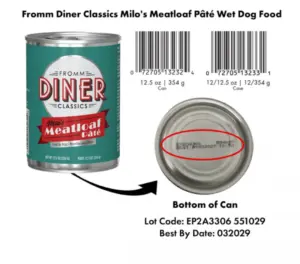
- Maintain Packaging Details: Always save the original bag or container, paying special attention to the lot code, facility code, and "Best By" date. If an animal shows signs of illness, this information is essential for veterinary diagnostics and regulatory reporting.
- Utilize Federal Tracking Portals: Regularly check the FDA Recalls and Safety Alerts Portal and weekly Enforcement Reports rather than relying solely on retail notifications.
- Practice Safe Food Handling: Treat dry kibble and pet treats with the same hygiene standards applied to raw meat. Wash hands thoroughly with soap and water after handling pet food, sanitize food scoops regularly, and avoid storing dry food in unwashed plastic containers where old oils can oxidize and harbor bacteria.
- Report Suspected Adverse Events: If a pet experiences sudden illness after consuming a specific food, instruct the attending veterinarian to file a report with the FDA’s Safety Reporting Portal and state agriculture officials to ensure potential outbreaks are flagged quickly.
The data from the 2023–2026 reporting cycle shows that pet food safety requires continuous vigilance. As manufacturing facilities grow larger and supply chains become more complex, regulatory enforcement, corporate accountability, and consumer awareness remain essential to keeping companion animals safe.