
Executive Overview
For the average citizen, navigating a bustling international airport terminal, a packed weekend restaurant, or a sprawling shopping center during the holiday season is a sensory-heavy, often exhausting experience. These environments present a chaotic symphony of sudden loud noises, flashing lights, surging crowds, rolling luggage, unexpected physical contact, and complex aromas. For many, it requires a conscious effort to stay grounded amidst the sensory overload.
Yet, for service dogs, these demanding public spaces are simply another day at the office. These remarkable canine companions move through high-stress environments with unwavering confidence, razor-sharp focus, and absolute composure. They do so not by accident of temperament, but through an intensive, multi-year developmental pipeline designed to cultivate supreme impulse control, absolute reliability, and specialized operational skills.
The calm, collected behavior the public observes in a working service dog is the culmination of meticulous breeding, dedicated early socialization by volunteer puppy raisers, systematic distraction desensitization, and rigorous public access training. Under the legal frameworks of the Americans with Disabilities Act (ADA), a service animal must be individually trained to do work or perform tasks directly related to a handler’s disability. Crucially, public access training addresses how the dog behaves in public accommodations, ensuring they can safely accompany their handlers into places where pets are ordinarily prohibited—such as restaurants, grocery stores, hospitals, and aircraft cabins—without causing disruption or safety hazards.
This deep dive explores the anatomy of service dog public access training: why high-stimulus environments are uniquely challenging, how trainers systematically build canine resilience through positive reinforcement, the vital role of early puppy development, and the rigorous evaluation standards required to forge life-changing working partnerships.
Detailed Chronology: The Lifecycle of a Service Dog in Training
The transformation of an energetic puppy into a steadfast, life-altering working service dog is a carefully sequenced, multi-phase developmental journey. Each stage builds upon the last, moving from foundational socialization to advanced real-world integration.
Phase 1: Neonatal and Early Puppyhood (Weeks 0–8)
The journey begins before formal training even starts, rooted in selective breeding programs that prioritize health, temperament, emotional stability, and biddability—typically focusing on breeds such as Labrador Retrievers, Golden Retrievers, and crosses known for their resilience. During their earliest weeks with professional breeding caretakers, puppies are introduced to gentle handling, novel tactile surfaces, and mild sensory challenges designed to stimulate neurological development and emotional recovery from minor stressors.
Phase 2: The Puppy Raiser Era (Months 2–12)
Around eight weeks of age, puppies transition to dedicated volunteer puppy raisers. This foundational phase centers on basic obedience, household manners, and broad-spectrum community socialization.
- Month 2–6: Raisers introduce pups to everyday household sounds, domestic appliances, varied floor textures (tile, grating, carpet), and friendly strangers of all ages.
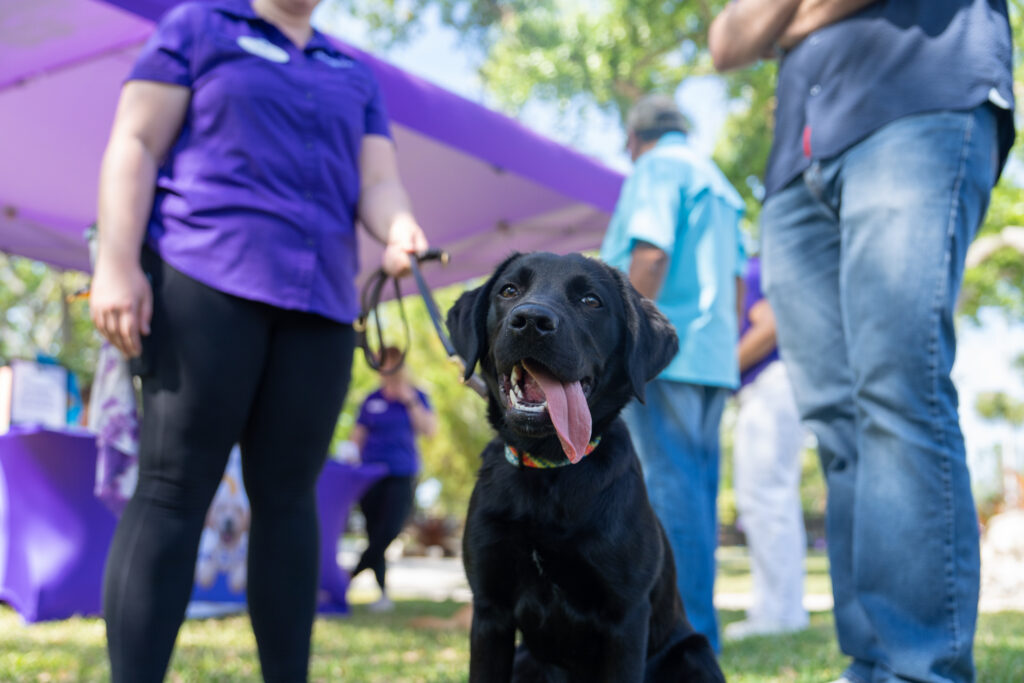
- Month 6–12: The scope widens dramatically. Raisers take adolescent dogs into community spaces—such as hardware stores, public parks, outdoor markets, and office buildings. During this window, the focus is on building environmental curiosity rather than fear, ensuring the puppy learns to view novel situations as safe and unthreatening.
Phase 3: Professional Advanced Training and Task Integration (Months 12–18+)
Upon graduating from the puppy-raising phase, the adolescent dog enters formal, professional instruction with certified trainers. This intensive period bridges the gap between basic obedience and specialized working competence.
- Task Specialization: Dogs are paired with the specific disability-mitigation tasks they will perform for their future handler. This may include retrieving dropped medication, providing mobility counterbalance, pulling a manual wheelchair, or performing deep pressure therapy (DPT) to interrupt an impending panic or trauma-related anxiety attack.
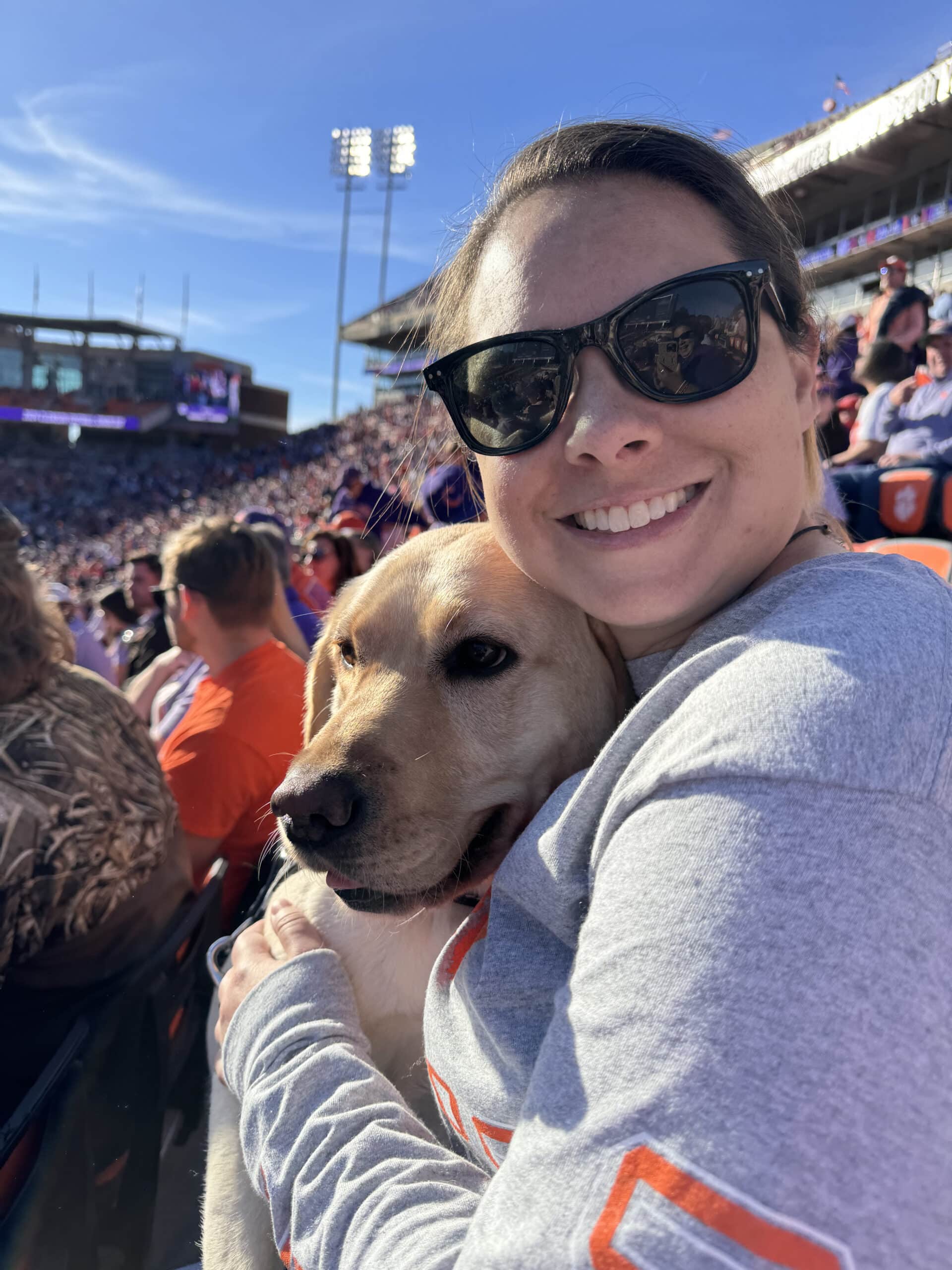
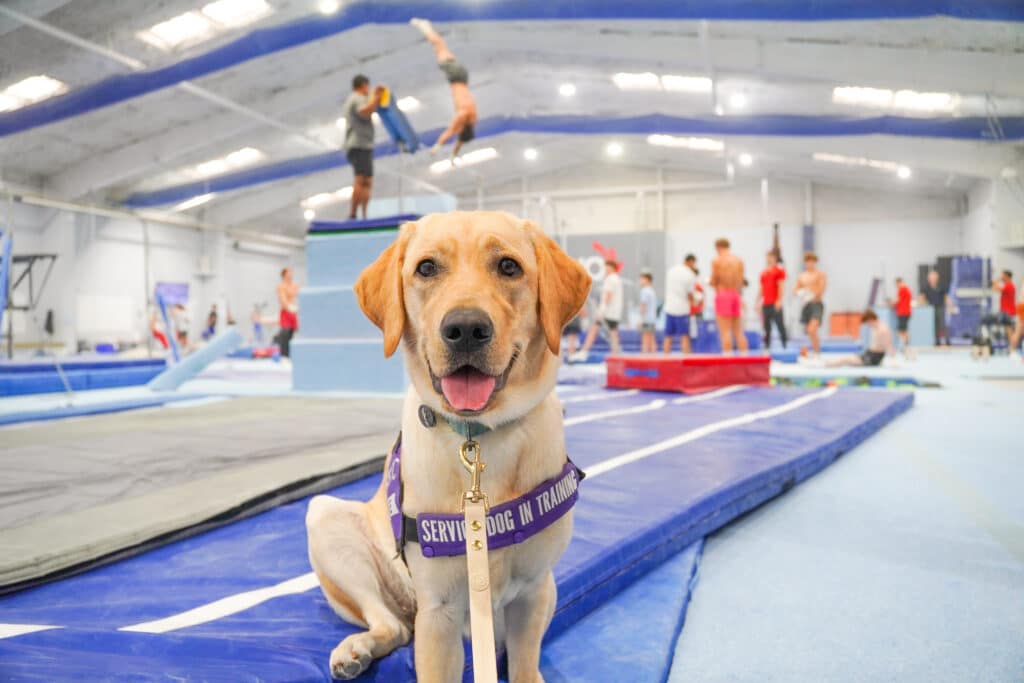
- Intensive Public Access Integration: Alongside task training, dogs undergo systematic public access conditioning. They are deliberately exposed to the most complex human environments—airports, public transit systems, crowded sports venues, and busy dining establishments—under the guidance of professional instructors.
Phase 4: Final Evaluation and Team Matching (Months 18–24)
Before graduation, candidates undergo comprehensive, multi-environment evaluations. Instructors test the dog’s ability to maintain focus under extreme duress, ignore environmental temptations (such as dropped food or other animals), and respond instantly to handler cues. Once certified, the dog is matched with a handler for specialized team training, culminating in a lifelong working partnership built on mutual trust, clear communication, and operational reliability.
Supporting Context & Metrics: The Anatomy of Environmental Challenges
To understand the necessity of public access training, one must examine the specific cognitive and emotional hurdles posed by modern human infrastructure. Dogs process the world primarily through olfaction and hearing, making high-density human environments inherently overwhelming without structured preparation.
+--------------------------------------------------------------------------+
|                       THE PUBLIC ACCESS CHALLENGE MATRIX                 |
+--------------------+------------------------------+----------------------+
| Environment        | Primary Stressors            | Required Canine Skill|
+--------------------+------------------------------+----------------------+
| Airports           | Rolling luggage, security    | Ignore sudden loud   |
|                    | checkpoints, PA systems,     | noises; maintain     |
|                    | moving walkways, dense crowds| steady heel pace     |
+--------------------+------------------------------+----------------------+
| Restaurants        | Food aromas, dropped crumbs, | Extended "down-stay" |
|                    | tight spaces, close contact  | under tables; ignore |
|                    | with unfamiliar diners       | food temptations     |
+--------------------+------------------------------+----------------------+
| Crowded Public     | Unpredictable movements from | High impulse control;|
| Spaces (Festivals, | children, shopping carts,    | resilience around    |
| Malls)             | barking pets, loud music     | erratic stimuli      |
+--------------------+------------------------------+----------------------+
The Airport Terminal
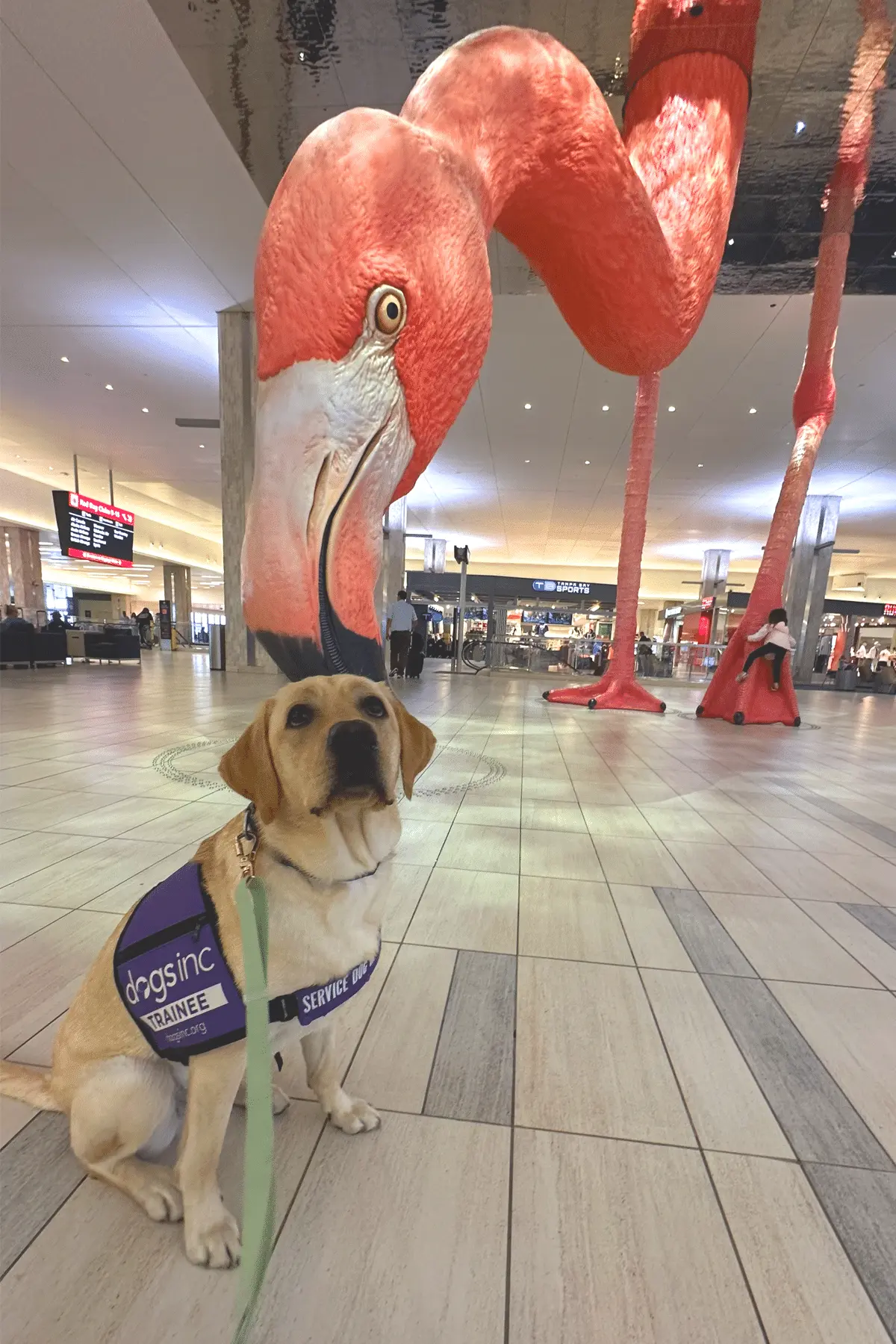
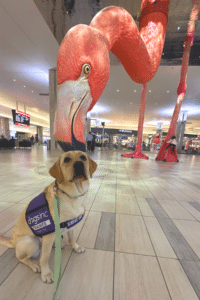
Airports represent the pinnacle of environmental complexity. Service dog airport training exposes candidates to mechanical noises (such as the squeak of rolling luggage wheels and the hum of industrial HVAC systems), automated announcements over public address systems, security screening checkpoints requiring static sits amidst bustling lines, and moving walkways. Dogs must learn that these stimuli are background noise rather than threats, maintaining a calm heel position through chaotic terminals.
The Restaurant Setting
Restaurants present an entirely different psychological and physiological challenge. Unlike outdoor spaces, dining establishments trap and amplify rich food aromas, offer abundant fallen crumbs, and force dogs into tight physical quarters beneath tables or booths. Service dog restaurant training teaches the "settle" or prolonged "down-stay" command. The dog must remain completely composed for an hour or more in cramped quarters, ignoring the strong temptation of nearby meals and the close proximity of passing waitstaff and diners.
High-Density Public Spaces
Shopping malls, downtown pedestrian zones, and public transit hubs provide invaluable settings for crowd training. Here, dogs encounter unpredictable human behavior—children running unpredictably, shopping carts clattering on pavement, bicycles passing closely, and unauthorized pet dogs acting unruly. Developing emotional resilience in these spaces ensures that a working service dog will never react defensively or aggressively when startled.
Distraction Desensitization and Impulse Control
The hallmark of a certified service dog is supreme distraction resilience. Trainers utilize graduated exposure protocols, starting in low-distraction environments and systematically layering in complex stimuli. If a child drops an ice cream cone directly in front of a working dog, or if an unruly pet dog barks aggressively from across a hotel lobby, the service dog must remain utterly indifferent, keeping its attention focused entirely on its handler. This level of impulse control is vital for public safety and operational efficacy.
Official Statements and Industry Insights
The philosophy underpinning modern service dog training emphasizes positive reinforcement, welfare-centric education, and strict adherence to statutory definitions.
Industry leaders and trainers emphasize that public access training is fundamentally distinct from basic obedience.
"Public access training is not merely about teaching a dog to sit, stay, or heel," notes a senior canine behavior specialist. "It is about shaping a sentient partner’s worldview so that it perceives the chaotic, unpredictable human landscape as a safe, manageable environment. We are cultivating an animal that can think critically, remain emotionally regulated under stress, and prioritize its handler’s safety above its own natural instincts."
Experts also stress the critical legal and operational distinction between true service animals and emotional support animals (ESAs). Under the Americans with Disabilities Act (ADA), emotional support animals—while providing therapeutic comfort through their mere presence—do not possess public access rights because they lack individual training to perform specific tasks that mitigate a disability.
"An untrained or improperly behaved animal wearing a vest does a disservice to the entire disability community," regulatory advocates explain. "Public access training ensures that service dogs meet an exacting standard of public safety, hygiene, and behavior. When a business owner or the public encounters a service dog team, they should witness the gold standard of canine discipline and handler partnership."
Furthermore, organizations championing positive reinforcement methodologies underscore that true confidence cannot be beaten or forced into a dog.
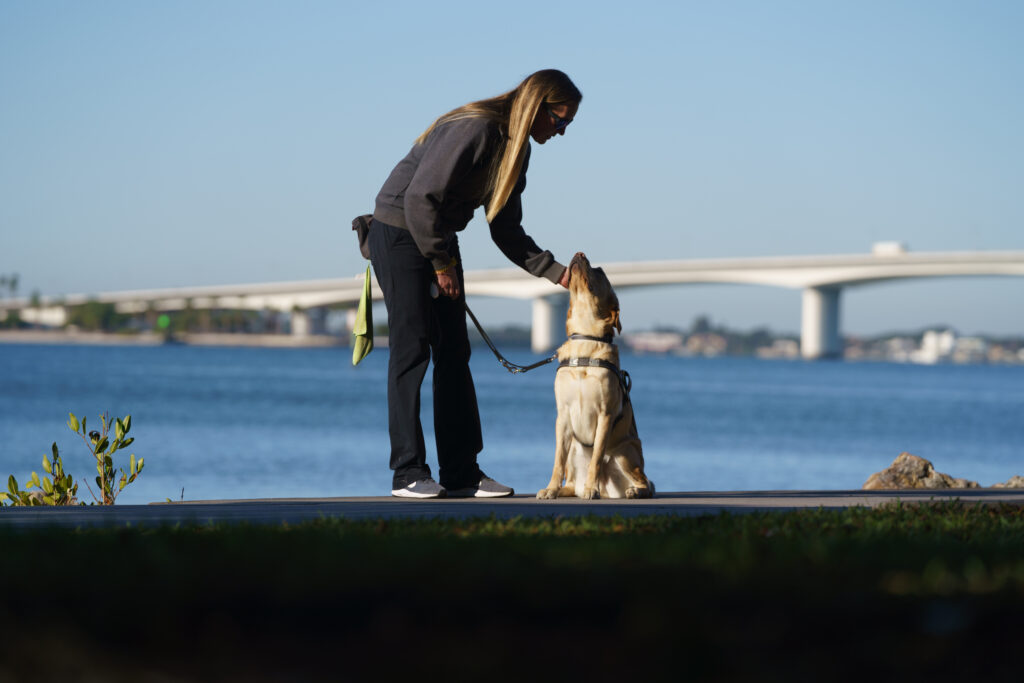
"By utilizing positive reinforcement, we build genuine psychological resilience," training directors state. "When a dog confronts a loud, flashing, or unexpected situation in the real world and receives calm reassurance and rewards for maintaining focus, it builds intrinsic curiosity and trust. That is how you create a fearless working partner."
Future Outlook: Evolution, Accessibility, and the Next Generation
As societal awareness regarding invisible disabilities—such as Post-Traumatic Stress Disorder (PTSD), traumatic brain injuries, severe mobility impairments, and medical alert needs—continues to expand, the demand for highly trained service dogs far outstrips the supply. Looking forward, the landscape of service dog training and public access preparation is evolving through several key fronts:
- Standardized Professional Certification: The industry is moving toward more uniform, internationally recognized standards for public access testing. This helps combat the proliferation of fraudulent online registries and vests, protecting both business owners and legitimate handlers from confusion.
- Technological Integration in Training: Trainers are increasingly utilizing advanced simulation tools—such as recorded ambient audio from airports, subway cars, and crowded stadiums—during early indoor phases to accelerate puppy desensitization before exposing them to live environments.
- Expanded Public Education: Educational campaigns targeted at retail establishments, food service workers, and the general public are reducing instances of illegal service dog denials while simultaneously cracking down on fake service animals. Greater awareness ensures that legitimate working teams can navigate society without unnecessary friction.
- Community-Driven Volunteer Networks: The pipeline relies heavily on civilian participation. As more individuals step forward to serve as puppy raisers and volunteer fosters, organizations can scale their breeding and training operations, ultimately reducing wait times for individuals whose independence depends on a canine partner.
Ultimately, the sophisticated performance witnessed when a service dog guides its handler through a crowded terminal or quietly settles beneath a restaurant table is no accident. It is the product of thousands of hours of intentional, compassionate, and scientific preparation. By merging rigorous public access training with profound early socialization and positive reinforcement, organizations are not merely training dogs—they are engineering independence, dignity, and freedom for individuals navigating the world with disabilities.
To learn more about how organizations like Dogs Inc are preparing future generations of life-changing service dog teams through cutting-edge public access training and community involvement, visit Dogsinc.org.