
Executive Overview
On September 9, a fast-moving residential structure fire in Pasadena, California, nearly claimed the life of Milo, a six-year-old Shetland Sheepdog (Sheltie). Trapped alone inside a rapidly filling home while his family ran errands and his owner was out of the country, the canine’s survival window was shrinking by the second. What began as an ordinary afternoon quickly escalated into a high-stakes, multi-agency emergency operation involving fire departments from Pasadena, Arcadia, and Sierra Madre.
This report provides an investigative, step-by-step reconstruction of the incident. It details the critical intervention of an alert passerby, the tactical deployment of mutual aid search-and-rescue teams, the technical challenges of navigating zero-visibility environments, and the medical efforts required to revive an unconscious animal on the brink of asphyxiation. Beyond the immediate drama of the rescue, this incident highlights the vital role of specialized first-responder equipment, the efficacy of regional mutual aid networks, and the profound human-animal bond that unites rescuers and the families they serve.
Detailed Chronology
The Outbreak and Early Detection
On the afternoon of September 9, the quiet of a Pasadena neighborhood was shattered when an electrical or structural failure triggered a fire inside a local residence. The home’s sole occupant at the time was Milo, a six-year-old Sheltie. His owner, Fernando, was traveling internationally, and the local family members caring for Milo had temporarily stepped out to run routine errands.
As smoke began to billow from the eaves and windows of the structure, the interior atmosphere rapidly deteriorated. Lacking human intervention, the fire threatened to consume the home undetected. The turning point occurred when a delivery driver, traversing his route, noticed dark smoke escaping from the residence. Approaching the property, the driver heard the muffled, frantic barking of a dog trapped inside. Recognizing the immediate danger, the passerby contacted emergency services via 911 at once, providing dispatchers with the critical intelligence that a living creature was trapped within the burning building.
[Family Departs] ──> [Fire Ignites] ──> [Delivery Driver Hears Barking] ──> [911 Call Placed] ──> [Multi-Agency Dispatch]The Arrival and Tactical Entry
The emergency call was routed through the regional dispatch system, triggering a coordinated mutual aid response. Units from the Pasadena Fire Department, Arcadia Fire Department, and Sierra Madre Fire Department were dispatched to the scene.
Upon arrival, crews observed heavy smoke conditions indicative of an active, oxygen-deprived fire. Ring doorbell and security camera footage from neighboring properties captured the urgency of the initial response: Arcadia firefighters rapidly deployed tools to breach a front window, ventilating the structure and creating an alternate point of entry.
Among the responding personnel was Firefighter Jessica Johnson of the Sierra Madre Fire Department. In her second year of professional service, Johnson was facing her first active, working residential structure fire—a milestone scenario that tests the limits of a firefighter’s training, physical endurance, and mental focus.
The Search in Zero Visibility
Inside the residence, the environment had reached a critical threshold. The smoke was thick, black, and toxic, reducing visibility to near zero. The barking that had alerted the delivery driver had ceased, indicating that the trapped animal had succumbed to smoke inhalation or carbon monoxide poisoning.
       [Tactical Entry]
              │
              ▼
   [First Search Attempt]  ──> (Zero Visibility / High Heat)
              │
              ▼
   [Second Search Attempt] ──> (Systematic Grid Search)
              │
              ▼
   [Third Search Attempt]  ──> (Thermal Imaging Camera Deployment)
              │
              ▼
    [Milo Located Under Living Room Table]
Firefighter Johnson entered the burning structure to conduct a primary search. Armed with a thermal imaging camera (TIC)—a device designed to detect heat signatures through dense smoke—she began a systematic grid search of the layout. The conditions were hostile; high ambient heat and thick soot compromised both physical movement and optical clarity.
Johnson made three separate entries into the burning home, refusing to abandon the search despite the deteriorating conditions. On her third sweep, while scanning the living room area near the front window, her thermal camera and physical sweep revealed a small, limp form wedged beneath a table. It was Milo, unresponsive and buried beneath a layer of soot.
"I barely could see him," Johnson recalled in an interview with ABC7. "I just kind of picked him up, brought him outside, and realized you could feel how limp he was."
The Resuscitation Battle
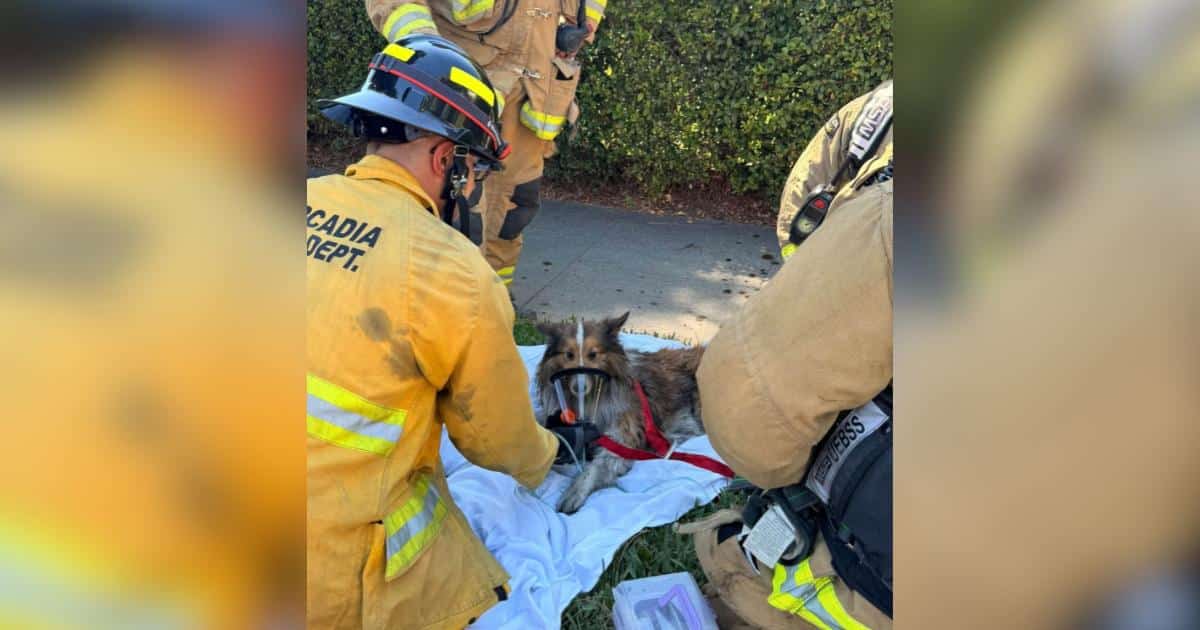
Milo had been trapped inside the smoke-filled environment for an estimated eight to ten minutes. When Johnson carried him onto the front lawn, the dog was clinically unresponsive: he was not breathing, had no discernible muscle tone, and his mucous membranes were cyanotic (blue) from severe oxygen deprivation.
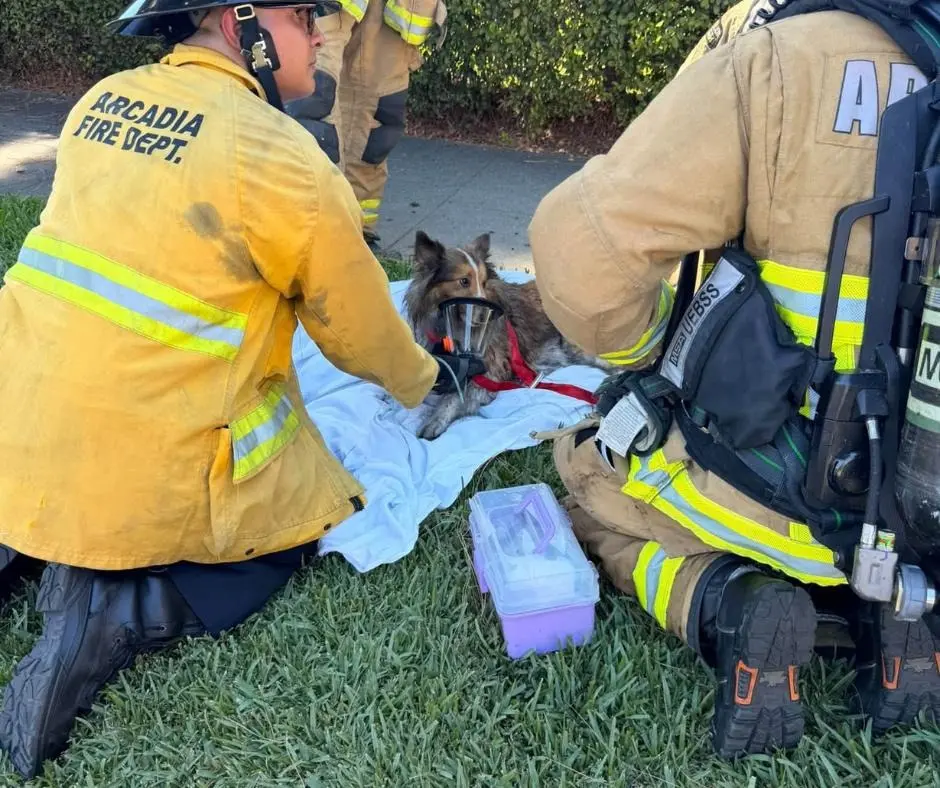
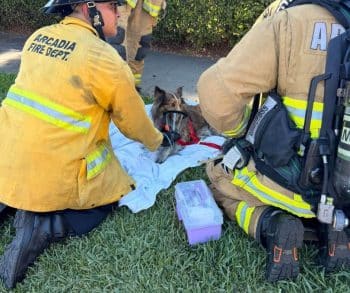
First responders immediately initiated emergency veterinary life support. Firefighters deployed a specialized canine oxygen mask, hooking it up to a high-flow medical oxygen cylinder. These contoured masks are specifically designed to seal around the snout of an animal, ensuring efficient delivery of oxygen compared to standard human masks.
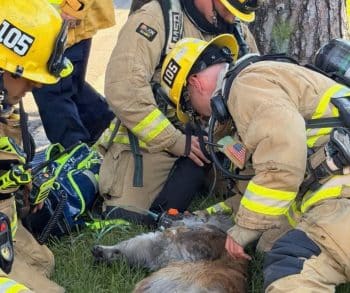
For five agonizing minutes, the rescue crew performed targeted stimulation and continuous oxygen therapy. There were no immediate signs of life. The scene was a tense standoff between the lethal effects of smoke inhalation and the persistent efforts of the first responders.
Finally, Milo’s body twitched. The dog rolled over, took a ragged breath, and began to regain consciousness. Though his fur was heavily stained with soot and his respiratory system was severely compromised, the immediate threat of death had been averted.
Supporting Context & Metrics
The Physiology of Canine Smoke Inhalation
To understand the gravity of Milo’s condition, it is necessary to examine the physiological impact of residential fire smoke on small canines. Fire smoke is a complex mixture of heated gases, particulate matter, and highly toxic compounds, primarily carbon monoxide (CO) and hydrogen cyanide (HCN).
| Compound | Physiological Effect on Canines | Clinical Manifestation |
|---|---|---|
| Carbon Monoxide (CO) | Binds to hemoglobin with an affinity 200 times greater than oxygen, forming carboxyhemoglobin and halting cellular respiration. | Lethargy, loss of consciousness, cherry-red or blue gums, death. |
| Hydrogen Cyanide (HCN) | Inhibits cytochrome oxidase, preventing cells from utilizing what little oxygen is left in the bloodstream. | Rapid collapse, neurological deficits, cardiac arrhythmias. |
| Superheated Particulates | Causes direct thermal burns to the upper airway, leading to rapid edema (swelling) and physical airway obstruction. | Stridor, wheezing, asphyxiation. |
For a dog of Milo’s size (approximately 15–25 pounds), the metabolic rate is higher than that of an adult human, meaning toxic gases are absorbed and processed by the body much faster. The eight to ten minutes Milo spent in the structure represented the absolute limit of canine survivability under such conditions.
[Inhalation of CO & HCN] ──> [Carboxyhemoglobin Formation] ──> [Cellular Hypoxia] ──> [Loss of Consciousness] ──> [Cardiovascular Collapse]The Role of Specialized Equipment
Milo’s survival is directly attributable to the availability of pet-specific oxygen masks. Standard human oxygen masks are designed for flat faces; when used on dogs, they allow significant ambient air leakage, diluting the oxygen concentration. Specialized pet masks feature a deep, conical rubber seal that fits securely over a dog’s muzzle, delivering close to 100% pure oxygen. This high concentration is critical for rapidly displacing carbon monoxide molecules from the animal’s hemoglobin.
Official Statements
The success of the operation drew praise from municipal leaders and fire officials, who highlighted the seamless coordination between the three responding jurisdictions.
Firefighter Jessica Johnson, reflecting on her first active structure fire and the emotional weight of the rescue, stated:
"I shed a little bit of a tear but, you know, you’ve got to keep it professional and continue to do my job. I did my job, and it came out successful, came out rewarding."
A spokesperson for the Sierra Madre Fire Department emphasized the value of regional mutual aid agreements:
"This incident demonstrates the absolute necessity of our joint training and dispatch protocols. When a life is on the line—whether human or animal—the artificial boundaries of city lines disappear. Pasadena, Arcadia, and Sierra Madre worked as a single, cohesive unit to prevent a tragedy."
Fernando, Milo’s owner, expressed the family’s profound relief and gratitude upon returning to find their beloved pet alive:
"We are forever grateful to the firefighters who risked their own safety to pull Milo out of that house. The house can be rebuilt, the walls can be replaced, but Milo is irreplaceable. He is family."
Future Outlook
Milo’s Recovery and Prognosis
Following his resuscitation on the front lawn, Milo was rushed to an emergency veterinary clinic for comprehensive evaluation. Diagnostic imaging and blood gas analyses confirmed that while he had suffered significant smoke inhalation, prompt oxygen therapy had prevented irreversible neurological and organ damage.
After a period of clinical observation, Milo was discharged to his family. Aside from a minor residual cough and the need for temporary bronchodilator therapy, the six-year-old Sheltie has made a stunning recovery. Within days of the fire, his family reported that he was once again active, running, and playing.
[On-Scene Resuscitation] ──> [Emergency Vet Evaluation] ──> [Oxygen Therapy & Monitoring] ──> [Discharge & Full Recovery]The Fire Station Reunion
A few days after the incident, once Milo was medically cleared, his family organized a special reunion at the fire station. The family presented the crew with custom-printed t-shirts featuring Milo’s smiling, healthy face—a token of appreciation for the team that refused to give up during those five critical minutes of resuscitation. For Firefighter Johnson, the reunion solidified a successful start to what promises to be a long career in public service.
Lessons in Pet Fire Safety
The Pasadena fire serves as a stark reminder of the vulnerability of pets during residential emergencies. Fire safety experts recommend that homeowners take several proactive steps to protect their animals:
- Pet Alert Decals: Place highly visible decals on front windows and doors indicating the number and types of pets inside the home. This alerts arriving search-and-rescue crews immediately.
- Monitored Smoke Alarms: Utilize smart, monitored smoke detection systems that send instant alerts to your smartphone or a central monitoring station, allowing for rapid 911 dispatch even when the home is unoccupied.
- Evacuation Drills: Include pets in household fire drills, keeping leashes and carriers near exits for quick access.
While the physical structure of the Pasadena home will require months of extensive remediation and structural repair, the preservation of Milo’s life stands as a testament to the preparation, equipment, and resolve of the San Gabriel Valley’s fire services.