Long before a puppy takes its first clumsy steps, learns to walk in step beside a handler, or steps into the immense responsibility of guiding an individual through a complex world, a profoundly intricate process is already well underway. Behind closed doors, hidden from public view during the earliest, most delicate days of life, newborn puppies undergo rapid neurological and physiological transformations.
At organizations like Dogs Inc, the journey toward producing world-class guide and service dogs does not begin with formal obedience commands or harness training. Instead, it begins at day one. By utilizing science-backed methodologies such as Early Neurological Stimulation (ENS), animal behaviorists and specialized handlers lay the critical biological and psychological groundwork that determines how these future lifesavers will perceive, process, and react to the world around them.
Executive Overview
The development of a high-caliber service dog is a marathon of biological milestones, targeted interventions, and environmental enrichment. While the ultimate goal is to produce resilient, confident, and emotionally stable adult dogs capable of navigating bustling airports, busy city streets, and unpredictable social environments, the blueprint for this success is drafted during the neonatal stage.
Early Neurological Stimulation sits at the foundation of this process. Originally developed for canine military programs, ENS introduces brief, controlled physical stressors to puppies between birth and two weeks of age. Far from being a form of training, these gentle, tactile exercises act as a biological jump-start for the canine nervous system.
When combined with subsequent phases of development—including the transitional stage, the critical socialization window, and adolescent boundary-testing—ENS provides dogs with an enhanced capacity to handle stress, recover quickly from startling stimuli, and adapt to novel environments. This investigative report explores the science, chronology, and strategic importance of early developmental programming at Dogs Inc, offering an authoritative look into how tomorrow’s guide dogs are nurtured from birth.
Detailed Chronology: From Neonatal Beginnings to Adolescent Maturity
A puppy’s path from a blind, deaf newborn to a focused, dependable service dog is mapped across several distinct developmental milestones. Understanding this timeline is essential to appreciating why interventions like ENS are deployed precisely when they are.
The Neonatal Stage (Birth to 2 Weeks)
During the neonatal period, puppies exist in a state of absolute dependency. Blind, deaf, and incapable of regulating their own body temperature, they spend the vast majority of their time alternating between nursing and deep sleep. Their world is entirely tactile and olfactory, mediated almost exclusively by their mother and littermates.
Despite their apparent fragility, their brains and central nervous systems are developing at an explosive rate. This is the precise window during which Early Neurological Stimulation is administered. Because the nervous system is so plastic and impressionable, introducing mild, structured physical challenges during these two weeks yields profound physiological adaptations that persist into adulthood.
The Transitional Stage (2 to 4 Weeks)
As puppies cross the two-week threshold, a miraculous transformation occurs. Their eyes and ears open, abruptly unlocking the senses of sight and sound. By week four, puppies begin to vocalize, walk, and explore their immediate surroundings with tentative curiosity.
Simultaneously, their deciduous teeth begin to erupt, signaling the gradual biological shift from an all-milk diet toward soft gruel and, eventually, solid food. This transitional period bridges the gap between the internal biological priming of ENS and the external social learning that defines the weeks to come.
The Critical Socialization Period (3 to 12 Weeks)
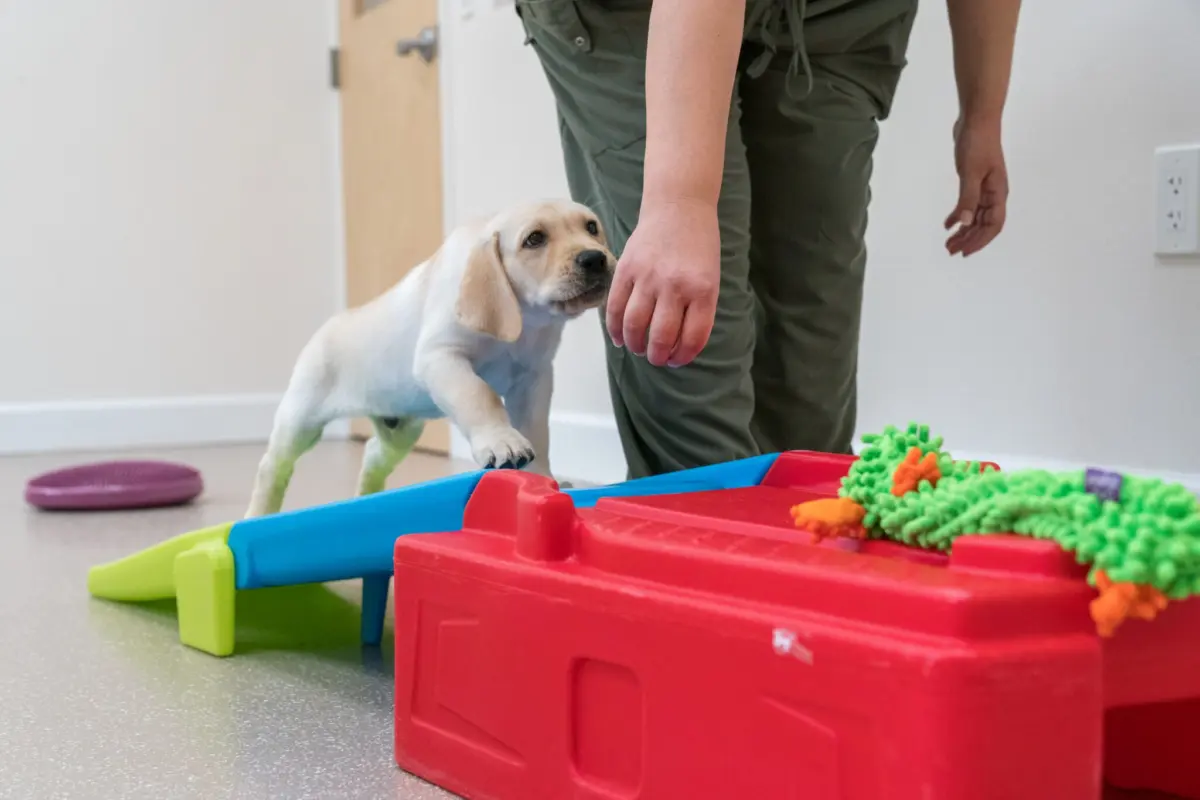
If the neonatal stage is about building hardware, the socialization period is about installing software. Spanning from roughly 3 to 12 weeks of age, this developmental window is arguably the most critical period in a dog’s life.
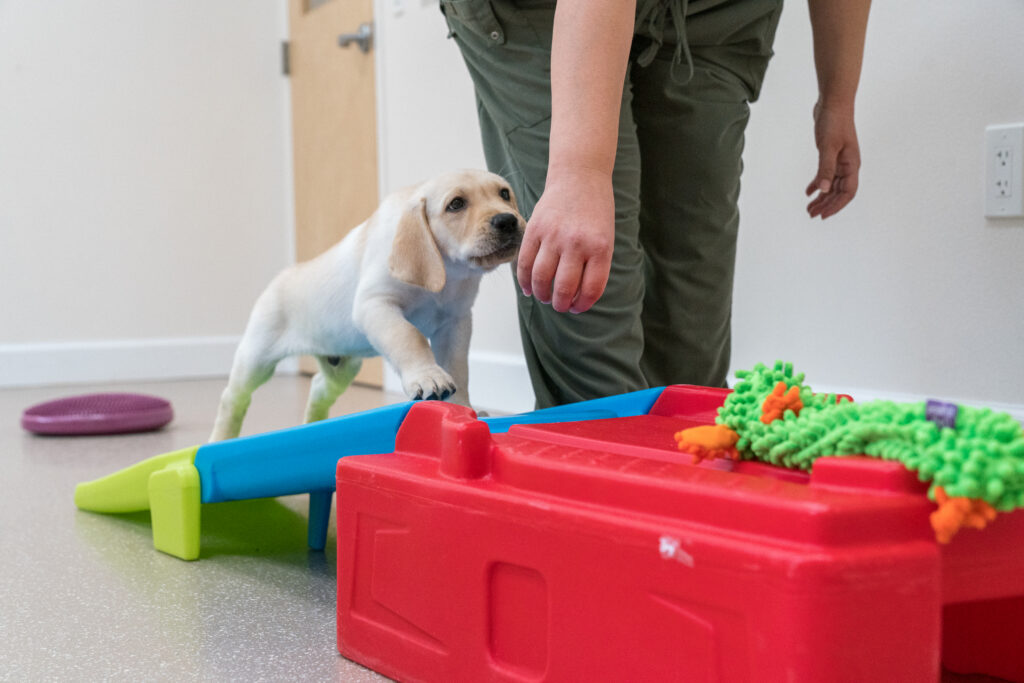
During this timeframe, puppies rapidly transition from cautious observers to active participants in their environment. They begin forming lasting associations with humans, unfamiliar sounds, varied walking surfaces, and other animals. Handlers and puppy raisers expose youngsters to a diverse array of stimuli to build emotional resilience.
Crucially, experts note that puppies experience an average of four distinct "fear periods" as they grow—phases where negative experiences can leave deep, lasting psychological scars. By carefully curating positive exposures and utilizing fear-free training methodologies, handlers help puppies build confidence, curiosity, and adaptability. By week 12, proper socialization acts as a bulwark against adult anxiety, reactivity, and aggression.
Adolescence and Maturity (6 Months to 12 Months)
As puppies transition into the adolescent stage around 6 months of age, they enter their canine equivalent of teenage rebellion. Much like human teenagers, adolescent dogs begin testing boundaries, pushing limits, and navigating the hormonal surges associated with reproductive maturity. For female dogs, this often includes their first heat cycle; for males, it involves hormone-driven behavioral shifts.
Concurrently, structured environments like puppy classes (often recommended starting around 16 weeks) reinforce obedience and social etiquette. By the time a dog reaches 12 months, the combination of early neurological priming, rigorous socialization, and positive reinforcement training culminates in a stable, well-adjusted young adult ready for advanced service training.
Supporting Context & Metrics: The Science and Mechanics of ENS
What does Early Neurological Stimulation actually entail, and why has it maintained a gold-standard status among working dog breeders and organizations for decades?
The Mechanics of ENS Exercises
ENS protocols consist of a series of five distinct, brief tactile exercises performed once daily per puppy. The exercises are strictly standardized and designed to be completed in a matter of seconds to avoid fatiguing or overwhelming the neonate. They include:
Tactile Stimulation: Holding the puppy in one hand and gently tickling them between the toes using a Q-tip for 3 to 5 seconds.
Head Up: Holding the puppy perpendicular to the ground (head up, tail down) for 3 to 5 seconds.
Head Down: Holding the puppy upside down with its head pointed toward the floor for 3 to 5 seconds.
Supine Position: Placing the puppy flat on its back in the palm of the hand, allowing it to rest freely for 3 to 5 seconds.
Thermal Stimulation: Placing the puppy feet-down on a damp, cool towel for 3 to 5 seconds.
Documented Physiological Benefits
While these exercises appear remarkably simple, their biological impact is profound. Controlled studies and decades of operational data from working dog organizations indicate that ENS stimulates the neurological system by introducing mild stressors at a time when the body can easily cope with them.
The purported benefits of this early physiological conditioning include:
Improved Cardiovascular Performance: Enhanced heart rate efficiency and cardiovascular health.
Stronger Stress Tolerance: Greater adaptability to environmental stress and novel situations later in life.
Enhanced Adrenal Function: Improved hormonal regulation under pressure.
Greater Disease Resistance: Anecdotal and observational evidence suggests improved baseline immune system responses.
However, researchers emphasize that ENS is merely one piece of a vastly complex puzzle. A service dog’s ultimate temperament and working capacity are a synthesis of genetics, maternal care, veterinary health, ongoing socialization, environmental enrichment, and expert training. ENS is a catalyst, not a silver bullet.
Official Perspectives: The Philosophy of Early Intervention at Dogs Inc
Organizations dedicated to breeding and training elite assistance animals view early development through a holistic, long-term lens. According to canine development specialists at Dogs Inc, preparing a puppy for a life of service requires an unwavering commitment to quality of care from the moment of birth.
"Long before a puppy ever learns to sit on cue or walk calmly on a leash, an entire world of neurological development is unfolding behind the scenes," notes a leading canine care specialist at Dogs Inc. "We cannot expect a dog to remain calm in a crowded transit hub or maintain focus in a high-stress medical environment if we have not intentionally prepared their nervous system to handle novelty from day one."
Specialists stress that early developmental programs are designed to complement, never replace, comprehensive socialization and positive reinforcement.
"ENS and early handling give us a head start, but true service dog readiness is built layer by layer," the specialist adds. "From the neonatal warming box to the adolescent training yard, every stage of life requires thoughtfulness, empathy, and strict adherence to science-based protocols. We are not manufacturing machines; we are nurturing life-changing partners."
This philosophy underscores the rigorous standards upheld by professional breeding facilities. Every touch, sound, and environmental shift is calculated to foster emotional maturity, curiosity, and unbreakable resilience.
Future Outlook: The Evolution of Canine Development Protocols
As the fields of canine science, behavioral genetics, and veterinary medicine continue to advance, the approach to breeding and raising working dogs is evolving in tandem. The future of service dog preparation points toward even greater individualization, leveraging biometric tracking, data-driven behavioral assessments, and customized enrichment protocols tailored to specific puppy genotypes and behavioral phenotypes.
Yet, despite these technological and scientific advancements, the core tenets established during the neonatal and transitional stages remain unchanged. The foundational weeks of a puppy’s life—governed by gentle touch, structured environmental exposure, and unwavering maternal care—will always dictate the ceiling of their potential.
For organizations like Dogs Inc, this means continuing to refine the delicate balance between science and compassion. By investing heavily in the earliest chapters of a puppy’s life, they ensure that when those tiny paws eventually grow into the steady gait of a certified guide or service dog, the animal walking beside its handler is equipped with the physical, mental, and emotional fortitude to change a life forever.