
Executive Overview
For pet parents dedicated to the safety and well-being of their four-legged family members, the automotive environment presents a persistent, high-stakes dilemma. Striking a delicate balance between a canine companion’s comfort—allowing them enough space to sprawl, relax, and enjoy the journey—and uncompromising safety in the event of a high-speed collision is an ongoing engineering challenge. For years, options dominated the market that promised convenience and luxury, yet failed catastrophically when subjected to rigorous, standardized crash-test protocols.
This investigative review chronicles a multi-year quest to find an optimal vehicular containment and protection system for Chloe, a 15-pound dog whose size places her awkwardly in the automotive safety grey area: too large for standard, rigid micro-carriers that excel in safety laboratories, yet too small to safely utilize standard human seatbelt systems or oversized canine barriers. Following the disheartening failure of the PetEgo Pet Tube—a once-favored collapsible tunnel bed that disintegrated under crash conditions—this inquiry turned toward the independent market, ultimately evaluating the AirPupSaver across both its 25-pound and 45-pound iterations.
After a rigorous, month-long testing period involving daily urban errand runs and extended multi-hour highway road trips, this evaluation provides an authoritative assessment of the AirPupSaver’s design philosophy, installation complexities, day-to-day usability, and overall protective capability. While the product is not without notable ergonomic hurdles and installation learning curves, it emerges as a uniquely engineered, highly defensible solution for pet owners seeking verifiable crash safety for small-to-medium-sized dogs.
Detailed Chronology: The Evolution of a Canine Car Safety Journey
The False Promise of the Pet Tube
The journey began with a straightforward objective: locate a car bed spacious enough for Chloe to sprawl out comfortably during transit while ensuring she would remain securely anchored and shielded from trauma during an accident. Several years ago, this search culminated in the adoption of the PetEgo Pet Tube. Initially praised for its lightweight, collapsible, tunnel-like design that allowed Chloe ample floor space, the illusion of safety was shattered upon the release of independent crash-test documentation. When subjected to simulated vehicular impact forces, the Pet Tube failed miserably, demonstrating a catastrophic structural breakdown that rendered it a hazard rather than a safeguard.
Returning to the drawing board revealed a sobering landscape within the pet safety industry. According to rigorous testing conducted by the Center for Pet Safety (CPS)—notably highlighted in their comprehensive evaluation frameworks—the car seats and carriers that successfully passed strict safety parameters were overwhelmingly designed for diminutive animals.
Examining the Industry Standards: PetEgo Jet Set and Sleepypod
The Center for Pet Safety’s benchmarks favored two primary products:
- The PetEgo Jet Set Forma Frame Carrier (paired with an ISOFIX-Latch Connection).
- The Sleepypod Mobile Pet Bed (secured via the PPRS Handilock system).
While the PetEgo Jet Set is undeniably an aesthetically pleasing, robustly manufactured carrier, long-term scrutiny reveals distinct functional shortcomings. Most notably, its construction features a conservative allocation of mesh paneling. For a traveling animal, restricted mesh translates directly to compromised ventilation and a severe lack of external visibility. Furthermore, dimensional analysis exposes a mismatch in sizing claims. The largest iteration of the Jet Set measures 22 inches in length, 10 inches in width, and 13 inches in height—dimensions the manufacturer suggests are adequate for a 22-pound dog. Practical observation contradicts this assertion. Although marginally longer and taller than Chloe’s preferred SturdiBag, it is a full two inches narrower in the body. Putting a 22-pound animal—or even a sturdy 15-pound dog—into this restrictive enclosure for a substantial interstate road trip invites canine claustrophobia and discomfort.
Similarly, the Sleepypod Mobile Pet Bed stands out as a magnificent piece of engineering. It suffers from zero ventilation deficiencies, and its structural integrity is elite. However, scale remains an insurmountable barrier. The largest variant, the "Sleepypod Medium," measures 13 inches in exterior height and 17 inches in round diameter, translating to a usable internal space that is roughly one to two inches smaller. While an ideal sanctuary for a diminutive dog weighing 10 pounds or less, it proves unforgivingly snug for a 15-pound canine like Chloe.
Pivoting to the AirPupSaver
Prompted by community feedback from fellow travelers and dog owners, the focus shifted to a product conspicuously absent from the formal Center for Pet Safety roster: the AirPupSaver. Despite lacking an official CPS endorsement, the manufacturer has subjected the device to independent crash testing, with documentation and testing footage publicly available for scrutiny.
The AirPupSaver is manufactured in two distinct size brackets:
- AirPupSaver 25: Engineered for dogs weighing up to 25 pounds.
- AirPupSaver 45: Engineered for dogs weighing up to 45 pounds.
Out of investigative curiosity—and a fleeting, ultimately unrealistic hope that the smaller variant might prove portable enough to pack inside standard luggage—both models were procured and subjected to exhaustive, real-world deployment.
Supporting Context & Metrics: Design Philosophy and Structural Mechanics
The "Baseball Mitt" Architecture
The operational concept underpinning the AirPupSaver departs radically from traditional hard-shell crates or rigid booster boxes. Instead, the bed is conceptualized to function structurally like a heavy, padded baseball mitt:
- The Palm: The base where the canine sits, rests, and sleeps. The dog is secured directly to this foundational pad via a dedicated harness-and-strap tether system.
- The Fingers: The elevated perimeter wall rising around the front and sides of the bed.
In the event of a sudden deceleration or frontal collision, the dog is hurled forward, only to be caught in the cushioned "fingers" of the mitt, which absorb and dissipate kinetic energy. While the bed features dense baseline padding, its core innovation lies within its pneumatic architecture. Depending on the specific model, the perimeter "fingers" contain two or three internal air chambers. Utilizing an included manual air pump, these chambers are inflated to create a resilient, high-pressure cushion designed to safely decelerate a hurtling pet.
Dimensional and Vehicular Integration Metrics
Evaluating the two models side-by-side in varied vehicular environments—specifically a Chrysler Town & Country minivan and a station wagon—revealed critical usage metrics:
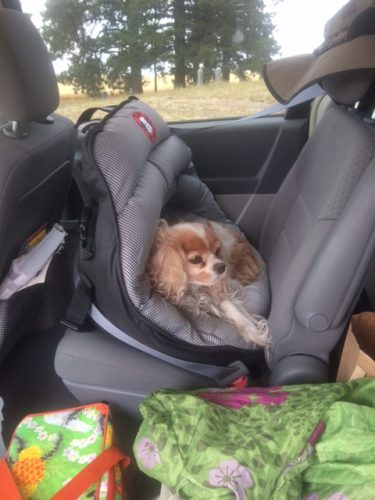
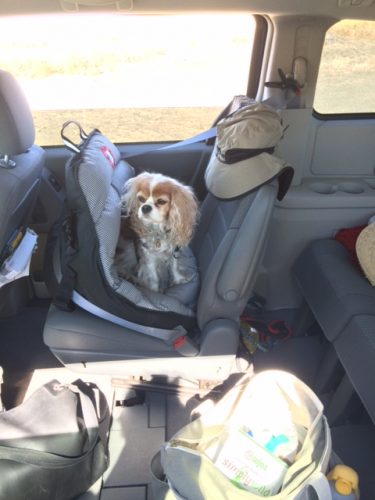
- AirPupSaver 25 Performance: Perfectly proportioned for a 15-pound dog. When installed in the minivan, it secured easily using lower LATCH anchors (designated as clips "A" in manufacturer schematics) combined with the vehicle’s rear shoulder and lap seatbelt. Notably, the 25-pound model omits overhead top-tether straps, drastically simplifying installation and preserving cabin lines. Chloe possessed adequate room to sit, rest, curl, or stretch without feeling overwhelmed by the physical footprint of the bed.
- AirPupSaver 45 Performance: Significantly larger in volume, this model features the base LATCH and seatbelt configurations alongside two additional overhead straps stretching from the top handle of the bed, over the rear of the seatback, and anchoring to the passenger seat’s rear LATCH anchor. While theoretically offering massive sprawl space for larger small dogs, practical testing proved that a 15-pound dog does not utilize the surplus volume. Furthermore, the 45-pound model claims an immense amount of cabin real estate and introduces severe installation friction.
Official Guidelines: Installation Realities and Operational Learnings
The manufacturer provides mixed documentation, supplementing printed instruction packets (which include a heavy-duty seatbelt clamp and an air pump) with three online video demonstrations. Despite these resources, installing the AirPupSaver for the first time is a non-trivial, labor-intensive exercise that discourages casual relocation between vehicles.
[Vehicle LATCH Anchors] ---> [Lower Bed Clips (A)]
                                      |
[Vehicle Seatbelt] --------> [Heavy-Duty Belt Clamp] ---> [Shoulder/Base Plastic Clips] ---> [Standard Buckle]
                                      |
[Pneumatic Chambers] ------> [Manual Pump Inflation] -----> [Structural Deceleration "Fingers"]
Critical Installation Insights Omitted from Manuals
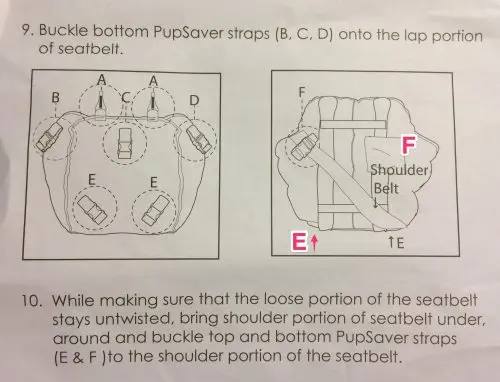
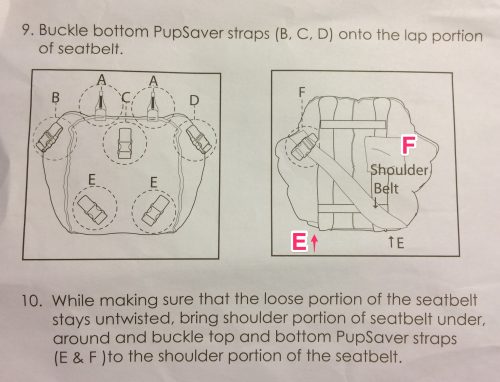
- Asymmetrical Clip Routing: The printed instruction manual features charts detailing bottom bed clips (B, C, D) for lap belts and diagonal belt routing options (E, F). The physical bed actually features dual "E" and "F" clip options. Installers must select the correct pairing strictly based on whether the bed is being mounted on the passenger-side or driver-side rear seat.
- The Role of the Seatbelt Clamp: Unlike child safety seats that rely entirely on vehicle belt locking mechanisms, the AirPupSaver utilizes a heavy-duty metal clamp attached to the vehicle’s wall-side seatbelt. This clamp serves a dual purpose: it allows the precise amount of slack required for the safety system to activate dynamically during an impact, while preventing the taut belt from pulling the upper perimeter of the bed inward and collapsing the space directly over the dog.
- Pneumatic Maintenance: The inflation state of the air chambers is mission-critical. If the chambers lose pressure over time, the "fingers" of the mitt lose structural rigidity, folding inward over the animal like a soft taco—a phenomenon that can cause significant distress to an enclosed pet. Keeping the air pump stored permanently within the vehicle glove compartment or trunk is mandatory for maintaining optimal safety geometry.
Future Outlook: Practical Verdicts and Recommendations
After a rigorous month-long evaluation encompassing urban errand routes and extended cross-country transit, the AirPupSaver earns a conditional, highly favorable endorsement—with specific caveats regarding sizing and lifestyle compatibility.
Advantages
- Verifiable Crash Safety Mechanics: Provides immense psychological relief to pet parents haunted by the catastrophic failure metrics of soft-sided tunnels and unanchored booster beds.
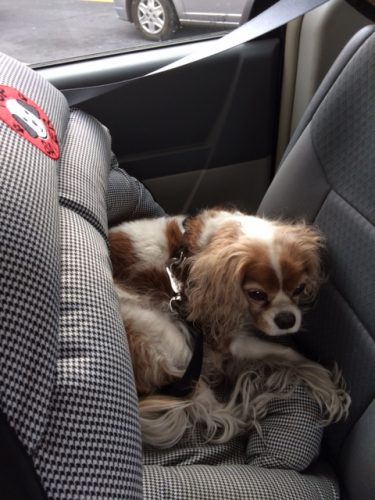
- Open Ventilation: Completely eliminates the airflow and claustrophobia issues inherent to fully enclosed fabric carriers. Chloe is able to observe her surroundings and peer out the vehicle windows.
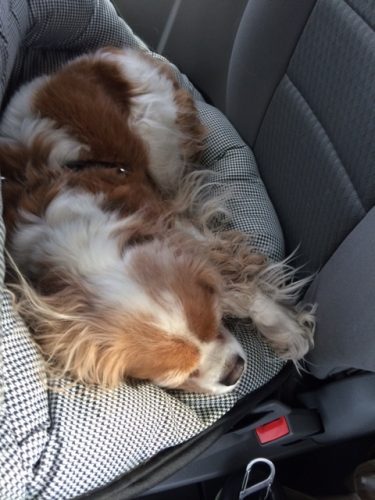
- Canine Comfort: Once acclimated, animals find the cushioned pneumatic basin exceptionally comfortable for sleeping or resting during transit.
Disadvantages and Operational Frictions
- Cumbersome Loading Dynamics: Loading a dog into the internal harness requires leaning over the rear seat. In tight urban environments (such as street parking in Seattle), this leaves the pet parent exposed to passing traffic. A successful workflow requires the human to climb entirely into the vehicle’s rear bench alongside the pet.
- Zero Portability: Unlike collapsible soft carriers that can be tossed into a trunk or flattened into a suitcase, the AirPupSaver is a permanent or semi-permanent automotive installation. Reinstalling it is sufficiently laborious that users will actively avoid moving it between vehicles.
- Harness Sizing Discrepancies: While high-quality, the included safety harness runs exceptionally large. A 15-pound dog like Chloe requires an Extra-Small harness tightened to its absolute limit. Owners of smaller toy breeds must source independent, heavy-duty rear-clip harnesses (such as the Solvit safety harness) to ensure safe integration. (Note: Buyers must also verify whether a harness is bundled with their specific retail order, as promotions fluctuate).
Final Purchasing Recommendations
For pet parents operating vehicles with small-to-medium canine companions weighing up to 15 or 20 pounds, the AirPupSaver 25 represents a masterclass in protective engineering, easily eclipsing rigid micro-carriers and unsafe fabric tunnels. It successfully bridges the chasm between uncompromising crash safety and canine comfort.
For owners of larger small dogs approaching the 40-pound threshold, the AirPupSaver 45 provides the necessary volumetric space, provided the vehicle possesses adequate rear-seat dimensions and the owner is prepared for a more demanding, semi-permanent installation process. Despite its steep learning curve and minor ergonomic trade-offs, the AirPupSaver successfully restores peace of mind to the automotive travel experience.