
Executive Overview
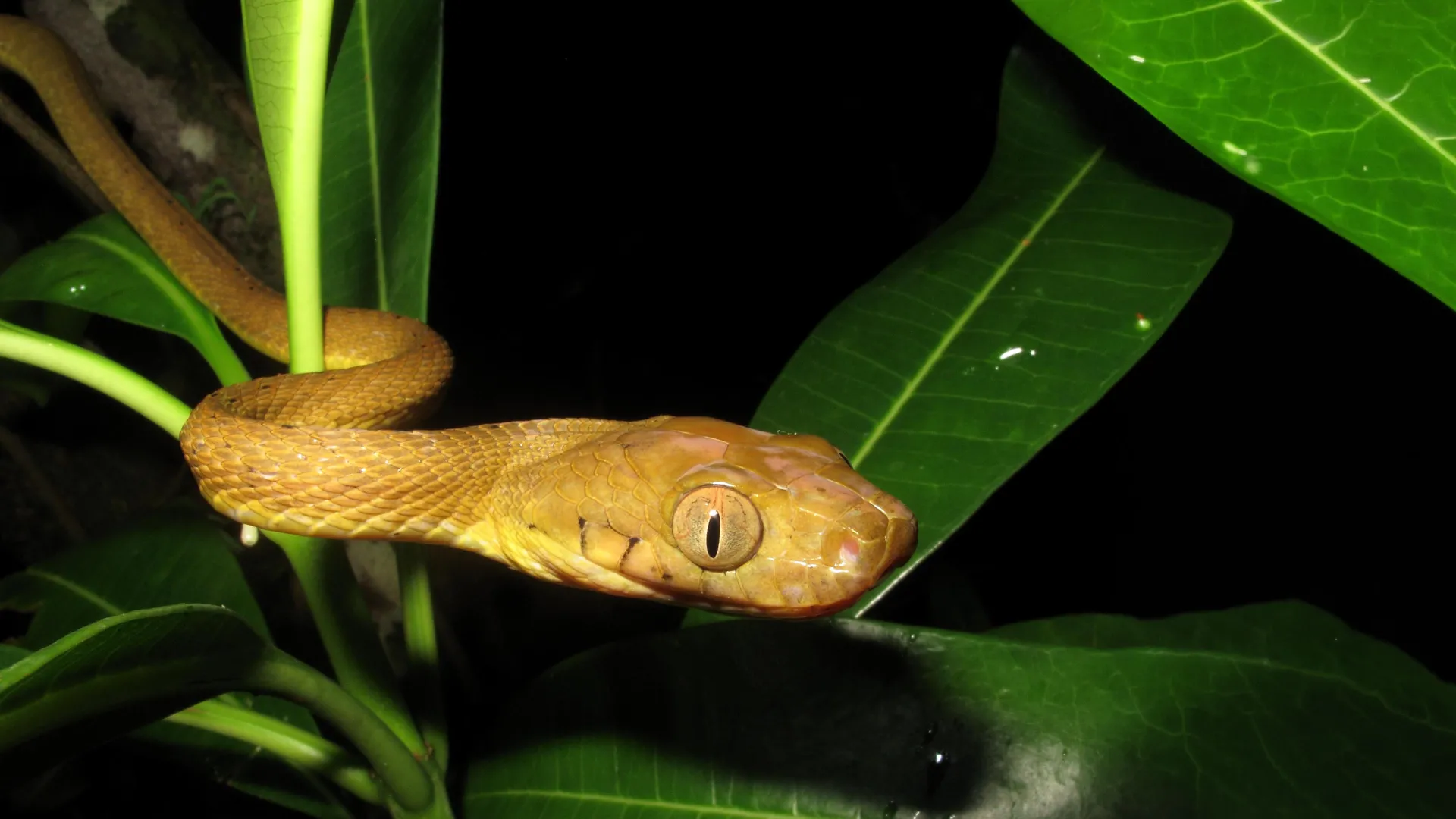
The brown tree snake (Boiga irregularis) stands as a grim textbook example of the catastrophic impacts invasive species can inflict on isolated ecosystems. Native to the forested landscapes of Australia and parts of the South Pacific, this nocturnal, arboreal predator arrived on the U.S. territory of Guam shortly after World War II, likely stowed away inside military cargo aircraft. Unchecked by native predators and met with an island ecosystem utterly unprepared for its hunting prowess, the snake exploded in population density. Today, in certain pockets of Guam, densities have reached an astonishing 30,000 snakes per square mile.
The consequences have been nothing short of apocalyptic for local biodiversity. The brown tree snakes have driven numerous endemic Guam forest bird species to local extinction, fundamentally altering the island’s plant communities that relied on those birds for seed dispersal. Furthermore, their propensity for climbing utility poles and electrical infrastructure triggers hundreds of power outages annually, inflicting significant economic damage on the territory.
For decades, biologists have wrestled with a profound evolutionary paradox known as the "invasion paradox." Standard ecological theory dictates that when a population is founded by only a handful of individuals—as Guam’s brown tree snakes are believed to have been—it suffers from a severe genetic bottleneck. Inbreeding normally strips a population of genetic variation, reducing its ability to adapt to new pathogens, climates, or prey bases, and typically dooms such groups to stagnation or extinction. Yet, the Guam population defied all expectations, mounting one of the most successful and destructive invasions in modern biological history.
Now, a groundbreaking study led by researchers at the University at Buffalo (UB), in collaboration with the U.S. Geological Survey (USGS), has shattered previous assumptions. Published on July 24 in the prestigious journal Science Advances, the research reveals that brown tree snakes harbor a vast, previously invisible reservoir of genetic variation. Utilizing cutting-edge long-read DNA sequencing technologies, the scientific team uncovered more than 19,000 structural variants—large-scale insertions, deletions, duplications, and rearrangements of genetic material—concentrated heavily in vital survival genes governing immunity and olfaction.
This hidden genetic flexibility explains how a tiny founding population bypassed the perils of inbreeding to conquer an island. However, the discovery poses a double-edged sword: while it complicates ongoing eradication and containment efforts on Guam by exposing the snake’s rugged biological resilience, it simultaneously offers a revolutionary beacon of hope for conservationists fighting to rescue critically endangered species facing similar genetic bottlenecks.
Detailed Chronology: From Post-War Stowaway to Genetic Revelation
To fully understand the magnitude of the recent UB-led study, one must trace the timeline of the brown tree snake’s invasion and the technological evolution that ultimately allowed scientists to decode its biological secrets.
- Post-World War II (Circa 1945–1950s): The brown tree snake is accidentally introduced to Guam, likely transported from its native habitats in Australia or the Solomon Islands via military cargo logistics following the conclusion of Pacific theater operations.
- 1960s–1980s (Ecological Collapse): Biologists and local residents begin noticing a catastrophic decline in Guam’s native fauna. Once-abundant forest bird species vanish systematically. By the late 1980s, the realization dawns that the brown tree snake has precipitated a cascading ecosystem collapse, leaving major portions of Guam’s forests virtually silent.
- Late 20th Century to Present (The Invasion Paradox Deepens): Wildlife management agencies, including the USGS Brown Tree Snake Rapid Response Team (RRT), establish stringent cargo inspection protocols to prevent the snakes from spreading to other vulnerable Pacific islands, such as Hawaii and the Commonwealth of the Northern Mariana Islands. Meanwhile, academic geneticists analyze the snakes using standard, legacy DNA sequencing methods, consistently finding low levels of traditional nucleotide diversity and intensifying the mystery of how the population thrives despite severe inbreeding.
- Recent Years (The Technological Leap): Driven by breakthroughs in genomics, long-read sequencing technology matures, allowing geneticists to look past single base-pair mutations and analyze massive stretches of continuous DNA.
- July 24 (The Publication Milestone): The UB and USGS research team publishes its landmark study in Science Advances. By analyzing DNA samples provided by the USGS RRT using long-read sequencing, the team uncovers over 19,000 structural variants, fundamentally rewriting our understanding of what constitutes genetic diversity and how invasive—and endangered—species adapt to extreme pressures.
Supporting Context & Metrics: Unmasking the Genomic Machinery
For years, the scientific community relied heavily on first- and second-generation DNA sequencing tools designed primarily to detect single nucleotide polymorphisms (SNPs)—minor alterations where an individual base pair changes, such as an adenine (A) swapping for a guanine (G), or a thymine (T) shifting to a cytosine (C). While these tools were revolutionary for their time, they operated like an investigator reading two thick volumes letter by letter with a magnifying glass. They could spot a typo in a word, but they were blind to major structural alterations involving entire chapters.
Long-read sequencing changes the paradigm entirely. By capturing much larger, continuous pieces of a genome, researchers can identify structural variants (SVs)—genetic alterations spanning 50 base pairs or more, including insertions, inversions, translocations, and large deletions or duplications.
When aggregated, these structural variants alter nearly eight times more of the genome than single base-pair changes combined. This explains why traditional metrics missed the mark when evaluating Guam’s snakes; scientists were looking in the right book, but using a method incapable of seeing that entire paragraphs had been transposed, duplicated, or deleted.
When the research team processed DNA samples in UB laboratories, the scale of the hidden variation became apparent:
- Over 19,000 Structural Variants: The team cataloged roughly 19,000 discrete genomic locations where sections of DNA differed substantially across the snake population due to structural modifications.
- Hotspots in Immunity and Smell: These variants were far from randomly scattered. They clustered densely within genes responsible for immune system defense and olfaction (the sense of smell).
- Olfactory Specialization: Brown tree snakes navigate their environments and locate prey primarily through smell, flicking their forked tongues to capture airborne chemical cues. The heightened diversity in their olfactory genes carries fascinating behavioral implications. In their native Australian and South Pacific ranges, brown tree snakes are known to engage in cannibalism. Yet, on Guam—where inbreeding is rampant and populations are hyper-dense—such aggressive intraspecific predation is rarely observed. The researchers hypothesize that specialized olfactory variations allow the snakes to recognize one another as kin rather than meals, mitigating destructive cannibalism and supporting high population densities.
- Population Densities: In localized areas of Guam, brown tree snake numbers have peaked at catastrophic levels of up to 30,000 snakes per square mile, sustained by an absence of natural predators and an abundance of vulnerable prey.
Official Statements & Expert Insights
The implications of this study stretch far beyond the jungles of Guam, challenging fundamental tenets of evolutionary biology and conservation genetics. The study’s authors and collaborators emphasize both the sobering realities for pest management and the optimistic takeaways for wildlife preservation.
Dr. Trevor Krabbenhoft, PhD, associate professor in the UB Department of Biological Sciences and corresponding author of the study, contextualized the findings regarding the snake’s true genetic standing:
"The brown tree snake is maybe not wildly diverse, but it has important sources of genetic diversity that have been underappreciated."
Dr. Christopher Osborne, PhD, former doctoral student in Krabbenhoft’s laboratory and currently an aquatic biologist at the State University of New York (SUNY) Oswego, highlighted the dual nature of the discovery—pointing out that understanding these hidden genetic mechanisms cuts both ways for conservation and pest control:
"It’s possible that endangered species may have more flexibility in their genes than we realize. We’re now getting a better understanding of unappreciated sources of genetic diversity that may explain how some inbred species can still respond to their environment."
Dr. Levi Gray, PhD, a postdoctoral researcher in Krabbenhoft’s lab who previously studied Guam’s snake crisis while working directly with the USGS, used a vivid literary analogy to describe the limitations of historical genetic analysis:
"It’s like looking at portions of two books letter by letter with a magnifying glass and thinking they’re the same, but not realizing entire paragraphs have been moved around or duplicated. Older sequencing technology didn’t allow us to easily see that DNA in one individual might be in a completely different place on the chromosome than in another. How we define genetic diversity and how we actually measure it is shaped largely by the technology of the day."
Reflecting on the behavioral mysteries of the snake population on Guam, Dr. Gray added:
"The snakes’ heightened sense of smell may allow them to recognize one another as something more like siblings—especially given the high levels of inbreeding—than as prey."
Addressing the ongoing scientific debate over the origins of these structural variants, Dr. Gray noted that further comparative research is mandatory:
"Is it possible some of this diversity emerged after the invasion? It is, but we would have to sequence snakes from the native populations to know for sure."
Future Outlook: Managing Invaders and Saving the Endangered
As wildlife management agencies digest the findings of the UB-led study, the path forward involves both daunting challenges and renewed scientific optimism.
Implications for Invasive Species Management
For organizations like the USGS Brown Tree Snake Rapid Response Team, the confirmation that brown tree snakes possess deep, structurally diverse genetic reserves is a sobering reality check. Eradication and containment strategies assume that bottlenecked invasive species are fragile or genetically brittle. If structural variants provide these snakes with enhanced immunological adaptability and superior environmental tracking capabilities, eradication efforts must account for an organism that is biologically tougher and more evolutionarily nimble than previously suspected. Future biosecurity protocols must remain unyielding to prevent this resilient pest from breaching containment lines and establishing footholds in biodiversity hotspots like Hawaii.
A Lifeline for Endangered Species
Conversely, conservation geneticists managing endangered species teetering on the brink of extinction have reason for cautious optimism. For decades, conservation programs have panicked when captive breeding programs or wild populations dwindled to mere handfuls of individuals, fearing that inbreeding depression would inevitably seal the species’ fate.
If structural variants—such as those discovered in the brown tree snake—are common across the animal kingdom, many threatened species may possess latent genetic flexibility that standard tests fail to capture. This hidden genomic architecture could provide endangered populations with the underlying tools needed to withstand novel diseases, habitat fragmentation, and rapid climate shifts.
The Next Scientific Frontier
To build upon these insights, the research team—which includes USGS scientists M. Renee Bellinger, PhD, and Melia Nafus, PhD, alongside UB researchers Brian Foote, Steven Fleck, PhD, Sarah Chang, and Hannah Waterman—must now turn their attention to the snakes’ native ranges. By sequencing the genomes of brown tree snakes from Australia and surrounding Pacific islands, scientists can determine definitively whether the 19,000 structural variants were present in the original founding few or if the extreme pressures of the Guam invasion somehow catalyzed the rapid generation of these genomic rearrangements.
Ultimately, this study underscores a profound lesson in modern biology: our understanding of life’s adaptability is entirely bound by the resolution of our tools. As long-read sequencing continues to unmask the hidden architecture of genomes, humanity gains a clearer, albeit more complex, view of the forces driving both ecological destruction and biological survival.