
Executive Overview
Every spring and autumn, the night skies above North America transform into one of the planet’s most magnificent ecological spectacles. Billions of birds take to the air, moving in vast, nocturnal waves between their wintering grounds and summer breeding habitats. Hundreds of millions of these avian travelers funnel directly over the Southwestern United States, traversing the complex topographies of Arizona, New Mexico, and surrounding arid lands. For millennia, these journeys have been governed by ancient biological clocks, innate magnetic senses, and the unchanging patterns of the cosmos.
However, the modern nocturnal landscape of the Southwest has changed dramatically. The rapid expansion of brightly lit urban centers—most notably metropolitan hubs like Phoenix and Albuquerque—has flooded the night sky with a persistent, disorienting artificial glow. This phenomenon, widely known as light pollution, poses an insidious and often overlooked threat to migrating wildlife.
Artificial light at night (ALAT) disrupts the celestial navigation systems of nocturnal migrants, drawing millions of birds fatally off course into concrete canyons, glass-paneled skyscrapers, and suburban residential zones. Once disoriented by urban glow, these exhausted animals face severe risks of building collisions, exhaustion, and increased vulnerability to predators.
While large-scale urban mitigation efforts—such as municipal "Lights Out" programs—are critical, the responsibility does not rest solely on commercial developers and city planners. Residential properties account for a massive share of the cumulative light footprint blanketing the American Southwest. Fortunately, mitigating this crisis does not require a return to total darkness. By adopting targeted, intentional home lighting practices, everyday residents can play a direct role in safeguarding the night skies.
This report investigates the mechanics of nocturnal avian migration, examines the ecological toll of artificial light, and outlines actionable, scientifically backed strategies that homeowners can implement immediately to protect vulnerable migratory species.
Detailed Chronology: The Journey and Disruption of Southwestern Migrations
To understand why residential lighting poses such a profound danger, one must first examine the temporal and spatial dynamics of the journey undertaken by millions of birds each year.
The Spring Push (March to June)
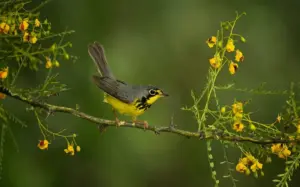
As winter recedes, migratory birds begin their northward journey from Central America, Mexico, and South America. By March and April, the vanguard of this movement reaches the Southwestern United States. Species such as warblers, tanagers, flycatchers, and grosbeaks rely heavily on the rich riparian corridors, mountain ranges, and desert scrublands of Arizona and New Mexico as stopover habitats to rest and refuel.
Because daytime temperatures in the desert Southwest can be punishingly high during late spring, the vast majority of these songbirds migrate under the cover of darkness. Flying at altitudes ranging from several hundred to several thousand feet, they navigate using polarized light at sunset, Earth’s geomagnetic field, and—crucially—the constellations of the night sky.
The Autumn Descent (August to November)
The cycle reverses as the northern breeding season concludes. Beginning in late summer and extending through November, billions of birds—now including the vulnerable fledglings of the year—retrace their paths southward. These young birds are making the journey for the very first time, relying almost entirely on genetic programming.
It is during this critical autumn window that the convergence of dense migration and urban sprawl peaks. As birds descend from high-altitude flight paths to find nocturnal resting spots, they encounter the sprawling glow of Southwestern population centers. Instead of navigating by starlight, migrating flocks are frequently lured toward low-level urban and suburban lighting, mistaking residential glow for natural horizon cues or safe foraging grounds.
The Mechanism of Disorientation
When migrating birds encounter intense artificial light sources, a phenomenon known as "fatal attraction" or "trap light" occurs. High-intensity light scatters through atmospheric moisture and dust, creating disorienting sky glow that obscures celestial navigation markers.
Disoriented birds become trapped within the illuminated urban and suburban matrix. Circling aimlessly around light sources, they rapidly deplete their critical energy reserves. Exhausted, disoriented, and blinded by glare, these birds frequently collide with residential windows, exterior walls, and vehicle windshields, or fall easy prey to domestic cats and other urban predators.
Supporting Context & Metrics: The Scale of the Crisis
The ecological impact of artificial light at night on migratory birds is supported by decades of ornithological research, population tracking, and satellite data mapping.
Quantifying the Southwestern Sky
The American Southwest features some of the fastest-growing metropolitan areas in the United States. Phoenix, Tucson, Las Vegas, and Albuquerque represent concentrated zones of high-intensity luminescence. According to satellite radiometer data analyzed by conservation scientists, light pollution in the Southwest has expanded at a rate outpacing population growth, driven largely by the unshielded adoption of high-intensity, cheap-to-operate Light Emitting Diode (LED) technology.
Ornithological studies utilizing regional radar networks—such as the WSR-88D weather surveillance system—consistently demonstrate that migration density over the Southwestern deserts peaks dramatically on clear, moonless nights during spring and fall. These are precisely the nights when the contrast between natural darkness and artificial light is most extreme, magnifying the pull of urban and suburban light domes on passing flocks.
The Vulnerability of Nocturnal Migrants
While diurnal birds (those that migrate by day, such as hawks and swallows) rely primarily on landmarks and thermal currents, roughly 80% of North America’s songbird species migrate exclusively at night. This group includes iconic and ecologically vital taxa:
- New World Warblers: Highly sensitive insectivores that play a crucial role in controlling forest and agricultural pest populations.
- Buntings and Grosbeaks: Renowned for their vibrant plumage and melodic songs, heavily reliant on nocturnal compass mechanisms.
- Thrushes and Sparrows: Ground-foraging species that utilize nighttime flight paths to bypass inhospitable desert expanses.
The cumulative mortality rate resulting from structural collisions and light-induced exhaustion numbers in the hundreds of millions of birds annually across North America. In residential environments, even a single poorly designed exterior floodlight can serve as a localized lethal attractor during peak migration weeks.
Official Statements & Expert Guidance
Leading conservation organizations, dark-sky advocates, and wildlife biologists have converged on a unified set of best practices to address the crisis of artificial light pollution.
The Role of the International Dark-Sky Association (DarkSky International)
DarkSky International, a global authority on light pollution mitigation, emphasizes that not all outdoor lighting is inherently harmful; rather, it is the mismanagement of light that causes ecological devastation.
"Light pollution is entirely reversible," notes the organization’s technical advisory documentation. "By deploying lighting only where it is needed, when it is needed, and in appropriate color temperatures, we can dramatically reduce the artificial glow that interferes with wildlife behavior while simultaneously improving human safety and energy efficiency."
Audubon Society Perspectives
The National Audubon Society, through initiatives like Lights Out Phoenix and regional conservation programs in New Mexico and Arizona, stresses the importance of residential participation. While commercial towers and downtown high-rises garner significant media attention during mass collision events, cumulative suburban lighting creates a broad, diffuse hazard zone that spans thousands of square miles.
Conservation experts point out that residential adjustments require minimal financial investment while yielding immediate ecological dividends. The integration of three foundational modifications—shielding fixtures, altering bulb specifications, and eliminating unnecessary illumination—forms the bedrock of modern bird-friendly architecture and landscaping.
Future Outlook: Practical Steps for Homeowners
Reversing the impact of artificial light on migratory birds does not require plunging homes and neighborhoods into total darkness. Instead, it requires a shift toward mindful, targeted lighting design. Below is a comprehensive guide to implementing bird-friendly lighting practices on any residential property in the American Southwest.
Tip 1: Choose Shielded Outdoor Fixtures
One of the most effective structural defenses against light pollution is the complete replacement or retrofitting of unshielded light fixtures.
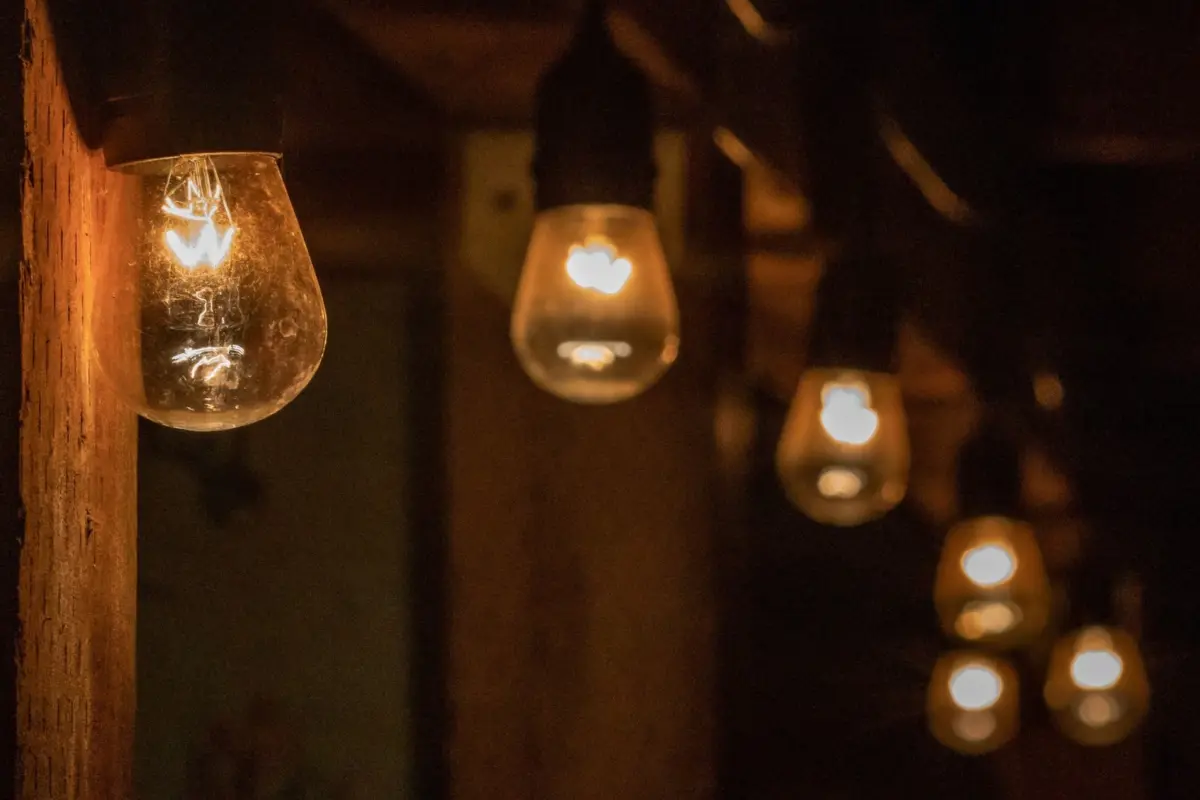
- The Problem with Unshielded Light: Traditional "globe" lights, coach lanterns with clear glass panes, and unshielded floodlights spray illumination in a 360-degree radius. This scatters photons upward and outward, directly into the nocturnal flight paths of migrating birds and contributing heavily to regional sky glow.
- The Shielded Solution: Fully shielded fixtures—often designated as "Dark Sky Approved"—direct all light strictly downward toward the ground where it is functionally required for safety and visibility. By capping the top and sides of the light source, these fixtures eliminate upward glare and significantly reduce light trespass onto neighboring properties and into the open sky.
- Implementation: Property owners can consult the International Dark-Sky Association’s product database to source certified fixtures, or install metal hoods and shields over existing outdoor lamps to redirect misplaced rays.
Tip 2: Switch to Warmer, Lower-Lumen Bulbs
When upgrading fixtures is impractical, modifying the characteristics of the bulbs themselves offers an immediate and impactful alternative.
- Mind the Lumens, Not the Watts: In the era of energy-efficient lighting, wattage is no longer an accurate measure of brightness. Homeowners should look specifically at lumens, which quantify the total amount of visible light emitted by a source. For general residential outdoor security and pathway illumination, lower-lumen bulbs (typically 400 to 800 lumens) provide more than adequate visibility without generating excessive nighttime glare.
- Prioritize Color Temperature (Kelvin Scale): The color spectrum of outdoor lighting plays a profound role in wildlife disruption. Many modern LED bulbs emit a harsh, cool, blue-rich light (measured at 3000K to 5000K or higher). This short-wavelength blue light scatters easily through the atmosphere, travels significantly farther, and has a disproportionately disorienting effect on the biological rhythms of birds, insects, and humans.
- The 2200K Standard: Homeowners should select warm-colored outdoor bulbs with a color temperature of 2200 Kelvin or below. These amber-toned, softer lights closely mimic natural twilight or firelight, creating minimal sky glow and leaving avian navigational systems undisturbed.
Tip 3: Turn Off Unnecessary Lights
Technology has made it easier than ever to ensure that outdoor lighting is active exclusively when it serves a verifiable purpose.
- The Audit: Conduct a nighttime walk around your property during peak migration seasons (spring and autumn). Evaluate every exterior light source with a critical eye: Does this light genuinely need to remain on for safety or security throughout the entire night?
- Automation and Motion Sensors: Many exterior lights are left burning out of habit rather than necessity. Equipping outdoor lights with motion sensors, automated timers, or smart-home dimmers ensures that illumination activates only when movement is detected or during specific evening hours when human activity is underway.
- The Total Shutdown Option: For decorative landscape lighting, accent spotlights, and patio bulbs that serve no essential security function, turning the switches off entirely between 11:00 PM and 6:00 AM during migration windows makes an immediate, life-saving difference for passing flocks.
Conclusion: Every Light Matters
For thousands of years, the nocturnal skies over the deserts, mountains, and river valleys of Arizona, New Mexico, and the broader American Southwest have guided migrating birds along their ancestral pathways. The stars have served as an unchanging compass, ensuring the survival of species that connect our ecosystems from pole to pole.
Today, the glow of human habitation threatens to sever this ancient connection. Yet, the solution lies within our immediate control. By embracing shielded fixtures, opting for warm, low-lumen bulbs, and exercising restraint with unnecessary illumination, residents of the Southwest can transform their homes from ecological traps into safe havens.
As we look to the future of our urban and suburban landscapes, intentional lighting choices reaffirm our coexistence with the natural world. Every bulb shielded, dimmed, or switched off is a beacon of safety restored to the night sky—ensuring that the extraordinary journeys of North America’s migratory birds continue for generations to come.