Executive Overview
As global temperatures continue to break historical seasonal records, summer weather presents severe physiological challenges for domestic canines. High ambient temperatures combined with high humidity place dogs at immediate risk of hyperthermia, heat stroke, and dehydration. Unlike humans, who regulate body temperature primarily through eccrine sweat glands spread across the entire cutaneous surface, canines rely almost exclusively on panting and minimal sweating through their paw pads to dissipate internal heat.
To mitigate these severe environmental risks, veterinarians, animal behaviorists, and canine sports authorities increasingly advocate for structured aquatic engagement. Water activities not only lower core body temperatures rapidly through thermal conduction but also provide low-impact cardiovascular conditioning, joint rehabilitation, and critical mental stimulation.
This comprehensive report examines the spectrum of summer water activities for dogs—ranging from casual backyard play to elite competitive sports like dock diving—while establishing rigorous safety protocols, equipment standards, and step-by-step behavioral integration techniques. By synthesizing expert veterinary guidance with modern pet lifestyle trends, this investigation serves as an authoritative manual for responsible pet ownership during peak summer months.
Detailed Chronology: The Evolution of Canine Aquatic Recreation
The integration of dogs into human water sports and recreational spaces has undergone a significant cultural and infrastructural shift over the past three decades. Understanding this progression highlights how modern canine recreation transitioned from informal swimming to a formalized industry complete with specialized competitive leagues, municipal adaptations, and dedicated gear engineering.

Phase One: The Era of Natural and Informal Swimming (Late 20th Century)
Historically, canine water access was largely restricted to natural bodies of water—lakes, rivers, and oceans—where pets accompanied owners during camping or hiking trips. Urban and suburban dogs were largely excluded from municipal water features due to public health codes, strict leash laws, and a lack of designated canine infrastructure. Swimming was viewed primarily as an instinctual pastime for sporting breeds rather than a universally accessible form of structured exercise or urban enrichment.
Phase Two: The Rise of Municipal Adaptations and Backyard Innovations (Early 2000s)
As pet ownership demographics shifted toward urban centers and dogs increasingly became integrated into family structures, the demand for accessible water outlets grew. Forward-thinking municipalities began designing public parks with dog-friendly water access, while urban centers started permitting leashed dogs in select community fountains, such as Seattle’s iconic International Fountain. Concurrently, the pet product market introduced portable, durable backyard solutions, replacing fragile inflatable swimming pools with rigid plastic kiddie pools and transitioning toddler splash pads into dedicated canine cooling stations.
Phase Three: The Professionalization of Canine Water Sports (2010s–Present)
Today, canine aquatic recreation is a sophisticated, highly regulated sector of the pet industry. Organizations such as North American Diving Dogs (NADD) have transformed casual pool jumping into an organized, nationally recognized competitive sport with standardized judging, official titles, and specialized training facilities. Furthermore, advancements in pet gear—such as high-buoyancy canine life jackets, water-resistant GPS tracking collars, and specialized paddleboards—have transformed water sports into safe, mainstream activities accessible to dogs of all breeds, ages, and physical capabilities.
Supporting Context & Metrics: Physiology, Risks, and Activity Categories
To understand the necessity of canine water activities, one must analyze the biometrics of canine thermoregulation and the specific physiological vulnerabilities dogs face during high-temperature months.

Physiological Metrics and Environmental Hazards
Canines operate at a normal core body temperature ranging from 101°F to 102.5°F (38.3°C to 39.2°C). When ambient temperatures exceed 85°F (29°C) with elevated humidity, the efficiency of panting drops precipitously.
- Hyperthermia Threshold: Core temperatures exceeding 106°F (41.1°C) can lead to multi-organ dysfunction, disseminated intravascular coagulation (DIC), and death within minutes.
- Brachycephalic Vulnerability: Flat-faced breeds (e.g., French Bulldogs, English Bulldogs, Pugs) possess anatomical anomalies—including stenotic nares, an elongated soft palate, and hypoplastic tracheas—that render natural panting highly inefficient. These breeds face an exponentially higher risk of fatal heat-induced respiratory distress during summer months.
- Water Intoxication (Hyponatremia): A critical yet frequently overlooked hazard is water intoxication, clinically known as hyponatremia. When dogs enthusiastically retrieve floating toys or bite at high-pressure sprinkler streams, they often ingest massive volumes of water involuntarily. This rapidly dilutes serum sodium levels in the bloodstream, leading to cerebral edema, neurological impairment, lethargy, vomiting, and potentially fatal seizures.
Categorizing Canine Water Activities
Canine aquatic engagement can be systematically divided into four distinct categories based on intensity, urban accessibility, and environmental requirements:
- Urban and Low-Impact Cooling (Public Fountains & Splash Pads): Designed for city-dwelling dogs lacking private yards, utilizing municipal water features or toddler splash pads hooked to garden hoses to provide low-impact, shallow-water cooling.
- Backyard Immersion (Puppy Pools & Sprinkler Chasing): Controlled, private environments utilizing rigid plastic pools and oscillating sprinklers designed to stimulate prey/herding drives while safely lowering body temperature.
- Endurance and Exploration (Paddleboarding & Kayaking): Balanced, calm-water adventures requiring specialized canine flotation devices and rigorous deck-training protocols.
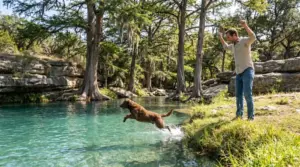
- High-Performance Athletics (Dock Diving): Elite competitive sports demanding explosive muscular power, advanced coordination, and specialized training facilities.
Official Guidelines and Expert Protocols
Implementing safe water activities requires strict adherence to behavioral science and veterinary safety standards. Industry experts emphasize that water immersion should never be forced upon an animal.
Behavioral Desensitization and Water Introduction
Many dogs—particularly water-retrieval breeds such as Labradors, Golden Retrievers, Poodles, and Newfoundlands—possess genetic predispositions toward swimming. However, millions of dogs experience acute aquaphobia or uncertainty when faced with unfamiliar water bodies.

- The Opt-In Principle: Animal behaviorists mandate that dogs must be allowed to "opt-in" to water activities. Forcing a hesitant dog into a pool or lake triggers severe cortisol spikes, damages trust, and can create a lifelong aversion to water.
- Step-by-Step Acclimatization:
- Dry Land Introduction: Lay out inflatable or rigid pools, paddleboards, or life jackets in the living room or yard without water, rewarding the dog with high-value treats for physical contact.
- Shallow Exploration: Introduce water incrementally—start with a dry pool, then add merely an inch of water. Toss floating, waterproof toys nearby to encourage voluntary entry.
- Praise and Reward: Continuously reinforce calm, curious behavior near the water’s edge with verbal praise and treats, allowing the animal to dictate the pace of immersion.
Essential Safety Equipment Standards
- Canine Flotation Devices (CFDs): Any deep-water activity—including lake swimming, kayaking, and paddleboarding—requires a properly fitted canine life jacket. Industry gold standards, such as the Ruffwear Float Coat, feature strategically placed foam panels to maintain natural swimming posture, robust rescue handles for lifting tired dogs out of the water, and high-visibility color panels with reflective trim.
- Pool Material Selection: When establishing backyard splash zones, pet owners must avoid inflatable vinyl pools, which are easily punctured by sharp canine claws, leading to sudden collapses and startled animals. Rigid plastic or foldable, hard-sided commercial dog pools provide the structural integrity required for active paws.
Future Outlook: Trends in Canine Aquatic Infrastructure and Sport
As the pet humanization movement continues to drive economic investment into animal lifestyle products, the landscape of canine water recreation is projected to expand significantly over the next decade.
Municipal Parks and Specialized Aquatic Centers
Urban planners are increasingly designing dedicated public parks featuring canine-specific splash zones, zero-entry swimming ponds, and agility-integrated water features. Cities recognizing the economic and social value of pet-friendly infrastructure are allocating municipal funds to build clean, filtered aquatic facilities that rival human splash parks. Furthermore, indoor canine aquatic rehabilitation and fitness centers—equipped with underwater treadmills and heated resistance pools—are becoming mainstream, offering year-round joint therapy for senior and recovering dogs.
Technological Integration in Water Safety
The future of canine water sports will see increased integration of wearable technology. Next-generation smart collars equipped with real-time GPS tracking, fatigue-monitoring biometric sensors, and automated hydration alerts will allow owners to track their dog’s exertion levels during high-intensity water retrieving and dock diving. These innovations will virtually eliminate heat exhaustion and water intoxication incidents by providing precise, data-driven thresholds for when a dog must be removed from the water for mandatory rest.
Conclusion
Summer water activities offer an unrivaled avenue for keeping canines cool, physically conditioned, and mentally stimulated during punishing high-temperature months. By pairing enthusiasm with rigorous safety protocols, proper protective gear, and patient behavioral desensitization, pet owners can transform the summer season into a series of safe, joyful, and deeply bonding aquatic adventures.