
Executive Overview
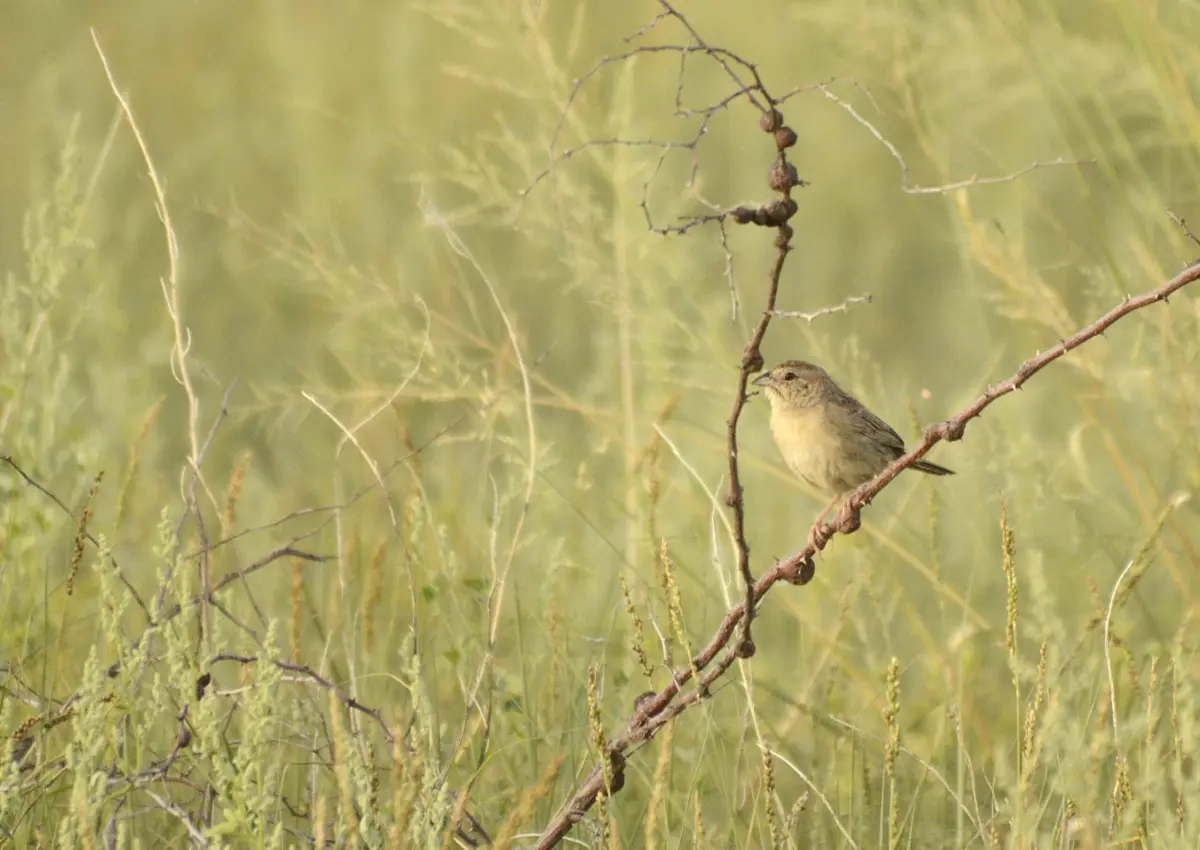
Across the sun-baked, undulating grasslands of the Appleton-Whittell Research Ranch in southeastern Arizona, a quiet avian drama plays out every year. Here, nestled within dense stands of native bunchgrasses, three iconic grassland specialists—the Cassin’s, Botteri’s, and Grasshopper sparrows—make their seasonal homes. Known to ornithologists and passionate birders alike as "grassland phantoms," these birds are far more famous for their evocative songs than for their visibility. They are creatures that choose to run mouse-like through the undergrowth rather than fly, testing the patience of even the most seasoned field researchers.
For decades, standard range maps have painted a deceptively simple picture of these species as year-round residents or predictable seasonal migrants. Yet, living and working on the Research Ranch reveals a far more complex, elusive reality. Do Botteri’s Sparrows truly abandon the high desert each autumn, or do they simply adopt a cloak of absolute invisibility? How do Cassin’s Sparrows manage to materialize out of thin air, arriving with clockwork precision precisely on the heels of the first heavy monsoon storms? And while Grasshopper Sparrows maintain a vocal presence year-round, are they truly the same individuals, or are local populations merely swapping places with northern counterparts?
These behavioral enigmas are more than mere academic curiosities; they represent critical knowledge gaps in avian conservation. As North American grasslands face unprecedented pressures from habitat fragmentation, climate change, and invasive species, understanding the precise migratory pathways and habitat requirements of these vulnerable grassland birds is paramount.
Fortunately, a technological revolution is quietly unfolding on the ranch. Powered by cutting-edge radio-telemetry networks, collaborative multi-institutional partnerships, and the eager hands of a new generation of conservation scientists, the Research Ranch Grassland Sparrow Motus Project is bridging the divide between mystery and mastery. By outfitting these feathered phantoms with microscopic radio transmitters, researchers are finally beginning to map the unmapped, tracing journeys that stretch far beyond the borders of the sanctuary and offering a glimmer of hope for the future of grassland conservation.
Detailed Chronology: Unraveling Decades of Avian Mystery
To understand the urgency and ingenuity of the current tracking initiatives, one must first retrace the historical timeline of ecological observation at the Research Ranch—a timeline punctuated by sudden arrivals, baffling seasonal silences, and enduring ecological questions.
The Rhythms of the Range: A Seasonal Diary
- May: The high desert landscape undergoes a dramatic auditory transformation. Botteri’s Sparrows arrive in a wave, their bouncy, bubbling songs echoing relentlessly from every swale and hillside across the ranch. Despite their ubiquity in sound, visual confirmations remain sparse. These birds are notorious for scurrying through the base of the grass canopy, behaving more like rodents than avian fauna.
- Mid-September: A profound and abrupt silence falls over the ranch. The incessant bubbling of the Botteri’s Sparrows ceases almost overnight. While a scattering of winter records persists across southeastern Arizona, field biologists are left grappling with a fundamental question: Have the birds migrated hundreds of miles south, or have they simply gone underground in behavioral terms?
- The Monsoon Threshold (June–August): Cassin’s Sparrows operate on an entirely different temporal clock—one dictated entirely by atmospheric pressure and precipitation. Unlike the dependable schedule of the Botteri’s Sparrow, Cassin’s sparrows are avian opportunists. They do not arrive on a fixed calendar date. Instead, they wait. The moment the first serious summer monsoon storm breaks the arid heat, soaking the parched soils, the Cassin’s Sparrows materialize. In wet years, their complex, cascading songs are so abundant that they entirely drown out the resident Botteri’s populations. In drought years, they may bypass the ranch entirely. How they sense these meteorological shifts from hundreds of miles away remains one of the desert’s greatest ornithological mysteries.
- Year-Round: Grasshopper Sparrows provide a constant baseline, their insect-like buzzes and tinkling notes audible through every season. Yet, beneath this apparent constancy lies a fluid population dynamic. Ornithologists long suspected that the birds singing during the blazing heat of July are entirely different individuals from those weathering the mild desert winter. While the species is present 365 days a year, the individuals are likely part of a broader continental conveyor belt, with local breeders heading south as northern populations move in to winter.
The Genesis of the Motus Project (2022–Present)
Recognizing that traditional visual surveys and banding techniques were insufficient to crack these behavioral codes, project organizers sought a technological solution capable of continuous, automated tracking without the logistical nightmare of physically following a ground-dwelling sparrow through dense brush.
- 2022: A critical infrastructure milestone is reached. Managed by the Bird Conservancy of the Rockies as part of the ambitious Great Plains-Chihuahuan Desert Motus Network, a specialized on-site Motus (Latin for "movement") telemetry station is erected on the ranch. This station joins a sprawling, international web of over 2,000 automated radio receivers spanning 34 countries, coordinated by Birds Canada to track the movements of everything from monarch butterflies and bats to tiny songbirds.
- 2024: The technological framework transitions from potential to practice. In a coordinated multi-agency push involving the Arizona Game and Fish Department, the Sonoran Joint Venture, Arizona State University, and the Tucson Bird Alliance, researchers successfully capture and tag the first cohort of Research Ranch sparrows.
- The Present Day: The initiative formally establishes the Research Ranch Grassland Sparrow Motus Project. With more than 25 individual sparrows safely fitted with lightweight, radio-emitting nanotags, the project moves past its pilot phase and into active data collection, yielding unprecedented insights into micro-movements, habitat utilization, and the practical limitations of automated telemetry in topographically complex terrain.
Supporting Context & Metrics
The intersection of advanced tracking technology, institutional collaboration, and ecological monitoring has generated a robust framework of data, metrics, and operational insights.
The Technology: How Motus Works
Traditional VHF radio telemetry requires a researcher to actively track a signal using a handheld directional antenna—a labor-intensive process ill-suited for vast landscapes or long-distance migrations. GPS tags, while offering pinpoint accuracy, have historically been too heavy for small songbirds, as wildlife tracking guidelines generally dictate that a backpack transmitter must not exceed 3 to 5 percent of a bird’s total body weight (with grassland sparrows often weighing a mere 15 to 30 grams).
The Motus Wildlife Tracking System bypasses these limitations through automated radio telemetry:
- Nanotags: Birds are fitted with digitally encoded radio transmitters weighing fractions of a gram. These tags emit unique ID pulses at set intervals on a standard frequency (typically 166.380 MHz).
- Receivers and Antennas: Omni-directional and highly directional Yagi antennas mounted to towers scan the skies continuously. When a tagged bird flies within range—often up to 15 kilometers under optimal line-of-sight conditions—the station logs the timestamp, frequency, and unique ID code.
- Global Connectivity: Data collected by the ranch’s local station is automatically uploaded to the central Motus database, allowing researchers to track individuals as they ping other stations across state and international lines.
Field Findings and Methodological Takeaways
Beyond tracking the sparrows themselves, the Research Ranch project has served as a valuable testing ground for the Motus network framework, yielding critical insights into the methodology of automated telemetry:
- Topographical Interference: The rolling hills, arroyos, and dense scrub of the Research Ranch create unique challenges for radio propagation. Researchers noted that terrain features can significantly dampen signal reception, proving that station placement must be meticulously engineered to account for local geomorphology.
- Behavioral Biases: Species-specific habits directly impact detection rates. A high-flying migrant passing over the ranch is far more likely to trigger a remote tower than a ground-dwelling Botteri’s Sparrow foraging beneath a dense canopy of grama grass. Recognizing these variables allows biologists to refine their data models.
- Cross-Project Interoperability: The local station does not merely record ranch-tagged birds; it frequently logs foreign tags from animals tagged in entirely different conservation initiatives across North America, highlighting the interconnected nature of flyways and the collaborative utility of the overarching network.
Official Statements & Expert Perspectives
The success and ongoing evolution of the Research Ranch Grassland Sparrow Motus Project rely heavily on a deeply collaborative ethos, bringing together state agencies, academic institutions, conservation non-profits, and emerging scientists.
Project coordinators emphasize that unraveling the migration mysteries of these three sparrow species is foundational to regional conservation planning. Because grasslands are among the most threatened biomes in North America—subject to agricultural conversion, overgrazing, and woody encroachment—knowing where these birds go during their non-breeding months is just as important as protecting their nesting grounds.
Furthermore, the project has served as an invaluable training ground for the next generation of ecological stewards. Academic integration has been a cornerstone of the initiative from its inception. Heaven Sanchez, an undergraduate researcher from Arizona State University and a recipient of the prestigious 2005 Appleton-Whittell Research Ranch Fellowship Program, became one of the first students to dive headfirst into the telemetry data, analyzing how spatial ecology intersects with avian movement.
Most recently, a cohort of ornithology students from Prescott College stepped out of the classroom and into the tall grass, working side-by-side with senior biologists to safely capture, process, and tag this season’s cohort of sparrows. Program leaders note that hands-on exposure to cutting-edge conservation technology provides students with practical, career-launching skills while simultaneously building community-wide investment in the preservation of fragile arid-land ecosystems.
Future Outlook: The Road Ahead for Grassland Conservation
As the Research Ranch Grassland Sparrow Motus Project marks its transitional milestones, field researchers agree that three years of foundational fieldwork represent merely the opening chapter of a much larger story.
The data harvested thus far has successfully transformed vague hypotheses into targeted scientific inquiries. Where do the Cassin’s Sparrows retreat during prolonged regional droughts? What specific wintering refugia do local Botteri’s populations rely on once they vanish from the ranch in September? Are individual Grasshopper Sparrows engaging in distinct altitudinal migrations, or are they journeying deep into the Chihuahuan Desert of Mexico?
Answers to these questions are rapidly taking shape as miniaturized tracking tech continues to evolve, offering lighter tags with extended battery lives and improved solar-recharge capabilities. Concurrently, an eager pool of undergraduate fellows, graduate researchers, and citizen scientists stands ready to analyze the incoming telemetry streams.
The conservation stakes could not be higher. By bridging the data gaps between breeding grounds and wintering habitats, conservationists can design more effective, landscape-scale management strategies that protect grassland corridors across international borders.
How to Follow the Journey
The scientific community, birding enthusiasts, and supporters of landscape conservation are invited to monitor real-time developments as the project unfolds:
- Scientific Publications: Keep an eye out for forthcoming peer-reviewed papers detailing the behavioral mechanics and telemetry trials conducted at the ranch.
- Live Data Tracking: Anyone can observe the real-time activity of tagged local sparrows—as well as visiting wildlife from other regional projects—by accessing the public Research Ranch Motus Station Dashboard.
As the sun sets over the sweeping vistas of southeastern Arizona and the evening chorus of the grasslands begins anew, the secrets of the phantoms are slowly being brought to light—ensuring these resilient grassland specialists have a voice on the range for generations to come.