
Date: October 22, 2026
Publication: Alley Cat Allies Special Report (Adapted from the Alley Cat Action® 2026 Fall Newsletter)
Executive Overview
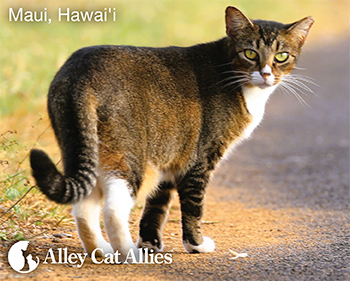
The landscape of animal advocacy in the United States continues to evolve at a rapid pace, marked by both severe regulatory challenges and historic triumphs in lifesaving initiatives. As detailed in the Alley Cat Allies 2026 Fall Newsletter, organizations dedicated to the protection of community cats are currently engaged on multiple fronts. From the tropical landscapes of Hawaiʻi to the coastal communities of Atlantic County, New Jersey, the battle for humane, science-based policies remains urgent.
In Hawaiʻi, the organization has taken a definitive stand against proposed administrative rule changes that threaten to dismantle Trap-Neuter-Return (TNR) programs and prioritize the lethal control of outdoor felines under the guise of wildlife conservation. Simultaneously, thousands of miles away in New Jersey, a landmark partnership between Alley Cat Allies and the Humane Society of Atlantic County (HSAC) is approaching a monumental milestone: helping nearly 7,000 cats and kittens. This report examines these two major developments, exploring the legal battles, community impacts, and philosophical shifts driving modern animal welfare policy.
Detailed Chronology: Recent Developments in Animal Advocacy
August 2026: The Fight for Hawaiʻi’s Community Cats
The ongoing struggle for animal rights in the Hawaiian Islands reached a critical juncture in August 2026, when proposed amendments to the Hawaiʻi Administrative Rules were brought forward for public and agency review. Alley Cat Allies, having maintained an active presence in the state for years to promote TNR and humane education, mobilized immediately to oppose the changes.
The amendments, introduced via state administrative channels, sought to implement sweeping prohibitions—most notably a ban on feeding "domestic animals" (which legally includes community cats) on Department of Land and Natural Resources (DLNR) lands. According to animal welfare advocates, these rules not only exceed existing state legislative statutes and stretch the jurisdictional authority of the agency, but they also signal a systemic shift toward lethal management strategies. Rather than relying on proven, life-affirming population management methods, the proposed framework threatened to criminalize caregivers and undermine decades of grassroots TNR work across the islands.
2024–2026: The Atlantic County Partnership Milestone
In stark contrast to the regulatory battles in the Pacific, the cooperative initiative between Alley Cat Allies and the Humane Society of Atlantic County (HSAC) in New Jersey stands as a beacon of progress. Over a multi-year collaborative push, this partnership has systematically scaled up TNR operations, spay/neuter access, and community outreach. As of the autumn of 2026, the joint initiative is on the verge of recording its 7,000th cat or kitten helped—a monumental benchmark for a regional shelter program.
Rather than relying on outdated intake-and-euthanasia models, the Atlantic County initiative has focused on upstream solutions: stabilizing outdoor colonies, vaccinating feral and stray populations, and supporting local caregivers. This milestone represents a culmination of dedicated fieldwork, veterinary partnerships, and unwavering financial and strategic support from national advocates.
Supporting Context & Metrics: The Science Behind the Policies
Hawaiʻi’s Wildlife Debate and the Misattribution of Ecological Impact
The regulatory push by the DLNR to restrict feeding and prioritize lethal control is framed around a singular objective: the protection of Hawaiʻi’s indigenous, threatened, and endangered wildlife. Proponents of the amendments argue that free-roaming cats pose an existential threat to native bird species and fragile ecosystems.
However, independent conservation scientists and animal welfare researchers point out a significant disconnect between these regulatory measures and empirical data. Comprehensive ecological studies consistently demonstrate that the primary drivers of species decline in Hawaiʻi—and globally—are large-scale anthropogenic factors: human-led commercial and residential development, habitat destruction, deforestation, invasive plant species, agricultural expansion, and climate change.

By focusing disproportionately on community cats while failing to address systemic environmental degradation and urban sprawl, policymakers risk scapegoating felines for broader ecological crises. Alley Cat Allies maintains that true environmental stewardship requires a balanced approach: protecting indigenous wildlife while simultaneously upholding the humane treatment of island cats through sterilization and colony management rather than lethal eradication.
Atlantic County Metrics: Transforming Shelter Dynamics
The operational success in Atlantic County provides measurable proof of the efficacy of community-centric animal management. The metrics achieved through the HSAC partnership highlight a profound operational shift:
- Approaching 7,000 Felines Assisted: The initiative has sterilized, vaccinated, and returned thousands of community cats, directly stabilizing population numbers in the region.
- Euthanasia Elimination: Through targeted TNR and diversion programs, the shelter has effectively eliminated the euthanasia of healthy community cats.
- Reduced Intake Volume: The steady sterilization of outdoor cats has resulted in fewer unplanned litters entering the shelter system, allowing facility resources to be reallocated toward the rehabilitation and adoption of adult cats.
Official Statements and Stakeholder Perspectives
The human element of these campaigns highlights the emotional and operational stakes involved in modern animal advocacy.
Weighing in on the collaborative success in New Jersey, Steve Dash, Executive Director of the Humane Society of Atlantic County, emphasized the profound ripple effects of the program on both shelter operations and public morale:
"The colony caregivers are very appreciative and the general public is thrilled that Alley Cat Allies has been so supportive of HSAC and the community cats in our area. The biggest impact is the elimination of euthanasia in the shelter. We see fewer litters coming in so we can concentrate on placing more adults. These programs are saving cats’ lives every day."
Dash’s perspective underscores the transformative power of institutional partnerships. When national organizations pool resources with local shelters, the burden on municipal facilities lifts, enabling a shift from reactive crisis management to proactive community care.
On the legislative front, representatives from Alley Cat Allies have issued clear, unwavering statements regarding the situation in the Pacific. Through formal testimonies and public advocacy campaigns, the organization has drawn a hard line against administrative overreach:
"Alley Cat Allies supports efforts to protect Hawaiʻi’s indigenous, threatened, and endangered wildlife while ensuring that cats living on the islands are treated humanely. We will fight to protect the community cats of Hawaiʻi."
This dual commitment—acknowledging the importance of native biodiversity while refusing to accept the cruel, lethal management of felines—serves as the foundational philosophy for the organization’s ongoing legal and political challenges.
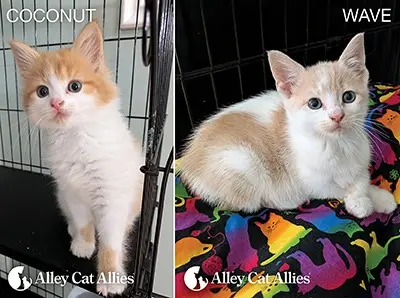
Case Study in Compassion: The Journey of Coconut and Wave
To truly understand the human and animal impact of programs like the HSAC initiative, one must look beyond macro-level metrics and examine individual success stories. Enter Coconut and Wave, two young kitten brothers who embody the success of modern feline welfare philosophies.
Coconut and Wave are prime beneficiaries of the "Leave Them Be" protocol—an evidence-based practice that encourages human observers to allow mother cats to raise their litters in their natural outdoor environments rather than prematurely removing them and overwhelming local shelters.
Under the watchful eye of their mother and local colony caregivers, Coconut and Wave remained in their outdoor home until they reached an appropriate age for socialization and adoption. Meanwhile, their mother was trapped, humanely spayed, vaccinated, eartipped to signify her sterilized status, and successfully returned to her outdoor colony where she continued to thrive. Today, Coconut and Wave represent the best of both worlds: a stabilized outdoor cat population managed through compassionate science, and healthy kittens successfully transitioned into indoor homes.
Future Outlook: The Road Ahead for Humane Communities
As the animal welfare community looks toward the remainder of 2026 and beyond, the contrasting developments in Hawaiʻi and New Jersey offer a clear blueprint for the work that remains.
In Hawaiʻi, the fight against administrative overreach is far from over. Alley Cat Allies remains fully prepared to challenge rules that defy established science, bypass legislative oversight, and threaten the lives of community cats. The legal and public relations battleground in the islands will serve as a crucial test case for how states balance environmental conservation with humane animal welfare standards in the coming years.
Meanwhile, on the East Coast, the celebration of the 7,000-cat milestone in Atlantic County provides renewed energy and proof of concept. As Steve Dash and his team look toward the next 1,000 cats, the partnership serves as an inspirational model for shelters nationwide. It proves that when communities reject the false dichotomy between wildlife protection and feline welfare—and instead embrace TNR, caregiver support, and collaborative funding—communities become safer, more compassionate places for humans and animals alike.
For further information, to review the complete data sets, or to read the full edition of the publication, access the Alley Cat Action® 2026 Fall Newsletter.