
Executive Overview
In the shadowy, tidal labyrinths of the world’s largest mangrove forest, a quiet conservation revolution may be underway. A groundbreaking study published in the journal Wildlife Research has revealed a behavioral quirk in saltwater crocodiles (Crocodylus poratus) that could fundamentally reshape global conservation strategies for the species. According to the research, saltwater crocodiles born or raised in captivity do not possess—or at least do not execute—the powerful homing instinct that typically plagues animal relocation and reintroduction programs.
For decades, wildlife management initiatives attempting to bolster dwindling apex predator populations have faced a frustrating biological hurdle: animals know where "home" is and will stop at nothing to get back to it. While wild-caught crocodilians are notorious for navigating across vast expanses of open water and dense river networks to return to their original capture sites, this new research suggests that captive-raised adults may bypass this compulsion entirely. Upon release, these individuals quietly settle into new habitats, behaving remarkably like their native wild counterparts.
The implications of this discovery are profound, particularly for regions like the Sundarbans mangrove forest in Bangladesh, where native saltwater crocodile populations have hovered on the precipice of ecological collapse for half a century. By demonstrating that older, captive-reared crocodiles can be successfully introduced into the wild without attempting hazardous return journeys, conservationists now have a viable, strategic pathway to accelerate population recovery. This comprehensive report explores the mechanics of the study, the historical context of crocodile conservation in South Asia, the vital data collected via satellite telemetry, and the future of apex predator management.
Detailed Chronology
To understand the weight of this recent discovery, one must trace the timeline of saltwater crocodile conservation in Bangladesh and the meticulous progression of the research project itself.
The Historical Backdrop: Decimation and Protection (1970s–Present)
The Sundarbans—a sprawling UNESCO World Heritage site shared between Bangladesh and India—represents the last stronghold for the saltwater crocodile in Bangladesh. Once abundant across the region’s dynamic estuarine networks, the species suffered catastrophic declines through the mid-20th century. Heavy commercial hunting for exotic leather decimated the population, reducing them to scattered, vulnerable remnants by the 1970s.
Recognizing the impending extinction of the species within national borders, the Government of Bangladesh enacted legal protections for saltwater crocodiles in 1973. However, protection on paper did not translate to biological recovery. Decades passed with no measurable rebound in population numbers. Today, surveys estimate that only about 140 mature saltwater crocodiles survive within the entire Bangladeshi sector of the Sundarbans.
The Traditional Paradigm and Its Failures
For generations, conservation biologists confronted a dual dilemma when attempting to restock depleted aquatic ecosystems with crocodilians. The traditional methodology relied almost exclusively on releasing hatchlings—young, newly hatched crocodiles produced in breeding facilities.
While theoretically sound, this approach proved largely ineffective in practice. Hatchling mortality rates in the wild are extraordinarily high due to predation, environmental stressors, and competition. Furthermore, because crocodiles are slow-growing creatures, it takes many years for a hatchling to reach reproductive maturity, leaving conservation programs waiting decades to see if their investments yield a self-sustaining wild population.
The alternative approach—relocating problem or wild-caught adult crocodiles from one region to another—fared no better, albeit for a different reason. Wild crocodilians possess an extraordinary spatial memory and navigation system. When moved to new locations, they frequently exhibit an intense homing instinct, embarking on grueling, dangerous journeys across unfamiliar terrain to return to their original territories. This behavior not only defeats the purpose of the relocation but often puts the animals into lethal conflict with humans as they traverse populated waterways.
The Genesis of the Study
Recognizing these compounding roadblocks, an international and intergovernmental coalition—including IUCN Bangladesh, the Bangladesh Forest Department, and funding from the Deutsche Gesellschaft für Internationale Zusammenarbeit (GIZ)—set out to test a radically different hypothesis. They asked a fundamental question: Do crocodiles raised in captivity for extended periods harbor the same homing drives as their wild counterparts?
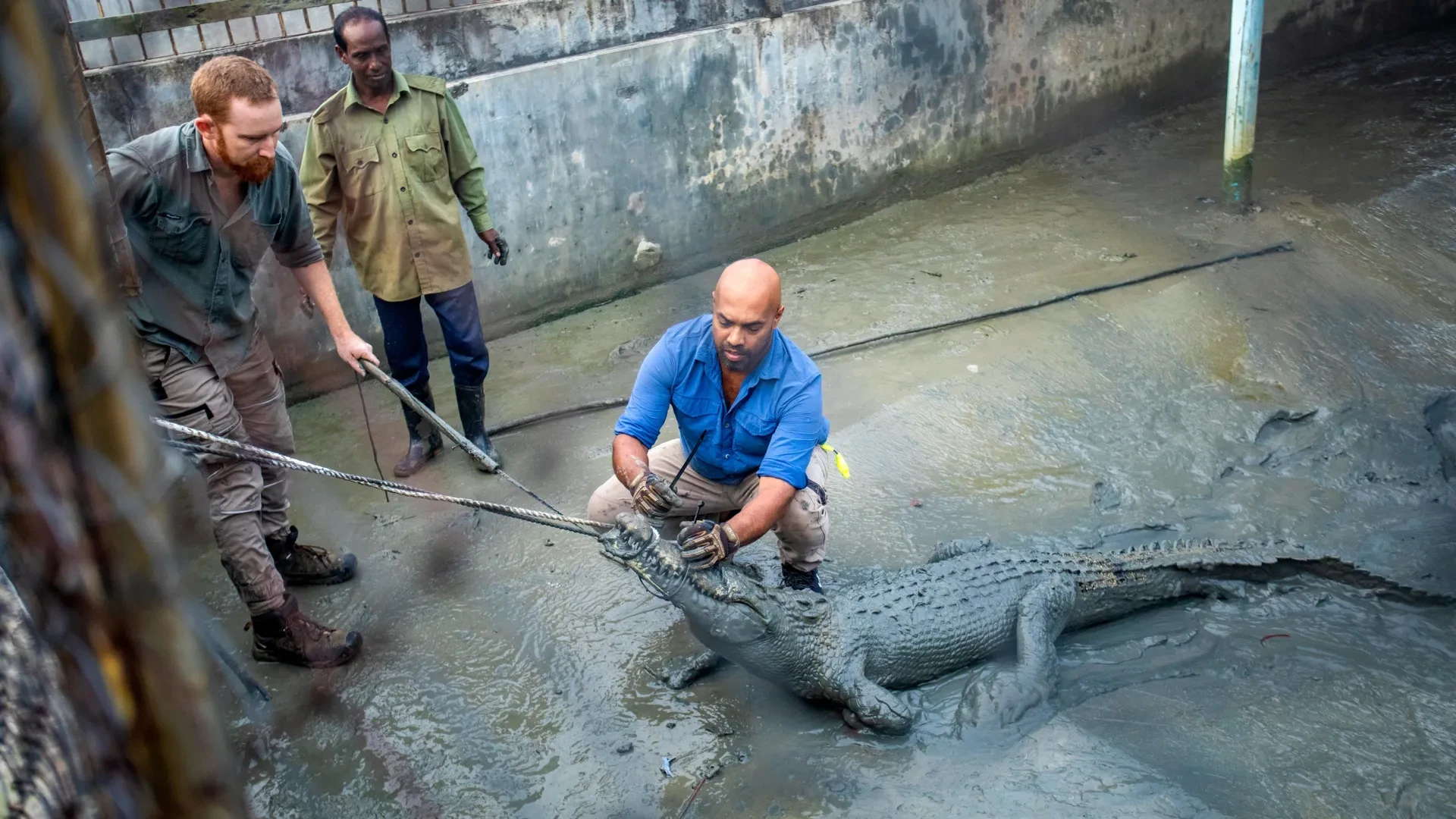
To answer this, researchers launched an ambitious tracking initiative in the Sundarbans. They selected a diverse cohort of five mature saltwater crocodiles to monitor via advanced satellite telemetry. The test group was meticulously curated to include:
- Three captive-reared females that had spent between 8 and 22 years residing entirely within controlled breeding facilities.
- One local wild crocodile, captured locally and then released at the exact same site to serve as a behavioral baseline.
- One translocated wild crocodile (subsequently named "Jongra"), which was captured and then released a massive distance away from its home territory.
Over several months, satellite transmitters affixed to the dermal armor of the animals recorded their precise movements, shedding unprecedented light on how captive-raised versus wild-caught predators navigate a brand-new wilderness.
Supporting Context & Metrics
The empirical data gathered during the Sundarbans study provided stark contrasts between the groups, offering quantitative backing to the qualitative observations of the researchers.
The Behavioral Divide: Captive vs. Wild Translocation
When the satellite tracking data began to flow in, the divergence in animal behavior was immediate and unmistakable.
The three captive-reared females—despite having spent up to two decades sheltered in artificial enclosures—showed zero inclination to seek out their former captivity sites. Instead of launching into erratic, exploratory travel patterns aimed at finding an imaginary "home," these animals seamlessly integrated into the ecosystem. They established small, well-defined home ranges and displayed movement dynamics virtually identical to the local wild-captured control crocodile.
Conversely, the translocated wild crocodile, Jongra, provided a masterclass in classic avian- and mammalian-style homing behavior. Captured and released approximately 132 kilometers away from his native territory, Jongra immediately went on the move.
Metrics of the Study
To put the behavioral differences into perspective, consider the following metrics recorded during the telemetry phase:
- Distance Translocated (Jongra): ~132 kilometers from original capture site.
- Time in Captivity (Captive Cohort): 8 to 22 continuous years.
- Sample Size: 5 mature saltwater crocodiles (3 captive-reared females, 1 local control, 1 translocated wild male).
- Daily Travel Distances: While the captive-reared crocodiles settled into localized home ranges with modest daily movements, Jongra recorded single-day travel spikes exceeding 30 kilometers, maintaining an exceptionally large overall territory as he persistently pushed in the direction of his original home.
These metrics highlight the deep-seated psychological and neurological differences between animals imprinted on the wild versus those conditioned in captivity. While a wild crocodile’s internal map is permanently etched with the coordinates of its natal or established territory, a captive-reared crocodile appears to possess a cognitive slate that is either blank or flexible enough to accept a novel release site as its primary domain.
Official Statements and Expert Analysis
The study, officially titled "What is home? Post-release movements of captive-reared and translocated mature saltwater crocodiles in Bangladesh," has drawn praise from the global ecological community for its pragmatic approach to wildlife restoration.
Dr. Ru Somaweera, a prominent behavioral ecologist and Adjunct Associate Professor from Murdoch University who spearheaded the research, emphasized the uniqueness of the animals in question.
"Crocodilians, the largest predators in most tropical, subtropical freshwater and brackish environments, are a unique case when it comes to homing behavior," Professor Somaweera stated. "Crocodiles are remarkably good at finding their way home, often returning to their original capture sites and limiting the success of relocation programs. What we still don’t fully understand, though, is how this behavior plays out in individuals that have been bred or kept in captivity for long periods before being released back into the wild."
Addressing the operational failures of traditional hatchling-release models, Somaweera noted that the discovery opens up entirely new demographic cohorts for conservationists:
"If crocodiles who are bred and raised in captivity subsequently return to their enclosures or breeding facilities after being released, attempts to reintroduce them into the wild as part of conservation efforts will ultimately fail," he explained. "The traditional approach has been to use hatchlings in reintroduction programs, but their survival rates are extremely low and they take a long time to reach reproductive maturity. Understanding whether larger, captive-bred crocodiles can be used instead represents an important knowledge gap."
The contrast between the calm integration of the captive crocodiles and the frantic journey of the translocated wild male underscored the complexity of mammalian and reptilian spatial cognition. Describing the fate of Jongra, Somaweera remarked:
"Unfortunately, the results weren’t as good for the wild crocodile Jongra, who was translocated about 132km from his home before being released. Although Jongra didn’t make it back to his original capture site during the study, his movements were very clearly going in that direction. He traveled far more each day than any other crocodile we tracked, covered an exceptionally large area, and even recorded single-day movements of more than 30 kilometers: all typical signs of homing behavior."
Future Outlook: A New Paradigm for Predator Conservation
As human populations expand and natural habitats fragment globally, the management of apex predators is entering a high-stakes era. Large carnivores and reptiles are frequently displaced by human-wildlife conflict, requiring translocation or captive intervention. The findings from the Sundarbans study provide actionable frameworks that conservation managers can immediately integrate into regional and international wildlife policies.
1. Shifting Toward Subadult and Adult Captive Releases
For decades, conservation breeding programs have operated under the assumption that only young animals can adapt to the wild. This study flips that paradigm on its head. By proving that subadult and adult saltwater crocodiles raised in captivity do not exhibit destructive homing drives, conservationists can now bypass the perilous hatchling phase entirely. Releasing mature or semi-mature individuals—which possess significantly higher survival rates and are immediately capable of contributing to the breeding pool—offers a fast-track method for rebuilding collapsed populations.
2. Refining Translocation Protocols for Wild Crocodiles
While captive-reared crocodiles showed high adaptability, the study serves as a stark warning regarding the translocation of wild-caught adults. Animals like Jongra, driven by an unyielding homing instinct, pose management challenges. Future conservation planning must account for these tendencies through meticulous release site selection, potential barrier management, or soft-release enclosures that help habituate wild-caught animals to new territories before they are given complete freedom.
3. Scaling Up Sundarbans Restoration
In Bangladesh, where the saltwater crocodile population languishes at a perilous 140 mature individuals, time is of the essence. The Sundarbans mangrove forest is a resilient yet fragile ecosystem facing mounting pressures from climate change, rising sea levels, and local anthropogenic activity. The validated use of captive-reared adults provides the Bangladesh Forest Department and IUCN Bangladesh with a powerful tool to infuse genetic diversity and numerical strength back into the estuarine network.
Ultimately, the research published in Wildlife Research bridges the gap between captive animal husbandry and field conservation ecology. By demonstrating that time spent in captivity modifies or dampens the innate urge to return home, science has handed conservationists a second chance at restoring one of the planet’s most formidable and majestic ancient predators to its rightful place in the wild.