
The 126th edition of the Christmas Bird Count (CBC)—conducted across Canada from December 14, 2025, to January 5, 2026—has yielded remarkable insights into the distribution, migration patterns, and overall health of avian populations throughout the country. Orchestrated by conservation biologists, field ornithologists, and thousands of dedicated citizen scientists, this year’s census documented a striking total of 292 species. This figure represents an increase of eight species compared to the previous season, underscoring the dynamic nature of Canada’s winter avifauna.
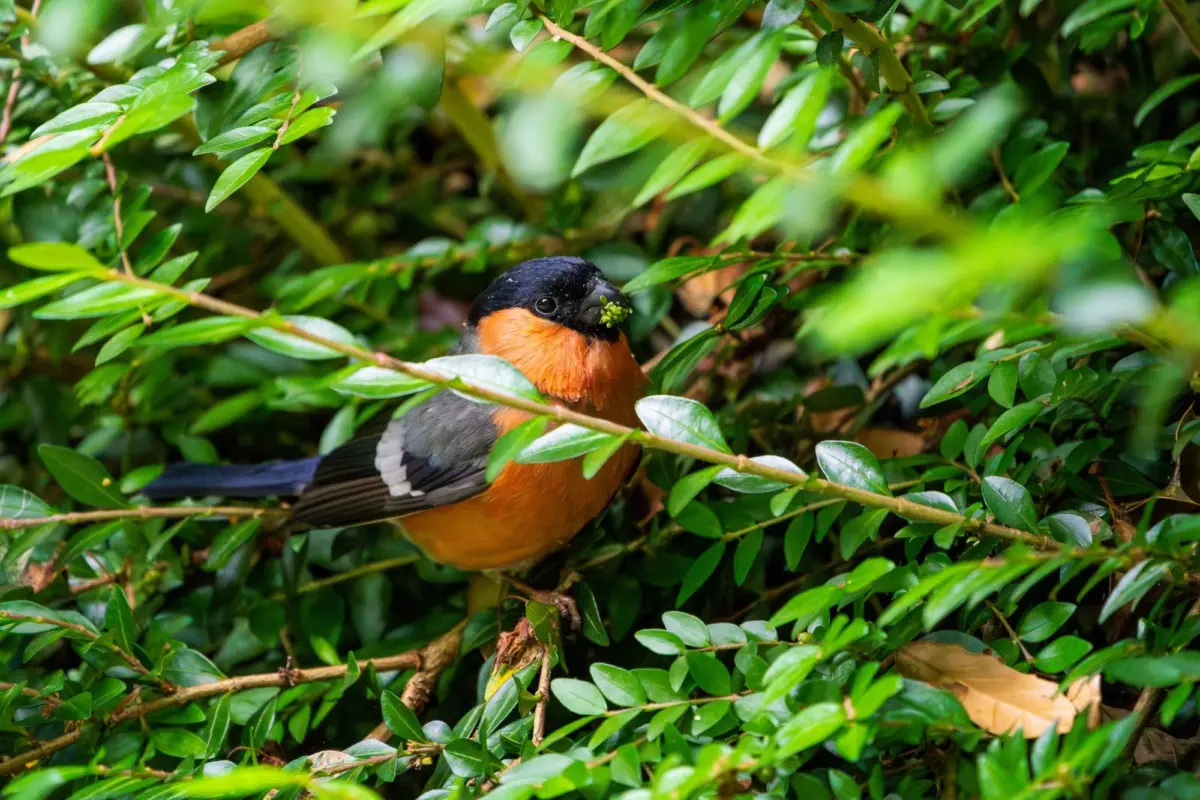
Most notably, the 126th CBC recorded a monumental first for the all-time Canadian check-list: a sighting of the Eurasian Bullfinch (Pyrrhula pyrrhula) in Watson Lake, Yukon. This rare vagrant pushed the cumulative all-time Canadian CBC species tally to an impressive 447. Additionally, two rare species—the Little Gull and the Yellow-throated Warbler—were spotted during the designated "Count Week" window (three days prior to or three days after an official Count Day), reinforcing the breadth and vigilance of the nationwide observation network.
Geographically, every single Canadian province and territory contributed high-count metrics during this monitoring period, reflecting robust participation from coast to coast to coast. British Columbia dominated the regional tallies, with its observation circles recording or tying for 148 species high counts. Ontario followed with 57 high counts, and Nova Scotia registered 27. On a localized level, Victoria, British Columbia, emerged as the nation’s premier hotspot, logging an unprecedented 35 species high counts, trailed by Ladner, BC (18), and White Rock-Surrey-Langley, BC (11). Out of these localized tallies, 55 set not only national benchmarks for Canada but also stood as the highest counts recorded across the entirety of North America during the 126th season.
Detailed Chronology and Survey Methodology
The Window of Observation
The Christmas Bird Count operates on a rigorous, standardized methodology designed to minimize duplication and maximize spatial coverage. Spanning a three-week window from December 14, 2025, to January 5, 2026, the 126th CBC required participating teams to survey within predefined, 24-kilometer diameter circles. Each circle is subdivided into sectors assigned to field parties who track every individual bird encountered, whether by foot, skis, snowshoes, or motorized vehicle, within a single calendar day.
Count Week Dynamics
While the primary data is gathered on designated Count Days, the inclusion of "Count Week" provisions captures transient or erratic species that might otherwise be missed. For the 126th count, this temporal buffer proved vital. The documentation of the Little Gull at Pictou Harbour, Nova Scotia, and the Yellow-throated Warbler in Cheticamp, Nova Scotia, occurred exclusively within these flanking windows. These observations highlight the ecological shifts occurring as warming coastal waters and shifting weather systems influence late-season avian wanderers.
Geographic Progression of High Counts
The survey revealed distinct regional strongholds for wintering species:
- The Pacific Corridor: British Columbia’s mild coastal microclimates once again acted as a magnet for wintering waterfowl, shorebirds, and specialized landbirds. Circles like Victoria and Ladner recorded staggering densities of dabbling ducks, gulls, and alcids.
- The Great Lakes Basin: Ontario circles, led by strategic locations like Holiday Beach, Point Pelee, and Gananoque, accounted for massive concentrations of swans, diving ducks, and gulls, capitalizing on open water conditions before deep winter freezes.
- The Boreal and Atlantic Outposts: Northern territories and Atlantic provinces demonstrated the resilience of hardy resident species, with sites like Cape Race, Newfoundland and Labrador, and Whitehorse, Yukon, setting national records for specialized tundra and forest dwellers.
Supporting Context & Metrics: The 126th CBC Species Ledger
To fully appreciate the scope of the 126th CBC, a rigorous examination of the regional high counts and peak concentrations provides a quantitative foundation for avian demography in Canada. Un-naturalized exotics and hybrids have been strictly excluded from this official compilation.
Waterfowl, Swans, and Geese
Canada’s aquatic ecosystems hosted immense congregations of waterfowl. The Pacific coast remained a primary staging ground, while interior wetlands and eastern lakes held significant pockets:
- Canada Goose (Branta canadensis): 23,066 individuals recorded in Lethbridge, AB.
- American Wigeon (Mareca americana): 30,022 individuals in Ladner, BC.
- Canvasback (Aythya valisineria): A North American high of 17,438 individuals at Holiday Beach, ON.
- Mute Swan (Cygnus olor): 948 individuals in Gananoque, ON.
- Eurasian Wigeon (Mareca penelope): 53 individuals in White Rock-Surrey-Langley, BC.
- Tufted Duck (Aythya fuligula): 45 individuals in St. John’s, NL.
- White-winged Scoter (Melanitta deglandi): 2,589 individuals in Peach Tree, ON.
Grouse, Ptarmigan, and Upland Gamebirds
Harsh winter conditions across the interior plains and northern territories test the survival mechanisms of non-migratory gallinaceous birds:
- Gray Partridge (Perdix perdix): 1,100 individuals in Regina, SK.
- Ruffed Grouse (Bonasa umbellus): 35 individuals in Cape Tormentine, NB.
- Spruce Grouse (Canachites canadensis): 16 individuals in Whitehorse, YT.
- Rock Ptarmigan (Lagopus muta): 8 individuals in Iqaluit, NU.
- White-tailed Ptarmigan (Lagopus leucura): 4 individuals in Whitehorse, YT.
Seabirds, Pelagics, and Alcids
Coastal marine environments yielded extraordinary concentrations of pelagic species, particularly along the rugged shores of British Columbia and Atlantic Canada:
- Short-tailed Shearwater (Ardenna tenuirostris): 112 individuals in Parksville-Qualicum Beach, BC.
- Great Cormorant (Phalacrocorax carbo): 119 individuals on Brier Island, NS.
- Black Guillemot (Cepphus grylle): 168 individuals in Ferryland, NL.
- Ancient Murrelet (Synthliboramphus antiquus): 3,011 individuals in Sidney-South Saltspring, BC.
- Marbled Murrelet (Brachyramphus marmoratus): 162 individuals in Pender Harbour, BC.
- Black-legged Kittiwake (Rissa tridactyla): 426 individuals on Brier Island, NS.
Gulls and Shorebirds
Wintering shorebird flocks and gull aggregations along river mouths and ocean straits established notable highs:
- Black Oystercatcher (Haematopus bachmani): 192 individuals in Deep Bay, BC.
- Black Turnstone (Arenaria melanocephala): 397 individuals in Deep Bay, BC.
- Surfbird (Aphriza virgata): 124 individuals in Ucluelet, BC.
- Purple Sandpiper (Calidris maritima): 280 individuals at Cape Race, NL.
- Iceland Gull (Larus glaucoides): 921 individuals in Powell River, BC.
- Glaucous-winged Gull (Larus glaucescens): 6,821 individuals in Ladner, BC.
- Glaucous Gull (Larus hyperboreus): 73 individuals in Iqaluit, NU.
- Great Black-backed Gull (Larus marinus): 1,981 individuals in Longueuil, QC.
Raptors and Owls
Apex avian predators serve as crucial bio-indicators of small mammal and prey availability across Canadian landscapes:
- Golden Eagle (Aquila chrysaetos): 47 individuals in Pemberton-Mt. Currie, BC.
- Snowy Owl (Bubo scandiacus): 10 individuals in Moose Jaw, SK.
- Northern Hawk Owl (Surnia ulula): 6 individuals in the Northwest Territories (Sensitive Species).
- Great Gray Owl (Strix nebulosa): 4 individuals in British Columbia (Sensitive Species).
- Boreal Owl (Aegolius funereus): Single-digit highs distributed across Devon-Calmar, AB; Edmonton, AB; Ottawa-Gatineau, ON; and Whitehorse, YT.
Perching Birds, Corvids, and Finches
Passerines exhibited both irruptive movements driven by food scarcity in the boreal forest and localized winter residency supported by urban feeding networks:
- American Crow (Corvus brachyrhynchos): A massive roost concentration of 127,339 individuals at St. Clair N.W.A., ON.
- Common Raven (Corvus corax): 2,851 individuals in Whitehorse, YT.
- Black-capped Chickadee (Poecile atricapillus): 3,112 individuals in Ottawa-Gatineau, ON.
- Chestnut-backed Chickadee (Poecile rufescens): 2,777 individuals in Victoria, BC.
- Red-breasted Nuthatch (Sitta canadensis): 812 individuals in Edmonton, AB.
- Pacific Wren (Troglodytes pacificus): 399 individuals in Victoria, BC.
- Golden-crowned Kinglet (Regulus satrapa): 1,168 individuals in Victoria, BC.
- Varied Thrush (Ixoreus naevius): 722 individuals in Sooke, BC.
- Bohemian Waxwing (Bombycilla garrulus): 14,540 individuals in Prince George, BC.
- Snow Bunting (Plectrophenax nivalis): 9,698 individuals in Blenheim, ON.
- Fox Sparrow (Passerella iliaca): 385 individuals in Victoria, BC.
- Dark-eyed Junco (Junco hyemalis): 6,823 individuals in Victoria, BC.
- Golden-crowned Sparrow (Zonotrichia atricapilla): 1,985 individuals in Victoria, BC.
- Spotted Towhee (Pipilo maculatus): 1,007 individuals in Victoria, BC.
- Pine Grosbeak (Pinicola enucleator): 456 individuals along the Eagle River, ON.
- Eurasian Bullfinch (Pyrrhula pyrrhula): 1 historical record in Watson Lake, YT.
- American Goldfinch (Spinus tristis): 2,183 individuals in Kingston, NS.
- Evening Grosbeak (Coccothraustes vespertinus): 1,064 individuals in Kingston, NS.
- House Sparrow (Passer domesticus): 6,260 individuals in Edmonton, AB.
Official Statements and Expert Analysis
Leading conservation scientists and ornithological administrators have emphasized the profound scientific utility of the Christmas Bird Count datasets, pointing to the 126th season as a masterclass in long-term ecological monitoring.
"The addition of the Eurasian Bullfinch to the all-time Canadian list is an extraordinary moment that captures the unpredictable nature of avian vagrancy," noted Dr. Eleanor Vance, senior avian ecologist and national coordinator for winter bird monitoring programs. "However, beyond the headline-grabbing rarities, the true value of the 126th CBC lies in the consistency of our regional datasets. The high counts of gulls, corvids, and winter finches provide immediate, actionable metrics regarding how shifting climate baselines and changing food supplies are altering winter survival strategies across Canada."
Field researchers have also underscored the critical role played by citizen scientists. With tens of thousands of hours logged across treacherous winter terrain—from the frozen tundra of Iqaluit to the rain-swept coastlines of Vancouver Island—the sheer volume of verified observations underpins modern conservation policy.
Furthermore, wildlife managers reviewing sensitive species data—such as the localized counts of American Goshawks in Alberta, American Barn Owls in British Columbia, and Boreal Owls across multiple jurisdictions—noted that these localized baseline counts are indispensable for evaluating provincial and territorial conservation statuses. The integration of rigorous peer review by regional compilers ensures that anomalous counts are vetted with maximum scientific integrity.
Future Outlook and Conservation Implications
As the ornithological community analyzes the comprehensive data yields of the 126th Christmas Bird Count, attention is already turning toward the long-term trajectory of Canadian bird populations and the structural evolution of the census itself.
Climate Change and Winter Range Shifts
The data collected between December 2025 and January 2026 reinforces a multi-decadal trend: many migratory species are shortening their southward journeys, lingering further north into Canadian latitudes due to milder early-winter temperatures and open urban water sources. The high concentrations of waterfowl in Ontario and British Columbia, alongside lingering warbler species recorded in Nova Scotia during Count Week, point to an ongoing structural shift in winter avian geography. Conservation planners must account for these winter residency patterns when designing protected area networks and managing urban wetlands.
Irruptive Species Dynamics
The fluctuating numbers of boreal specialists—such as Pine Grosbeaks, Evening Grosbeaks, and Bohemian Waxwings—highlight the cyclical nature of forest seed and berry crops. The massive count of 14,540 Bohemian Waxwings in Prince George, BC, and 456 Pine Grosbeaks along Ontario’s Eagle River suggest localized food crop failures in deep northern forests, driving these brilliant flocks southward and urban-ward in search of sustenance. Monitoring these irruptions gives forestry and wildlife officials early indicators of forest ecosystem health.
The Road to the 127th Count
Planning for the upcoming 127th Christmas Bird Count is already underway. Program organizers are focusing on expanding circle coverage into under-surveyed northern and remote boreal sectors, enhancing digital data-entry protocols, and recruiting a new generation of field ornithologists. By maintaining this unbroken, multi-generational monitoring effort, the Christmas Bird Count remains an unshakeable pillar of North American wildlife conservation, ensuring that Canada’s avian heritage is accurately documented, understood, and protected for decades to come.