
Executive Overview
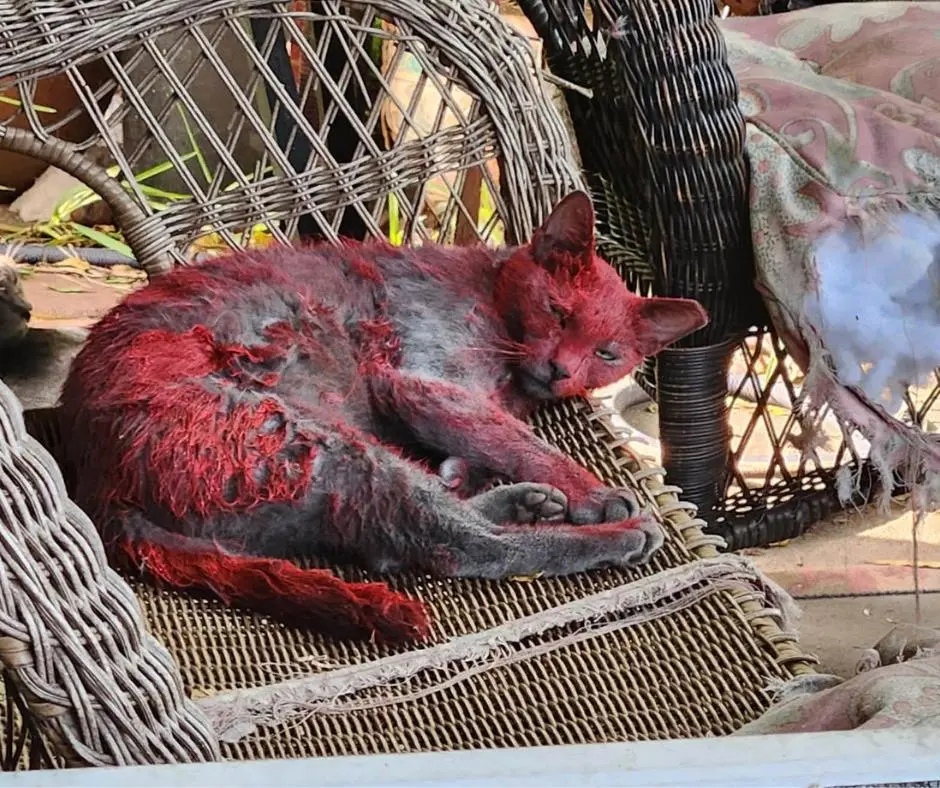
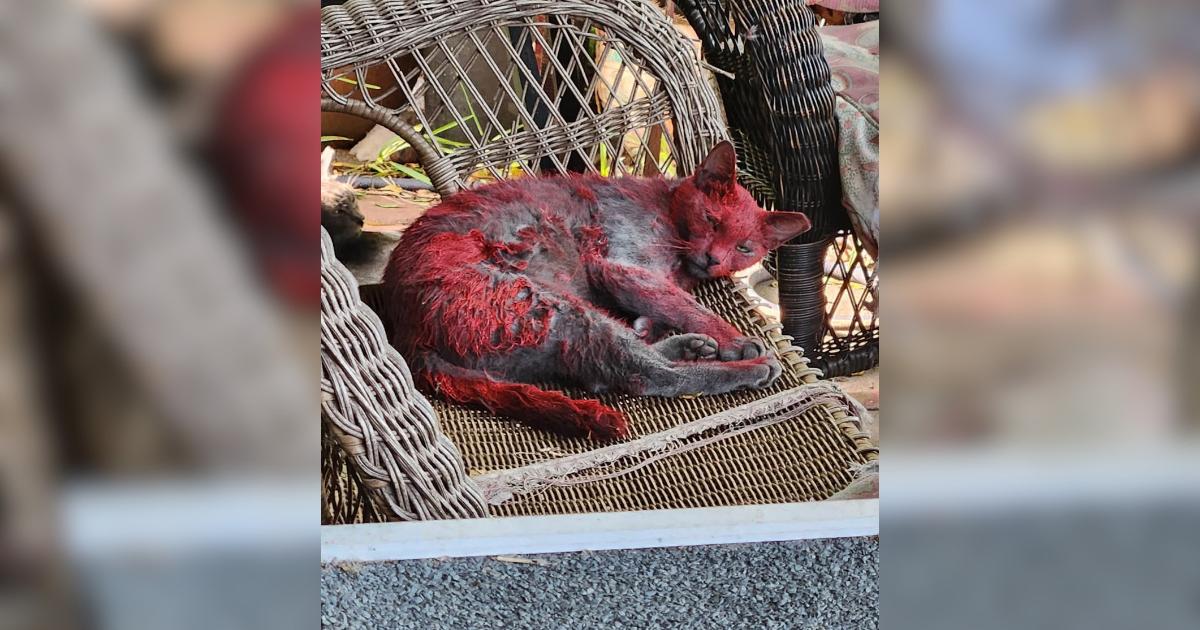
In the quiet, residential neighborhoods of League City, Texas, an unsettling feline mystery has galvanized the local community and put animal rescue personnel on high alert. A stray gray cat, distinguished by alarming patches of bright red dye or paint smeared across her coat and severely matted fur, has become the center of an intense, coordinated rescue operation. The feline’s striking and distressing appearance has sparked widespread concern across social media, leaving residents deeply anxious about her well-being and eager to see her brought to a safe environment.
However, this heart-wrenching situation has presented unique logistical challenges for local animal welfare advocates. While the instinct of compassionate neighbors is to rush to the cat’s aid—offering food, shelter, or direct physical intervention—professionals at League City Animal Care have issued strict directives urging the public to resist these impulses. Frightened, roaming cats require a delicate, methodical approach to capture without inducing panic. Consequently, a high-stakes, patient operation is underway, relying on professional traps, localized caregivers, and real-time community sightings rather than amateur rescue attempts.
Beyond the immediate welfare concerns, the cat’s unusual appearance has ignited dark speculations within the community. The presence of unnatural, vivid markings on a stray animal has led some residents to voice fears regarding darker subterranean activities, such as illegal dogfighting rings, where compromised animals are sometimes used as bait. While local law enforcement and shelter officials have emphasized that no official link to criminal activity has been established, the public unease underscores the psychological weight of the visual evidence. This comprehensive report examines the chronology of the search, the complexities of urban stray rescue operations, the community’s reaction, and the ongoing efforts by League City Animal Care to transition this vulnerable animal from survival mode to medical rehabilitation.
Detailed Chronology of Events
The unfolding narrative of the League City painted cat began with a series of disparate, fleeting sightings that quickly coalesced into an organized community concern.
Phase One: The Initial Sightings and Social Media Alarm
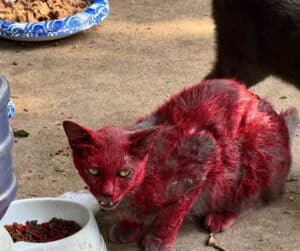
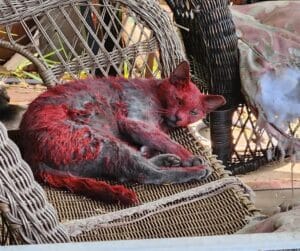
Days prior to the launch of formal rescue interventions, residents throughout several League City neighborhoods reported glimpses of a wary, gray cat navigating backyards, alleyways, and green spaces. What initially appeared to be a standard stray or feral cat quickly drew intense scrutiny due to unmistakable visual anomalies. Large, vivid patches of crimson—appearing to be either chemical dye or industrial paint—marred the cat’s natural gray coat. Compounding the visual shock was the state of her fur, which was heavily matted, filthy, and indicative of prolonged exposure to the elements and physical distress.
As photographs of the cat began circulating on local community groups and social media platforms—most notably through posts shared by League City Animal Care—the narrative shifted from casual observation to urgent mobilization. The images exposed not just an unusual discoloration, but an animal visibly struggling with the burdens of neglect or trauma.
Phase Two: The Stand-Down Directive
As panic and sympathy mounted online, well-meaning residents attempted to take matters into their own hands. Individuals began leaving plates of food out in their yards or actively tracking the cat through neighborhoods in hopes of cornering her and lifting her into carriers.
Recognizing that well-intentioned civilian interference was inadvertently jeopardizing the rescue, League City Animal Care intervened with public announcements. Officials instructed the community to cease all independent trapping and feeding efforts. In the psychology of a feral or severely traumatized roaming cat, erratic human approaches and fluctuating food sources create unpredictability. This instability often causes the animal to abandon familiar territory, scattering her from targeted feeding zones and rendering professional trapping protocols ineffective.
Phase Three: Strategic Tracking and Professional Trapping
With the civilian interference minimized, League City Animal Care transitioned to a methodical, localized capture strategy. Rather than mounting active, high-speed chases, rescuers established a cooperative network with established neighborhood cat caregivers.
Instead of deploying direct force, the operation relies on patience and data collection. Rescuers map the precise coordinates of each sighting, tracking the cat’s nocturnal or crepuscular movements. Humane traps, baited appropriately and monitored discreetly, are deployed in zones where she has shown consistent comfort. Every phone call, message, and timestamped photo provided by residents serves as a critical data point, slowly narrowing the geographic net around the frightened feline as professionals wait for the right moment to secure her safely.
Supporting Context & Metrics: The Mechanics of Feline Rescue
To fully understand the gravity of the League City operation, it is necessary to examine the broader context of urban stray management, the psychological profile of displaced domestic cats, and the operational realities faced by municipal shelters.
The Psychology of Traumatized Felines
Domestic cats that have experienced prolonged periods of abandonment, abuse, or exposure undergo significant behavioral shifts. Unlike indoor pets accustomed to human touch, a roaming cat in distress operates primarily out of survival instincts. The "fight-or-flight" response becomes hyper-activated.
When an animal is covered in foreign substances like paint or dye, her sensory perception—particularly her sense of smell and tactile awareness—is often compromised. Dried paint or chemical dyes stiffen the fur, causing irritation, restriction of movement, and localized skin distress. This physical discomfort makes the animal inherently distrustful of any tactile contact. Approaching such a cat without specialized equipment or training typically triggers a panicked flight response, driving the animal deeper into dangerous urban infrastructure, such as storm drains, busy roadways, or inaccessible crawlspaces.
Municipal Shelter Realities in Texas
League City Animal Care, like many municipal and regional facilities across Texas, operates at the intersection of public safety, animal control, and compassionate rescue. Texas municipalities frequently grapple with high populations of free-roaming domestic and feral cats, exacerbated by mild climates that permit year-round breeding cycles.
| Operational Metric / Factor | Impact on Rescue Operations |
|---|---|
| Geographic Dispersion | Sprawling suburban layouts complicate continuous monitoring without community surveillance. |
| Civic Engagement | High public visibility via social media accelerates awareness but risks operational interference. |
| Resource Allocation | Strategic deployment of humane traps versus reactive, manpower-heavy searches. |
| Medical Intake Load | Anticipated demand for dermatological care, chemical removal, and trauma rehabilitation upon capture. |
The intervention required for this specific gray cat goes beyond standard intake protocols. Because the substance on her coat remains unverified, handlers must prepare for potential chemical toxicity, skin necrosis, or secondary infections resulting from attempts to groom the toxic substance off her fur.
Official Statements and Community Discourse
The visual presentation of the cat—specifically the stark red stains against a gray background—has sparked intense dialogue, illuminating the friction between official institutional responses and grassroots community anxieties.
The Official Stance of League City Animal Care
In their formal public communications, shelter representatives have sought to balance community reassurance with operational clarity. Addressing the widespread emotional fallout of the viral photographs, the agency released a clear directive:
"We are aware of the cat that has been seen around the community with red dye or paint on her fur, and we want everyone to know this baby is not forgotten. Our team is actively trying to safely trap the cat so she can receive the care and attention she needs."
By acknowledging the emotional investment of the residents, the shelter validated public concern while simultaneously establishing boundaries. The explicit request—asking citizens to refrain from chasing, catching, or leaving food out—was framed not as a dismissal of public help, but as a technical necessity to ensure the cat’s safe extraction. Shelter officials emphasized that erratic feeding schedules disrupt the efficacy of professional drop-traps, which depend on an animal’s predictable hunger cycle to step inside safely.
Community Speculation and the Specter of Cruelty
While animal care officials maintain a disciplined focus on rescue and rehabilitation, the local populace has engaged in deep speculation regarding the origin of the cat’s condition. Across comment sections on local news feeds and social media platforms, residents have voiced dark theories.
A prominent concern raised by multiple community members centers on the underground world of illegal dogfighting. As one concerned local commenter noted: "I could be wrong, but aren’t ‘painted’ animals usually associated with illegal dog-fighting rings?"
In the lexicon of illicit animal fighting operations, vulnerable stray animals—often referred to as "bait animals"—are occasionally marked with paint or dye to identify them, track their usage, or designate them within underground gambling frameworks. The thought that this defenseless gray cat might have crossed paths with such malevolent actors generated immediate calls for police intervention and formal animal cruelty investigations.
However, local law enforcement agencies and news outlets, including KTRK, have reported that no active criminal investigation has been initiated, nor have formal animal cruelty charges been filed. Authorities note that without tangible evidence linking the cat’s markings to a specific criminal enterprise, it is impossible to rule out alternative explanations. The red substance could equally be the result of an accidental domestic mishap—such as a cat knocking over an open tin of house paint in a garage or shed—or malicious vandalism by local juveniles acting independently of organized crime.
Regardless of the etiology, shelter leadership has maintained that the immediate forensic debate must take a back seat to biological rescue. Determining how the cat became painted is a secondary objective; extracting her from an outdoor environment where she is vulnerable to predators, vehicular traffic, and the physical toll of her matted, stained coat remains the undisputed priority.
Future Outlook: Rehabilitation and the Path Forward
As the coordinated search for the League City painted cat enters its next phase, the outlook for the animal hinges on community compliance and professional execution.
The Transition to Veterinary Care
Once the trap is successfully sprung and the feline is secured within League City Animal Care facilities, she will immediately undergo a comprehensive medical triage. Veterinarians and veterinary technicians will evaluate:
- Dermatological Health: Assessing the chemical composition of the red substance to determine if it poses systemic toxicity and safely removing the dye or paint without causing further trauma to her irritated skin.
- Grooming and De-matting: Relieving the animal of the heavy, pulling mats that currently restrict her movement and trap dirt and moisture against her body.
- General Condition: Screening for underlying malnutrition, parasitic infestations, dehydration, and baseline organ function.
Community Action Protocol
Until that capture is realized, the role of the League City community has been refined into that of an active, disciplined intelligence network. Rather than interfering on the ground, residents have been instructed to act as observers.
Anyone spotting the cat is urged to transmit precise data—including the exact location, timestamp, and direction of travel—via direct message to League City Animal Care rather than attempting physical contact. These real-time intelligence reports provide the missing puzzle pieces that allow professional handlers to adjust trap placements and deploy resources efficiently.
The story of the painted cat of League City serves as a powerful reminder of the complex bonds between humans and urban wildlife. It highlights both the best impulses of a compassionate community and the rigorous, often unseen science required by animal welfare professionals to turn compassion into successful rescue. As the net tightens around this resilient feline, there is profound hope that her days of wandering stained and frightened are drawing to a close, paving the way for healing, recovery, and ultimately, a safe and secure future.