Executive Overview
In the digital age, screen time is no longer an exclusively human pastime. From specialized "Cat TV" channels on YouTube featuring scurrying rodents and fluttering birds to interactive tablet games designed for paws, domestic felines have increasingly become consumers of digital media. However, a recent viral phenomenon has highlighted an unexpected contender in the realm of pet entertainment: Sealook, an animated children’s series streaming on Netflix.
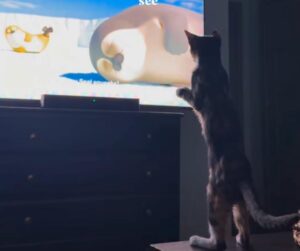
The trend kicked off when an adorable calico kitten named Fig, whose adventures are chronicled on the popular Instagram account @fossilandfig, was introduced to the show. A video shared by her family showcased Fig sitting inches from the television screen, utterly transfixed by the colorful, bouncing antics of the animated seals. Her concentration was so absolute that she soon began reaching out with her paws, attempting to physically interact with the characters on screen.
Fig’s viral reaction is far from an isolated incident. Across social media, a growing community of cat owners has reported identical phenomena, noting that Sealook possesses a hypnotic quality that commands feline attention in a way few other programs do. While Netflix classifies the series as a lighthearted, whimsical Korean children’s cartoon about a group of seals living in a sanctuary, veterinary ophthalmologists and animal behaviorists suggest that the show accidentally hits the exact physiological "sweet spot" of feline vision.
By examining the science of feline optics—specifically the delicate balance between color-sensing cone cells and motion-detecting rod cells—we can begin to understand why certain animated programs captivate cats while others leave them indifferent. This report explores the intersection of feline biology, animation design, and internet culture, detailing why Sealook has unexpectedly become the premier prestige television experience for cats across the globe.
Detailed Chronology of a Viral Feline Phenomenon
The journey of Sealook from an unassuming children’s cartoon to a viral sensation among pet owners provides a fascinating case study in how internet culture and animal behavior intersect.
The Discovery of Fig
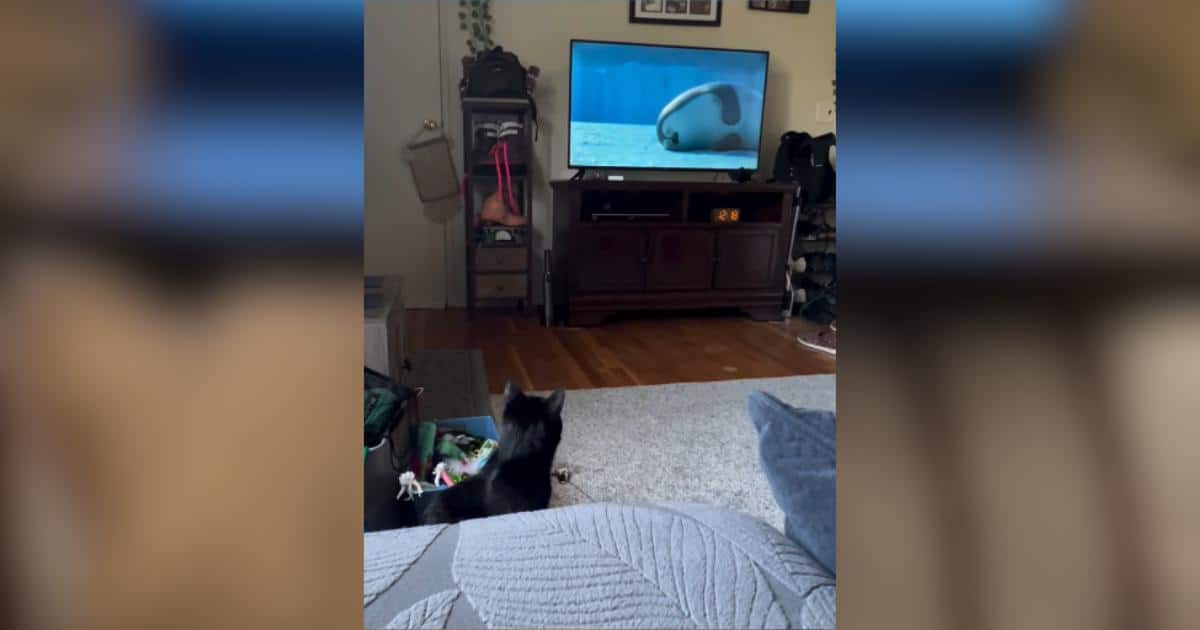
The phenomenon gained mainstream traction when Fig’s human family decided to put on Sealook—a series they likely anticipated would provide gentle, ambient background noise or perhaps entertain younger human members of the household. Instead, the program immediately arrested the kitten’s attention.
As captured in the widely shared video on @fossilandfig, Fig abandoned her usual toys and trotted directly toward the television set. She assumed a posture of intense, predatory focus, her eyes wide and unblinking. As the animated seals began sliding, tumbling, and bouncing across the screen, Fig’s distance management evaporated. She crept closer until her whiskers were nearly brushing the display, eventually lifting her paws to bat at the digital marine mammals.
Her family summarized the event with a sentiment echoed by thousands of online viewers: "She’s obsessed." Where many cat owners struggle to hold their pets’ interest with expensive, battery-operated electronic toys or complex puzzle feeders, Fig found total fulfillment in a streaming service’s children’s catalog.
The Spread to the Global Feline Community
Following the post’s traction on Instagram and TikTok, the video triggered a digital wave of replication. Cat owners worldwide began searching for Sealook on Netflix to test the theory on their own pets.
The results were remarkably consistent. Comment sections under Fig’s video quickly filled with testimonials from other cat parents. One user noted that the show had successfully integrated itself into their cat’s daily routine, serving as a reliable afternoon distraction. Another viewer announced plans to trial the series immediately, while others shared anecdotes of multi-cat households where pets gathered collectively around the television set, behaving much like humans tuning into a weekly sporting event or prestige drama.
While not every cat was won over—some stubborn felines reportedly maintained their preference for chasing computer mouse cursors—the overwhelming consensus was clear: Sealook possessed a unique magnetism that resonated deeply across the species divide.
Supporting Context & Metrics: The Science of Feline Vision
To comprehend why Sealook exerts such a powerful pull on cats, one must first deconstruct how the feline visual apparatus operates. Human beings often project their own sensory experiences onto animals, assuming that a bright, high-definition television broadcast looks identical to a cat sitting on the living room rug. In reality, the biological architecture of a cat’s eye is fundamentally specialized for survival, hunting, and navigation in dim light, rather than the appreciation of rich artistic palettes.
Cones, Rods, and the Color Spectrum
Human retinas are packed with millions of cone cells—photoreceptor cells responsible for color vision and sharp detail. We possess trichromatic vision, allowing us to perceive a vast spectrum encompassing reds, greens, blues, and all their complex combinations.
Cats, conversely, are dichromats. Their eyes contain significantly fewer cone cells, meaning their perception of color is vastly muted and less saturated compared to ours. According to veterinary ophthalmologists, a cat’s color world is predominantly rendered in shades of blue and yellow. Distinguishing between reds and greens presents a formidable challenge for feline eyes; these shades often blur into muted grays, brownish-yellows, or neutral tones.
Therefore, when marketing material or social media posts claim that a show like Sealook is produced in "colors cats can see," it represents a slight oversimplification. Technically, cats can see some of the colors, but they do not experience the vibrancy or the full chromatic range intended by the human animators.
The Dominance of Motion-Detecting Rod Cells
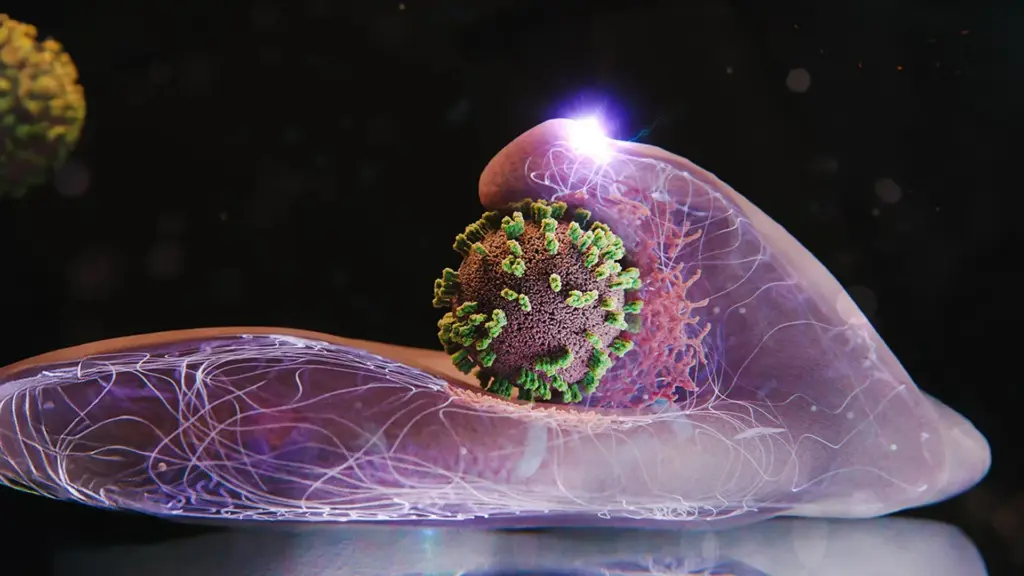
If color is not the primary driver of a cat’s screen obsession, what is? The answer lies in the abundance of rod cells packed into the feline retina. Rod cells are exceptionally sensitive to light and movement, making them the ultimate evolutionary tool for nocturnal and crepuscular hunting.
Dr. Paul Miller, a prominent veterinary ophthalmologist, has emphasized that movement is infinitely more important to a cat than color when it comes to capturing and sustaining attention. While a human viewer might judge a television show based on dialogue, narrative complexity, or artistic color grading, a cat’s brain is hardwired to track shifting vectors, rapid accelerations, and sudden changes in spatial positioning.
Sealook features stylized, highly kinetic animation. The characters—plump, expressive seals—constantly bounce, slide, swim, and perform exaggerated physical comedy. To a feline brain, these movements mimic the erratic, high-stakes evasion patterns of prey animals or the playful stalking behaviors of littermates. When combined with high-contrast character designs and color tones that happen to fall within the cat-accessible blue-and-yellow spectrum, the show inadvertently creates a masterclass in feline sensory stimulation.
Official Statements and Industry Perspectives
Despite the viral narrative surrounding Sealook as the ultimate "Cat TV" milestone, official documentation reveals a less calculated origin story.
Netflix’s Positioning of the Series
According to official Netflix catalog descriptions, Sealook is a South Korean animated comedy series created for children. Set within a whimsical wildlife sanctuary, the show follows the day-to-day misadventures of a group of expressive seals whose contrasting personalities routinely lead them into mischief.
Streaming platform representatives and industry insiders have confirmed that the series was never intentionally engineered, storyboarded, or color-graded to cater to feline visual capabilities. The production team designed the show for young human audiences, relying on slapstick humor, vibrant visual gags, and universally appealing character animation to drive engagement.
Veterinary and Behavioral Consensus
Animal health organizations, including VCA Animal Hospitals and the Merck Veterinary Manual, emphasize that a cat’s engagement with digital screens is an extension of its predatory instinct. Veterinary professionals note that while television technology has evolved—featuring higher refresh rates and 4K resolution that make moving images appear seamless to animal eyes—older cathode-ray tube (CRT) televisions often flickered at rates humans couldn’t perceive, but which sometimes irritated cats. Modern flat-screen displays eliminate this flicker, making digital media a much more comfortable and compelling viewing experience for pets.
Dr. Miller and other specialists validate that Fig’s obsession is a textbook manifestation of biological determinism. The high contrast of the animated seals against their backgrounds, coupled with rapid, unpredictable movements across a stable screen frame, triggers the innate predatory sequence: orient, stalk, pounce.
Future Outlook: The Rise of Tailored Feline Media
Fig’s viral discovery of Sealook opens a broader conversation about the future of pet-centric entertainment and the evolution of multi-species households. As smart home technology advances and pet humanization continues to accelerate as a dominant cultural and economic trend, the boundary between human entertainment and pet enrichment is blurring.
The Evolution of "Cat TV"
For years, "Cat TV" was limited to static DVDs featuring continuous loops of chirping birds or swimming fish. These early iterations were often rudimentary, suffering from poor production values and repetitive loops that quickly lost a cat’s interest.
However, the accidental success of mainstream children’s programming like Sealook demonstrates that pets can become deeply engaged with professional, high-budget animation. This realization may inspire media companies and streaming platforms to explore content optimization explicitly tailored to domestic animals. By deliberately combining high-contrast blue-and-yellow color palettes with erratic, prey-mimicking motion vectors, future streaming content could cater dual-demographics: entertaining human children while simultaneously providing cognitive enrichment for their feline companions.
A New Standard for Pet Enrichment
Behaviorists increasingly recognize that mental stimulation is just as critical to a domestic cat’s well-being as physical exercise. Indoor cats, stripped of the need to hunt for survival, frequently experience boredom, which can manifest as behavioral issues ranging from destructive scratching to anxiety-related over-grooming.
While interactive wand toys and automated laser pointers remain staples of feline enrichment, screen-based media offers a safe, low-effort alternative for busy owners seeking to keep their pets mentally engaged during the workday. Shows like Sealook prove that cats do not require high-tech, pet-specific software to find digital fulfillment; sometimes, the right combination of kinetic energy and accessible color theory can turn an ordinary children’s cartoon into a feline masterpiece.
Conclusion
As Fig the calico kitten continues to enjoy her front-row seat to the antics of her favorite animated seals, she serves as a furry ambassador for a new era of cross-species media consumption. Her story reminds us that our feline companions inhabit a sensory world vastly different from our own—one where a simple children’s comedy can transform into an epic adventure of motion, contrast, and instinct. Until Netflix officially launches a dedicated feline profile tier, human viewers will simply have to negotiate for control of the living room remote, accepting that when Sealook is on, the TV officially belongs to the cat.