
Executive Overview
Long before a puppy takes its first clumsy steps on a leash, learns to sit on command, or undergoes the rigorous training required to guide a person through a complex world, an intricate biological symphony is already playing out behind the scenes. In the quiet, dimly lit whelping boxes of specialized breeding and training facilities, weeks before their eyes or ears ever open, newborn puppies are experiencing a rapid surge of neurological and physiological development.
At organizations like Dogs Inc, this critical window is treated with the utmost scientific precision and intentional care. Preparing future guide dogs and service dogs does not begin at six months or even eight weeks of age; it begins on day one. One of the cornerstone practices utilized during this fragile neonatal stage is Early Neurological Stimulation (ENS)—a specialized, science-based protocol designed to gently challenge and strengthen the developing nervous systems of newborn canines.
While ENS is only a single chapter in the broader narrative of puppy development, it exemplifies a holistic, research-backed philosophy that prioritizes emotional resilience, stress tolerance, and physiological adaptability from the very beginning. This comprehensive look explores the science of the neonatal stage, the mechanics of ENS, its distinction from later socialization windows, and how early interventions lay the groundwork for life-changing partnerships between humans and canines.
Detailed Chronology: From the Whelping Box to Adulthood
Understanding how a service dog is forged requires tracing their development through distinct, chronologically progressive stages. Each phase presents unique biological milestones, vulnerabilities, and developmental windows that shape the adult dog.
The Neonatal Stage (Birth to 2 Weeks)
The journey begins in the neonatal phase. During these first fourteen days, puppies are entirely dependent on their mother and littermates. At this stage, they cannot see or hear, and their bodies are incapable of regulating internal temperatures. They spend the vast majority of their time sleeping and nursing.
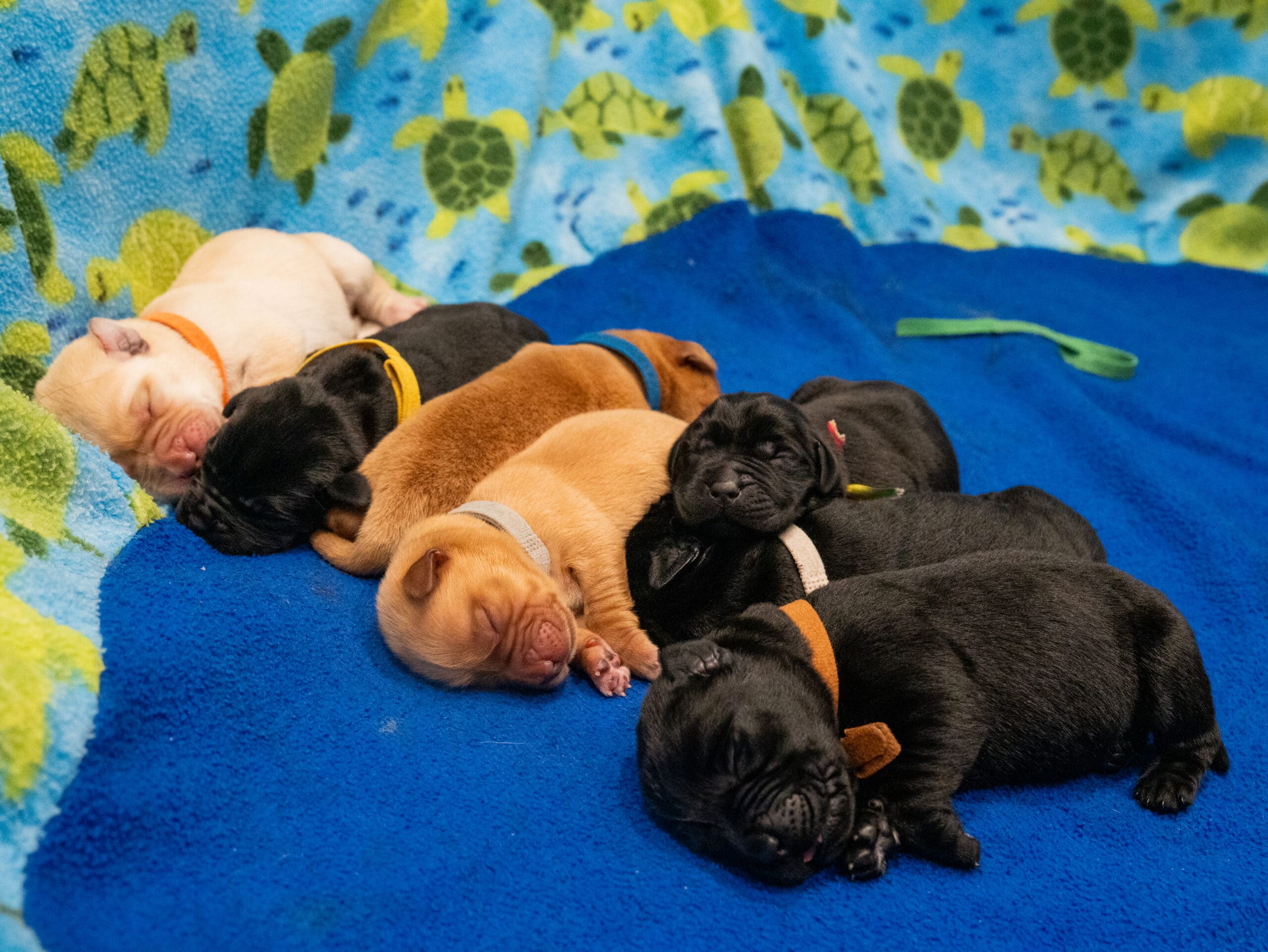
Despite their apparent vulnerability, profound structural changes are occurring inside their central nervous systems. The brain is rapidly forming neural connections, and the body is laying down the neurological tracks that will dictate future sensory processing. It is precisely during this delicate window—typically spanning from day three to day sixteen—that Early Neurological Stimulation is introduced.
The Transitional Stage (2 to 4 Weeks)
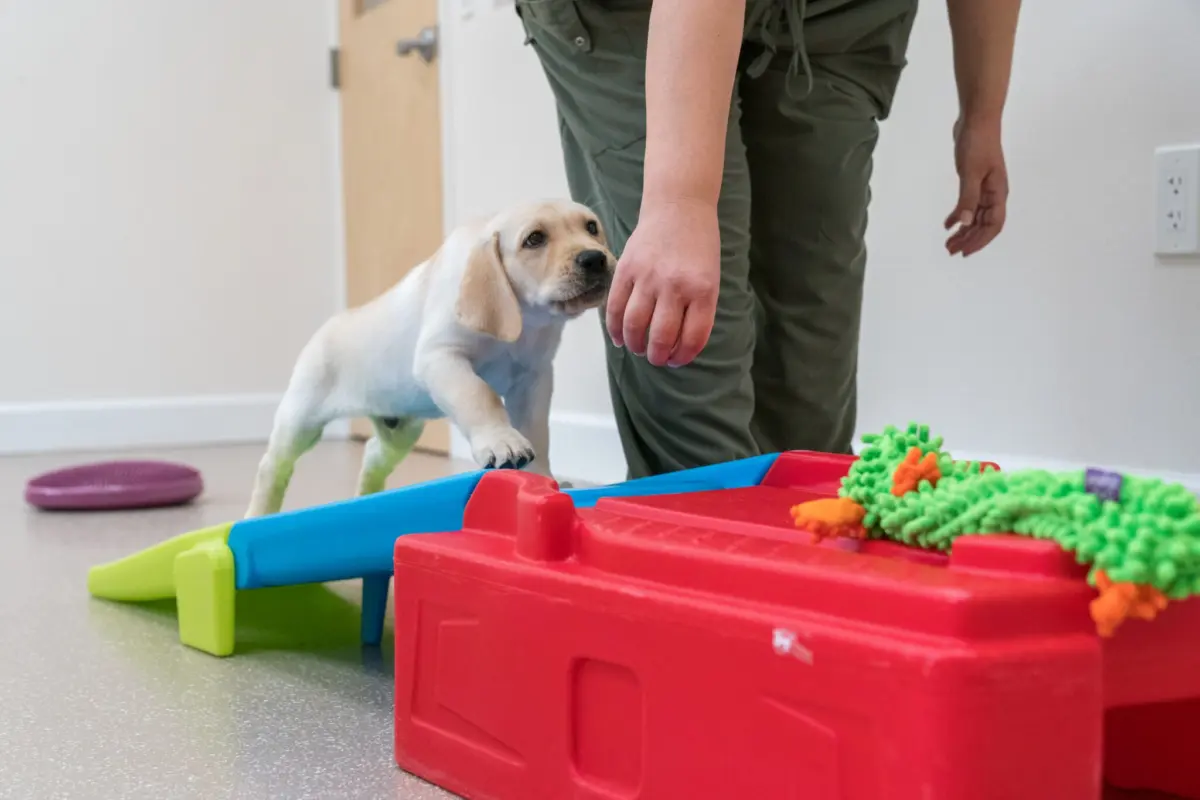
As puppies cross the two-week threshold, a rapid awakening occurs. Their eyes and ears finally open, shifting their perception of the world from purely tactile and olfactory to visual and auditory. By the time they reach four weeks of age, puppies begin to walk, vocalize with tentative barks, and interact more deliberately with their littermates.
Simultaneously, their deciduous (baby) teeth begin to erupt, marking the biological cue to transition away from exclusively nursing toward soft gruel and, eventually, solid food. This stage introduces spatial awareness and the first glimmers of independent mobility.
The Socialization Period (3 to 12 Weeks)
Often considered the most critical psychological window in a dog’s life, the socialization period overlaps with the tail end of the transitional stage and extends through the third month. During this phase, puppies build vital positive associations with humans, unfamiliar sounds, varied surface textures, and other animals.
By the eight-week mark, many foundational experiences have taken root, helping to prevent the onset of fear-based behaviors, anxiety, and aggression later in life. By twelve weeks, structured exposure to diverse environments helps cement social skills, preparing the puppy for the wider world.

The Adolescent Stage and Beyond (6 Months to 12 Months and Older)
As puppies mature into adolescence—which can begin as early as six months—they enter a phase akin to human teenagehood, frequently testing boundaries and establishing independence. Reproductive maturity generally occurs between six and 12 months. For female dogs, this often involves their first heat cycle and the broader hormonal shifts associated with estrus, while male dogs begin displaying hormone-driven behaviors.
Throughout this period, puppies navigate an average of four distinct "fear periods," during which negative experiences can have an outsized impact on their confidence. Consequently, continued positive reinforcement, structured crate training to build independence, and professional puppy classes (often recommended around 16 weeks) are vital to ensure they mature into stable, confident, and well-adjusted adult companions.
Supporting Context & Metrics: The Science of Early Neurological Stimulation
Early Neurological Stimulation was originally developed for military canine programs based on the premise that early, mild physiological stress could improve a dog’s stress tolerance and overall performance later in life. Though originally referred to by terms like "Bio Sensor" training, modern working dog organizations utilize ENS as a standardized, gentle protocol tailored to the neonatal nervous system.
How ENS Works: The Protocols
ENS exercises are brief, highly controlled, and restricted to the neonatal window (days 3 through 16). Because puppies are exceptionally delicate during this period, the exercises must be executed exclusively by trained handlers following strict protocols. Each exercise lasts only three to five seconds per puppy, per day, ensuring that stress levels remain negligible while physiological stimulation is maximized.
The standard routine involves five distinct tactile and postural positions:
- Tactile Stimulation: The handler gently tickles the puppy’s foot between the toes using a Q-tip for three to five seconds. This stimulates neurological pathways associated with touch and limb awareness.
- Head Held Erect: The puppy is held vertically, with its head pointed straight up toward the ceiling for three to five seconds, challenging the vestibular system’s equilibrium response.
- Head Pointed Down: The puppy is gently inverted so that its head points toward the floor, stimulating gravitational orientation pathways.
- Supine Position: The puppy is placed flat on its back in the palm of the handler’s hand, allowing it to rest comfortably while experiencing a vulnerable, exposed posture.
- Thermal Stimulation: A refrigerated damp towel is placed underneath the puppy, introducing a mild, non-harmful thermal change that activates metabolic and circulatory adjustments.
Potential Physiological and Behavioral Benefits
Decades of anecdotal observation and emerging scientific study suggest that these minor, controlled stressors stimulate the neurological system in ways that enhance functional capacity. Potential benefits observed in dogs subjected to ENS protocols include:
- Improved Cardiovascular Performance: Enhanced heart rate and resting heart rates.
- Stronger Glands: Improved adrenal gland function and hormonal regulation.
- Greater Tolerance to Stress: Enhanced resilience when confronted with novel, unexpected environmental stimuli later in life.
- Greater Disease Resistance: Anecdotal evidence suggests improved immune responses, though genetics, nutrition, and overall veterinary care remain the primary drivers of health.
ENS vs. Socialization: Understanding the Distinction
It is a common misconception that ENS and socialization are interchangeable terms. They occur at entirely different developmental milestones and serve distinct biological purposes.
ENS is strictly confined to the neonatal stage (birth to two weeks), targeting the central nervous system before the eyes and ears are even functional. Socialization, by contrast, takes place from three weeks onward, relying on active sensory processing, conscious learning, and emotional engagement with the external environment. ENS is not a substitute for socialization; rather, it is a precursor that prepares the neurological "hardware" to better process the rich environmental data delivered during the socialization window.
Official Statements and Organizational Philosophy
Preparing a dog to guide a blind individual, assist a veteran with PTSD, or mitigate mobility challenges requires an institutional commitment to excellence that spans years. Organizations at the forefront of this field emphasize that no single technique dictates a dog’s success; rather, success is the cumulative result of genetics, targeted nutrition, meticulous veterinary care, environmental enrichment, and thoughtful training methodologies.
The Holistic Approach at Dogs Inc
At Dogs Inc, the philosophy of puppy rearing is rooted in the understanding that exceptional service dogs are built through a continuum of care. From the moment a litter is whelped, handlers and breeding experts collaborate to ensure that every developmental milestone is met with the appropriate level of challenge and support.
"Early Neurological Stimulation is a vital tool, but it is just one small chapter in a much larger story," notes developmental specialists within the working dog community. "We are not trying to manufacture ‘perfect’ dogs in a vacuum. Our goal is to provide thoughtful, structured experiences at every single stage of growth—from neonatal stimulation to adolescent boundary-testing—so that our puppies develop emotional maturity, resilience, and an innate curiosity about the world."
This philosophy recognizes that while genetics provide the raw blueprint, early experiences determine how those genetic traits are expressed. By combining ENS with maternal care, early socialization, positive reinforcement training, and eventual placement with dedicated puppy raisers, organizations like Dogs Inc construct an unshakeable foundation for future working dogs.
Future Outlook: The Evolution of Canine Development Science
As the science of animal behavior and neonatology continues to advance, the protocols surrounding service dog development are constantly refined. Researchers are increasingly focusing on the epigenetics of stress—understanding how early environmental interventions can permanently alter gene expression related to anxiety, emotional regulation, and cognitive adaptability.
The future of guide and service dog breeding will likely see even more personalized tracking of neonatal development, leveraging biometric data to assess which puppies are best suited for high-stress environments like bustling airports or crowded city streets, versus those better suited for calmer, facility-based roles.
However, the core tenets established by foundational practices like ENS will remain unchanged: respect for the delicate biology of the newborn puppy, an unwavering commitment to positive, humane handling, and a deep appreciation for the lifelong journey of learning.
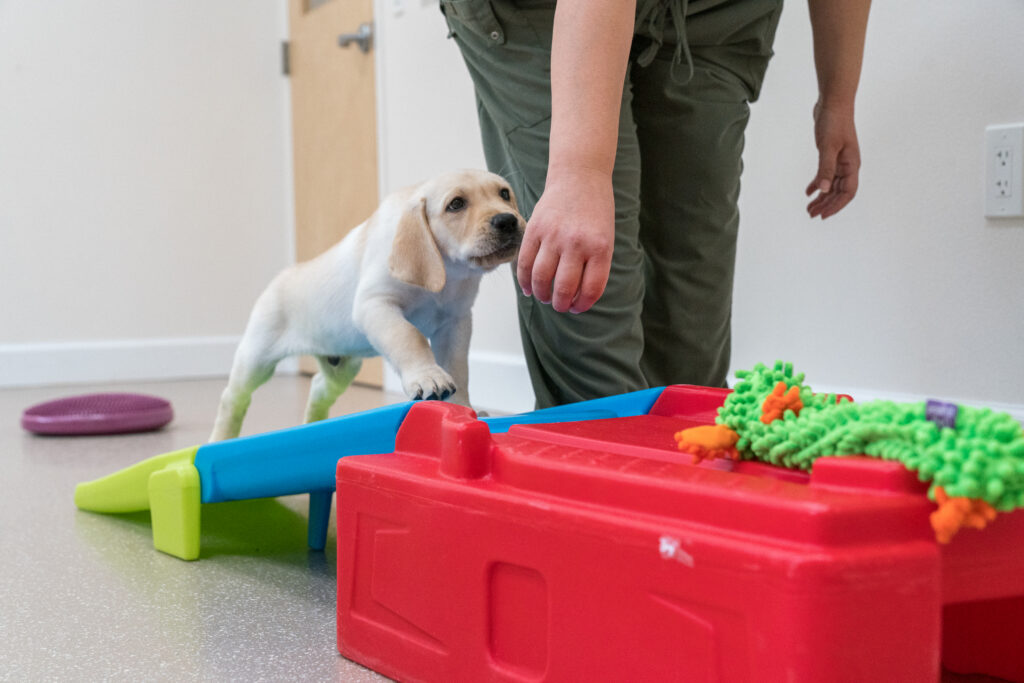
Ultimately, a puppy’s first weeks pass in the blink of an eye, but they mark the genesis of a remarkable transformation. Through the thoughtful application of Early Neurological Stimulation, followed by years of rigorous socialization, advanced training, and profound human-canine bonding, these tiny, vulnerable newborns evolve into life-changing partners—eyes for the blind, independence for the mobility-impaired, and steadfast companions for those who need them most.