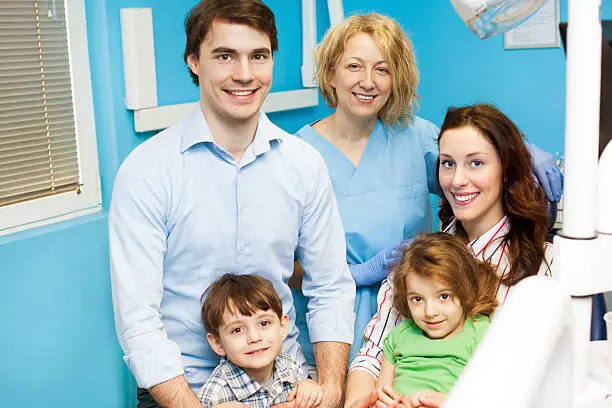

Executive Overview
In the contemporary American household, time is arguably the most fiercely contested commodity. Between the logistical ballet of academic schedules, extracurricular practices, career demands, and domestic management, keeping track of preventative healthcare appointments often feels like building a house of cards in a windstorm. Nowhere is this administrative friction more palpable than in the realm of family dental health.
Consider a common scenario: one child requires a routine bi-annual cleaning, another is experiencing the unsettling discomfort of a loose tooth, and a parent has spent the better part of six months postponing their own diagnostic exam simply because the operational bandwidth to schedule it does not exist. Before long, maintaining oral hygiene across a multi-generational household transforms from a straightforward wellness practice into a tangled administrative puzzle characterized by disparate office locations, overlapping paperwork, conflicting scheduling protocols, and a lingering sense of guilt over missed prophylactic interventions.
To mitigate this compounding stress, an increasing number of parents and household heads are turning toward a centralized solution: establishing a single "dental home" through a dedicated family dentistry practice. By consolidating pediatric, adolescent, adult, and geriatric care under one roof, households can fundamentally alter their relationship with oral healthcare.
Far more than a mere exercise in convenience, transitioning to a single family dentist offers profound structural advantages. It drastically reduces the cognitive load of household administration, fosters deep-seated trust between patients and clinicians, normalizes dental visits for anxious children through shared family routines, and ensures long-term clinical continuity. According to public health frameworks—including data highlighted by the Centers for Disease Control and Prevention (CDC)—oral health is inextricably linked to systemic physical well-being across every stage of the human lifespan. When care is streamlined, accessibility improves; when accessibility improves, preventative habits take root, safeguarding the long-term health and financial stability of the household.
Detailed Chronology: The Evolution of Household Dental Management
To understand why centralized family dentistry has become the gold standard of modern oral healthcare management, it is useful to examine how household healthcare logistics have evolved over the past several decades.
The Fragmented Era (Late 20th Century)
Historically, dental care was heavily specialized and geographically dispersed. Children were frequently routed to pediatric dental specialists located in commercial medical parks, while parents visited general practitioners nearer to their workplaces, and aging grandparents relied on yet another provider altogether.
While this decentralized model ensured that specialists handled specific demographics, it placed an immense logistical burden on the household manager—typically the primary caregiver. Maintaining distinct patient charts, adapting to entirely different office cultures, and coordinating three or more calendars generated severe administrative friction. Consequently, routine cleanings were routinely deprioritized in favor of more immediate household crises, leading to a reactive rather than proactive healthcare model.
The Rise of Specialized General Practice (Early 2000s)
As healthcare economics shifted toward holistic, patient-centered models, dental clinics began recognizing the immense value of comprehensive general dentistry. Practices started expanding their clinical competencies, investing in advanced training to treat toddlers alongside octogenarians. This era marked the birth of the modern family dental practice—a hybrid model capable of delivering preventative, restorative, and aesthetic procedures to every member of the household, regardless of age.
The Modern Consolidated Standard (Present Day)
Today, the family dental practice serves as an integrated health hub. Modern technological advancements—such as unified electronic health records (EHRs), digital intraoral scanners, and centralized family billing platforms—have made it seamless for a single dental team to manage the dynamic oral health needs of a multi-generational family. The focus has shifted definitively away from episodic, transactional interventions toward lifelong preventative partnerships.
Supporting Context & Metrics: The Clinical and Logistical Case for Centralization
The movement toward a single family dentist is backed by a compelling body of public health data, behavioral science, and operational metrics. When evaluating the friction points of modern healthcare, the numbers paint a clear picture.
The Public Health Imperative
Oral health is not an isolated cosmetic concern; it is a vital indicator of systemic health. Clinical research consistently demonstrates clear correlations between chronic periodontal (gum) disease and systemic inflammatory conditions, including cardiovascular disease, poorly managed diabetes, and adverse pregnancy outcomes.
Yet, despite these known risks, routine dental utilization remains inconsistent across the population. According to data tracking compiled by the CDC’s National Center for Health Statistics (NCHS), a significant percentage of American adults and children fail to visit a dentist annually. The primary drivers behind these missed appointments are rarely philosophical objections to dental care; rather, they are logistical barriers:
- Perceived Time Deficits: Difficulty carving out hours across multiple office calendars.
- Administrative Fatigue: The burden of registering new patients, updating insurance information across multiple providers, and managing separate recall notices.
- Transportation Friction: Navigating distinct geographic locations for different family members.
[Decentralized Care Model]
Multiple Offices ──> Disjointed Calendars ──> High Admin Load ──> Missed Visits ──> Reactive/Costly Treatment

[Centralized Family Dentist Model]
Single Office ────> Coordinated Schedules ──> Low Admin Load ──> Consistent Care ──> Proactive/Affordable Wellness
The Financial Dimension of Prevention
From a socioeconomic perspective, consolidating care under a family dentist directly impacts the household budget. Dental economics operate on a straightforward inverse rule: preventative care (cleanings, sealants, diagnostic exams) requires minimal financial expenditure and yields maximum protection. Conversely, deferred care invariably leads to restorative and endodontic interventions (root canals, crowns, surgical extractions) that demand substantial capital and cause patient discomfort.
By simplifying the scheduling apparatus, a family dental practice removes the primary obstacle to preventative consistency. When all household members are on a synchronized six-month recall schedule, minor vulnerabilities—such as an emerging demineralized spot on a child’s molar or an adult’s early-stage gingivitis—can be addressed before graduating into complex, expensive clinical problems.
Behavioral Psychology and Patient Anxiety
Dental anxiety is a pervasive barrier to care, affecting millions of adults and children alike. Psychological studies indicate that familiarity and environmental predictability are among the most effective palliatives for procedural anxiety.
When a child observes their parents and siblings entering the same clinical environment, interacting warmly with the same front-desk personnel, and returning with positive outcomes, the dental office ceases to be an alien space of clinical apprehension. It transforms into a familiar, trusted community hub. This psychological conditioning is difficult to replicate when every family member visits a completely isolated practitioner in a different part of town.
Official Statements: Perspectives from Dental Professionals and Public Health Authorities
To gain a deeper appreciation of why centralized family care is transforming community health standards, industry leaders and health organizations offer critical insights.
The Public Health Perspective
Public health officials continuously emphasize the necessity of breaking down barriers to entry for preventative care. In guidelines published by the CDC regarding adult and pediatric oral hygiene, experts stress that consistency is the single most reliable predictor of long-term dental retention.
"Oral health is a cornerstone of overall physical health, yet millions of individuals experience preventable decay simply due to structural and logistical gaps in care coordination. Establishing a continuous, lifelong relationship with a primary dental provider creates a protective barrier against chronic oral diseases."
— Public Health Advisory Excerpt, CDC Oral Health Division
The Clinical Perspective
Practicing clinicians who manage multi-generational households note that longitudinal care fundamentally alters the quality of diagnoses they can provide.
"When you treat an isolated patient who drops in once every few years, you are treating a snapshot. When you act as the family dentist, you are reading a biography. You understand the genetic predispositions, the dietary habits, the nocturnal grinding patterns, and the developmental milestones of every person in that household. That contextual awareness allows us to provide hyper-personalized, anticipatory guidance that isolated clinics simply cannot match."
— Dr. Elizabeth Vance, D.D.S., General and Family Practitioner
Furthermore, practitioners emphasize the emotional resonance of multi-generational continuity. "There is a unique clinical reward in watching a patient transition from a nervous toddler sitting on their parent’s lap into a confident college student managing their own oral hygiene, all within the exact same walls," Dr. Vance adds. "That level of enduring trust is the absolute bedrock of successful modern dentistry."
Comparative Analysis: One Family Dentist vs. Separate Dental Offices
To clearly evaluate the operational and emotional trade-offs between centralized and fragmented dental care, consider the following metrics:
| Consideration | One Family Dentist | Separate Dental Offices |
|---|---|---|
| Scheduling Logistics | Appointments can often be blocked consecutively or coordinated on the same operational day, minimizing calendar fragmentation. | Requires managing multiple disconnected calendars, disparate office hours, and uncoordinated phone trees. |
| Medical History & Records | A single clinical team maintains a comprehensive longitudinal view of genetic oral patterns, treatment history, and developmental milestones. | Information is siloed across separate providers, increasing the risk of overlooked cross-generational trends. |
| Patient Comfort & Anxiety | Children and adults benefit from a highly familiar environment where family members model calmness and positive reinforcement. | Each new office requires an independent adjustment period, elevating baseline apprehension for sensitive patients. |
| Preventative Consistency | Routine bi-annual visits are significantly easier to maintain when tied to a single administrative point of contact. | Missed appointments and lapsed care intervals occur at a much higher frequency due to administrative fatigue. |
| Parental Workload | Drastically reduced paperwork, unified billing systems, and streamlined reminder notifications. | High administrative overhead, requiring separate follow-ups, disparate intake forms, and complex travel planning. |
Future Outlook: The Next Generation of Household Dental Care
As we look toward the horizon of modern healthcare, the role of the family dentist is poised to expand even further, driven by technological integration and a societal shift toward hyper-efficient lifestyle management.
Tele-Dentistry and Remote Monitoring
The integration of digital health tools is rapidly redefining how family practices interact with households. Remote monitoring technologies—such as at-home intraoral scanners, AI-driven diagnostic apps for tracking orthodontic progress, and secure virtual consultation portals—are enabling family dentists to triage household concerns without requiring an immediate in-office visit. A parent questioning whether a child’s erupting permanent tooth is developing correctly can now transmit secure digital imagery directly to a trusted family dentist who already possesses the child’s developmental baseline.
Preventive Genetics and Personalized Medicine
The future of family dentistry will also see a deeper integration of predictive genomics. Because a family dentist treats multiple generations of the same genetic lineage, they are uniquely positioned to monitor hereditary oral health conditions—such as aggressive periodontal disease, enamel hypoplasia, or congenital tooth agenesis—long before clinical symptoms manifest. By leveraging genetic screening data, family dental practices will soon transition from traditional preventative care to truly personalized, predictive wellness planning.
The Shift Toward Stress-Free Domestic Operations
Ultimately, the future of household health management points toward radical simplification. As consumers demand frictionless experiences across all service sectors, healthcare is no exception. The chaotic era of juggling three or four distinct medical and dental portals is giving way to unified, relationship-driven care hubs.
For the modern family, choosing a single, highly capable general dentist is much more than a logistical shortcut. It is an intentional investment in peace of mind. By transforming dental visits from a scattered chore into a shared, familiar, and life-affirming routine, households can safeguard their smiles, protect their financial resources, and reclaim the most precious commodity of all: time.