
Executive Overview
Across the frost-kissed hills of the American Northeast and the sprawling timberlands of the Great Lakes, a quiet revolution is taking place in the heart of the sugarbush. Traditionally, the production of maple syrup—a quintessential North American tradition—has focused narrowly on maximizing sap yields through intensive forestry. Forest stands were frequently thinned down to clean, uniform monocultures of sugar maples (Acer saccharum), stripped of underbrush, competing hardwoods, and standing dead trees to ease the collection of sap via buckets or modern plastic tubing networks.
However, a growing movement is proving that the sweet amber liquid dripping from trees can do much more than satisfy breakfast tables; it can also sustain declining migratory bird populations.
Spearheaded by the National Audubon Society, the Bird-Friendly Maple program is rapidly expanding its footprint across key syrup-producing states. By incentivizing landowners to transition away from sterile monocultures toward ecologically diverse, multi-tiered forests, the program offers a masterclass in regenerative agriculture. Producers who enroll in the initiative commit to rigorous forest management standards designed to protect native flora, bolster climate resilience, store atmospheric carbon, and—most importantly—safeguard critical breeding habitats for more than 70 species of forest birds.
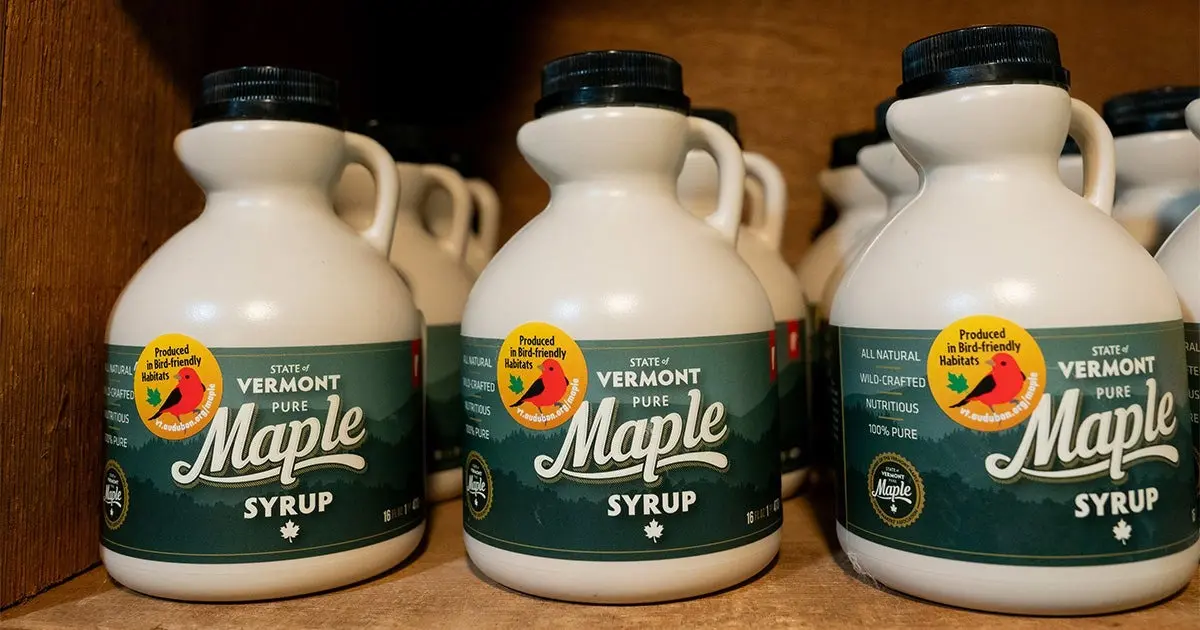
In return, these stewards of the land gain access to a booming market of conservation-conscious consumers, proudly displaying the program’s signature Scarlet Tanager logo on their syrup bottles. As participation climbs to roughly 150 businesses managing over 20,000 acres, this initiative illustrates how commercial enterprise and environmental conservation can exist in harmonious balance, offering a beacon of hope for eastern forest ecosystems facing alarming population declines.
Detailed Chronology: The Evolution of Bird-Friendly Maple
To understand the current momentum of the Bird-Friendly Maple program, it is essential to trace its roots from a regional pilot project into an interstate conservation framework.
2014: Planting the Seeds in Vermont
The initiative was officially born in Vermont in 2014, conceptualized by forest ecologists and conservationists at Audubon Vermont. Recognizing that the vast acreage of privately owned sugarbushes in the Northeast overlapped significantly with the prime breeding grounds of vulnerable neotropical migratory songbirds, program leaders sought a way to engage private landowners. Rather than locking forests away in strict preservation, which is often economically unviable for working farmers, the program introduced a set of practical, science-backed forestry guidelines that could be integrated seamlessly into daily maple production.
The Mid-2010s to 2020: Gradual Regional Scaling
In its first several years, the program focused primarily on establishing trust within Vermont’s tightly knit maple-producing community. Foresters conducted workshops, walked woodlots with skeptical or curious producers, and demonstrated that prioritizing biodiversity did not have to come at the expense of maple yields. As word spread about the ecological benefits—ranging from improved soil health to enhanced tree vigor—the program began spilling over Vermont’s borders into neighboring New York, New Hampshire, and Maine, slowly building a network of certified producers who recognized the untapped marketing potential of ecological stewardship.
2024–2026: Expansion into the Great Lakes and National Recognition
By the mid-2020s, the program achieved a major milestone by expanding westward into the Great Lakes region. Producers like Christopher Petron of Nature’s Sweetly farm in Merrill, Wisconsin, became trailblazers in their home states by signing up as the first participants outside the traditional northeastern stronghold.
Today, the program encompasses approximately 150 businesses spanning the Northeast and the Great Lakes. While these certified stands currently represent just over 20,000 acres out of the more than 310,800 total acres dedicated to commercial maple syrup production in the United States, the trajectory is sharply upward. With dozens more businesses slated for enrollment before the close of the year, the program has transitioned from a localized Vermont experiment into a recognized multi-regional standard for sustainable forestry.
Supporting Context & Metrics: The Science of Sugarbush Ecology
To appreciate why the Bird-Friendly Maple program is so vital, one must examine the precarious state of eastern forests and the biological mechanics of a healthy sugarbush.
The Crisis in Eastern Forests
The ecological urgency driving this program cannot be overstated. According to comprehensive avian conservation data, breeding birds in North American eastern forests have suffered an estimated 27 percent population decline between 1970 and 2025.
This steep drop is primarily driven by habitat loss, fragmentation, and the simplification of forest structures. Modern development, suburban sprawl, and intensive, single-use forestry practices have steadily eroded the complex layers of the forest ecosystem. For migratory songbirds that travel thousands of years from Central and South America to breed in North America’s temperate zones, finding a structurally diverse, food-rich forest canopy is a matter of survival.
Transforming the Sugarbush: Beyond Monocultures
In a conventional, intensively managed sugarbush, the objective is often maximum efficiency: remove every tree that is not a sugar maple, clear out competing understory brush to make stringing vacuum tubing easier, and remove fallen logs or dead standing trees (snags) perceived as messy or hazardous.
The Bird-Friendly Maple program flips this script entirely. To earn and maintain certification, producers must adhere to a holistic set of forest management protocols that mimic natural forest disturbances and structural complexity:
- Retention of Native Hardwood Diversity: Rather than maintaining a sterile monoculture of maples, producers must actively foster a rich mix of companion species such as oaks, birches, beeches, and cherries. These diverse species provide alternate food sources (such as acorns and catkins) and varied microhabitats.
- Understory and Shrub Layer Preservation: Native shrubs and understory saplings are left intact. This multi-tiered vertical structure is critical for species like the Wood Thrush, which nests in dense understory saplings, and provides crucial concealment from predators.
- Dead Wood Management: Standing dead trees (snags) and fallen logs are left in place. Snags serve as essential nesting and foraging sites for cavity-nesting species like the Yellow-Bellied Sapsucker, while rotting logs on the forest floor offer drumming stages for Ruffed Grouse and micro-habitats for the insects that Ovenbirds scratch for in the leaf litter.
- Invasive Species Mitigation: Producers must actively monitor and suppress invasive plant species—such as buckthorn, garlic mustard, and honeysuckle—which crowd out native vegetation and degrade the nutritional quality of the forest floor.
Ecosystem Co-Benefits
Steve Hagenbuch, who leads the Bird-Friendly Maple program and serves as Audubon Vermont’s senior forests program manager, emphasizes that managing for birds inherently means managing for the entire web of life.
"We get them to manage for bird habitat, general biodiversity benefits, forest health benefits, climate resilience benefits, carbon storage benefits—all of the things you could think of that relate to a forest," Hagenbuch explains.
By allowing structural diversity and older trees to remain, these forests become more resilient to the stresses of a changing climate, better equipped to withstand extreme weather events, and vastly more efficient at sequestering atmospheric carbon.
Official Statements and Producer Perspectives
The success of the Bird-Friendly Maple program relies fundamentally on the willingness of private landowners to voluntarily alter how they manage their ancestral lands. The voices of these producers reveal a profound alignment between economic viability and deep environmental ethics.
The Wisconsin Perspective: Christopher Petron
At Nature’s Sweetly farm in Merrill, Wisconsin, owner Christopher Petron views his sugar maple trees not merely as commercial assets, but as members of a broader ecological community. As the very first producer in Wisconsin to join the Audubon initiative, Petron embodies the growing geographic shift of the program.
"My natural go-to instinct when managing the forest is thinking about the birds and thinking about how I’m not the only one here that wants to use this space," Petron remarks.
His philosophy challenges the traditional extractivist mindset, proving that commercial agricultural production can coexist respectfully with local wildlife.
The New York Perspective: Craig and Sharon Myers
In Cuba, New York, co-owners Craig and Sharon Myers of Tails & Trails Farm have embraced the program as a way to bridge the gap between conscientious farming and consumer education. Their certified syrup bottles, adorned with the program’s vibrant red male Scarlet Tanager logo, immediately draw the eye and spark curiosity.
"People ask, ‘What does that mean?’ and it’s a pretty easy conversation to have," Craig Myers notes. "Because who doesn’t want to make things better for the birds? Their habitat is really threatened right now."
For Sharon Myers, the extra effort required to manage the forest holistically is a moral imperative rooted in sustainable stewardship:
"We’re being very strategic in using what Mother Nature gives us without destroying it for the commercial use," she explains.
This sentiment highlights a powerful marketing and ethical reality: when consumers understand that their purchase directly supports songbird conservation, they are not only willing to pay for the product—they become vocal advocates for the brand.
Future Outlook: Scaling Conservation Across the Continent
As the Bird-Friendly Maple program looks toward the latter half of the decade, its architects and participants face both exciting opportunities and notable challenges.
Bridging the Scale Gap
While 20,000 certified acres is an impressive achievement for a relatively young conservation initiative, it still represents a fraction of the over 310,800 acres utilized for maple production in the United States. The primary frontier for the program lies in scaling up enrollment across major syrup-producing powerhouses like upstate New York, Wisconsin, Michigan, and the Canadian provinces, where vast tracts of privately owned sugarbushes remain uncertified.
To bridge this gap, Audubon regional offices are streamlining verification processes, partnering with state forestry extension services, and demonstrating the direct economic returns of certification. As consumer demand for sustainably sourced, climate-friendly foods surges, certified producers frequently find themselves able to command premium pricing or secure loyal customer bases that insulate them from commodity market fluctuations.
Climate Resilience as the Ultimate Insurance Policy
Looking ahead, the long-term viability of the maple syrup industry itself is inextricably linked to forest health and climate stability. Rising average temperatures and erratic spring freeze-thaw cycles threaten the physiological health of sugar maple trees. By enforcing management practices that increase tree diversity, soil moisture retention, and structural complexity, the Bird-Friendly Maple program serves as an invaluable insurance policy against climate change. Diverse forests are inherently more adaptable to environmental stress than fragile, simplified monocultures.
A Model for Regenerative Agriculture
Ultimately, the Audubon Bird-Friendly Maple program offers a blueprint that extends far beyond the sweet confines of the sugarbush. It demonstrates that private landowners do not have to choose between financial livelihoods and ecological preservation. By aligning market incentives with rigorous avian science, the program turns every stack of pancakes drizzled with certified syrup into a micro-investment in the future of North America’s migratory songbirds.
As Steve Hagenbuch and his team continue signing up new stewards from the wooded hills of New England to the northern reaches of the Great Lakes, the message ringing through the canopy is clear: protecting the chorus of the forest is not just a moral obligation—it is the sweetest deal in agriculture.