
Executive Overview
In an era defined by professional uncertainty and the subtle isolation of modern life, the intersection of vulnerability and compassion often manifests in the most unexpected ways. This report details the extraordinary account of Écho Boréal, a professional musician whose routine recording session was interrupted by a tiny, shivering orange kitten peering through a glass door.
What began as a transient encounter amid the gentle, resonant chimes of a handpan transformed into a profound mutual rescue. Against a backdrop of personal hardship—marked by the sudden loss of employment and a subsequent descent into emotional desolation—Boréal found solace in the stewardship of an orphaned feline. Named Windy for his erratic, energetic bursts of play, the kitten not only survived a perilous early life in the cold but also catalyzed a psychological and emotional renaissance for his human caregiver.
This journalistic feature examines the chronological unfolding of their meeting, the veterinary evaluations that ensured the kitten’s health, the symbiotic nature of their daily routine, and the broader psychological implications of cross-species companionship during periods of profound human transition.
Detailed Chronology: From First Notes to Lifelong Bond
The Encounter Outside the Glass
The event occurred on an ordinary afternoon in Boréal’s living room. Engaged in the precise art of recording acoustic textures on his handpan—a convex steel instrument celebrated for its soothing, bell-like harmonics—Boréal noticed a peripheral disturbance. A diminutive flash of orange color had materialized outside his floor-to-ceiling glass door.
Initially unable to process the visual data, Boréal paused his performance to investigate. Peering back at him through the pane was a cat of remarkably small stature: an orange tabby kitten estimated to be a mere six to seven weeks of age.
Recognizing the environmental hazards—specifically the dropping ambient temperatures and the vulnerability of an unweaned animal—Boréal exercised calculated restraint. Rather than rushing forward with abrupt movements that might terrorize the already frightened creature, he stepped outside slowly. He allowed the kitten to acclimate to his scent, offering an open hand for olfactory inspection. This deliberate patience bridged the gap between human and animal, establishing a foundation of trust before the kitten was lifted into the warmth of the interior.
Veterinary Assessment and Medical Clearance
Upon securing the kitten indoors, Boréal’s immediate priority shifted to epidemiological and physical due diligence. Young kittens found in outdoor environments are frequently vectors for parasites, upper respiratory infections, and severe localized pathogens.
Boréal transported the kitten to a local veterinary clinic for a comprehensive diagnostic screening. The examination yielded remarkably positive results:
- Parasite Status: The kitten was entirely free of fleas, ticks, and common internal parasites.
- Viral Screening: Boréal held acute concerns regarding a virulent feline virus prevalent within the regional cat population; however, clinical assessments confirmed the kitten showed no signs of infection.
- Physical Condition: Despite a fragile frame—characterized by a disproportionately large head resting atop a body small enough to be cupped within a single human palm—the kitten was deemed structurally sound, nourished enough to survive, and metabolically stable.
Cleared by veterinary professionals, the feline began an aggressive developmental growth phase, doubling in physical mass within weeks of his rescue.
Supporting Context & Metrics: The Anatomy of a Rescue
To fully comprehend the significance of Boréal and Windy’s integration, one must examine the broader socio-economic and psychological ecosystem surrounding pet adoption and stray animal vulnerability.
The Vulnerability Window in Feline Development
Felines aged six to seven weeks are at a critical juncture of socialization and nutritional dependency. Without maternal intervention or human supplementation, kittens in this bracket face a high mortality rate due to:
- Thermal Regulation Deficits: Young kittens cannot effectively maintain core body temperatures in dropping weather.
- Predatory Exposure: Urban and suburban strays are susceptible to larger fauna, vehicular traffic, and anthropogenic hazards.
- Nutritional Deficits: Weaning typically concludes around eight weeks; premature separation from a mother without artificial milk replacement often leads to developmental stunting. Windy’s arrival at Boréal’s doorstep occurred within a narrow window where intervention meant the difference between survival and expiration.
The Psychology of Job Loss and Emotional Isolation
At the time of Windy’s appearance, Boréal was navigating the acute psychological aftermath of sudden unemployment. Psychological studies consistently demonstrate that sudden job loss triggers a cascade of mental health challenges, including:

- Loss of structured daily routine
- Erosion of self-efficacy and professional identity
- Elevated cortisol levels and symptoms akin to situational depression
The sudden introduction of a dependent lifeform disrupts this spiral of rumination. Caring for a fragile animal forces an external focus, re-establishing a micro-routine—feeding, monitoring health, and providing tactile comfort—that serves as an anchor during existential storms.
Official Statements and Personal Reflections
The narrative of Écho Boréal and Windy resonates deeply within digital communities precisely because of its authentic articulation of emotional vulnerability. In interviews and public reflections, Boréal has articulated the paradoxical nature of their caregiving dynamic.
"Windy is the perfect name," Boréal notes, describing the kitten’s tendency to zoom through the living room with kinetic unpredictability, mirroring atmospheric currents.
Yet, the emotional weight of their relationship transcends playful metaphors. Addressing the deeper currents of his own mental health journey during the period of unemployment, Boréal offered a poignant assessment of mutual rescue:
"I take care of him, but I feel like he takes care of me the most."
This sentiment underscores a growing body of sociological and psychological research indicating that companion animals do not merely act as passive beneficiaries of human charity; rather, they serve as active agents of emotional stabilization, offering unconditional positive regard and combating the insidious impacts of modern alienation.
The Therapeutic Role of Music in Animal-Human Integration
A particularly poetic dimension of Windy’s integration into Boréal’s household involves the instrument that was playing during their initial meeting: the handpan.
Felines possess acute auditory processing capabilities, capable of detecting frequencies far exceeding human thresholds. The handpan produces sustained, low-frequency harmonic overtones that promote parasympathetic nervous system activity—not only in human listeners, but demonstrably in domestic animals.
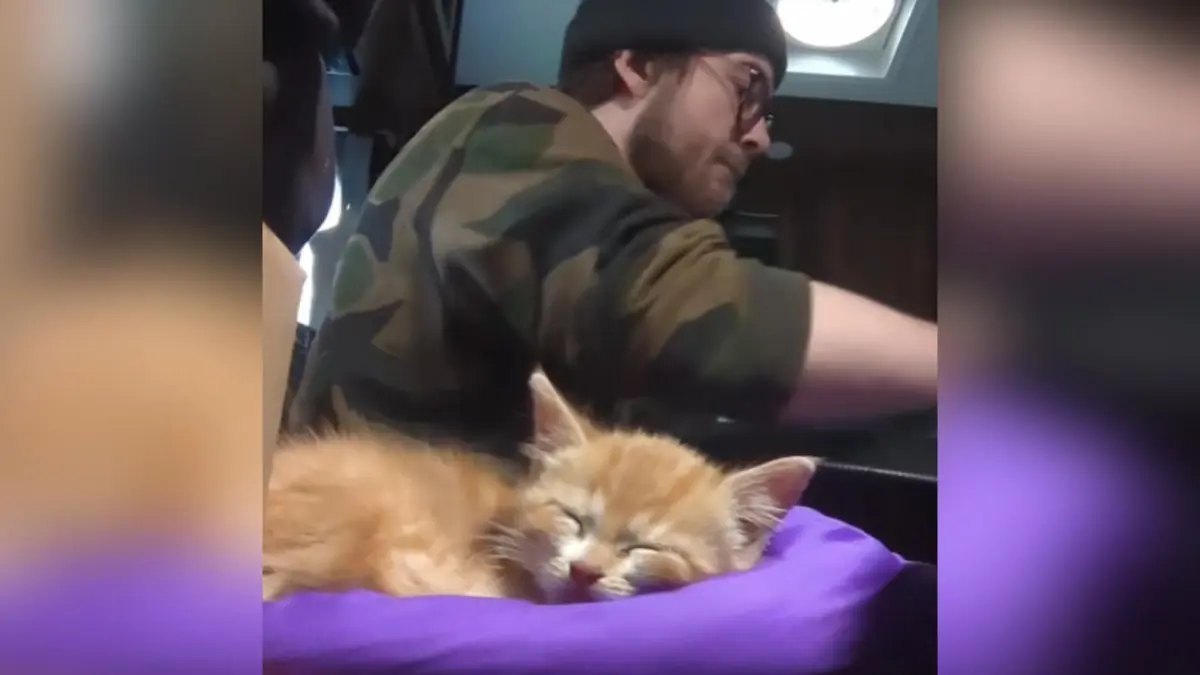
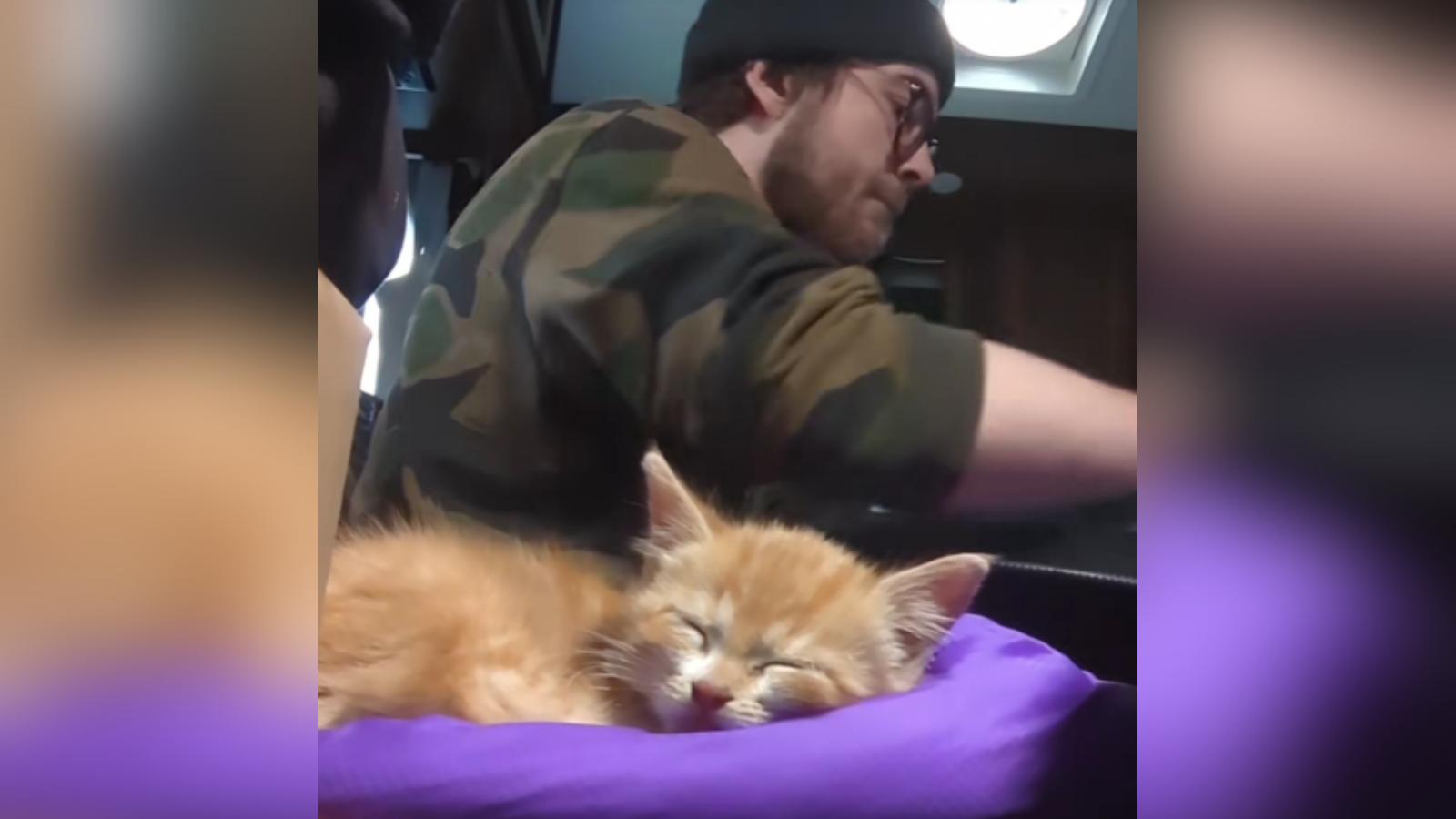
Rather than fleeing from the resonant vibrations, Windy established a behavioral pattern that persists to this day. Whenever Boréal sits to play his instrument, Windy approaches, scales his lap, and settles into a deep, uninterrupted sleep.
Behavioral Implications of the Musical Routine
- Auditory Conditioning: The acoustic environment that marked the kitten’s rescue has become synonymous with safety, warmth, and maternal-equivalent security.
- Kinesthetic Bonding: The physical vibrations of the handpan passing through Boréal’s body while he holds or sits near the kitten create a dual-sensory calming effect.
- Synchronized Circadian Rhythms: The predictability of the musical sessions provides structural anchors for the cat’s daily resting cycles.
Future Outlook
As Windy matures from a fragile, palm-sized orphan into a robust, playful juvenile cat, the trajectory of their shared life points toward enduring companionship. For Écho Boréal, the crisis of unemployment has been reframed not as an endpoint, but as the clearing that allowed a new chapter to begin.
The story serves as a broader cultural reminder of the resilience inherent in unexpected encounters. In a world increasingly mediated by digital interfaces and distanced interactions, the simple, analog act of a stray cat looking through a glass door—and a human pausing his music to open it—demonstrates the enduring capacity for empathy to rewrite human and animal destinies alike.
Moving forward, Boréal continues his musical pursuits, now accompanied by a permanent, purring auditor whose very existence testifies to the transformative power of a timely intervention.