
August 7, 2026
Featured in the Alley Cat Action® 2026 Summer Newsletter
Read the full newsletter edition here
Executive Overview
In the historic, sun-drenched coastal corridors of San Juan, Puerto Rico, a high-stakes battle is unfolding for the lives of the city’s beloved community cats. Alley Cat Allies, operating directly on the ground alongside local welfare organizations, is spearheading an intensive campaign to protect the iconic feline population of the Paseo del Morro. This urgent intervention comes in the wake of a contentious federal court decision that greenlit a U.S. National Park Service (NPS) plan to enact the lethal removal of the cats—a ruling that animal advocates argue is built upon a fundamental mischaracterization of Trap-Neuter-Return (TNR) methodologies.
The conflict highlights a growing national friction point: the clash between federal land management agencies clinging to outdated, lethal wildlife and animal control protocols, and modern, science-based humane organizations championing sustainable, community-supported care. Alley Cat Allies is not only fighting the NPS in the courtroom through robust legal challenges, but they are also doubling down on proactive measures. By collaborating with Puerto Rican municipal leaders, investing heavily in local spay-and-neuter infrastructure, and deploying comprehensive humane education campaigns, the organization aims to secure a permanent, compassionate future for San Juan’s cats.
As prominent regional leaders like Congressman Pablo José Hernández step forward to condemn the federal agency’s approach as both inhumane and counterproductive, the spotlight shines brightly on San Juan. This report provides an exhaustive, investigative look at the ongoing crisis at Paseo del Morro, the legal battlegrounds, the science of TNR, and the strategic path forward for animal advocacy in Puerto Rico.
Detailed Chronology of the Crisis
The Historical Sanctuary of Paseo del Morro
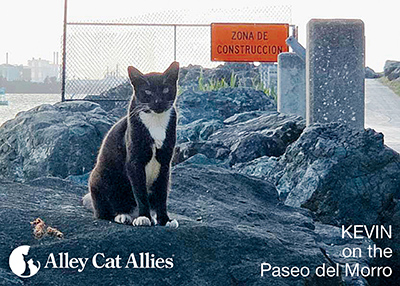
For decades, the Paseo del Morro—a breathtaking pedestrian walkway flanked by massive historic fortress walls and the crashing waves of the San Juan Bay—has served as home to a colony of free-roaming cats. Long before formal management strategies were implemented, these cats established themselves within the ecosystem of the Old San Juan waterfront. Over the years, dedicated local feeders, grassroots volunteers, and animal welfare organizations like Save A Gato stepped in to manage the population.
Through tireless, grassroots efforts, these groups stabilized the cat population using Trap-Neuter-Return (TNR), providing daily meals, veterinary care, and monitoring the health of the colonies. To millions of tourists and local residents alike, the cats became an endearing, picturesque part of the Paseo del Morro experience, coexisting harmoniously with the historic fabric of the national historic site.
The Escalation and the Federal Court Ruling
The fragile peace protecting the Paseo del Morro cats was shattered when the U.S. National Park Service (NPS)—which holds jurisdiction over the federal lands encompassing the walkway—announced a controversial proposal to eradicate the feline population. Under the guise of environmental protection and wildlife management, the NPS devised a removal plan that animal welfare advocates immediately recognized as a death sentence for the cats.

Alley Cat Allies and Save A Gato mobilized quickly, entering into litigation to halt the lethal removal plan. However, a recent federal judge’s decision handed a temporary victory to the federal agency, dismissing key arguments put forth by animal advocates. Legal experts reviewing the ruling note that the decision relied upon a gross mischaracterization of TNR practices. Crucially, advocates emphasize that TNR was never legitimately on trial in a scientific sense; rather, the legal proceedings exposed procedural missteps, including allegations that the NPS violated federal law in drafting and advancing its removal strategy without adequate environmental and social impact reviews.
Alley Cat Allies Mobilizes On the Ground
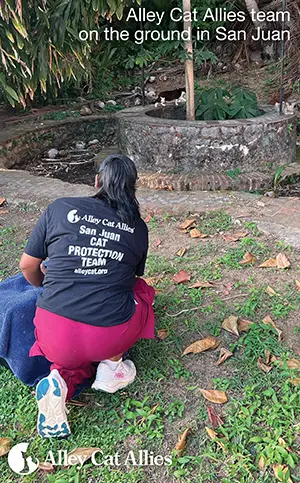
Rather than retreating in the face of the judicial setback, Alley Cat Allies escalated its response. The organization deployed emergency teams on the ground in San Juan to work side-by-side with Save A Gato. Daily operations shifted into a high-urgency phase, focusing on hands-on care for the Paseo cats, documenting their well-being, and preparing the next wave of legal maneuvers.
Concurrently, Alley Cat Allies expanded its strategic footprint across Puerto Rico. Recognizing that local legislative and community support is vital to counterbalancing federal overreach, the organization initiated high-level partnerships with Puerto Rican policymakers and community leaders. By injecting critical funding into localized spay-and-neuter programs, expanding access to professional TNR resources, and launching public-facing humane education campaigns, the coalition is working to build an impenetrable shield of community support that federal agencies cannot easily dismantle.
Supporting Context & Metrics: The Science and Strategy of TNR
Deconstructing the Flaws of Lethal Removal
To understand why the National Park Service’s plan has triggered such fierce opposition, one must examine the proven failure rates of lethal removal compared to the scientific efficacy of Trap-Neuter-Return.
For decades, animal control agencies nationwide relied on "catch-and-kill" or catch-and-remove policies. Decades of ecological and zoological data have proven this approach to be an exercise in futility known as the Vacuum Effect. When cats are removed from a specific territory—whether through lethal means or impoundment—available resources (such as shelter and food sources) remain. Unsterilized cats from neighboring territories quickly move in to fill the ecological void, breeding rapidly and resetting the population cycle to square one.
Lethal removal is not only biologically ineffective; it is also financially burdensome and deeply unpopular with the tax-paying public. Conversely, TNR permanently stabilizes the population size. Sterilized cats no longer reproduce, nuisance behaviors associated with mating (such as yowling and fighting) drastically decrease, and the colony gradually and naturally diminishes over time.
The Socio-Economic Impact in San Juan
San Juan’s tourism economy is inextricably linked to the cultural and historical charm of Old San Juan. The Paseo del Morro draws tourists from every corner of the globe who enjoy walks along the historic fortifications. Studies on tourist sentiment in urban historic districts where community cat colonies are humanely managed consistently show that visitors view well-cared-for cats as a positive, charming element of the local cultural landscape.
By contrast, an aggressive, visible eradication campaign by a U.S. federal agency alienates animal-loving tourists, sparks international public relations backlash, and drains federal resources that could be better spent on cooperative conservation efforts. Alley Cat Allies’ financial and logistical investments in San Juan aim to demonstrate that humane management is not only morally imperative but economically and administratively superior.
Official Statements and Leadership Perspectives
The battle for the Paseo del Morro has transcended local animal welfare circles, drawing the attention of high-ranking government officials who recognize the federal overreach inherent in the NPS’s actions.
Congressman Pablo José Hernández Speaks Out
Among the most vocal political champions for the cats and their human advocates is Puerto Rico’s congressional representative, Congressman Pablo José Hernández. Weighing in on the heavy-handed tactics of the federal land managers, Congressman Hernández issued a sharp rebuke of the agency’s strategy:
“[The National Park Service] plan is both inhumane and counterproductive, and my constituents know it,” declared Congressman Hernández. “I urge NPS to commit to a period of public outreach and stakeholder consultation to reach a solution that puts people and animals first.”
The Congressman’s statement strikes at the heart of the community’s frustration: a federal agency operating with little regard for local cultural norms, regional sentiment, or modern scientific consensus regarding animal management. His call for genuine stakeholder consultation has galvanized local activists, providing much-needed political leverage in the ongoing struggle.
Perspectives from Alley Cat Allies
Leadership at Alley Cat Allies has echoed these sentiments, emphasizing that the fight in San Juan is emblematic of a broader national struggle for animal rights on public lands.
"The decision by the National Park Service to pursue lethal removal is an outdated, cruel response to a manageable situation that local advocates have successfully handled for years," noted a senior representative for Alley Cat Allies. "We are utilizing every legal avenue available to challenge this ruling. More importantly, we are standing shoulder-to-shoulder with Save A Gato and leaders like Congressman Hernández to prove that San Juan is a community that values compassion, science, and respect for life."
Future Outlook: A Path Toward Humane Coexistence
As the legal teams representing Alley Cat Allies prepare their subsequent appellate steps, the daily work in San Juan continues unabated. The immediate future hinges on a multi-pronged strategy designed to protect the cats of Paseo del Morro while fundamentally shifting the policy landscape across Puerto Rico.
1. Legal Challenges and Judicial Accountability
The legal fight is far from over. Attorneys are rigorously reviewing the federal judge’s initial ruling to identify procedural errors, administrative overreaches, and misinterpretations of environmental and animal welfare statutes. By holding the National Park Service accountable to federal transparency and environmental review standards, advocates hope to secure a permanent injunction against any lethal removal actions.
2. Grassroots Infrastructure and Expansion of TNR
Financial and logistical investments from Alley Cat Allies are actively transforming the capacity of local organizations like Save A Gato. By upgrading spay-and-neuter clinic infrastructure, securing veterinary supplies, and training local volunteers in advanced trapping and colony management techniques, the initiative ensures that San Juan possesses independent, long-term capabilities to manage its cat populations humanely.
3. Public Education and Policy Reform
A critical pillar of the ongoing campaign is shifting public perception and institutional policy. Through targeted educational outreach campaigns, Alley Cat Allies and its partners are working to dispel myths surrounding community cats and TNR among municipal officials, park rangers, and the general public. The goal is to institutionalize TNR as the standard operating procedure for all public lands in Puerto Rico, rendering future attempts at lethal eradication legally and politically untenable.
Conclusion
The fate of the community cats of Paseo del Morro serves as a litmus test for how modern society balances historic preservation, federal jurisdiction, and ethical animal stewardship. While the road ahead is fraught with legal challenges and bureaucratic resistance, the unwavering dedication of Alley Cat Allies, Save A Gato, local volunteers, and forward-thinking political leaders like Congressman Pablo José Hernández offers profound hope.
In San Juan, the message is clear: lethal removal belongs in the past, and compassionate, science-based coexistence is the only acceptable path forward. As the fight continues on both legal and community fronts, the advocates on the ground remain steadfast in their commitment to ensuring that the cats of Paseo del Morro are protected, valued, and allowed to live out their lives in peace.