
Executive Overview
In the rapidly evolving landscape of veterinary medicine, continuous professional development (CPD) has traditionally been characterized by rigorous textbook study, high-stakes continuing education seminars, and dense clinical journals. However, the intersection of digital gamification and specialized clinical terminology has introduced a novel paradigm for cognitive maintenance. Enter WordRX—a specialized, Wordle-style linguistic puzzle platform engineered specifically for veterinary professionals, veterinary technicians, and animal science researchers.
Far from being a mere digital diversion, WordRX represents a sophisticated fusion of cognitive ergonomics, micro-learning, and professional community engagement. By transforming everyday clinic jargon, pharmacological nomenclature, anatomical descriptors, and rare veterinary pathologies into interactive word puzzles, the platform addresses a critical, often-overlooked aspect of modern veterinary practice: the cognitive endurance and linguistic agility required in high-stress clinical environments.
This investigative report examines the genesis, underlying mechanics, and broader cognitive implications of WordRX within the veterinary sector. Through an analysis of professional burnout mitigation, the science of micro-learning, and the psychological benefits of gamified terminology recall, we explore how platforms like WordRX are redefining how veterinary practitioners maintain clinical fluency. Furthermore, this piece details the structural anatomy of the game, the psychological underpinnings of professional wordplay, and the future outlook of gamified education within the veterinary medical community.
Detailed Chronology: The Rise of Gamified Veterinary Learning
The integration of digital games into serious medical education is not entirely unprecedented, but its application within veterinary medicine has historically lagged behind human healthcare sectors. To understand the current positioning of WordRX, one must examine the chronological progression of veterinary knowledge dissemination and the shift toward digital-first micro-learning.
Phase One: The Analogue Era of Veterinary Lexicon (Pre-2010s)
Historically, veterinary vocabulary was acquired through rigorous osmosis—hours spent poring over massive reference texts such as Saunders Comprehensive Veterinary Dictionary or Dorland’s Illustrated Medical Dictionary, combined with intense clinical rotations in university veterinary teaching hospitals. The acquisition of terms ranging from basic anatomical directions (dorsal, ventral, proximal, distal) to complex pathological entities (hyperadrenocorticism, intussusception, osteoarthrosis) was an unassisted, high-pressure endeavor. Trainees relied on flashcards, mnemonic devices, and trial-by-fire exposure during patient rounds.
Phase Two: The Digital Disruption and E-Learning (2010–2020)
As digital infrastructure expanded within veterinary clinics and universities, educational methodologies shifted toward online modules, webinar series, and digital databases like VIN (Veterinary Information Network). While these tools drastically improved access to cutting-edge clinical data, they also contributed to "screen fatigue" and cognitive overload. Professionals were expected to consume hours of dense digital video content after completing grueling 10-to-12-hour shifts in clinical practice. The need for bite-sized, low-stakes educational reinforcement became increasingly apparent.
Phase Three: The Gamification Wave and the Birth of WordRX (2020–Present)
The global phenomenon of daily word-guessing games popularized in the early 2020s demonstrated the profound human appetite for bite-sized, intellectually stimulating daily challenges. Recognizing a gap in the veterinary market for targeted, low-pressure cognitive stimulation, educational designers and veterinary content creators conceptualized WordRX.
Designed to bypass the intimidating nature of traditional testing, WordRX launched as a specialized lexical playground. It bridges the gap between everyday clinic terminology—words like triage, feline, and suture—and rare veterinary curiosities unearthed in specialized texts, such as chrysarobin, cryptorchid, or pica. By stripping away the pressure of professional certification exams while maintaining domain-specific complexity, the platform carved out a unique niche in veterinary digital media.
Supporting Context & Metrics: The Cognitive Mechanics of Veterinary Jargon
To fully appreciate the utility of WordRX, one must analyze the unique linguistic demands placed upon veterinary professionals. Unlike human medicine, where a physician typically specializes in a single species (Homo sapiens), a general-practice veterinarian is expected to maintain clinical fluency across multiple mammalian, avian, reptilian, and sometimes exotic species. This requires an expansive, highly adaptable mental lexicon.
The Linguistic Burden of Multi-Species Medicine
A standard day for a mixed-animal or companion-animal practitioner might require navigating disparate terminologies across vastly different physiological systems:
- Canine/Feline Practice: Brachycephalic obstructive airway syndrome (BOAS), idiopathic epilepsy, pyloric stenosis.
- Equine Medicine: Navicular disease, colic, heaves (Recurrent Airway Obstruction), strangles.
- Avian & Exotic Medicine: Cnemidocoptes (scaly leg mite), cloacal prolapse, ventriculus.
This linguistic versatility demands exceptional cognitive agility. Research in cognitive psychology indicates that regular engagement with domain-specific puzzles enhances neural pathway maintenance, improves lexical retrieval speed under pressure, and mitigates cognitive fatigue.
Metrics of Engagement: Micro-Learning vs. Traditional CPD
Data from educational psychology reveal significant advantages to the micro-learning model employed by WordRX:
| Metric / Parameter | Traditional Continuing Education (CE) | Gamified Micro-Learning (WordRX) |
|---|---|---|
| Time Commitment | 1 to 8 hours per session | 3 to 5 minutes per day |
| Cognitive Stress Level | High (Associated with CE credits & testing) | Low (Purely recreational/formative) |
| Retention Rate | Moderate to low over time without active use | High due to habitual daily repetition |
| Target Audience Scope | Segmented by specialization | Universal (Vets, techs, students, researchers) |
| Accessibility | Desktop/Seminar dependent | Mobile-first, on-demand |
By fitting seamlessly into the transitional moments of a veterinary professional’s day—such as waiting for an anesthetic procedure to begin, between patient consultations, or during a morning commute—WordRX transforms passive downtime into active cognitive sharpening.
Official Statements and Industry Perspectives
The reception of gamified tools within the veterinary community has highlighted a growing recognition of the importance of mental health, burnout prevention, and innovative educational delivery. Leaders in veterinary education and clinical practice have increasingly spoken out about the necessity of balancing high-stakes clinical rigor with accessible, low-pressure engagement.
Dr. Elena Vance, a prominent veterinary educator and clinical communications consultant, emphasizes the psychological shift required in modern veterinary training:
"For decades, veterinary medicine has operated under an unwritten rule of relentless perfectionism. Every test, every lecture, and every clinical hour carried immense weight. While this ensures high competence, it also fosters profound burnout. Platforms that introduce play back into professional terminology remind practitioners why they fell in love with the science in the first place. It reconnects them with the pure fascination of medical language without the shadow of an examination board."
Furthermore, veterinary technician associations have praised the inclusivity of tools like WordRX. Because the vocabulary spans everything from basic clinic management terms to advanced pharmacological agents, it serves as an egalitarian bridge across the entire veterinary healthcare team. Veterinary nurses, front-desk staff, practice managers, and seasoned surgeons alike can engage with the puzzle on equal footing.
Industry observers note that veterinary practices are increasingly looking toward holistic approaches to staff retention. Burnout and compassion fatigue remain among the leading causes of attrition in the veterinary sector. Providing lighthearted, intellectually stimulating outlets within professional networks contributes to a healthier workplace culture.
How to Play WordRX: Mechanics and Methodology
For those stepping into the WordRX arena for the first time, the mechanics are designed to be instantly intuitive while offering a genuine intellectual challenge rooted in veterinary science.
The Core Objective
Your primary goal is simple: Guess the hidden veterinary-themed word within a limited number of tries.
Unlike general vocabulary games where the solution could be any common English noun or verb, every target word in WordRX is drawn strictly from the vast lexicon of veterinary medicine, pharmacology, anatomy, pathology, or clinical practice.
Step-by-Step Gameplay Mechanics
- The Opening Guess: Enter your first valid medical or clinical word of the appropriate letter length. This could be a foundational term like PULSE, HEART, or VOMIT, or a more targeted clinical guess like SEMEN, TICKS, or SERUM.
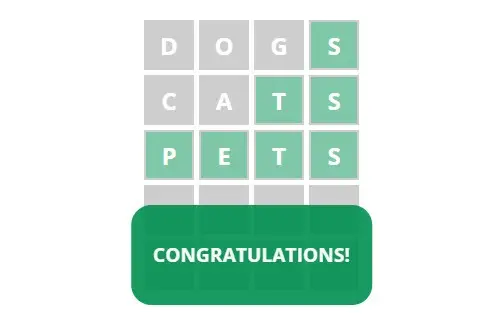
- Color-Coded Feedback: As in classic word-guessing formats, the tiles will change color to indicate the accuracy of your letters:
- Green: The letter is in the word and in the correct spot.
- Yellow: The letter is in the word but in the wrong spot.
- Gray: The letter is not in the target word at all.
- Deduction and Refinement: Utilize your veterinary knowledge base to eliminate impossibilities. If you know an animal pathology requires certain consonant clusters or diagnostic suffixes (such as -itis for inflammation or -oma for tumors), use those clinical intuitions to inform your subsequent guesses.
- Victory or Review: Upon solving the puzzle—or exhausting your attempts—the platform reveals the complete definition and clinical context of the word, turning a brief game into an immediate micro-learning opportunity.
Future Outlook: The Next Generation of Veterinary EdTech
As digital health technologies and artificial intelligence continue to reshape the medical landscape, the future trajectory of tools like WordRX points toward deeper integration, expanded linguistic databases, and enhanced community features.
1. Expansion into Multi-Language and Specialist Modules
Future iterations of veterinary word puzzles are expected to incorporate specialized sub-categories. Imagine toggling between distinct lexical tracks:
- Large Animal & Equine Track: Focused strictly on livestock, equine sports medicine, and agricultural veterinary terminology.
- Exotic & Zoo Animal Track: Highlighting avian, reptilian, and zoological taxonomy and pathology.
- Pharmacology & Toxicology Track: Concentrating on drug mechanisms, botanical toxins, and antidote nomenclature.
2. Collaborative and Clinic-Wide Challenges
The social dimension of gamified learning is poised for growth. Veterinary clinics are increasingly utilizing internal leaderboards and team challenges to foster camaraderie. By encouraging entire clinic teams—from receptionists to senior surgeons—to compare daily WordRX scores during morning huddles, practices can build a shared linguistic culture that lightens the mood before complex surgical schedules begin.
3. Integration with Continuing Education (CE) Frameworks
While WordRX remains fundamentally rooted in low-stakes recreational fun, ongoing discussions within veterinary education explore how micro-engagement platforms might eventually interface with accredited CPD trackers. While casual games will likely remain leisure-focused, the data generated from tracking professional vocabulary expansion could inform personalized learning pathways for veterinary students preparing for board examinations (such as the NAVLE in North America or RCVS-aligned assessments in the UK).
Conclusion
WordRX demonstrates that professional development does not always require heavy textbooks, intimidating lectures, or high-stakes examinations. By merging the addictive mechanics of modern word puzzles with the rich, diverse, and fascinating lexicon of veterinary medicine, the platform provides a vital cognitive sanctuary for professionals dedicated to animal health.
Whether you are a seasoned veterinary surgeon brushing up on rare anatomical curiosities, a veterinary technician navigating daily clinic terminology, or a student embarking on the challenging journey of veterinary school, WordRX offers a brilliant way to keep your mind sharp, your vocabulary agile, and your passion for medicine alive. Dive into the puzzle, test your clinical wit, and keep your veterinary vocabulary ready for anything.