
Executive Overview
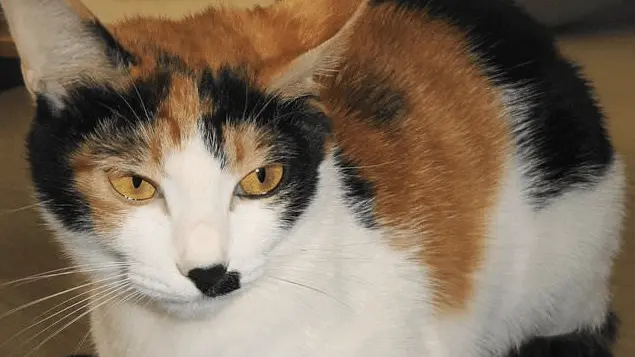
To the casual observer, a calico cat is simply a charming feline adorned with a striking patchwork of white, black, and orange fur. To geneticists and veterinary scientists, however, these animals represent a living, breathing masterclass in chromosomal mechanics.
While the vibrant coat patterns of calico and tortoiseshell cats are familiar to pet owners worldwide, a pervasive piece of feline trivia often sparks amazement: male calicos are exceptionally rare. Estimates place their occurrence at roughly one in every 3,000 calico cats.
This dramatic gender imbalance is not a quirk of nature, but a direct consequence of mammalian genetics. The genes responsible for orange and black coat colors reside exclusively on the X chromosome. Because normal male mammals possess a single X and a single Y chromosome ($textXY$), they lack the genetic machinery necessary to display both colors simultaneously.
When a male calico does appear, it is typically the result of a rare chromosomal anomaly known as Klinefelter syndrome ($textXXY$), or occasionally a complex cellular chimera/mosaic ($textXX/textXY$). These conditions unlock the dual-color coat pattern at a profound biological cost: nearly all male calico cats are sterile.
This comprehensive investigation explores the molecular biology, historical documentation, and scientific realities governing one of nature’s most fascinating feline phenomena.
Detailed Chronology: Unlocking the Science of Feline Coat Color
To understand why male calico cats are biological unicorns, one must trace the historical and scientific milestones that led humanity to decode feline genetics.
The Early Observations of Feline Coats
For centuries, breeders, farmers, and pet owners noticed distinct patterns in domestic cats. While solid colors, tabbies, and bi-colors were common, the distinct tri-color pattern—characterized by stark patches of dense black, vibrant orange, and crisp white—captured the human imagination. Historically, folklore in various cultures attributed these cats with powers of good fortune, often noting their overwhelming propensity to be female. However, for most of human history, the underlying cause remained completely obscured by a lack of microscopic and genetic tools.
The Discovery of X-Inactivation (The Lyon Hypothesis)
The true breakthrough in understanding calico coloring arrived in the mid-20th century. In 1961, British geneticist Mary F. Lyon proposed a groundbreaking theory known as X-inactivation (often referred to as "lyonization").
Lyon was studying coat color genetics in mice and investigating how mammals compensate for the fact that females have two X chromosomes ($textXX$) while males have only one ($textXY$). She theorized that early in embryonic development, female mammals undergo a random process where one of their two X chromosomes is permanently deactivated in every single somatic cell.
This cellular silencing is fixed and inherited by all daughter cells descended from those original cells. In the context of calico cats, this means:
- Some cells deactivate the X chromosome carrying the black color gene, resulting in orange fur patches.
- Other cells deactivate the X chromosome carrying the orange color gene, resulting in black fur patches.
- White fur patches are governed by an entirely separate, epistatic gene (the white-spotting gene) that masks the underlying color, creating the classic tri-color mosaic.
The Documentation of Klinefelter Syndrome in Veterinary Science
As genetic tracking advanced, scientists turned their attention to the rare anomalies that defied the standard $textXX$ female rule. Landmark epidemiological surveys—such as the definitive studies conducted by researchers like Centerwall and Benirschke on male tortoiseshell and calico cats—documented the presence of the $textXXY$ chromosomal configuration in rare male specimens.
These researchers confirmed that the rare male calicos were biological counterparts to human males presenting with Klinefelter syndrome, first described in humans by Dr. Harry Klinefelter in the 1940s. These veterinary studies established once and for all that male calicos were not a breedable strain, but rather the result of a sporadic, non-inheritable chromosomal nondisjunction event.
Supporting Context & Metrics: The Biological Blueprint
To fully appreciate the rarity of male calico cats, one must examine the precise chromosomal mechanics and statistical realities governing mammalian genetics.
The Chromosomal Breakdown
| Genotype | Sex | Calico Coat Possible? | Fertility Status |
|---|---|---|---|
| $textXX$ | Female | Yes (Standard Calico) | Typically fertile |
| $textXY$ | Male | No (Single X limits color expression to either black or orange, never both) | Typically fertile |
| $textXXY$ (Klinefelter Syndrome) | Male | Yes (Rare, approx. 1 in 3,000 calicos) | Usually sterile |
| $textXX/textXY$ (Chimera or Mosaic) | Male | Yes (Extremely rare) | Occasionally fertile in documented rare cases |
Why Males Cannot Normally Be Calico
In mammalian genetics, biological sex is determined by sex chromosomes. Females inherit two X chromosomes ($textXX$), one from each parent. Males inherit one X chromosome from their mother and one Y chromosome from their father ($textXY$).
The gene that dictates whether a cat’s coat will produce black eumelanin or orange phaeomelanin is located exclusively on the X locus. Because a normal male cat has only one X chromosome, his genetic map can accommodate either the orange allele or the black allele—never both simultaneously. Thus, a standard male cat can be entirely orange, entirely black, or a tabby variation thereof, but he cannot display the patchwork quilt of a true calico.

The Exception: Klinefelter Syndrome and Chimerism
For a male cat to display a calico coat, a genetic disruption must occur:
- Klinefelter Syndrome ($textXXY$): This occurs during the formation of reproductive cells (gametes) or early embryonic cleavage, where chromosomes fail to separate properly (nondisjunction). If an egg carrying two X chromosomes is fertilized by a sperm carrying a Y chromosome, the resulting offspring is an $textXXY$ male. The presence of the second X chromosome permits X-inactivation, allowing both orange and black pigment patches to manifest.
- Chimerism ($textXX/textXY$): Even rarer than Klinefelter syndrome is the chimerism or mosaicism model. This happens when two separate embryos—one $textXX$ female and one $textXY$ male—fuse together very early in gestation. The resulting cat grows up possessing two completely distinct sets of DNA within a single body, occasionally resulting in male anatomy coupled with dual-color coat expression.
Statistical Prevalence
- Frequency in Calicos: Estimates consistently indicate that male calico or tortoiseshell cats represent approximately 1 in every 3,000 calico cats (roughly 0.033%).
- Human Parallels: In human genetics, data from health institutions such as MedlinePlus Genetics places Klinefelter syndrome at roughly 1 in 500 to 1 in 1,000 newborn boys, making the condition significantly more common in humans than the surviving $textXXY$ configurations identified in male felines.
Official Statements and Expert Insights
Veterinary geneticists and animal health professionals emphasize that while male calicos are marvels of natural science, their existence comes with inherent biological limitations.
Dr. Kathryn Primm, a prominent small animal veterinarian and educator, notes the practical intersection of these biological principles in clinical practice:
"Calico cats are lovely and unique. Even more unique is the fact that they are nearly always female. I can take advantage of my knowledge of this to impress my clients by correctly guessing the gender of their cat from a distance! Although it can make me seem magical, science makes my skill much less impressive."
Furthermore, veterinary literature reinforces the immutable rule regarding breeding and reproduction. Because the extra X chromosome ($textXXY$) disrupts normal spermatogenesis—the biological process by which spermatozoa are formed—nearly all male calicos are sterile.
Landmark surveys, including historical evaluations published in scientific repositories like PubMed, confirm that breeders cannot purposefully select for or replicate male calicos. Any attempt to breed two calicos with the expectation of producing a male offspring is statistically futile, as the genetic anomaly responsible for the phenotype cannot be reliably passed down through generations.
Future Outlook: Genetics, Conservation, and Feline Health
As veterinary science enters an era of advanced genomic mapping and personalized medicine, our understanding of chromosomal anomalies continues to deepen. While the mystique of the male calico cat will undoubtedly persist among pet lovers and cat fanciers, ongoing research offers broader implications for understanding genetic health across mammalian species.
Advancements in Feline Genomics
Modern sequencing technologies allow geneticists to study non-standard karyotypes with unprecedented precision. By analyzing DNA samples from rare feline specimens, researchers can better understand how nondisjunction events occur during cell division. This research extends far beyond coat color; insights gained from studying feline chromosomal disorders like Klinefelter syndrome can parallel human genetic studies, offering comparative models for understanding developmental abnormalities.
Ethical Breeding and Pet Care Education
As public awareness grows through digital media and educational veterinary platforms, the understanding of feline genetics is shifting away from folklore and toward scientific literacy. Cat owners who happen to welcome a rare male calico into their homes are increasingly educated by veterinary professionals about the cat’s unique biological status.
While these cats require no specialized medical intervention solely due to their coat color, understanding their sterile status and potential developmental sensitivities ensures they receive appropriate, attentive veterinary care throughout their lives.
Ultimately, whether a cat is a common $textXX$ female or a rare $textXXY$ male, the calico coat remains a stunning, living testament to the elegant complexity of natural genetics—a brilliant mosaic painted by the random dance of chromosomes.
Frequently Asked Questions (FAQ)
Can calico cats be male?
Yes, but it is exceptionally rare. A male calico almost always carries an extra X chromosome ($textXXY$), which represents the feline manifestation of Klinefelter syndrome. This spare chromosome allows him to carry and express both the orange and black coat color genes. Broad surveys of male tortoiseshell and calico cats place their occurrence at roughly 1 in every 3,000 calicos.
Are male calico cats sterile?
Nearly always, yes. The $textXXY$ chromosome pattern that enables the striking multi-colored coat also disrupts normal meiosis and sperm production. Consequently, male calicos are almost universally sterile, meaning this trait cannot be selectively bred or passed down intentionally.
What is Klinefelter syndrome in cats?
Klinefelter syndrome is a genetic condition characterized by the presence of an extra X chromosome in a male, resulting in an $textXXY$ chromosomal map instead of the standard $textXY$. In the feline world, it is most widely recognized for producing tortoiseshell and calico males. The condition shares biological parallels with human Klinefelter syndrome, which affects approximately 1 in 500 to 1 in 1,000 newborn boys.
Why does X-inactivation make the patches look scattered?
During early embryonic development, every cell in a female mammal (or an $textXXY$ male) independently and randomly deactivates one of its two X chromosomes. Cells that silence the black-producing X chromosome display orange fur, while cells that silence the orange-producing X display black fur. As these cells multiply and divide, they maintain their original inactivation decision, resulting in distinct, scattered patches of color rather than a uniform, blended hue.