
Executive Overview
In the realm of canine training, the lexicon is traditionally defined by absolute compliance. From pet obedience schools to advanced working-dog programs, the foundational vocabulary relies on simple, direct imperatives: Sit. Stay. Come. For generations, human expectations of dogs have centered on immediate, uncritical adherence to verbal or physical commands. The animal acts; the animal obeys.
However, a rare and sophisticated exception challenges this paradigm: intelligent disobedience.
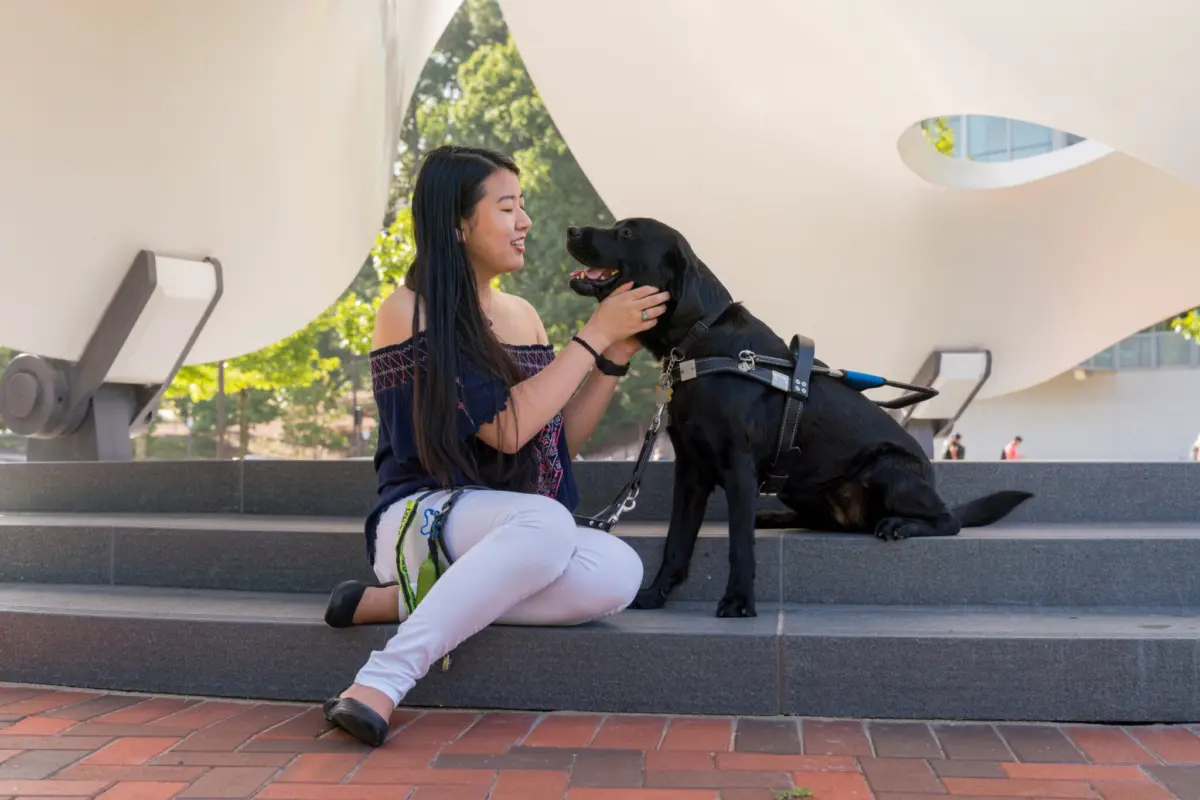
Practiced primarily by elite guide dogs serving individuals who are blind or visually impaired, intelligent disobedience is the calculated, deliberate refusal of a handler’s command when executing that command would place the handler in imminent physical danger. Far from being an act of defiance, stubbornness, or behavioral failure, intelligent disobedience represents the pinnacle of service dog education. It is an advanced cognitive skill that requires a working dog to continuously assess its environment, weigh potential hazards, override its deep-seated programming to please its handler, and independently prioritize human safety above all else.
This comprehensive report examines the mechanics of intelligent disobedience, tracing its development from early puppyhood socialization through rigorous professional training. We explore how mobility instructors evaluate this vital competency, the profound psychological trust required to sustain such a partnership, and why this unique form of independent thinking ultimately serves as the ultimate catalyst for human freedom and mobility.
Detailed Chronology: The Evolution of a Guide Dog’s Independent Mind
The creation of a guide dog capable of intelligent disobedience is not an accident of nature; it is the result of a meticulously structured, multi-year developmental timeline. Transforming a high-drive puppy into an autonomous safety partner requires a phased approach that spans approximately two years, bridging grassroots volunteer socialization with professional institutional instruction.
Phase 1: Foundations and Socialization (Months 0 to 18)
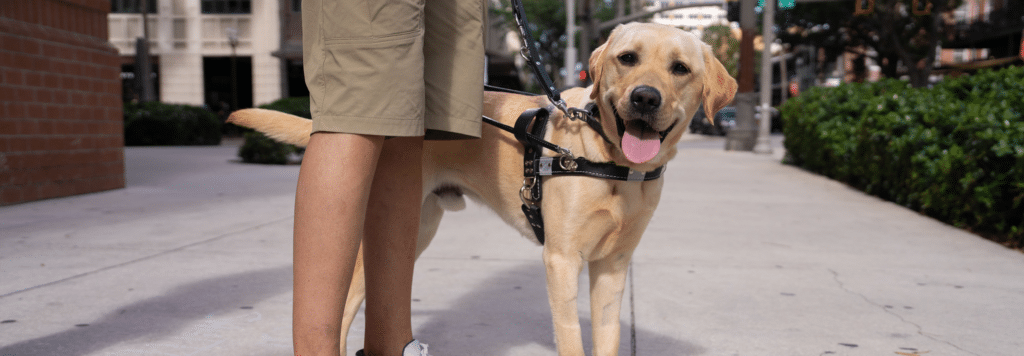
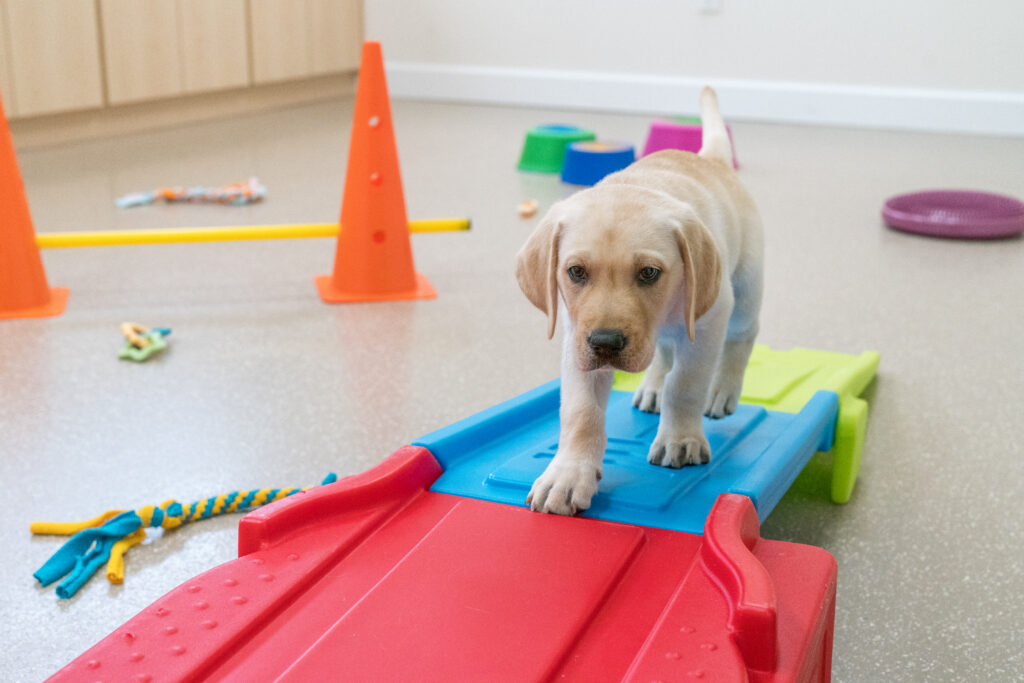
The journey begins at birth. Pups destined for elite service work are carefully bred for temperament, health, and environmental resilience. During the first year to year-and-a-half of life, these dogs are placed with volunteer puppy raisers.
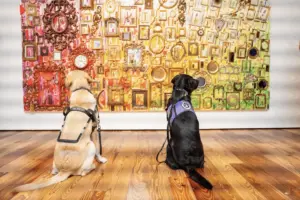
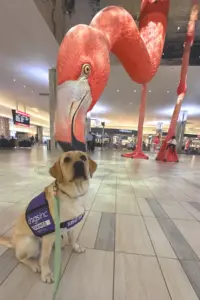
During this foundational window, the focus is not yet on advanced safety maneuvers, but rather on broad socialization and basic obedience. Puppies are exposed to bustling city streets, crowded shopping malls, public transit systems, and unpredictable environmental stimuli. They learn emotional regulation, impulse control, and how to remain calm under pressure. Crucially, puppy raisers encourage exploratory confidence. A dog that is perpetually frightened of novel sounds or moving objects cannot later be expected to protect a human handler from them.
Phase 2: Advanced Institutional Training (Months 18 to 24+)
Once basic development is established, the adolescent dogs enter advanced training facilities (such as Dogs Inc) under the direct supervision of professional guide dog mobility instructors. This intensive phase lasts a minimum of five months—and often longer, depending on the individual dog’s learning curve.
It is during this advanced stage that instructors introduce complex decision-making frameworks. Dogs are systematically placed in controlled, realistic training scenarios designed to test their situational awareness. For example, a handler-instructor will give a forward directional command while an obstacle or hazard is intentionally introduced.
Through positive reinforcement, the dog learns a profound lesson: while compliance is generally rewarded, choosing safety in the face of danger yields an equally—if not more—positive outcome. Over hundreds of repetitions, the dog develops critical-thinking pathways, shifting from an obedient reactor to an active, analytical co-pilot.
Phase 3: Team Matching and the "Juno Walk"
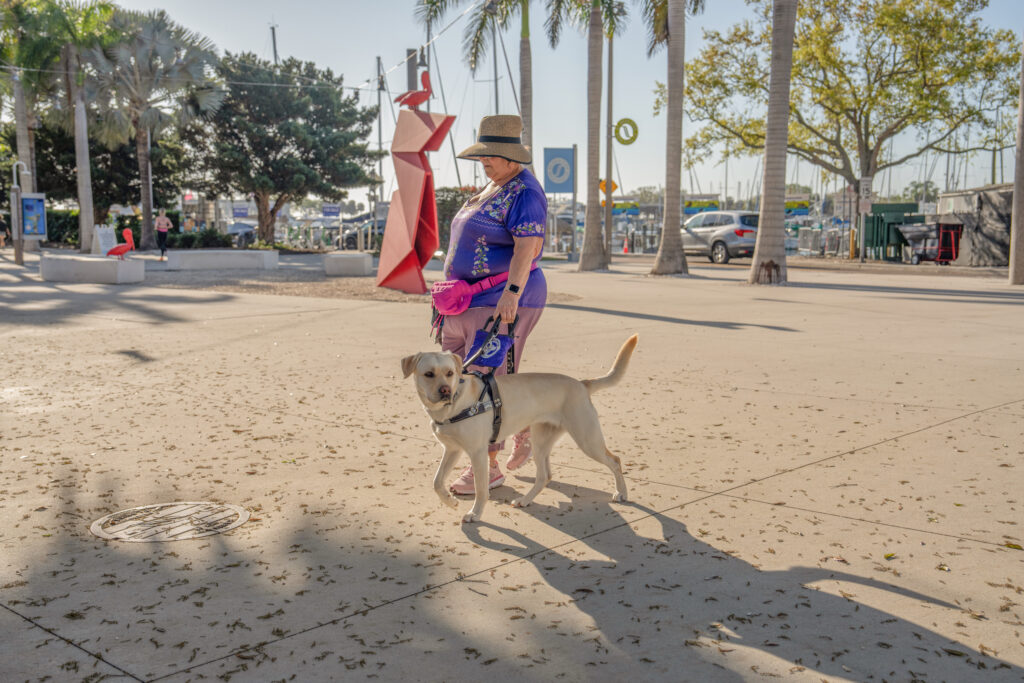
Training a dog is only half the equation; the dog and human must function as a unified organism. The matching process evaluates the handler’s lifestyle, walking pace, everyday environment, and specific mobility needs.
To ensure long-term success, organizations utilize compatibility assessments known as Juno Walks. During these evaluations, mobility instructors observe how a prospective handler interacts with a candidate dog, measuring the rhythm of their stride and the responsiveness of their communication. Only when compatibility is proven is the match finalized, setting the stage for the human-canine team to navigate the real world together.
Supporting Context & Metrics: The Science of Canine Cognition and Safety
To fully appreciate intelligent disobedience, one must understand the sensory landscape of a visually impaired pedestrian. Individuals who are blind navigate the world primarily through non-visual inputs: auditory cues (such as the Doppler shift of engine traffic), tactile feedback from white canes, and spatial memory. However, modern urban environments present hazards that defy traditional sensory detection—silent electric vehicles, sudden overhead construction barriers, low-hanging tree branches, and chaotic traffic patterns.
The Metrics of Mastery
Evaluating a dog’s readiness for intelligent disobedience involves measuring specific behavioral indicators during training simulations. According to mobility standards, a qualified guide dog must consistently demonstrate:
- Environmental Vigilance: The ability to scan a 180-degree forward arc for moving and stationary obstacles.
- Inhibition Control: The capacity to suppress the natural desire to move forward immediately upon receiving a directional cue.
- Resolution Resiliency: The ability to select an alternate, safe path (rerouting) without becoming flustered or shutting down when a primary path is blocked.
- Composure Under Pressure: Remaining calm when faced with sudden loud noises, aggressive animals, or erratic pedestrian traffic.
How Intelligent Disobedience Differs from Standard Obedience
| Parameter | Standard Pet Obedience | Guide Dog Intelligent Disobedience |
|---|---|---|
| Core Goal | Immediate, uncritical compliance to human commands. | Preservation of handler safety above compliance. |
| Decision-Making | Passive (waits for human instruction). | Active/Autonomous (evaluates environment continuously). |
| Reward System | Treats/praise for executing "Sit," "Stay," or "Fetch." | Reinforcement for refusing a command when hazardous. |
| Cognitive Load | Low (associative memory and habituation). | High (situational risk assessment and critical thinking). |
Official Statements and Expert Insights
Guide dog mobility instructors and canine behaviorists emphasize that intelligent disobedience is a delicate psychological balancing act. A dog must be independent enough to think for itself, yet obedient enough to remain manageable.
"People often assume a well-trained dog is one that never questions its owner," notes a senior guide dog mobility instructor. "With a guide dog, the exact opposite is true. We are deliberately cultivating an intelligent partner—a living, breathing safety buffer who has the courage to say ‘no’ when the human makes a mistake. That requires an extraordinary level of canine mental stability."
Behavioral researchers point out that this skill relies on altering the classic operant conditioning loop. Typically, animals learn that Action A leads to Consequence B (Command equals Reward). In guide dog training, the equation is updated: Command + Hazard = Refusal + Safety = Reward.
"The dog learns that its judgment is valued," explains a canine cognitive researcher. "When a guide dog refuses to step off a curb because a car is turning illegally, it is performing a complex mental calculation: My human wants to go forward, but forward equals danger. Therefore, staying put is the correct action. It is a remarkable display of interspecies cooperation."
The Role of Trust: The Foundation of the Partnership
Intelligent disobedience cannot exist in a vacuum; it is entirely dependent upon an unbreakable bond of trust between handler and dog.
When a guide dog suddenly plants its paws, refuses to move, or veers sharply off a straight path, the handler faces an immediate psychological test. Lacking visual confirmation of the hazard, the handler must choose to trust the dog’s judgment over their own intuition or schedule.
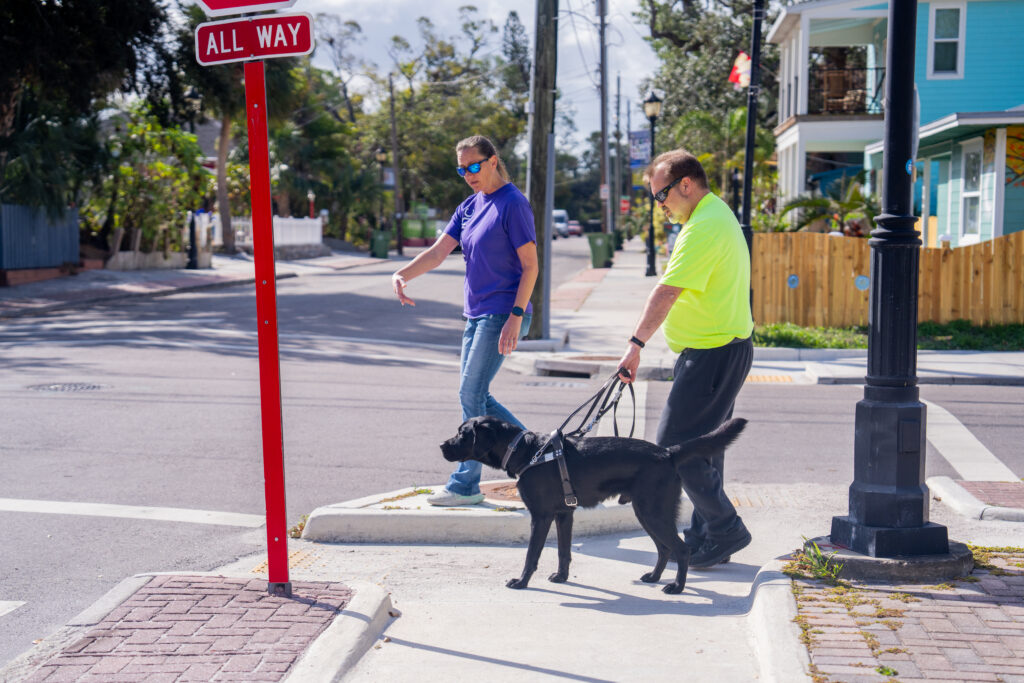
This dynamic redefines the traditional master-pet hierarchy into a genuine team dynamic. The human provides the strategic vision—deciding where they want to go, such as the local post office or a workplace office—while the tactical execution is handed over to the dog, who dictates how to get there safely.
Over months and years of shared travel, this partnership deepens. Handlers learn to read subtle shifts in their dog’s harness tension, breathing patterns, and body posture. A sudden stiffening of the shoulders or a subtle lean away from an alleyway becomes a clear, communicative sentence: Stop. Something is wrong.
Through this shared understanding, navigating a complex, unpredictable world transforms from a source of high stress into an accessible, empowering experience.
Future Outlook: Empowering Greater Independence
As urban infrastructure evolves—introducing quieter hybrid and electric vehicles, more complex street designs, and increasingly distracted pedestrian traffic—the role of the guide dog is more critical than ever. Technology may offer various assistive tools, but no digital application can match the real-time situational awareness, empathy, and independent judgment of a well-trained guide dog.
Organizations such as Dogs Inc continue to refine their breeding, training, and matching methodologies to ensure that the next generation of guide dog teams is equipped to handle the demands of modern society. By fostering intelligent disobedience, these programs do more than teach dogs how to navigate physical obstacles; they grant human handlers the ultimate gift: freedom, dignity, and peace of mind.
For those inspired by this work, opportunities abound to support the future of guide dog partnerships. Whether through financial donations, volunteering, or stepping up as a puppy raiser, community involvement remains the lifeblood of this mission. Intelligent disobedience proves that when humans and dogs work together as true equals, the possibilities are boundless.