
Executive Overview
Long before a puppy ever learns to sit, heel, or walk calmly on a leash—and years before they take on the profound responsibility of guiding an individual through a complex world—an intricate sequence of developmental milestones is already underway behind the scenes. At organizations like Dogs Inc, the journey of cultivating future guide dogs and service dogs begins not with formal obedience training, but in the quiet, fragile opening weeks of life.
During this neonatal stage, puppies are growing and changing in remarkable, often imperceptible ways. Though their eyes and ears remain sealed shut and they are entirely dependent on their mother and littermates, their brains and central nervous systems are working at an extraordinary pace. The stimuli and experiences they encounter during these initial weeks help lay a resilient, adaptable neurological groundwork for how they will perceive, learn, and interact with the world around them.
One scientifically backed practice employed during this delicate timeframe is Early Neurological Stimulation (ENS). While ENS represents just one small chapter in a much larger, multi-year developmental narrative, it exemplifies the deeply thoughtful, evidence-based methodology required to support optimal health and emotional resilience from birth. This investigative report explores the science of ENS, the critical developmental windows of canine growth, how early handling shapes future service animals, and why intentional puppy-rearing practices are foundational to creating life-changing canine partners.
Detailed Chronology: From Neonatal Vulnerability to Adolescent Independence
To understand how service dogs achieve the composure necessary for public work, one must examine the chronological stages of canine development. Every phase introduces unique physiological changes, behavioral milestones, and distinct windows of opportunity.

1. The Neonatal Stage (Birth to 2 Weeks)
During the first week of life and extending through day fourteen, newborn puppies exist in a state of absolute dependency. They cannot see or hear, and they lack the physiological capacity to regulate their own body temperature, relying entirely on their mother’s body heat and milk supply. They spend the vast majority of their time alternating between nursing and deep sleep.
Despite their vulnerable appearance, profound neurobiological developments are occurring. It is during this precise window that Early Neurological Stimulation is introduced. Because the nervous system is malleable and rapidly organizing, brief, controlled forms of physical stimulation can induce beneficial physiological responses. These exercises are not training sessions; rather, they are gentle, age-appropriate tactile introductions designed to stimulate neurological pathways without overwhelming the puppy’s delicate system.
2. The Transitional Stage (2 to 4 Weeks)
As puppies cross the two-week threshold, a rapid transformation takes place. Their eyes and ear canals begin to open, abruptly expanding their sensory universe. By the time they reach four weeks of age, puppies are typically attempting to walk, interacting playfully with littermates, and letting out their first barks.
Simultaneously, their deciduous (baby) teeth begin to erupt, signaling a dietary shift away from exclusive nursing toward soft gruels and eventually solid food. This transitional period bridges the gap between passive existence and active environmental exploration, setting the stage for more complex social learning.

3. The Socialization Period (3 to 12 Weeks)
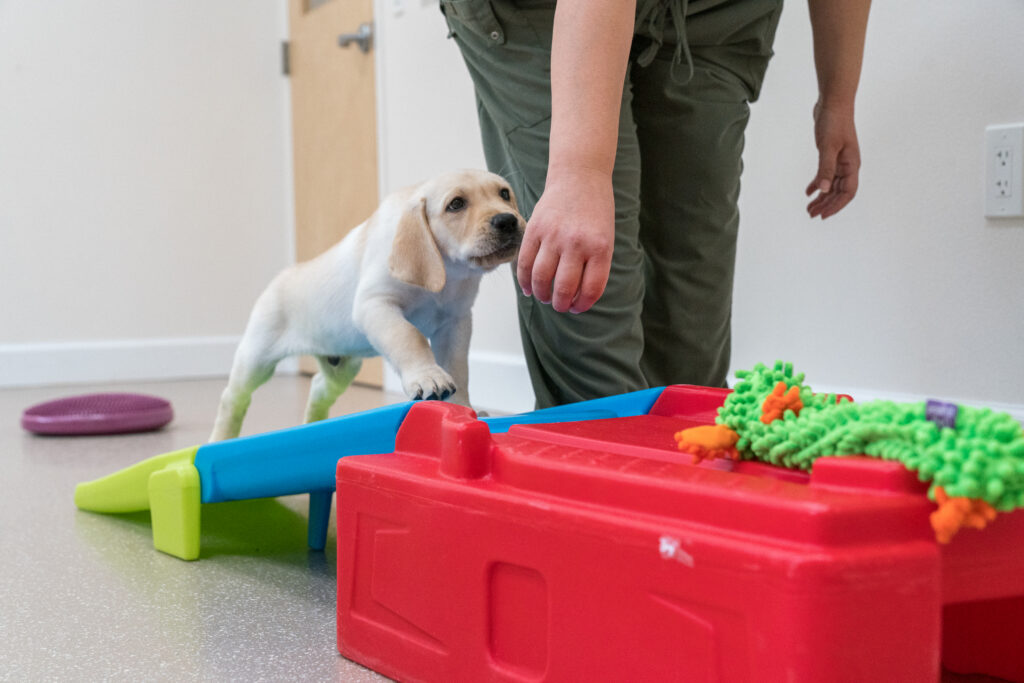
Widely recognized by animal behaviorists as one of the most critical windows in a dog’s life, the socialization period runs concurrently with and extends beyond the transitional stage. Starting around three weeks and solidifying through twelve weeks, young puppies experience a massive surge in environmental curiosity and social awareness.
- Building Associations: During this phase, puppies must be thoughtfully and safely exposed to a diverse array of stimuli—including varied human faces, novel floor surfaces, unusual sounds, and interactions with other well-adjusted dogs.
- Preventing Behavioral Deficits: Exposure helps build confidence and prevents the development of chronic fear, anxiety, or aggression in adulthood. By eight to twelve weeks of age, these positive experiences lay the foundation for a friendly, well-adjusted temperament.
4. Juvenile and Adolescent Stages (6 Months to 12 Months)
As puppies mature, they encounter new hormonal and behavioral milestones. The adolescent stage can begin as early as six months, during which young dogs—much like human teenagers—frequently test boundaries and display independent streaks.
Simultaneously, most dogs approach reproductive maturity between six and 12 months. For female dogs, this often involves experiencing their first heat cycle, while males may exhibit heightened hormone-driven behaviors. Furthermore, canine behaviorists note that puppies navigate an average of four distinct "fear periods" as they grow. Introducing novel experiences thoughtfully during these times with positive reinforcement is vital to ensuring they do not develop lasting aversions.
Supporting Context & Metrics: The Science of ENS and Environmental Enrichment
Early Neurological Stimulation was originally developed for military canine programs and later popularized for broader working dog breeding initiatives. The protocol involves a series of five distinct, brief exercises performed once daily between days three and sixteen of a puppy’s life—a period when the neurological system is believed to be exceptionally receptive to external manipulation.

The Five ENS Exercises
Each exercise lasts approximately three to five seconds per puppy and is executed by trained personnel following strict protocols to ensure zero distress:
- Tactile Stimulation: Holding the puppy in one hand and gently tickling the pad of one foot using a Q-tip for a few seconds.
- Head Up: Holding the puppy upright perpendicularly with both hands so its head is directly above its tail, supporting the body.
- Head Down: Holding the puppy firmly with its head inverted downward toward the ground.
- Supine Position: Holding the puppy so that it is sleeping comfortably on its back, resting in the palm of the handler’s hands.
- Thermal Stimulation: Placing the puppy feet-down on a damp, cool towel for a brief, controlled duration.
Proposed Physiological and Behavioral Benefits
While ENS is only one component of a comprehensive breeding and rearing program, decades of anecdotal observation and biological theory suggest several key advantages:
- Improved Cardiovascular Performance: Mild stress stimulation has been linked to better cardiovascular conditioning and resting heart rates.
- Enhanced Stress Tolerance: Puppies exposed to early tactile challenges often demonstrate greater resilience when encountering novel stressors later in life.
- Greater Adrenal Gland Responsiveness: Controlled early stimulation appears to optimize the endocrine system, allowing the body to react to and recover from stress more efficiently.
- Stronger Brain Lateralization: Early handling is thought to encourage balanced brain development, enhancing problem-solving capabilities.
However, experts emphasize that ENS is not a silver bullet. A puppy’s ultimate temperament is a complex mosaic shaped by genetics, overall health, environmental enrichment, structured socialization, and ongoing positive-reinforcement training.
Official Perspectives and Operational Insights
Organizations dedicated to breeding elite working dogs operate under the philosophy that operational excellence is engineered from day one. Leadership and canine development specialists at institutions like Dogs Inc maintain that preparing future guide and service dogs requires a long-term, holistic strategy.

"A puppy’s first weeks may pass in the blink of an eye, but they mark the genesis of a journey that extends long after those tiny paws first touch the grass," notes a senior canine development specialist. "Early Neurological Stimulation provides a vital framework of gentle, measured challenges, but it is merely the opening chapter. Through intentional puppy raising, comprehensive socialization, and science-based training, our puppies continue to evolve with every single experience."
Working dog organizations stress that successful service animals cannot be rushed. The qualities that define an exceptional guide dog—unwavering focus in chaotic environments, emotional stability amidst sudden disruptions, and a calm, cooperative disposition—are the cumulative result of thousands of micro-interactions spanning from the neonatal box to advanced harness training.
Future Outlook: The Continuum of Canine Education
As veterinary science and animal behavior research continue to evolve, the methodologies surrounding puppy development are becoming increasingly sophisticated. Modern service dog programs no longer rely on intuition alone; they integrate data-driven insights regarding stress recovery, neurological windows, and emotional resilience.
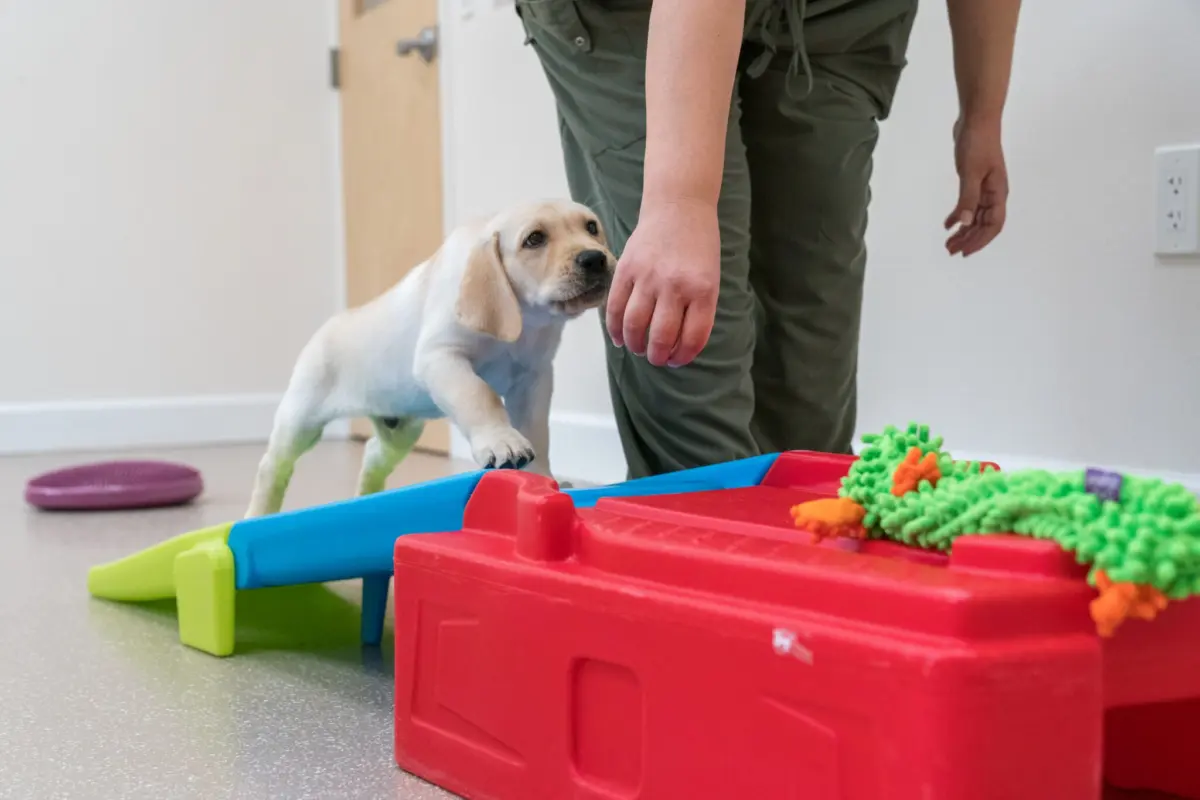
Looking ahead, the integration of early-life interventions like ENS with progressive, post-neonatal enrichment programs—such as early crate training, structured novel-object exposure, and positive obedience foundations starting around three months of age—will continue to set the gold standard for working dog production. Programs that introduce basic cues in short, engaging sessions by three months of age, followed by structured puppy classes around 16 weeks, consistently yield adults capable of meeting the rigorous demands of assisting individuals with visual impairments or physical disabilities.
Ultimately, the meticulous care invested during a puppy’s earliest weeks echoes throughout its entire lifetime. By combining cutting-edge scientific protocols with boundless patience and empathy, organizations like Dogs Inc ensure that their graduates are not only prepared to navigate the physical world, but are poised to transform the lives of the people who depend on them.