
Executive Overview
For millennia, humanity has stamped its footprint across the globe. We have carved concrete labyrinths through ancient forests, bisected migration corridors with endless ribbons of asphalt, and converted wild, biodiverse prairies into sterile, monocultural farmlands. Conventional wisdom—and decades of ecological science—has long dictated that wildlife responds primarily to these permanent structural transformations. Animals adapt, flee, or perish based on the physical infrastructure we construct.
However, groundbreaking new research published in the prestigious journal Science shatters this long-held paradigm. An international team of scientists from the University of California, Santa Barbara (UCSB), the Smithsonian’s National Zoo and Conservation Biology Institute, and Yale University has revealed a startling new reality: animals do not merely react to the environments we build; they actively adjust their behaviors in real-time to the simple, transient fact that human beings are physically nearby.
By pioneering the use of high-resolution, anonymized cellphone geolocation data and pairing it with massive GPS tracking datasets of thousands of individual mammals and birds, the researchers have managed to pull apart two closely intertwined variables that have historically confounded conservationists: the permanent modification of habitats versus the ephemeral, moving shadow of human presence.
The findings are both fascinating and sobering. More than half of the animal species studied—roughly 57%—are directly influenced by a complex interplay between human presence and landscape modification. Furthermore, human presence alone was found to alter the territorial range or environmental niche of 67% of mammal species and 68% of bird species. Crucially, the study demonstrates that animals experience human pressure differently depending on how heavily a landscape has already been altered. In pristine or lightly developed areas like national parks, wildlife exhibits an acute sensitivity to human footfall and activity, often shrinking their territories to avoid us. Conversely, in hyper-modified zones, the calculus shifts entirely.
As the scientific community grapples with the accelerating pressures of the Anthropocene—the geological epoch defined by human dominance—this study provides a critical wake-up call. Traditional conservation strategies, which rely solely on tracking urban sprawl or agricultural boundaries, are dangerously incomplete. To achieve true human-wildlife coexistence, policymakers must adopt a far more nuanced approach: one that recognizes that where and when we walk, drive, and recreate matters just as much as where we build.
Detailed Chronology: From Pandemic Lockdowns to a Paradigm Shift in Conservation
To understand how researchers finally managed to untangle the effects of human presence from physical landscape changes, one must look back to the unprecedented disruptions of the year 2020. The COVID-19 pandemic triggered a global socioeconomic shockwave, forcing governments worldwide to institute sweeping lockdowns, travel restrictions, and stay-at-home orders.
This sudden, drastic alteration of human mobility—dubbed the "anthropause" by researchers—created a once-in-a-generation natural experiment. For a brief, fleeting window in modern history, human mobility dropped precipitously while physical landscapes remained largely unchanged. Highways still existed, cities still stood, and agricultural fields remained plowed, but the bustling, moving tide of human beings suddenly vanished from many natural and semi-natural areas.
Recognizing the gravity of this moment, an international collective of scientists rapidly mobilized the COVID-19 Bio-Logging Initiative. This massive, global collaborative effort ultimately brought together over 600 research partners who pooled approximately 1 billion location records from roughly 13,000 individual animals worldwide. Their core mission was to observe how wildlife reacted when the constant, ambient pressure of human presence was abruptly lifted.
The Methodological Breakthrough: Unlocking Cellphone Data
While tracking animal movement via GPS collars and bio-logging tags has become standard practice in modern ecology, measuring human presence with equivalent precision has historically proven nearly impossible.
In the past, researchers studying human-wildlife interactions were forced to rely on coarse, indirect proxies. They would measure urban development density, agricultural coverage, or, in the case of pandemic studies, binary policies like whether a specific county or province was under lockdown. While these proxies offered broad clues about human activity, they suffered from a fatal flaw: they could not capture the dynamic, fluid nature of how people actually move across a landscape on a daily or weekly basis. High-density tourist areas inside a national park, for instance, would look identical on a static land-use map to a remote, rarely visited mountain ridge.
To bridge this critical data gap, the research team turned to an unconventional source: anonymized, neighborhood-resolution cellphone geolocation data. Made widely available to researchers during the pandemic to track the public health impacts of shutdowns, these proprietary datasets—normally guarded closely by private tech and data-broker companies—offered an unprecedented lens into human mobility.
"The cell phone data we used was made available to researchers during the pandemic to help reveal the impacts of COVID-19 shutdowns," explained co-lead author Scott Yanco, a research ecologist at the Smithsonian’s National Zoo. "Typically, private companies hold onto these, which made this a rare opportunity for us to quantify how human presence impacts wildlife, and to demonstrate that there is more to consider than just land modification to create robust conservation plans."
Armed with this treasure trove of human movement data, the team filtered and analyzed weekly GPS tracking records from 4,581 individual mammals and birds across the continental United States. By matching these records against identical timeframes in 2019 (pre-lockdown) and 2020 (post-lockdown), the researchers were able to isolate the independent and combined effects of habitat modification and human foot traffic.
The results, published in Science, permanently alter our understanding of human-wildlife ecology. The study proved that human presence and habitat transformation do not act in isolation; they are deeply intertwined forces that dictate how wild species navigate their shrinking worlds.
Supporting Context & Metrics: Quantifying the Invisible Pressure
The numbers generated by the research team paint a comprehensive portrait of an ecosystem under dual pressures. By examining both the physical space utilized by individual animals (their home ranges) and their environmental niches (how they exploit micro-habitats, resources, and ecological conditions), the researchers uncovered systemic behavioral shifts across diverse taxa.
Key Metrics from the Study:
- 57%: The total percentage of studied wildlife species whose behaviors are directly altered by the combination of human physical presence and landscape modification.
- 67%: The percentage of mammal species whose spatial territory or environmental niche size is modified by human presence alone.
- 68%: The percentage of bird species demonstrating shifts in territory or niche size in response to human presence.
- 67% of Mammals vs. 41% of Birds: The proportion of species within these respective groups that responded to the dual pressure of human presence and landscape alteration by actively contracting their habitat use—effectively squeezing themselves into smaller, less optimal spaces to avoid us.
The Paradox of Protected Areas
One of the most striking findings of the research involves the psychological and behavioral impacts of human presence in seemingly safe havens, such as national parks and state reserves.
Conventional conservation logic assumes that animals living in protected, undeveloped landscapes are insulated from human pressures. However, the study revealed that wildlife sensitivity to human presence is actually most acute in places with relatively little physical development.
In urban environments, wildlife that successfully persists alongside humans has often undergone a process of habituation or behavioral filtering; they are urban adapters, accustomed to the ambient noise, light, and motion of city life. But in national parks and rural wildernesses, where structural modification is minimal, animals are far more sensitive to the sudden intrusion of hikers, campers, and tourists. When humans wander into these pristine landscapes, wildlife responds with heightened avoidance behaviors, significantly contracting the territory they utilize and altering their natural foraging and resting patterns.
Species-Specific Responses: Wolves, Deer, and Cranes
Crucially, the study emphasizes that there is no universal behavioral template across the animal kingdom. Different species possess distinct evolutionary histories, physiological needs, and behavioral strategies when confronting the human shadow.
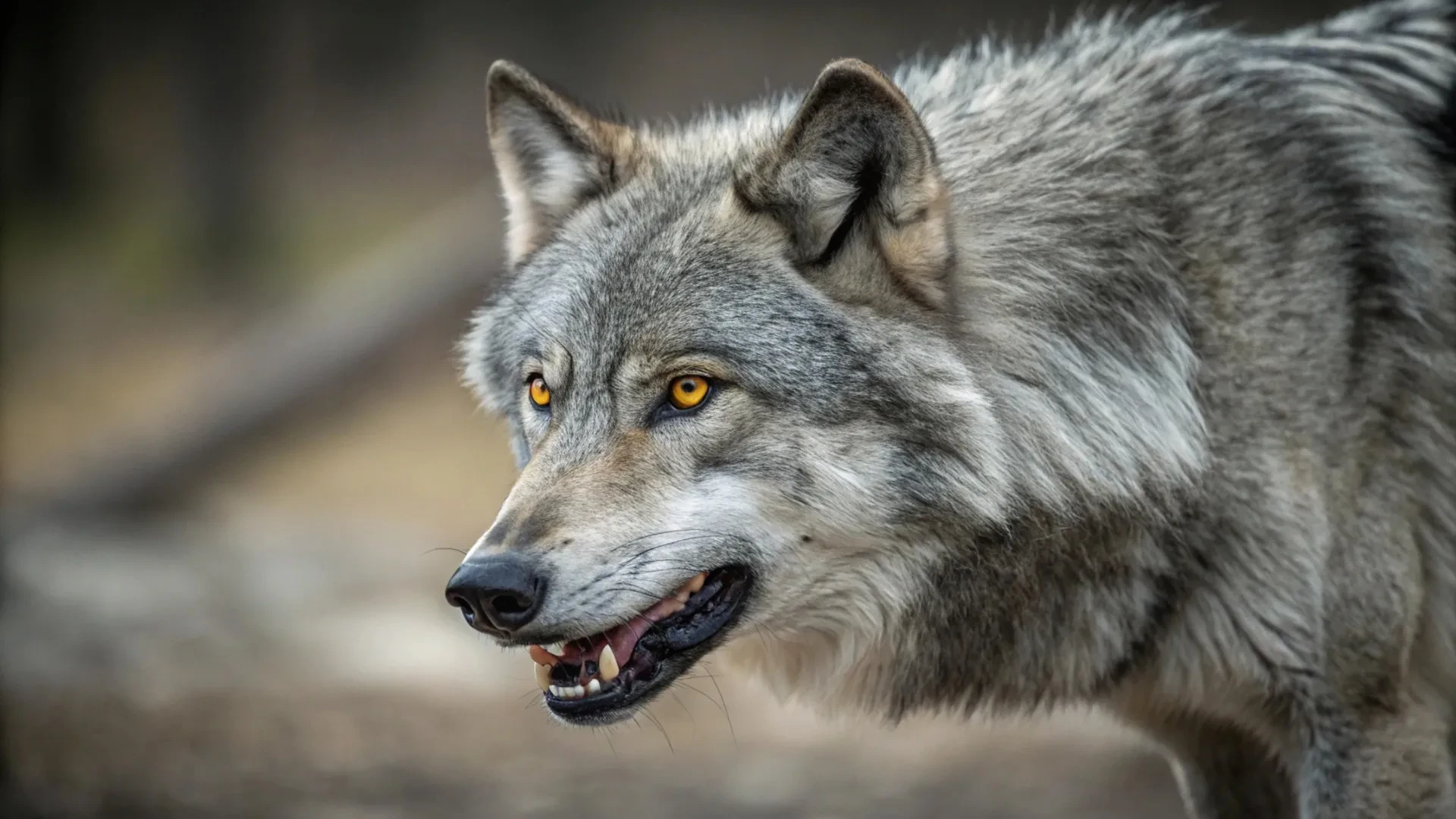
- Gray Wolves (Canis lupus): Belying the behavior of many smaller or more timid mammals, wolves exhibited an expanding habitat use in response to human presence. Researchers hypothesize that this behavioral expansion reflects the species’ long, fraught history of persecution and conflict with humans. Rather than shrinking away or hiding, wolves facing human activity tend to spread out over larger areas, actively seeking to widen the physical buffer zone between themselves and human populations.
- White-Tailed Deer (Odocoileus virginianus): Displaying a fascinating dual response, white-tailed deer expanded their environmental niches as landscapes became more heavily modified by human infrastructure, yet drastically contracted their niches as the physical density of human presence increased. This suggests that while deer can successfully exploit the mosaic of edge habitats created by human agriculture and suburban sprawl, they remain deeply wary of actual human bodies moving through those spaces.
- Sandhill Cranes (Antigone canadensis): Exhibiting a pattern directly inverse to that of white-tailed deer, sandhill cranes responded differently to the sliding scale of modification versus presence, highlighting the immense variability in how avian species process anthropogenic risk.
"These findings highlight the critical importance of species-based conservation," noted co-lead author Ruth Oliver. "Every species has different habitat requirements, has its own particular behavioral tendencies and faces unique threats. Effective conservation requires that we understand the particular challenges that each species faces."
Official Statements and Expert Perspectives
The implications of this research extend far beyond academic journals, challenging wildlife management agencies, urban planners, and park administrators to rethink how public lands are managed.
Reflecting on the complex ways humans exert pressure on natural systems, Dr. Ruth Oliver, assistant professor in UCSB’s Bren School of Environmental Science & Management, stressed the necessity of holistic data collection:
"Humans have complicated effects on wildlife—from our physical presence to how we reshape habitats—but we can’t understand our full impact without information on both."
Dr. Oliver expanded on this during discussions of the study’s broader philosophy, expressing cautious optimism about what these granular insights mean for the future of conservation policy. For decades, conservationists felt powerless against the relentless tide of urban expansion; once a forest was paved over, the ecological game was perceived as lost. However, understanding that human presence is a distinct, manageable variable offers a new toolkit for coexistence.
"Our results give me some optimism that we can achieve wildlife-coexistence through more nuanced policies that more smartly consider where and when we need to give animals space," Oliver stated.
Dr. Scott Yanco of the Smithsonian’s National Zoo underscored the unique methodological value of tapping into commercial and public-health-derived mobility data, noting that the partnership with private-sector data streams represents a paradigm shift in ecological research.
"Typically, private companies hold onto these [cellphone datasets], which made this a rare opportunity for us to quantify how human presence impacts wildlife, and to demonstrate that there is more to consider than just land modification to create robust conservation plans," Yanco explained.
Future Outlook: Adaptation, Stress, and the Next Frontier in Conservation
As the research team celebrates the publication of their landmark findings in Science, they are already turning their attention to the next major, unanswered question in human-wildlife ecology: Are these behavioral adjustments helping or hurting the animals?
When an animal alters its spatial range, abandons prime foraging grounds to avoid a popular hiking trail, or expands its territory to flee human foot traffic, it expends precious metabolic energy. In many cases, these behavioral shifts represent costly compromises.
"Our current study shows that animals change how they use space and resources, but we don’t know if these changes are helping them adapt or are a sign of stress," Dr. Oliver pointed out. "Our group is now digging into that question by asking whether animals that change their behavior in response to human pressures are at greater or lower risk of dying."
By linking real-time behavioral adaptations directly to survival and mortality rates, the researchers hope to determine the exact threshold at which human recreational pressure transitions from a mild nuisance to a lethal driver of population decline.
Policy Implications for the Anthropocene
The lessons derived from the global anthropause and this subsequent multi-institution study arrive at a critical juncture. As global populations continue to urbanize, and as post-pandemic ecotourism and outdoor recreation reach all-time highs, national parks, wildlife refuges, and semi-wild buffer zones are experiencing unprecedented visitor congestion.
Traditional conservation management has relied heavily on static zoning laws: drawing lines on a map to designate a forest as protected, or setting aside a wetland as a sanctuary. While vital, these measures are increasingly insufficient if thousands of hikers, cyclists, and tourists flood those exact sanctuaries every weekend, inadvertently driving sensitive species into marginal, resource-poor habitats.
Moving forward, the integration of high-resolution human mobility data with wildlife telemetry offers the blueprint for a smarter, more dynamic era of conservation. Wildlife agencies may soon transition toward temporal zoning—implementing seasonal or daily restrictions on human access during critical mating, nesting, or migration periods, even within existing public parks. By understanding precisely when and where human presence inflicts the heaviest ecological toll, park managers can design trail networks, viewing platforms, and access schedules that minimize human overlap with vulnerable fauna.
Ultimately, the study serves as a profound reminder of our invisible impact on the natural world. Long before we lay down concrete or clear-cut timber, our very presence casts a long, heavy shadow over the landscape. Recognizing that shadow is the first, essential step toward ensuring that human beings and the planet’s remaining wildlife can finally share the Earth in balance.