
October 22, 2026 — The following report is featured in the Alley Cat Action® 2026 Fall Newsletter. To view the original publication and explore ongoing initiatives, visit the official Alley Cat Allies Fall 2026 Newsletter.
Executive Overview
The landscape of animal welfare in the United States is defined by moments of acute crisis and profound community resilience. Across the nation, animal advocacy organizations, shelter workers, and law enforcement agencies are increasingly collaborating to protect the most vulnerable members of our feline population. The Fall 2026 edition of the Alley Cat Action newsletter highlights three distinct, powerful narratives of rescue, rehabilitation, and community-driven protection orchestrated by Alley Cat Allies and its dedicated network of supporters.
From an emergency extraction of an ailing mother cat and her four male kittens from an overburdened Maryland shelter, to the remarkable recovery of an abused polydactyl cat named Hemingway, and finally to a heartwarming partnership with the Atlantic City Police Department in New Jersey on behalf of a community cat named Sheba, these stories underscore a singular truth: systemic animal protection relies heavily on proactive intervention, medical funding, and grassroots collaboration.
This report provides an in-depth examination of these three rescue operations, detailing the logistical challenges overcome, the medical treatments administered, the community partnerships forged, and the broader implications these cases hold for the future of feline advocacy.
Detailed Chronology: Three Stories of Triumph
1. Saving a Feline Family of Five: The Maryland Intervention
The plight of homeless feline families in crowded regional shelters often hinges on the availability of immediate foster placement and specialized medical funding. In Maryland, an urgent situation unfolded when a mother cat and her entire litter of four male kittens faced imminent distress within an overcrowded shelter environment.

The Medical Emergency
Time was of the essence. Every member of the feline family was suffering from varying degrees of upper respiratory infections (URIs)—a common yet highly dangerous affliction in shelter settings that, if left untreated in young kittens, can quickly become fatal. Shelter resources were stretched to their absolute limits, leaving the family vulnerable to the risks of prolonged confinement and deteriorating health.
Intervention and Naming
Prompted by emergency alerts, supporters mobilized to fund a rapid extraction. The intervention successfully relocated the family to a safe, nurturing environment where their medical needs could be comprehensively addressed.
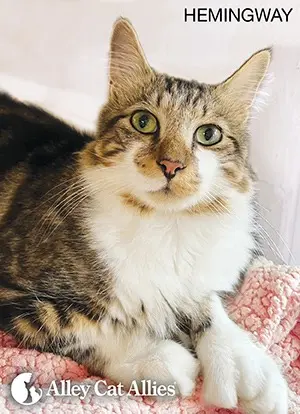
Inviting community engagement, Alley Cat Allies launched a public naming campaign for the quintet. The mother cat was christened Strawberry, while her four boisterous boys received sweet, memorable monikers: Churro, Creamsicle, Cotton, and Almond. Today, the family has fully recovered from their respiratory ailments, blossoming into energetic, healthy cats poised for bright futures.
+-------------------------------------------------------------+
|               THE MARYLAND FELINE FAMILY                    |
+-------------------+-----------------------------------------+
| Mother Cat        | Strawberry                              |
| Kittens (All Boys)| Churro, Creamsicle, Cotton, Almond      |
| Primary Diagnosis | Upper Respiratory Infections (URIs)     |
| Outcome           | Successfully rescued, treated, adopted  |
+-------------------+-----------------------------------------+
2. Hemingway’s Journey: Healing from Abuse to Extra-Toed Joy
Trauma recovery in animals requires immense patience, specialized veterinary care, and an environment designed to restore a sense of safety. Such was the journey of Hemingway, a young cat whose life began under the dark shadow of abuse.
A Larger-Than-Life Personality
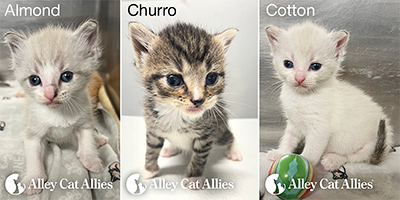
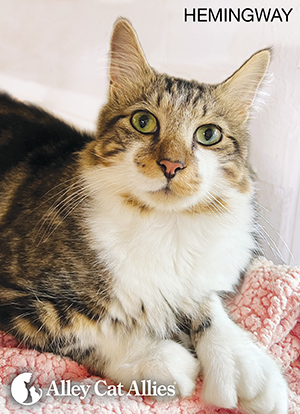
Hemingway is a cat who embodies the descriptor "extra" in every possible way. Most notably, he is a polydactyl cat—possessing extra toes on his paws—a genetic trait famously associated with the writer Ernest Hemingway, whose historic home in Key West, Florida, is populated by dozens of similar felines. In addition to his unique anatomy, Hemingway boasts an extraordinarily fluffy tail and a remarkably sweet disposition.
Rescue and Rehabilitation
Rescued from an abusive household, Hemingway entered the care of Alley Cat Allies carrying deep emotional and physical scars. Fear and distrust are natural responses for animals who have survived cruelty, but Hemingway’s resilience proved remarkable. Placed into a specialized rehabilitation and veterinary program, he received the medical attention necessary to heal his wounds.
Almost immediately upon entering a secure, loving environment, Hemingway’s true personality emerged. Shedding his fear, he transformed into a "purr machine," captivating rescue workers with his big, soulful eyes and cheerful demeanor. He has since transitioned to a permanent adoptive home, where he is living a life defined by comfort, security, and endless affection.
3. Atlantic City Police Rally Around Sheba the Cat
Community policing takes on a profound meaning when local law enforcement actively participates in animal welfare. In Atlantic City, New Jersey, a group of dedicated police officers proved that protecting a community extends beyond human residents to include the neighborhood’s feline inhabitants.
Building Trust on the Beat
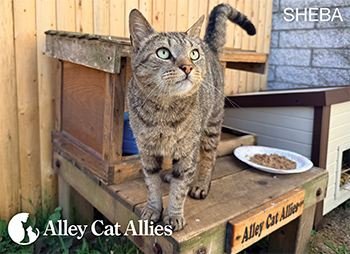
For an extended period, a local cat named Sheba had captured the hearts of several Atlantic City police officers. While on duty or taking breaks, officers regularly checked in on Sheba, providing her with fresh food, clean water, and vital human interaction. Sheba became an unofficial mascot and a comforting presence for the precinct.
The TNR Partnership
Recognizing the need to ensure Sheba’s long-term health and safety, the officers sought assistance. Through a collaborative initiative between Alley Cat Allies and the Humane Society of Atlantic County, the precinct gained access to no-cost Trap-Neワクチン-Return (TNR) and veterinary services.
Officers proudly posed with Sheba in her humane trap before she was transported to the clinic, where she was safely spayed, vaccinated, and microchipped. True to their commitment, the officers were waiting for her return. Sheba was welcomed back to her familiar territory with a hearty meal and a brand-new, weather-resistant outdoor shelter, securing her health, safety, and happiness for years to come.
Supporting Context & Metrics: The Mechanics of Feline Rescue
To truly understand the impact of these interventions, one must examine the broader logistical and medical frameworks that make operations by organizations like Alley Cat Allies possible.
Upper Respiratory Infections (URIs) in Shelter Populations
URIs are among the most prevalent infectious diseases in animal shelters, typically caused by feline herpesvirus-1 (FHV-1) and feline calicivirus (FCV). Stress, overcrowding, and poor ventilation exacerbate outbreaks.
- The Risk: Without timely intervention, secondary bacterial infections can lead to severe pneumonia, corneal ulceration, and systemic decline.
- The Solution: Rapid extraction protocols—such as the one that saved Strawberry and her kittens—are clinically proven to reduce mortality rates by removing animals from pathogen-rich environments and providing immediate antibiotic and supportive care.
The Significance of Trap-Neuter-Return (TNR) and Community Policing
The partnership between the Atlantic City Police Department and local animal welfare organizations highlights an effective model for community cat management.
- Public Health Benefits: Spaying and neutering stabilize outdoor cat populations, preventing exponential growth while eliminating nuisance behaviors associated with unsterilized cats (such as yowling and spraying).
- Vaccination Protocols: Mandatory rabies vaccinations protect both the feline population and the human community that interacts with them.
- Cultural Shift: Law enforcement involvement in animal welfare fosters community trust and models compassionate behavior, reinforcing anti-cruelty standards.
Official Statements & Community Perspectives
The successes documented in the Fall 2026 newsletter highlight the power of collaborative animal advocacy. While individual accounts emphasize personal transformation, the structural backing comes from institutional commitment.
"Caring for cats is a community effort, and it’s especially heartening when law enforcement has a personal stake in it! Sometimes, that begins with a single cat."
— Alley Cat Allies Field Report
Animal welfare advocates emphasize that community-led initiatives—whether rescuing a polydactyl cat from an abusive background or outfitting an outdoor cat with a custom winter shelter alongside local police officers—demonstrate that animal protection is a shared societal responsibility. The swift financial and logistical mobilization for Strawberry, Churro, Creamsicle, Cotton, and Almond further proves that donor-backed safety nets remain the primary bulwark against shelter euthanasia and neglect.
Future Outlook: Sustaining the Momentum of Compassion
As animal welfare organizations look toward the remainder of 2026 and beyond, the lessons learned from Maryland, Hemingway’s rehabilitation, and Atlantic City serve as a blueprint for future action.
- Expanding Shelter Relief Networks: The emergency extraction of Strawberry’s family highlights the ongoing need for rapid-response foster networks. Scaling these pipelines will prevent vulnerable litters from languishing in high-risk shelter environments.
- Advancing Anti-Cruelty and Rehabilitation: Hemingway’s journey from abuse to adoption emphasizes the necessity of behavioral rehabilitation funding. Specialized trauma care must become a standard component of institutional animal rescue.
- Institutional Partnerships: The success in Atlantic City establishes a replicable model for engaging municipal agencies—including police departments, public works, and health departments—in humane, non-lethal community cat management programs.
Through continued public support, veterinary partnerships, and grassroots dedication, the safety net for cats across the nation continues to strengthen, ensuring that every cat—whether an extra-toed survivor of abuse or a beloved precinct cat like Sheba—receives the dignity, health, and love they deserve.