
Executive Overview
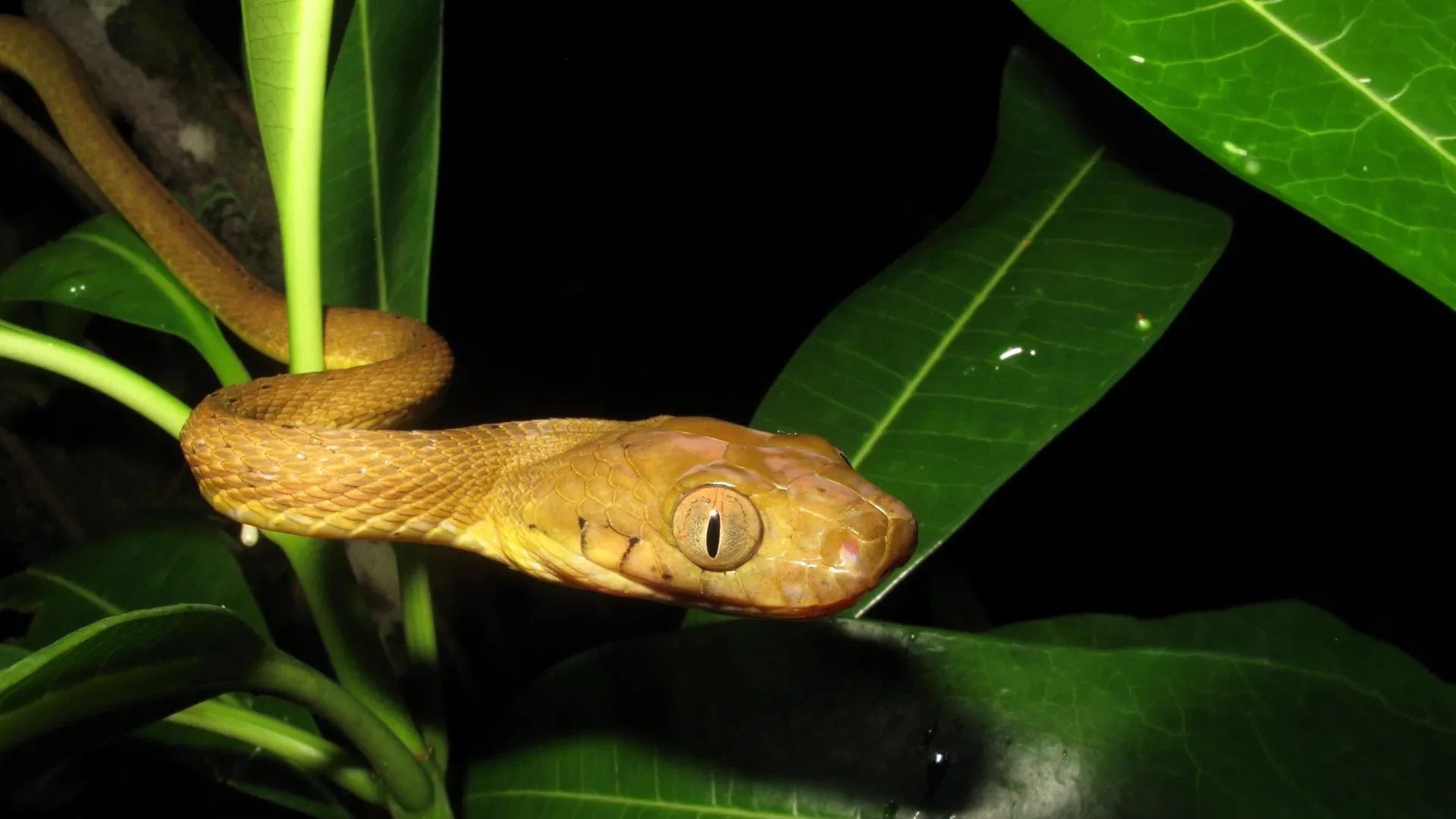
For decades, the brown tree (Boiga irregularis) has stood as a cautionary tale in the annals of conservation biology. Accidentally introduced to the Pacific island of Guam in the chaotic aftermath of World War II—likely stowed away within the cargo holds of military aircraft—this nocturnal, mildly venomous predator achieved ecological dominance with terrifying speed. In the absence of natural predators and amidst a smorgasbord of naive island wildlife, the snake population exploded. Today, in certain pockets of the U.S. territory, population densities reach a staggering 30,000 snakes per square mile.
The consequences have been catastrophic. The invasive serpent drove many of Guam’s native forest bird species to local extinction, fundamentally altering the island’s seed dispersal and forest regeneration cycles. Furthermore, their proclivity for scaling utility poles and electrical infrastructure triggers hundreds of power outages annually, inflicting significant economic damage on local communities.
Yet, for all the devastation it has caused, the brown tree snake has long presented evolutionary biologists with a profound biological paradox. Standard ecological theory dictates that when a population is founded by only a handful of individuals—as Guam’s snake population is believed to have been—it should suffer from a severe genetic bottleneck. Inbreeding normally strips a population of genetic diversity, rendering it vulnerable to disease, lowering its adaptability, and suppressing rapid population growth.
According to a groundbreaking study published on July 24 in Science Advances and led by researchers at the University at Buffalo (UB) in collaboration with the U.S. Geological Survey (USGS), that theoretical bottleneck should have stopped the brown tree snake in its tracks. Instead, the snake population thrived.
Utilizing cutting-edge long-read sequencing technology, the research team discovered that brown tree snakes possess a vast, previously unrecognized reservoir of genetic variation. Rather than lacking diversity, the snakes harbor more than 19,000 structural variants—large-scale DNA insertions, deletions, duplications, and rearrangements—concentrated heavily in genes governing immunity and smell. This hidden genomic flexibility helps explain how a tiny founding population managed to survive intense inbreeding, adapt to a foreign environment, and conquer an entire island.
While this discovery complicates eradication efforts on Guam by highlighting the formidable resilience of the species, it simultaneously offers a radical shift in how scientists view endangered species suffering from low genetic diversity. The implications stretch far beyond the Pacific, redefining our fundamental understanding of how populations adapt, survive, and overcome the odds.
Detailed Chronology
The Post-War Arrival and Ecological Collapse of Guam
The story of Guam’s ecological collapse began quietly in the late 1940s or early 1950s. Native to the coastal regions of Australia, Indonesia, and various islands in the South Pacific, the brown tree snake was transported across the ocean via military logistics networks supporting post-war operations. Released into an ecosystem wholly unprepared for an arboreal, nocturnal predator, the snakes found an island paradise.
Guam’s native forest birds, having evolved on an isolated island without heavy mammalian or reptilian predation, possessed no instinctual defenses against the snake. The impact was swift and devastating. By the 1980s, nearly all of Guam’s native forest bird species had vanished from the wild, creating what scientists call an "empty forest" syndrome. Insect populations soared in the absence of avian predators, and plant life suffered as seed-dispersing birds disappeared.
Beyond ecological destruction, the snakes became a daily nuisance and hazard. Their affinity for climbing utility infrastructure led to frequent short circuits, plunging neighborhoods into darkness and costing millions in repairs. Federal and territorial agencies launched multi-pronged eradication and containment programs, deploying everything from acetaminophen-laced dead mice airdropped into the canopy to trained detector dogs at ports of departure. Yet, the snakes held their ground.
The Theoretical Conundrum of Inbreeding
As biologists monitored the plague, they were haunted by a mathematical and genetic contradiction. Population genetics models dictate that a species descending from a minute number of founders must experience a genetic bottleneck.
When a population crashes or is founded by very few individuals, the pool of available gene variants shrinks dramatically. Inbreeding—the mating of closely related individuals—inevitably follows. This leads to the expression of deleterious recessive mutations, a loss of physiological vigor, and an inability to adapt to environmental shifts. For decades, scientists assumed Guam’s snakes must have possessed some anomalous resilience, but they lacked the technological capability to peer deeply enough into the genome to prove it.
The Breakthrough: Long-Read Sequencing Revolutionizes Genomics
The turning point came when UB researchers joined forces with the USGS Brown Tree Snake Rapid Response Team (RRT)—a specialized unit tasked with preventing the stowaway snakes from spreading to other vulnerable Pacific islands, such as Hawaii and the Commonwealth of the Northern Mariana Islands.
Using DNA samples collected by the RRT, the research team applied advanced long-read sequencing technologies. Traditional sequencing methods, which dominated genomic research for decades, operated much like reading a book through a magnifying glass, focusing on individual letter changes—single nucleotide polymorphisms (SNPs), such as an A swapping for a G. While useful, these older tools were blind to larger architectural changes within the genome.
Long-read sequencing, by contrast, allowed scientists to sequence extensive, continuous stretches of DNA. This capability unlocked the ability to detect structural variants (SVs)—major genomic rearrangements affecting 50 base pairs or more. When the UB team analyzed the data, they discovered that these structural variants altered nearly eight times more of the genome than single base pair mutations combined.
The findings upended prevailing assumptions about the snake’s genetic makeup, revealing a complex, dynamic genomic architecture capable of driving rapid adaptation despite extreme inbreeding.
Supporting Context & Metrics
By the Numbers: Quantifying the Genomic and Ecological Scale
- 30,000: The peak population density of brown tree snakes per square mile in certain high-concentration areas of Guam.
- July 24: The publication date of the landmark study in the journal Science Advances.
- 19,000+: The number of distinct structural variants identified in the brown tree snake genome by the research team.
- 8x: The multiplier representing how much more of the genome is altered by structural variants compared to traditional single base pair changes (SNPs).
- 50+: The minimum base-pair threshold that defines a structural variant, encompassing insertions, deletions, inversions, and duplications of genetic material.
Genomic Architecture: Immunity and Olfaction
The discovery of more than 19,000 structural variants was striking not just for its sheer scale, but for where these variations were located within the genome. They were not randomly distributed; instead, they clustered heavily in functional gene categories related to immune response and olfaction (the sense of smell).
In an invasive species, robust immune genes are critical. Entering a novel environment exposes a population to unfamiliar pathogens and parasites. The abundance of structural variants in immune-related genes suggests that the snakes may possess an adaptable defense system, allowing them to rapidly mount resistance against local diseases.
Simultaneously, the concentration of variants in olfactory genes sheds light on a fascinating behavioral dynamic. Brown tree snakes rely profoundly on their sense of smell. By flicking their forked tongues, they gather airborne chemical cues, feeding data into the vomeronasal organ to track prey, identify mates, and navigate their environment.
This heightened olfactory sensitivity may solve an enduring behavioral puzzle on Guam: why brown tree snakes rarely cannibalize one another on the island, despite practicing cannibalism in parts of their native range. With high levels of inbreeding producing closely related neighbors, the snakes’ sophisticated olfactory machinery may allow them to recognize kin, chemically signaling that a nearby snake is a sibling rather than a meal.
Official Statements
The study has drawn widespread attention across the scientific community, sparking discussions about conservation, invasive species management, and the evolution of genetics.
"The brown tree snake is maybe not wildly diverse, but it has important sources of genetic diversity that have been underappreciated."
— Dr. Trevor Krabbenhoft, Associate Professor in the UB Department of Biological Sciences and Corresponding Author of the Study.
Dr. Krabbenhoft emphasizes that traditional metrics of biodiversity—which often focus solely on SNP diversity—miss the bigger picture of how organisms adapt under stress.
"It’s like looking at portions of two books letter by letter with a magnifying glass and thinking they’re the same, but not realizing entire paragraphs have been moved around or duplicated. Older sequencing technology didn’t allow us to easily see that DNA in one individual might be in a completely different place on the chromosome than in another. How we define genetic diversity and how we actually measure it is shaped largely by the technology of the day."
— Dr. Levi Gray, Postdoctoral Researcher in the Krabbenhoft Lab and former USGS researcher.
Dr. Gray highlights how technological evolution dictates scientific paradigms. By shifting from narrow viewing windows to panoramic genomic sequencing, researchers can finally perceive the structural scaffolding that supports biological persistence.
"It’s possible that endangered species may have more flexibility in their genes than we realize. We’re now getting a better understanding of unappreciated sources of genetic diversity that may explain how some inbred species can still respond to their environment."
— Dr. Christopher Osborne, Aquatic Biologist at SUNY Oswego and First Author of the Study.
Dr. Osborne points to the dual-edged sword of the findings. While bad news for island managers fighting the snake, the revelation offers a glimmer of hope for conservationists working to save endangered, bottlenecked species from extinction.
Future Outlook
Implications for Invasive Species Management
For biosecurity agencies, wildlife managers, and conservationists across the Pacific, the UB-USGS study serves as a sobering reality check. For years, eradicating or containing the brown tree snake has operated on the assumption that extreme inbreeding would eventually exact a biological toll, weakening the population over generations.
The discovery of extensive structural variation shatters that comforting assumption. If Guam’s snakes possess a hidden reservoir of genetic flexibility, they may be far more resilient to environmental pressures, poisons, and containment strategies than previously modeled. Biosecurity protocols must account for the possibility that invasive populations can adapt at the structural genomic level, making rigorous quarantine and rapid response measures more critical than ever to prevent the species from establishing footholds on neighboring islands like Hawaii.
A Beacon of Hope for Endangered Species
Paradoxically, the mechanisms that make the brown tree snake a devastating invader may hold the key to saving the planet’s most vulnerable creatures.
Many endangered species—ranging from the iconic California condor and the black-footed ferret to isolated island populations of endemic mammals—suffer from severe population bottlenecks and extensive inbreeding. Conservation biologists have long feared that these species are genetic dead ends, doomed by their inability to adapt to rapid environmental changes such as climate change or habitat fragmentation.
If structural variants—duplications, deletions, and large-scale rearrangements—are far more common across the animal kingdom than previously recognized, conservationists may need to reevaluate the genetic health of endangered populations. Species previously written off as genetically impoverished might possess hidden layers of genomic resilience waiting to be unlocked by long-read sequencing.
The Road Ahead: Tracing the Origins of Variation
To fully understand how the brown tree snake achieved its biological triumph, researchers must now look backward. A central, unanswered question remains: Did these 19,000 structural variants evolve after the snakes arrived on Guam as a rapid evolutionary response to the bottleneck, or were they already present within the small founding population sampled from their native Australian and South Pacific ranges?
Answering this question will require comprehensive genomic sequencing of native, un-bottlenecked populations across the snake’s indigenous range. By comparing the structural genomic profiles of native snakes against those on Guam, researchers can determine whether severe population bottlenecks actively accelerate the expression or stabilization of structural variants.
As science continues to refine its tools, the brown tree snake remains an imposing subject of study—a masterclass in biological adaptability wrapped in scales. Whether serving as a persistent threat in the forests of Guam or an unexpected teacher of evolutionary resilience, this infamous invader is forcing science to rewrite the rules of genetics.