
Executive Overview
For decades, wildlife conservationists engaged in the restoration of apex predators have faced a stubborn biological hurdle: the homing instinct. Across the animal kingdom—from migratory birds traversing continents to amphibians returning to natal ponds—the drive to navigate back to familiar territory is a powerful evolutionary imperative. Among reptiles, few species exhibit this trait as fiercely as the crocodilian family. Capable of navigating vast oceanic stretches, traversing dense river systems, and pinpointing their exact geographic origins, wild crocodiles routinely undermine human relocation programs by simply walking, swimming, or crawling back to where they started.
This behavioral tenacity has long frustrated conservation efforts, particularly when managing problem animals or attempting to restock depleted habitats with mature specimens. Traditionally, conservation biologists relying on captive-breeding programs have released fragile hatchlings into the wild. The logic was simple: young animals, having spent minimal time in controlled environments, would lack deeply ingrained attachments to breeding facilities and would naturally integrate into local ecosystems. Unfortunately, this strategy is plagued by exceptionally high mortality rates among juveniles, which fall victim to a gauntlet of natural predators, starvation, and environmental stressors long before reaching reproductive maturity.
However, a groundbreaking study published in the journal Wildlife Research offers a paradigm shift for global crocodilian conservation. Titled "What is home? Post-release movements of captive-reared and translocated mature saltwater crocodiles in Bangladesh," the research reveals a striking behavioral divergence. According to the findings, saltwater crocodiles born or raised in captivity for extended periods do not exhibit the same compulsion to return to their breeding centers when released into the wild. Instead of embarking on exhaustive homing journeys back to human-managed enclosures, these captive-raised adults smoothly integrate into local ecosystems, establishing defined home ranges remarkably similar to those of native wild populations.
This discovery could rewrite the playbook for reviving critically low populations of saltwater crocodiles (Crocodylus porosus), particularly in critical strongholds like the Sundarbans mangrove forest in Bangladesh. By demonstrating that older, larger, and more resilient captive-bred crocodiles can be successfully introduced into the wild without attempting to retrace their steps to captivity, conservationists now have a viable, highly promising tool to bypass the perilous hatchling stage and accelerate population recovery. Funded by the Deutsche Gesellschaft für Internationale Zusammenarbeit (GIZ) and spearheaded by IUCN Bangladesh alongside the Bangladesh Forest Department, this study bridges a vital knowledge gap in behavioral ecology and applied conservation science.
Detailed Chronology and Methodology of the Study
To understand the significance of the recent findings, one must examine the meticulous fieldwork and tracking methodologies deployed by the research team within one of Asia’s most formidable environments: the Sundarbans mangrove forest. Straddling the border between Bangladesh and India, the Sundarbans represent the single largest continuous tract of mangrove forest in the world and serve as the final major refuge for saltwater crocodiles in Bangladesh.
Historically, the region supported robust populations of Crocodylus porosus. However, the twentieth century brought devastation. Heavy commercial hunting driven by the global demand for luxury crocodile leather decimated local populations. Despite the implementation of legal protections in Bangladesh in 1973, the saltwater crocodile population failed to mount a measurable recovery. Today, the species teeters on the brink of ecological collapse in the country. Recent comprehensive wildlife surveys estimate that the entire Bangladeshi sector of the Sundarbans harbors a meager 140 mature individuals—a precariously small number that leaves the population vulnerable to stochastic environmental events, inbreeding depression, and disease.
Recognizing the urgency of the situation, researchers set out to test a long-standing hypothesis regarding the post-release behavior of captive-reared versus wild-translocated crocodiles. The core operational challenge was tracking the precise movements of large, apex aquatic predators capable of traversing dozens of kilometers daily through dense, tidal labyrinthine waterways.
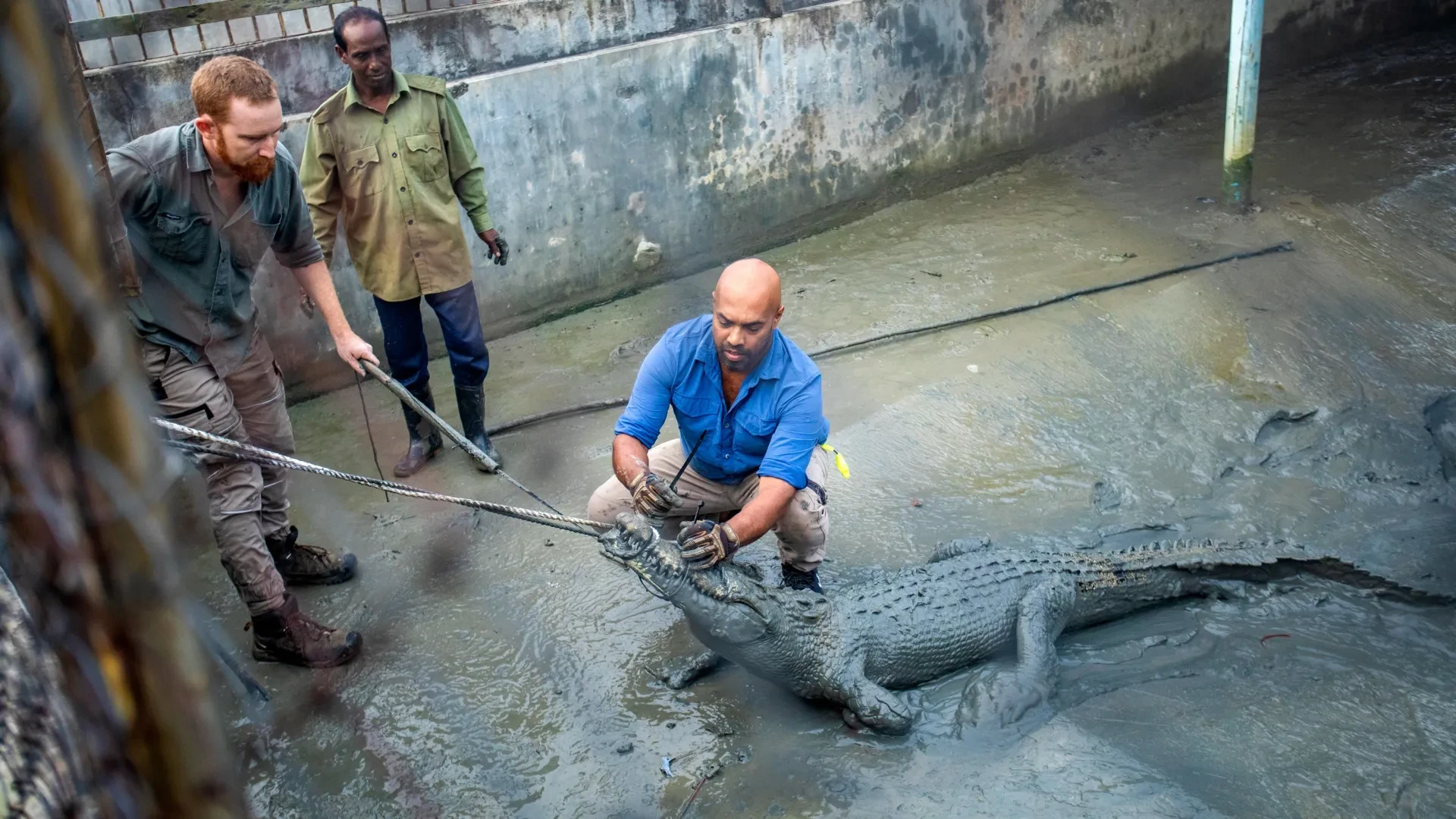
The experiment centered on five mature saltwater crocodiles, each fitted with advanced satellite tracking devices secured to their osteoderms to monitor their geographic coordinates, movement speeds, and behavioral patterns in real time. The study cohort was deliberately diverse to allow for comparative analysis:
- The Captive-Reared Cohort: Three mature females that had spent between 8 and 22 years in continuous captivity within breeding facilities. These animals had no prior experience navigating natural tidal ecosystems or hunting live prey in the wild.
- The Local Wild Control: A native wild crocodile captured within the Sundarbans, fitted with a tracker, and immediately released back at its exact site of capture to establish a baseline for normal, undisturbed wild behavior.
- The Translocated Wild Subject: A wild adult male named "Jongra," who was captured in his natural habitat and subsequently translocated—transported a massive distance of approximately 132 kilometers away from his home territory—before being released into an unfamiliar stretch of the mangrove forest.
Following their respective releases, the five crocodiles were continuously monitored via satellite telemetry over a multi-month tracking period. The scientists recorded their daily travel distances, directional headings, habitat selection, and spatial clustering to determine whether the animals attempted to navigate back to their points of origin.
The results yielded a stark dichotomy. The three captive-reared females demonstrated an immediate capacity for environmental adaptation. Rather than panicking, searching for human handlers, or attempting to navigate back to their concrete breeding enclosures, the captive-raised crocodiles quickly settled into small, well-defined geographic areas. Their daily movement profiles, localized spatial use, and behavioral patterns mirrored those of the local wild control crocodile. They successfully transitioned into apex predators, navigating the complex tidal currents and hunting within the dense mangrove network as if they had lived there their entire lives.
In sharp contrast, the translocated wild crocodile, Jongra, provided a masterclass in classic homing behavior. Despite being dropped 132 kilometers away from his home turf, Jongra immediately exhibited classic navigation markers. While he did not complete the entire journey back to his original capture site within the study period, his directional heading was remarkably linear and purposeful. Jongra traveled significantly greater distances each day than any other monitored crocodile, spanned an exceptionally large geographic territory, and recorded single-day movement spikes exceeding 30 kilometers—unmistakable indicators of a desperate, driven homing attempt.
Supporting Context and Metrics
The implications of this study are deeply intertwined with the ecological pressures and management crises facing crocodilian conservation globally. To fully appreciate why these findings are being hailed as a breakthrough, one must examine the ecological metrics governing saltwater crocodile reintroduction programs.
The Vulnerability of Hatchlings
Historically, conservation breeding facilities—such as those operating in northern Australia, India, and Southeast Asia—have relied almost exclusively on releasing hatchlings (young-of-the-year) or juveniles into depleted river systems. While this method avoids the logistical complexities of transporting massive, dangerous adult predators, it is statistically inefficient.
Hatchling saltwater crocodiles face a staggering mortality rate in the wild. Measuring mere centimeters upon hatching, they are predated upon by a wide array of species, including large wading birds, monitor lizards, pythons, predatory fish, and even cannibalistic adult crocodiles. Furthermore, environmental stressors such as fluctuating salinity levels, monsoon floods, and high metabolic demands during their rapid growth phases mean that only a tiny fraction of released hatchlings survive to reproductive maturity—often estimated at 10 to 12 years of age for females and up to 16 years for males. Consequently, decades of hatchling release programs in various jurisdictions have yielded negligible net increases in breeding adult populations.
The Economics and Logistics of Adult Relocation
Conversely, utilizing subadult or adult crocodiles for reintroduction has traditionally been avoided due to the "homing paradox." When nuisance crocodiles—animals that wander into human settlements or aquaculture facilities—are captured and relocated by wildlife authorities, they almost invariably attempt to return home.
Data from tracking studies across Australia’s Northern Territory and Southeast Asia show that translocated adult crocodiles can travel hundreds of kilometers across open ocean or complex river networks, often navigating past hazards to reclaim their original territories. If relocated animals cannot return home, they frequently engage in protracted wandering behavior, putting them into conflict with human communities along riverbanks, damaging fishing gear, or suffering from severe weight loss and stress as they continuously test physical barriers.
The Bangladesh study injects a vital nuance into this dynamic: not all experienced crocodiles home equally. While wild-translocated adults like Jongra possess deeply mapped cognitive spatial memories of their home territories and will expend immense energy to return, captive-reared adults do not possess a wild "home" to return to. Having spent their formative years within artificial, confined enclosures, their spatial map of the natural world is a blank slate. Upon release, their immediate survival instinct is not navigation, but settlement—identifying a localized niche with adequate shelter, basking sites, and prey availability, and anchoring themselves to it.
| Crocodile Subject | Origin / Background | Treatment | Tracked Behavior Post-Release | Outcome |
|---|---|---|---|---|
| Subjects 1-3 | Captive-bred (8–22 years) | Released into Sundarbans | Localized movement; settled into defined home ranges | Successful integration; mirrored wild control behavior |
| Subject 4 | Native Wild | Captured & released in situ | Baseline normal movement within original territory | Normal wild behavior; established experimental control |
| Subject 5 (Jongra) | Native Wild | Translocated 132 km away | Long-distance linear travel (>30 km/day spikes) | Homing behavior; directed travel toward original home |
Official Statements and Expert Insights
The scientific community has responded with enthusiasm to the publication of What is home? Post-release movements of captive-reared and translocated mature saltwater crocodiles in Bangladesh. The research represents a collaborative triumph involving international funding bodies, governmental agencies, and field ecologists.
Dr. Ru Somaweera, a prominent behavioral ecologist and Adjunct Associate Professor from Murdoch University who led the scientific analysis, emphasized the profound shift these findings represent for wildlife managers.
"Crocodilians, the largest predators in most tropical, subtropical freshwater and brackish environments, are a unique case when it comes to homing behavior," Dr. Somaweera stated. "Crocodiles are remarkably good at finding their way home, often returning to their original capture sites and limiting the success of relocation programs. What we still don’t fully understand, though, is how this behavior plays out in individuals that have been bred or kept in captivity for long periods before being released back into the wild."
Addressing the core fear that had previously paralyzed conservationists—that multi-year captive crocodiles would instinctively seek out their human-managed breeding centers upon release—Dr. Somaweera offered definitive reassurance:
"If crocodiles who are bred and raised in captivity subsequently return to their enclosures or breeding facilities after being released, attempts to reintroduce them into the wild as part of conservation efforts will ultimately fail," he explained. "The traditional approach has been to use hatchlings in reintroduction programs, but their survival rates are extremely low and they take a long time to reach reproductive maturity. Understanding whether larger, captive-bred crocodiles can be used instead represents an important knowledge gap."
Detailing the breakthrough success of the captive-reared cohort, Dr. Somaweera noted the seamless transition observed in the field:
"According to the most encouraging result, the three captive-reared crocodiles showed no signs of attempting to return to the breeding facility where they had lived. Instead, they settled into small, well-defined areas and moved in much the same way as the local wild crocodile we tracked, which tells us they are possibly able to adapt to their new environment seamlessly."
However, he issued a cautionary note regarding the starkly contrasting behavior of translocated wild adults, utilizing the tracking data from Jongra to underscore the necessity of meticulous spatial planning:
"Unfortunately, the results weren’t as good for the wild crocodile Jongra, who was translocated about 132km from his home before being released. Although Jongra didn’t make it back to his original capture site during the study, his movements were very clearly going in that direction. He traveled far more each day than any other crocodile we tracked, covered an exceptionally large area, and even recorded single-day movements of more than 30 kilometers: all typical signs of homing behavior."
The research was made possible through the collaborative framework of IUCN Bangladesh, the Bangladesh Forest Department, and financial backing from the Deutsche Gesellschaft für Internationale Zusammenarbeit (GIZ). Conservation officials within Bangladesh have hailed the study as a timely intervention for the Sundarbans mangrove ecosystem, where apex predators play a crucial role in maintaining ecological balance by controlling predatory fish populations and cycling aquatic nutrients.
Future Outlook and Conservation Implications
The publication of this study in Wildlife Research marks the dawn of a new era in crocodilian management and rewilding strategy. By proving that captive-raised saltwater crocodiles can bypass the dangerous juvenile mortality bottleneck and successfully integrate into wild habitats as mature, reproductive-ready adults, conservationists now possess an empirically validated protocol to rebuild crashing populations.
1. Redesigning Captive Breeding and Release Protocols
Conservation breeding facilities across South and Southeast Asia can now pivot their operational models. Rather than releasing vulnerable hatchlings that quickly succumb to predation, facilities can retain crocodiles until they reach subadult or adult stages—when they are physically robust enough to defend themselves against natural hazards. Because these animals lack a wild geographic origin, they can be introduced directly into depleted river basins within the Sundarbans and surrounding estuaries with high confidence that they will remain in the release zone.
2. Strategic Management of Nuisance and Translocated Crocodiles
Conversely, the study reinforces strict guidelines for handling wild conflict crocodiles. Wildlife authorities must recognize that translocating mature wild crocodiles over long distances is often counterproductive and potentially inhumane. When a wild adult crocodile is removed due to human-wildlife conflict, simply dumping it 100 kilometers away triggers frantic, high-energy homing behavior, increasing the likelihood of dangerous secondary encounters with human settlements along its migratory corridor. Future management plans must incorporate careful release zoning, physical barrier considerations, or, where homing is guaranteed, the establishment of permanent sanctuary enclosures rather than distant wild translocations.
3. Boosting Biodiversity in the Sundarbans
For Bangladesh, where the saltwater crocodile population languishes at a precarious 140 mature individuals, the stakes could not be higher. The reintroduction of robust, mature captive-bred females—capable of participating in upcoming breeding seasons—injects much-needed genetic diversity and immediate demographic mass into the ecosystem. As these apex predators re-establish their territories within the Sundarbans mangrove labyrinth, they will resume their vital ecological role as keystone species, restoring the health and resilience of one of the planet’s most majestic and fragile tidal habitats.