
Executive Overview
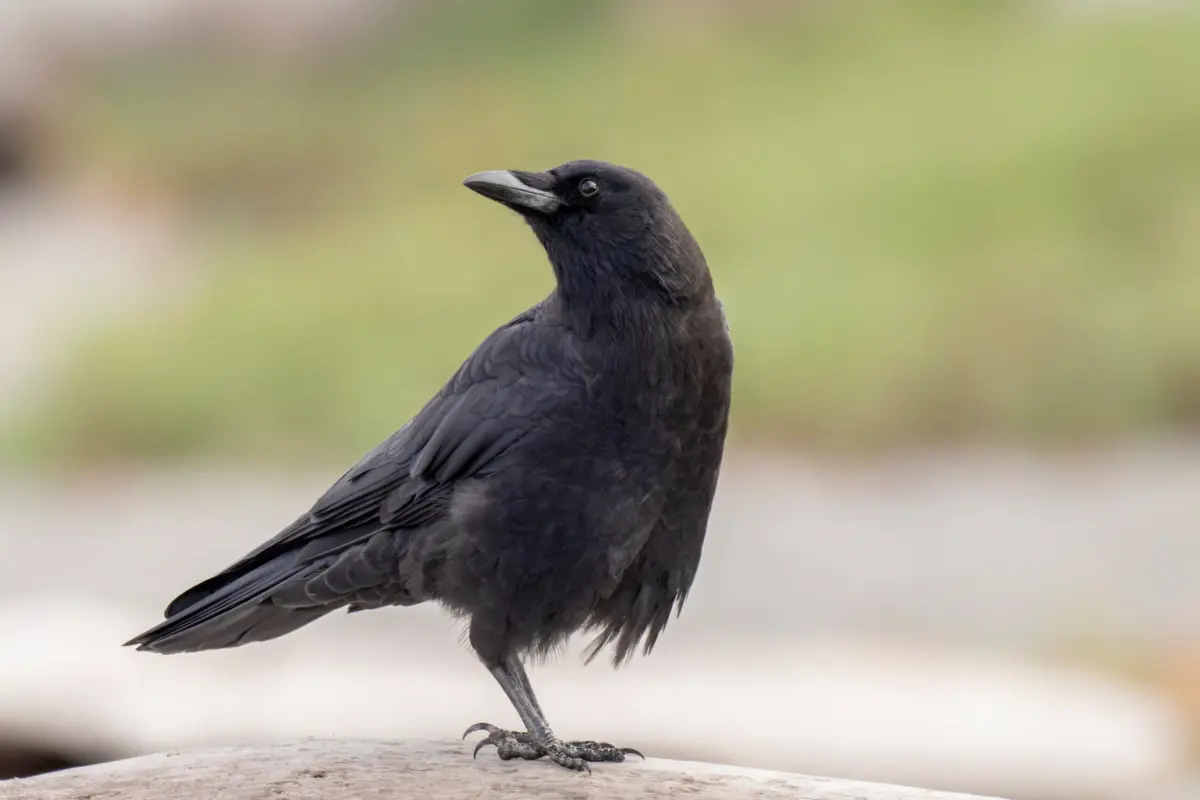
For decades, the popular and scientific consensus surrounding avian intelligence has been clear: corvids (crows, ravens, jays, and magpies) and parrots rule the roost. Hailed as the undisputed geniuses of the bird world, these taxa have routinely captured the public imagination with feats of tool-making, abstract reasoning, and problem-solving that rival the cognitive capacities of primates and human toddlers.
However, a comprehensive new analysis of the last 25 years of avian cognition research threatens to upend this long-standing hierarchy. According to a landmark review conducted by behavioral researchers Kelsey McCune and Jeffrey Katz, an astonishing 98 percent of the world’s roughly 11,000 known bird species have never had their intelligence scientifically tested.
The investigation, which scrutinized 937 published studies spanning a quarter-century, reveals that our understanding of bird smarts is heavily skewed by institutional bias, laboratory convenience, and anthropocentric observation. Far from proving that corvids and parrots are the absolute apex of avian intellect, the data suggests we may simply be looking—and testing—in all the usual places. As researchers pivot toward automated field technologies and community-wide behavioral assays, science is beginning to realize that the backyard feeder may harbor hidden geniuses whose cognitive capabilities remain entirely unmapped.
Detailed Chronology: How the Avian Cognition Gap Evolved
The Historical Roots of Lab Bias (Early to Mid-20th Century)
The foundation of avian cognition research was laid in the early decades of the 20th century by comparative psychologists and behaviorists who sought to understand the mechanics of learning and intelligence broadly, rather than studying birds for their own intrinsic qualities.
During this era, researchers gravitated heavily toward specific species that met logistical demands rather than ecological curiosity. Pigeons, doves, chickens, quails, and pheasants quickly established themselves as the gold standard of laboratory subjects. These birds offered distinct practical advantages: they were inexpensive, straightforward to breed in captivity, maintained uncomplicated dietary requirements, and tolerated confinement remarkably well.
As a result, early psychological literature was saturated with data derived from a tiny fraction of the avian tree of life. This foundational inertia created a self-reinforcing loop: because methodologies, housing protocols, and baseline psychological responses were already optimized for pigeons and quails, subsequent generations of researchers found it far easier to continue using these established models than to develop novel protocols for unfamiliar taxa.
The Rise of the Corvids (Late 20th to Early 21st Century)
As the field transitioned from strict behaviorism toward a nuanced appreciation of cognitive ecology in the late 20th and early 21st centuries, the scientific pendulum swung dramatically toward corvids. Spurred by striking anecdotal accounts of crows and ravens solving complex multipart problems, utilizing multi-stage tools, and demonstrating remarkable memory and spatial caching abilities, laboratories began focusing intensely on the family Corvidae.
Concurrently, pet trade integration and human fascination with psittacines cemented parrots as the other heavyweight champions of avian intelligence. Parrots demonstrated an uncanny capacity for vocal mimicry, associative learning, and abstract categorization (as famously exemplified by Dr. Irene Pepperberg’s work with an African Grey parrot named Alex).
By the turn of the 21st century, corvids and parrots had secured an unassailable reputation as the "brainiacs" of the avian world. This reputation generated a powerful feedback loop: once a species or family was labeled as exceptionally intelligent, it attracted more funding, more research interest, and more publication opportunities, further widening the gap between the heavily studied elite and the thousands of ignored species.
The Paradigm Shift and Methodological Awakening (Present Day)
The modern era of avian research is characterized by a growing humility among scientists who recognize that historical bias has distorted our view of the natural world. Driven by improvements in passive monitoring, microchip tagging, and portable computerized testing stations, researchers are finally breaking out of the traditional laboratory setting.
Field biologists like Kelsey McCune are spearheading efforts to test entire communities of wild birds simultaneously, rather than subjecting isolated captive individuals to artificial trials. This methodological evolution is systematically dismantling old assumptions, proving that species once viewed as ordinary can match—or even outperform—celebrated masterminds when given the chance to prove themselves.
Supporting Context & Metrics: The Numbers Behind the Bias
To quantify the extent of the blind spots in avian research, McCune and Katz conducted a sweeping bibliometric analysis of 937 experimental avian cognition papers published over a 25-year window. The metrics paint a stark picture of academic concentration:
- The 2 Percent Reality: Out of more than 11,000 recognized bird species on Earth, exactly 194 have ever been subjected to experimental cognitive testing. That amounts to less than 2 percent of all avian biodiversity.
- Family-Level Exclusion: Researchers have formally studied species from fewer than one-third of all recognized bird families.
- The Dominant Five: Sixty-four percent of all historical studies focused on just five avian families:
- Corvidae (crows, ravens, jays, magpies)
- Columbidae (pigeons and doves)
- Paridae (tits and chickadees)
- Phasianidae (chickens, quails, pheasants)
- Psittacidae (parrots)
- Hyper-Concentration Within Families: Even within these heavily researched groups, extreme bias persists. For instance, the family Columbidae contains 306 distinct species; yet, out of 135 studies focusing on the family, all but three were performed on a single species: the Rock Pigeon (Columba livia).
- The Direct Comparison Deficit: Despite bold claims regarding corvid supremacy, direct comparative studies are extraordinarily rare. McCune and Katz’s review found only five studies that directly pitted corvids against other bird families in identical cognitive trials.
The results of these rare head-to-head comparisons challenge the notion of undisputed corvid dominance. While corvids outperformed rivals in two studies, their performance equaled non-corvid species in another two. Most tellingly, a comprehensive 2024 study challenging 15 distinct species to solve physical puzzle boxes—such as flipping lids and removing obstacles to access food—found that Blue Jays were outright outperformed by five common songbirds: Black-capped Chickadees, European Starlings, Gray Catbirds, American Robins, and the overall champion, the Tufted Titmouse.
Official Statements and Researcher Perspectives
The realization that human bias has dictated our understanding of animal minds has prompted deep introspection within the behavioral ecology community.
Reflecting on her early experiences designing log-based puzzle boxes for Mexican Jays and California Scrub-Jays as a University of Washington Ph.D. student, Kelsey McCune recalled how non-target species consistently disrupted experimental assumptions:
"All these other species would come and interact with the puzzle box, too—towhees, chickadees, and Downy Woodpeckers. Sometimes they would come in and solve the problem before the jays."
This unexpected ecological crossover prompted McCune to re-evaluate prevailing dogmas surrounding avian smarts. When subsequent studies revealed that Great-tailed Grackles—members of the blackbird family—performed equally to or better than corvids on equivalent tasks, the foundational questions multiplied.
McCune points out that human perception is heavily influenced by proximity and utility. Urban-adapted species like American Crows and Rock Doves are ubiquitous in our daily lives, exposing us to behaviors that we naturally interpret as sophisticated. Whether it is crows dropping hard nuts onto asphalt to be crushed by passing cars, or pigeons navigating complex spatial arrays in dense metropolitan squares, human observation is inherently biased toward animals that share our concrete habitats. Similarly, the global pet trade ensures that parrots remain front-and-mind for humans:
"We can closely observe them, and they can mimic human speech, which makes us feel like they’re smart, like us," McCune explains.
Ultimately, McCune argues that confirmation bias has sustained the "brainiac" narrative for generations. Once a species acquires a stellar intellectual reputation, scientists naturally gravitate toward confirming and expanding upon those pre-existing frameworks rather than starting from scratch with unheralded taxa.
Future Outlook: Feeder Geniuses and Conservation Imperatives
As the scientific community confronts the vast unexplored territories of avian cognition, the research horizon is expanding rapidly. The deployment of advanced automated field equipment—such as computerized, microchip-scanning bird feeders—is revolutionizing how behavioral ecologists measure intelligence in the wild.
In current field studies, researchers are tagging diverse populations of wild birds, allowing automated stations to track precisely which individuals interact with experimental apparatuses. Because only a single computerized port actively dispenses rewards, researchers can track individual learning curves, persistence, and problem-solving flexibility across entire multi-species communities simultaneously. This technology bypasses the traditional bottleneck of laboratory captivity, granting insight into species that were previously deemed too difficult or delicate to study under controlled conditions, including ubiquitous backyard visitors like Northern Cardinals, Carolina Wrens, and Downy Woodpeckers.
Beyond the Smart-Bird Leaderboard
The push to diversify cognitive research carries implications that stretch far beyond academic debates or popular wildlife trivia. According to McCune, understanding the cognitive flexibility of a broad spectrum of birds is an urgent conservation necessity:
"The more we know about how birds see and navigate the world, the better we can design conservation strategies to help them to deal with the way that we’re changing it."
As global ecosystems face unprecedented pressures from habitat fragmentation, shifting agricultural practices, extreme weather events, and rapid urbanization, a species’ behavioral flexibility—its ability to innovate, adapt to novel food sources, and navigate altered landscapes—often determines whether it will thrive or vanish. By mapping cognitive traits across a wider swath of the avian family tree, conservation biologists can better predict which populations are most vulnerable to environmental disruption and design targeted interventions to support them.
Ultimately, acknowledging what science does not yet know marks a profound maturing of the field. By opening the aperture of inquiry beyond the familiar silhouettes of crows and parrots, researchers are poised to discover that brilliance in the avian world is not the exclusive domain of a privileged few, but a widespread evolutionary trait waiting to be uncovered.