
Executive Overview
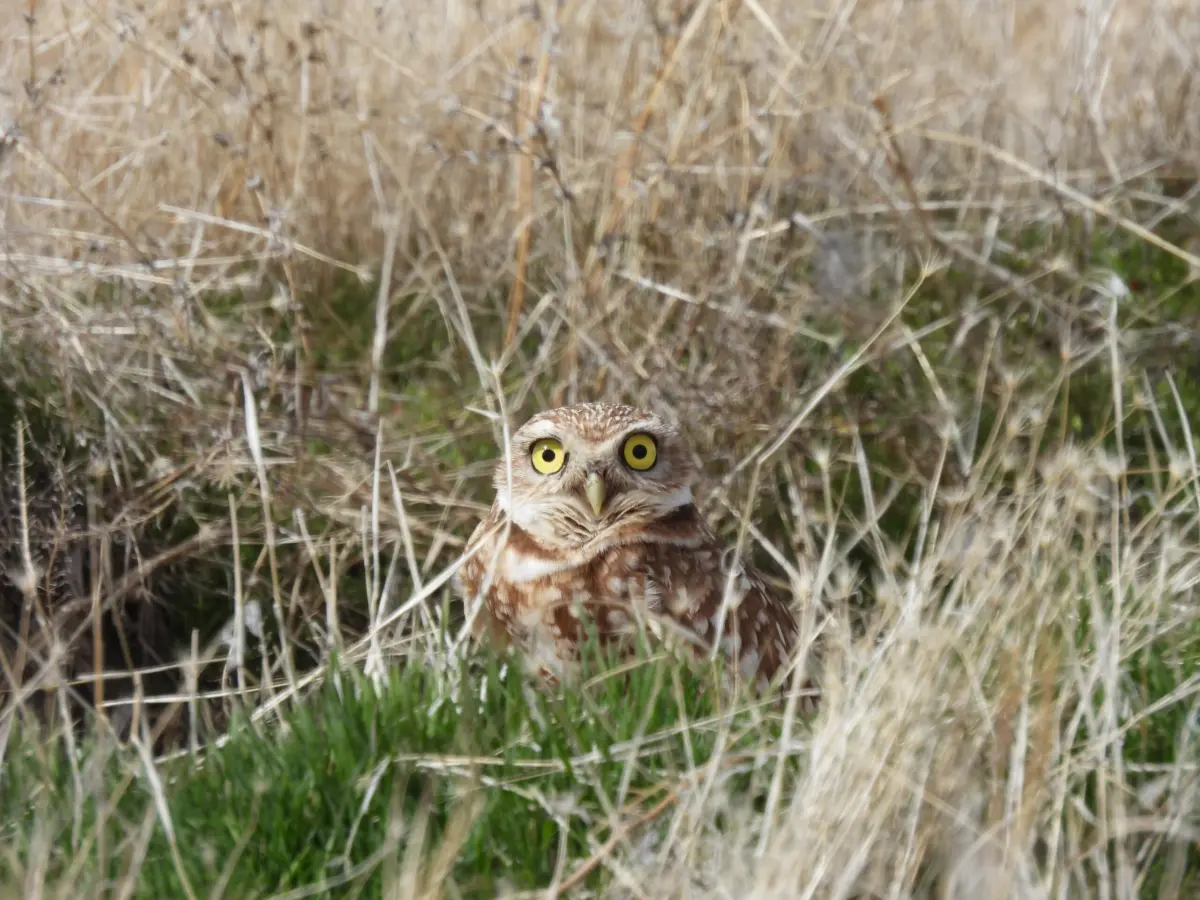
Along the southeastern shores of Utah’s sprawling Great Salt Lake, a quiet ecological transformation is underway. At the National Audubon Society’s Gillmor Sanctuary, decades of environmental degradation caused by invasive species are being systematically reversed through a targeted, large-scale habitat restoration initiative. At the heart of this endeavor is the recovery of the Burrowing Owl (Athene cunicularia), a charismatic, ground-dwelling raptor whose fortunes have plummeted across North America due to habitat loss, agricultural expansion, and human-wildlife conflicts.
For years, vast swaths of the sanctuary’s upland ecosystems—traditionally characterized by open, low-growing grasses and scattered shrubs—were choked by dense monocultures of tamarisk (commonly known as saltcedar). This Eurasian invader fundamentally altered the landscape, transforming open grassland and shrubland into impenetrable forested thickets. For a species like the Burrowing Owl, which relies on unobstructed sightlines to spot predators and locate prey, this habitat conversion was catastrophic.
By clearing more than 1,000 acres of invasive tamarisk, reseeding native flora, and working hand-in-hand with regional stakeholders, conservationists at Gillmor Sanctuary have unlocked a powerful blueprint for grassland recovery. Wildlife surveys confirm that the initiative is an overwhelming success: Burrowing Owls, alongside other sensitive shorebirds, songbirds, and native mammals, are returning to historic nesting grounds. This comprehensive report explores the chronology of the restoration, the ecological metrics underpinning its success, the collaborative partnerships driving the work forward, and the broader outlook for the Great Salt Lake ecosystem.
Detailed Chronology: From Overgrowth to Open Horizons
To understand the magnitude of the recent victories at Gillmor Sanctuary, one must trace the timeline of ecological decline and the strategic counter-offensive mounted by Audubon and its conservation partners.
The Rise of an Invader (19th Century to Late 20th Century)
The ecological trajectory of the Great Salt Lake’s uplands was drastically altered in the 1800s with the introduction of tamarisk to North America. Initially championed for its utility in stabilizing eroding riverbanks and controlling wind erosion, the deciduous shrub quickly proved to be an aggressive ecological colonizer. Possessing deep taproots and an extraordinary capacity to absorb and transpire vast quantities of water, tamarisk outcompeted native vegetation.
Across the West’s riparian corridors and high-water-table uplands, the invader established dense, mono-specific canopies. At Gillmor Sanctuary, areas that historically supported sparse vegetation—critical for ground-nesting birds—gradually morphed into thick, forested corridors. Native species, unable to penetrate the dense leaf litter and heavy shade of the tamarisk canopy, disappeared. Consequently, the intricate web of life dependent on these open ecosystems, from burrowing mammals to apex grassland raptors, collapsed.
Recognizing the Crisis (Early 2000s)
By the turn of the 21st century, the continental decline of the Burrowing Owl could no longer be ignored. Listed as endangered in Canada and classified as a Species of Greatest Conservation Need across every U.S. state within its range, the owl became an indicator species for the ailing health of western grasslands. Conservation biologists realized that protecting isolated patches of land was insufficient; systemic habitat restoration was mandatory to prevent local extirpations.
Audubon’s leadership identified Gillmor Sanctuary—a vital ecological buffer on the southern edge of the Great Salt Lake—as a prime candidate for intervention. The sanctuary possessed the underlying soil and hydrological conditions necessary to support historical grassland communities, provided the invasive canopy could be eliminated.
The Tamarisk Eradication Campaign (Present Era)
The turning point for Gillmor Sanctuary arrived with the launch of a concerted, multi-year habitat revitalization campaign. Backed by critical grant funding and community-driven volunteer efforts, Audubon initiated systematic tamarisk removal across the sanctuary and its neighboring properties.
Deploying heavy mechanical equipment alongside precision herbicide treatments, conservation crews cleared more than 1,000 acres of dense tamarisk. This grueling physical labor reopened the landscape, allowing sunlight to once again reach the soil. Crucially, the cleared zones were not left to chance; crews actively reseeded the land with a diverse mix of native grasses, shrubs, and forbs. This intervention accelerated ecological succession, restoring the structural integrity of the low, open landscapes required by grassland wildlife.
Supporting Context & Metrics: The Science of Grassland Recovery
The success of the Gillmor Sanctuary restoration is not measured merely by acres cleared, but by the measurable biological response of native fauna and flora. Environmental scientists implemented rigorous pre-restoration, mid-restoration, and post-restoration monitoring protocols to gauge ecosystem health.
The Burrowing Owl and Its Symbiotic Network
Unlike the vast majority of owl species that roost and nest in the canopy of mature trees, the Burrowing Owl is uniquely adapted to open terrain. Standing roughly nine inches tall with long, slender legs adapted for running, the owl depends on wide-angle visibility to scan for predators such as coyotes, badgers, and avian raptors.
Furthermore, the species has a symbiotic relationship with fossorial (digging) mammals. Because Burrowing Owls rarely dig their own subterranean homes, they rely on abandoned burrows excavated by species such as:
- Badgers (Taxidea taxus)
- Black-tailed Prairie Dogs (Cynomys ludovicianus)
- Various ground squirrel species
- Desert tortoises (Gopherus agassizii) (in more arid southern ranges)
When tamarisk invaded the uplands, it drove these burrowing mammals away, depriving the owls of essential nesting infrastructure. By clearing the tamarisk and restoring native bunchgrasses, Audubon inadvertently recreated the ideal foraging and burrowing matrix for these foundational mammal species, thereby rolling out the welcome mat for the owls.
Biodiversity Metrics and Indicator Species
Post-restoration monitoring surveys have yielded extraordinary biodiversity metrics across the 1,000-plus restored acres:
- Avian Resurgence: With the vertical obstruction of tamarisk removed, Burrowing Owls have returned to the uplands to establish nests. They are joined by other declining shorebirds and grassland specialists, notably the Long-billed Curlew (Numenius americanus) and the Willet (Tringa semipalmata), both of which utilize the open ground for breeding and foraging.
- Songbird Recovery: Acoustic and visual monitoring has documented significant population rebounds among grassland songbirds. Horned Larks (Eremophila alpestris) and Savannah Sparrows (Passerculus sandwichensis)—species highly sensitive to structural vegetation changes—are now frequently observed nesting in the restored areas.
- Mammalian Return: The ecological healing extends beyond birds. Large and medium-sized grassland mammals, including herds of pronghorn (Antilocapra americana) and agile jackrabbits (Lepus spp.), have reclaimed the reopened corridors, utilizing the restored shrub-steppe for cover and forage.
Official Statements and Stakeholder Perspectives
The monumental scale of the Gillmor Sanctuary restoration could not have been achieved by any single organization. It represents a masterclass in coalition-building, uniting diverse interests around a shared ecological vision.
Conservation leaders emphasize that the removal of invasive species is fundamentally about restoring ecological resilience. "When we clear tamarisk, we aren’t just cutting down trees; we are turning back the clock on decades of environmental degradation," notes project field staff. "The immediate return of species like the Burrowing Owl validates the immense effort poured into these soils."
The financial and logistical backbone of the initiative reflects a broad coalition of public and private entities. Audubon formally extended its gratitude to the numerous organizations and volunteers whose tireless labor on the ground made the clearing and reseeding possible.
Crucial financial backing was provided by the National Fish and Wildlife Foundation (NFWF) through its competitive America the Beautiful Challenge Grant, alongside substantial philanthropic support from the Browning Foundation. These grants underscore the national significance of the Great Salt Lake ecosystem, positioning local conservation at Gillmor as a critical node in continental migratory flyways and biodiversity networks.
Future Outlook: Scaling Restoration Across the Great Salt Lake Ecosystem
While the ecological gains within the 1,000-plus acres of Gillmor Sanctuary are undeniable, conservationists are keenly aware that ecological boundaries do not conform to property lines. Tamarisk continues to blanket extensive surrounding acreage across the Great Salt Lake basin, serving as an ongoing seed source that threatens to reinvade restored parcels if left unchecked.
Collaborative Expansion and Landscape-Scale Vision
Looking ahead, Audubon’s strategic vision centers on regional scaling. The organization is actively forging partnerships to execute cross-boundary tamarisk eradication. Future phases of the initiative aim to coordinate removal efforts alongside a diverse array of regional stakeholders, including:
- Local duck clubs holding historical wetlands and uplands around the lake
- The Salt Lake City International Airport, whose sprawling grounds border critical migratory corridors
- Private ranchers and agricultural landowners managing adjacent grazing tracts
- State and federal wildlife agencies
By aligning these disparate interests under a unified watershed management framework, conservationists hope to establish a continuous buffer of healthy native uplands around the Great Salt Lake.
Beyond Tamarisk: Innovative Nesting Initiatives
Habitat restoration at Gillmor Sanctuary is a multi-dimensional endeavor. Beyond eradicating invasive flora and reseeding native bunchgrasses, Audubon is actively engaged in pioneering direct-action wildlife management. This includes supplemental artificial burrow programs designed to accelerate nesting density for returning owls—a proactive measure dubbed by sanctuary staff as providing "new digs" for the raptors.
As these holistic efforts mature, Gillmor Sanctuary stands as a beacon of hope in an era defined by biodiversity loss. It proves that with targeted science, robust funding, and cross-sector collaboration, degraded landscapes can be brought back to life—ensuring that the iconic call of the Burrowing Owl will echo across the Great Salt Lake uplands for generations to come.