
Executive Overview
For pet owners, few experiences instill as much immediate dread as discovering a flea or tick setting up shop on an animal companion—or, worse yet, migrating onto a human family member. Beyond the sheer discomfort of an infestation, these bloodsucking ectoparasites serve as vectors for a litany of dangerous, sometimes fatal illnesses affecting both pets and people. Managing these risks requires constant vigilance, financial investment, and a lifelong commitment to preventive care.
To help pet owners navigate the crowded and often confusing market of parasite prevention, experts analyzed 21 distinct treatments, narrowing them down to eight top-tier recommendations: four specifically formulated for dogs and four tailored for cats. Spanning prescription chewables, long-lasting collars, and broad-spectrum topical solutions, this comprehensive guide synthesizes veterinary insights, regulatory standards, and practical product evaluations to help protect your household year-round.
Detailed Chronology: The Evolution of Parasite Prevention
Understanding how we arrived at modern veterinary recommendations requires looking back at how parasite control has evolved over the past several decades.
- The Pre-1990s Era: Historically, combating fleas and ticks relied heavily on messy indoor bug bombs, environmental sprays, and harsh chemical dips. These methods posed significant toxicity risks to pets and humans alike, offered short-lived efficacy, and did little to disrupt the underlying parasite life cycle.
- The 1990s Revolution (Fipronil and Imidacloprid): The introduction of spot-on topicals containing active ingredients like fipronil (found in products like Frontline) and imidacloprid in the mid-1990s revolutionized the industry. For the first time, pet owners could apply a localized liquid that stayed on the surface of the skin and hair coat, effectively ending indoor infestations without the need for whole-house pesticide foggers.
- The 2014 Isoxazoline Breakthrough: A major paradigm shift occurred in 2014 with the introduction of isoxazolines—a class of systemic drugs that enter the animal’s bloodstream, providing long-lasting, highly effective defense against fleas and multiple tick species. These compounds drastically reduced the frequency of administration and offered robust protection against aggressive external parasites.
- The Modern Era of Combination Therapy: Today, the standard of care has evolved past mere flea and tick control. Modern prescription treatments frequently combine external parasiticide agents with medications like moxidectin and pyrantel, simultaneously safeguarding pets against internal threats such as heartworms, hookworms, and roundworms in a single dose.
Supporting Context & Metrics: Understanding the Parasite Landscape
Year-Round Risk and Geographic Spread
A common misconception among pet owners is that flea and tick prevention can be relaxed during colder months. Veterinary experts emphasize that this seasonal mindset leaves pets dangerously exposed.

"To think of them as a seasonal concern is likely setting yourself or your pets up for exposure," warns Dr. Aly Cohen, a veterinarian at Cornell University’s Riney Canine Health Center and a clinical instructor at Maddie’s Shelter Medicine Program.
Ticks can become active when ambient temperatures reach 40 degrees Fahrenheit and above. However, they have been observed in even colder conditions, particularly during mild winters lacking a prolonged freeze. Similarly, fleas require only a few weeks of relative warmth and humidity to trigger a massive indoor outbreak.
Dr. Susan Little, a distinguished veterinarian and parasitologist at Oklahoma State University, stresses the necessity of continuous coverage. "The key thing with parasite control is it’s got to be there all the time. It’s got to be constantly on board," she notes. "You can’t let your guard down."
Evaluating the Top Recommendations
Top Picks for Dogs
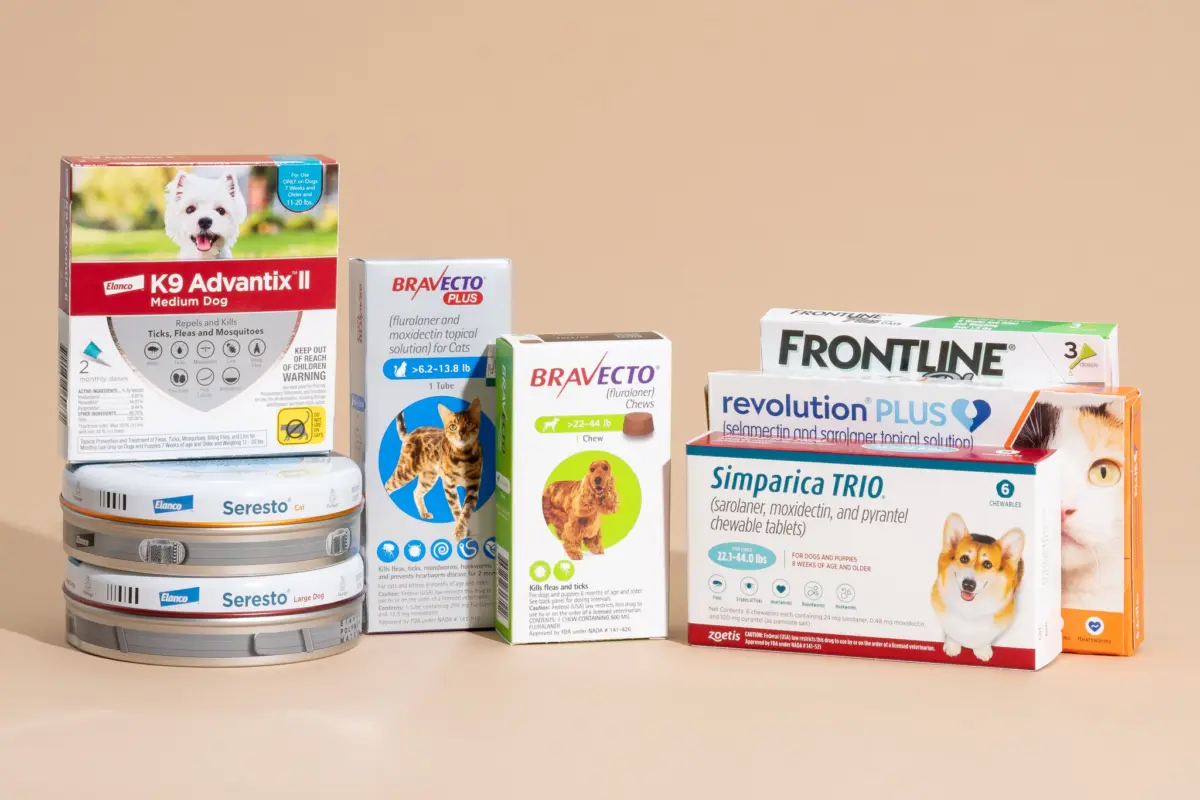
- Simparica Trio Chewable Tablets for Dogs (Top Pick): A monthly, prescription-only liver-flavored chew offering the broadest protection at a low price point. It targets fleas, six types of ticks (including the emerging Gulf Coast tick and Asian longhorned tick), prevents heartworm disease, and treats hookworm and roundworm. (Estimated Annual Cost: $390–$450)
- Bravecto Chew for Dogs (Long-Lasting Pick): An oral treatment providing up to 12 weeks of continuous defense against fleas and most ticks per single dose. While highly convenient, it does not cover internal parasites, requiring a companion medication for comprehensive care. (Estimated Annual Cost: $345–$370)
- Seresto Flea and Tick Collar for Dogs (Budget Pick): An over-the-counter option that both repels and kills fleas and ticks for up to eight months. Because it repels parasites, pests are neutralized before they can bite and transmit rapid-onset diseases. It requires no prescription but lacks protection against worms. (Estimated Annual Cost: $90)
- K9 Advantix II Spot Treatment for Dogs (Budget Pick): An over-the-counter monthly topical that repels and kills fleas, ticks, lice, biting flies, and mosquitoes. It remains on the skin’s surface, meaning it does not prevent heartworm, and it carries strict warnings regarding toxicity in multi-pet households containing cats. (Estimated Annual Cost: $160)
Top Picks for Cats
- Bravecto Plus Topical Solution for Cats (Top Pick): A prescription systemic topical administered every two months. Absorbed into the bloodstream, it kills fleas and four tick species, treats roundworms and hookworms, and prevents fatal heartworm disease while easing application trauma to six times a year. (Estimated Annual Cost: $330)
- Revolution Plus Topical Solution for Cats (Runner-Up): A monthly systemic topical covering fleas, specific ticks (including the lone star tick), hookworms, roundworms, heartworms, and explicitly noted for treating ear mites. It requires monthly application but can be used on kittens as young as eight weeks. (Estimated Annual Cost: $290–$340)
- Seresto Flea and Tick Collar for Cats (Budget Pick): Delivers up to eight months of repellent and killing action against fleas and ticks without requiring systemic ingestion. Ideal for cats intolerant of liquid topicals, though it does not protect against internal worms. (Estimated Annual Cost: $90)
- Frontline Plus Flea and Tick Spot Treatment for Cats (Budget Pick): An accessible, over-the-counter monthly topical utilizing fipronil to disrupt the flea life cycle and kill four tick species and chewing lice. It does not protect against internal parasites. (Estimated Annual Cost: $150)
Official Statements and Regulatory Oversight
Parasite control products are subject to strict oversight split between two federal agencies depending on their delivery mechanism. Prescription oral medications and systemic topicals that enter the animal’s bloodstream are regulated as animal drugs by the Food and Drug Administration (FDA). Over-the-counter topicals and collars that remain on the surface of the skin and hair coat fall under the jurisdiction of the Environmental Protection Agency (EPA).

Despite rigorous testing, veterinary experts note that all medications carry potential side effects. The FDA has previously issued advisory warnings regarding neurological adverse events associated with isoxazoline-class drugs. Consequently, Dr. Susan Little advises caution: "If you have a dog with epilepsy or any kind of history of neurologic concerns, then that’s not the right product to use."
Similarly, the EPA conducted a comprehensive review of the Seresto collar following isolated reports of pet injuries. However, data from the American Veterinary Medical Association (AVMA) indicates that the rate of adverse events associated with the collar remains exceptionally low at approximately 0.116%—roughly 1 incident per 1,000 collars sold nationwide.
Pet owners are strongly cautioned against attempting "DIY" parasite control. Using agricultural formulations intended for livestock (such as cattle spot-ons) results in massive, dangerous overdoses. Furthermore, species-specific boundaries must be respected: compounds like permethrin, which are safe for dogs and humans, are severely toxic to felines and can lead to fatal poisoning if applied to cats.
Future Outlook: Emerging Threats and Best Practices
As global climate shifts alter weather patterns and expand the geographic ranges of vectors like the Gulf Coast tick and Asian longhorned tick, veterinarians anticipate sustained, if not heightened, parasite pressure across North America.

To safeguard animal and human health effectively, pet owners should adhere to the following best practices:
- Consult Your Veterinarian: Always collaborate with a licensed veterinarian to select products appropriate for your pet’s specific age, weight, medical history, and regional risk profile.
- Maintain Year-Round Adherence: Set recurring digital calendar reminders to ensure treatments are never delayed or missed.
- Perform Routine Checks: Remember that no preventive treatment offers 100% infallible protection in high-burden areas; routine physical tick checks remain a vital line of defense.
- Purchase Authentically: Buy medications directly from your veterinary clinic or verified, reputable online pharmacies to completely avoid counterfeit products.
By pairing modern, broad-spectrum veterinary pharmaceuticals with vigilant home management, pet owners can successfully mitigate the risks posed by parasites and ensure a safe, healthy life for their animal companions.