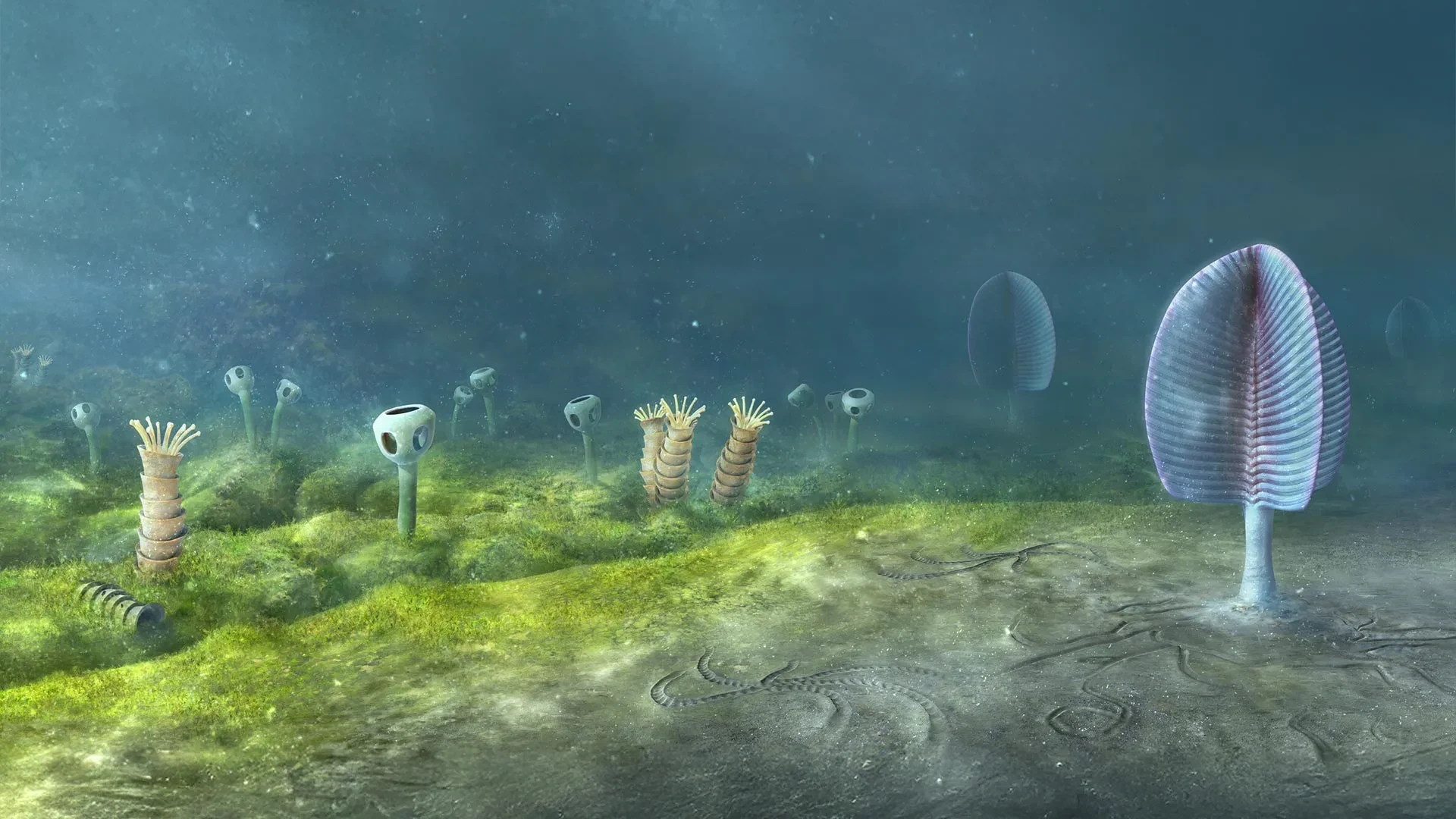

Executive Overview
For generations, evolutionary biologists and paleontologists have relied on a foundational assumption to map the timeline of animal life on Earth: the absence of evidence in exceptionally well-preserved ancient fossil deposits was viewed as evidence of absence. If a rock formation captured microscopic organisms in breathtaking, cellular detail yet lacked any trace of animal remains, scientists confidently inferred that animals simply had not yet evolved when those sediments were laid down.
A groundbreaking study published on October 2 in Science Advances has upended this long-standing paradigm. Led by an international team of researchers from the University of Oxford, in collaboration with the University of California Berkeley, ETH Zürich, and Yale University, the new study demonstrates that exceptionally pristine fossil assemblages can completely fail to capture animals that are historically known to have existed at the time.
By analyzing newly recovered microfossils from the Kheseen Biota in Mongolia, the research team dismantled the traditional reasoning that has long restricted the maximum age of the animal kingdom to the late Ediacaran Period. When the researchers factored in this paradigm shift and recalculated molecular clock models using much older geological constraints—spanning 850 to 730 million years ago—the estimated dawn of animal life was pushed backward by an astonishing 200 million years.
This startling revision places the possible emergence of the earliest animals squarely between 800 and 700 million years ago. Consequently, the new timeline breathes fresh life into the debate over "Snowball Earth," suggesting that Earth’s earliest multi-cellular organisms may have not only predated the planet’s most severe global ice ages but may have weathered them directly. As scientists reevaluate the fossil record, the true birth date of the animal kingdom remains one of science’s most compelling unsolved mysteries.
Detailed Chronology of the Discovery
To understand the magnitude of the recent findings published in Science Advances, one must examine the timeline of scientific discovery and the specific geological puzzles that led researchers to reevaluate Earth’s ancient past.
The Cambrian Illusion and the Ediacaran Puzzle
For centuries, the earliest chapters of animal evolution appeared deceptively straightforward. The fossil record demonstrates an apparent explosion of animal life shortly before the Cambrian Period, spanning roughly 539 to 487 million years ago. During this epoch, complex marine creatures with hard shells, skeletons, and specialized organs seemed to materialize almost overnight in the geological strata.
However, evolutionary theory, comparative biology, and modern genetics have long signaled that this "Cambrian Explosion" was more of a grand unveiling than a sudden creation. Molecular clock analyses—techniques that measure genetic mutations over time to estimate when species diverged from common ancestors—consistently pointed to a much deeper, hidden evolutionary root. Yet, bridging the gap between genetic projections and physical fossils remained an insurmountable hurdle because the ancient body fossil record stubbornly refused to show direct evidence of animals prior to the late Neoproterozoic Era.
The Weng’an Biota Benchmark
At the core of this methodological dilemma was the Weng’an Biota in South China. Preserved in rocks dating back approximately 590 million years to the Ediacaran Period, the Weng’an deposit is a paleontological treasure trove. It features microscopic organisms, algae, and potentially early protists preserved in exquisite, cellular-level detail.
Because the Weng’an Biota is so meticulously preserved, scientists previously adopted a hardline interpretative rule: if animals had already been roaming the ancient seas at 590 million years ago, surely this extraordinary deposit would have captured them. The total absence of definitive animal fossils within Weng’an was therefore used by the scientific community as a reliable maximum age boundary. Under this assumption, researchers argued that the animal kingdom could not have originated significantly before the Weng’an Biota formed.
The Kheseen Biota: A Crucial Empirical Test
The recent breakthrough hinges on a rigorous test of this foundational assumption. An international team of geoscientists turned their attention to the Kheseen Biota in Mongolia—a fossil assemblage roughly 40 million years younger than Weng’an, dating to a period when animals are definitively known to have existed in other global localities, such as Namibia and South China.
Utilizing advanced scanning electron microscopy, the research team scrutinized more than 140 rock samples, including materials gathered from previously undocumented stratigraphic locations. The analysis revealed a stunning array of exceptionally preserved microfossils, including intricate acritarchs (spherical microscopic organisms adorned with delicate spines and branching projections) and rare, embryo-like fossils featuring distinct internal cellular structures.
Despite a preservation quality that rivaled or exceeded the Weng’an Biota, none of the Kheseen microfossils could be confidently identified as an animal.
This empirical discovery shattered the long-held premise. As senior author Associate Professor Ross Anderson pointed out, the Kheseen Biota proves that exceptionally well-preserved microfossil assemblages can completely lack animal remains even when animals are historically known to have populated the globe. Consequently, the silence of the Weng’an Biota no longer serves as proof that animals had yet to evolve 590 million years ago.
Recalibrating the Molecular Clock
Freed from the chronological constraints imposed by the Weng’an Biota, the Oxford-led research team looked much further back in time. They re-examined significantly older, well-preserved fossil deposits dating between 850 and 730 million years ago. These deposits included:
- The Svanbergfjellet Formation in Norway,
- The Bitter Springs Group in Australia, and
- The Chuar Group in Arizona, United States.
Historically recognized as sedimentologically capable of preserving delicate organic remains, these older sites have long served as maximum age constraints for early life. When the research team substituted these ancient formations into their molecular clock analyses—integrating genetic divergence data with updated geological parameters—the mathematical models shifted dramatically.
The recalculated timeline pushed the estimated origin of the animal kingdom backward by approximately 200 million years, placing the emergence of ancestral animal lineages between 800 and 700 million years ago.
Supporting Context & Metrics
Evaluating the scale and implications of this research requires a deep dive into the geological metrics, taphonomic factors, and chemical signatures that govern the ancient fossil record.
Geological and Paleontological Metrics Table
| Metric / Parameter | Previous Scientific Consensus | Revised Scientific Understanding |
|---|---|---|
| Estimated Origin of Animals | ~600 to 550 million years ago (Late Ediacaran) | ~800 to 700 million years ago (Neoproterozoic / Cryogenian) |
| Time Gap Shift | Apparent sudden appearance near the Cambrian | Up to a 200-million-year "hidden history" before the fossil record |
| Weng’an Biota Age | ~590 million years old | Serves as a poor maximum age constraint (proven blind to existing animals) |
| Kheseen Biota Age | ~550 million years old (Post-Weng’an) | Demonstrates preservation bias; lacks animals despite their global presence |
| Key Calibration Sites | Ediacaran deposits (Weng’an Biota) | Older Neoproterozoic deposits (Svanbergfjellet, Bitter Springs, Chuar) |
| Primary Ice Age Overlap | Post-Snowball Earth diversification | Concurrent with or pre-dating Cryogenian "Snowball Earth" phases |
The Taphonomic Challenge: Why Early Animals Elude Capture
Why did Earth’s earliest animals leave virtually no physical body fossils for hundreds of millions of years? The answer lies in the harsh realities of taphonomy—the study of how organisms decay and become fossilized.
The earliest ancestral animals would have been exceedingly small, delicate, and entirely soft-bodied. Lacking mineralized skeletons, calcium carbonate shells, rigid cartilage, or tough chitinous outer coverings, these fragile organisms were exceptionally vulnerable to environmental decay, microbial consumption, and mechanical destruction long before mineral replacement could take place.
Furthermore, fossilization is an extraordinarily rare geochemical lottery. Even in modern environments teeming with life, only a fraction of organisms become fossils. In the ancient Neoproterozoic oceans, successful fossilization required a precise, rare confluence of local water chemistry, rapid burial by fine-grained sediment, and early mineral authigenesis (such as early phosphatization or silicification) to lock biological structures in place before decay erased them. If early animals inhabited ecological niches that did not favor these specific chemical conditions, their physical remains would vanish without a trace.
Chemical Fossils and Biomarkers
Physical body fossils are not the only clues pointing toward a much deeper evolutionary origin for animal life. For decades, organic geochemists have studied chemical fossils—also known as biomarkers—extracted from ancient sedimentary rocks.
Biomarkers are stable molecular hydrocarbons that retain the distinct chemical structures of specific biological precursor molecules (such as steroids or lipids produced by living organisms). Research into ancient biomarkers has repeatedly recovered molecules consistent with the biological presence of demosponges living at least 650 million years ago. These chemical breadcrumbs predate the oldest definitive macroscopic animal body fossils by tens of millions of years, offering independent, chemical corroboration that simple animal life was active long before the Ediacaran Period.
The Snowball Earth Connection
Pushing the origin of animals back to the 800-to-700-million-year window introduces a profound evolutionary question regarding the Cryogenian Period (which began approximately 720 million years ago). During the Cryogenian, Earth experienced some of the most severe, globally extensive ice ages in geological history, widely referred to as "Snowball Earth" scenarios, during which glaciers advanced all the way to the equator and oceans may have been largely capped by thick sheets of ice.
If animals originated between 800 and 700 million years ago, it means the animal kingdom either managed to establish itself before the onset of these global glaciations or actually emerged and adapted during the harsh, high-stress environmental filters of Snowball Earth. This challenges historical assumptions that extreme ice ages acted as absolute bottlenecks that prevented complex animal evolution until the ice retreated. Instead, environmental pressures associated with global glaciation may have played a critical role in driving the early adaptations, metabolic innovations, and ecological strategies that shaped animal life.
Official Statements and Expert Insights
The study has drawn widespread commentary from the international scientific community, highlighting both the caution required in interpreting molecular clocks and the transformative nature of the empirical evidence.
Weighing in on the significance of the findings, lead author Orin Lole Durbin, a PhD student at the University of Oxford who began the research as an undergraduate and is now at Virginia Tech, emphasized the nuanced nature of the discovery:
"Pre-Ediacaran animal body fossils still elude us, and this analysis does not prove that animals existed 800 million years ago. However, our new fossil evidence from Mongolia undermines one of the main arguments for restricting animal origins to the Ediacaran interval. Meanwhile, our molecular-clock analyses show how much further back their evolutionary history could extend."
Senior author Associate Professor Ross Anderson of the Oxford University Museum of Natural History expanded on how the Kheseen Biota fundamentally shifted scientific reasoning regarding preservation biases:
"The Kheseen Biota breaks the argument that the exceptional microfossils of Weng’an mean we would have seen animal fossils in the assemblage had they existed at the time. The Kheseen microfossils are just as well-preserved, yet animals continue to be absent—despite the fact we know at that point they existed."
Addressing the ongoing quest to pinpoint the exact moment animal life sparked into existence, Professor Anderson underscored the necessity of casting a wider net in future research:
"Until that evidence becomes available, the precise birth date of the animal kingdom remains uncertain."
Future Outlook: The Road Ahead for Paleontology
The publication of this study in Science Advances marks not the end of a scientific debate, but rather the opening of a dynamic new chapter in paleobiology and evolutionary research. As scientists recalibrate their assumptions regarding fossil preservation and molecular clock calibrations, several key avenues for future research are taking shape:
1. Expanding the Geographic and Environmental Search
Paleontologists are intensifying field expeditions to target previously underexplored Neoproterozoic rock formations. Future research will prioritize sampling diverse depositional environments—ranging from deep-water marine basins to shallow shelf environments and near-shore microbial mats—to understand how localized chemistry and ecology influenced fossil preservation. By casting a wider net across different continents and geological settings, researchers hope to bridge the gap between molecular predictions and physical body fossils.
2. Multi-Proxy Integration
The scientific community increasingly agrees that no single line of evidence can fully resolve the timeline of early life. Future investigations will rely heavily on multi-proxy integration, combining:
- Traditional body fossils and microfossil assemblages,
- Trace fossils (such as ancient burrows, trackways, or microbial disturbances indicating motility),
- Advanced geochemical biomarkers (lipids and isotopic signatures preserved in kerogen), and
- Genomic molecular clocks refined with updated calibration nodes.
3. Re-evaluating Taphonomic Filters
Laboratory simulations and advanced imaging technologies—such as synchrotron X-ray tomographic microscopy and high-resolution nanoscale elemental mapping—are shedding new light on how soft-bodied organisms decay and interact with ambient mineral chemistry over geological timescales. Understanding the exact chemical pathways required to fossilize delicate, non-biomineralized tissues will help scientists identify which ancient environments hold the highest probability of preserving pre-Ediacaran animal remains.
Conclusion
The realization that animals may have evolved up to 200 million years earlier than the clear fossil record suggests is a humbling reminder of the gaps in our planetary history. By dismantling the long-held assumptions of the Weng’an Biota and harnessing rigorous new data from the Kheseen Biota in Mongolia, modern science has opened the door to a deeper, more complex chapter of evolution. As researchers continue to probe the rocks of the Neoproterozoic, the search for the true dawn of animal life promises to reshape our understanding of how resilience, adaptation, and life itself took root on our changing planet.