
Executive Overview
The intersection of animal rescue and human adoption represents a profound commitment to trauma-informed care, rehabilitation, and family expansion. Curtis and Roberta Griner, long-standing advocates for canine welfare who have fostered over 70 dogs and adopted several special-needs pets, have expanded their domestic sanctuary. The couple officially finalized the international adoption of three biological sisters from Poland—Jessica, Victoria, and Veronica (affectionately known as "Sunshine").
This strategic family integration brings together two distinct realms of advocacy: canine rehabilitation and international child welfare. Before their arrival in the United States, the young sisters were introduced to their future home’s three resident rescue dogs—Max, Maggie, and Red—each of whom carries a history of abandonment, abuse, or exploitation. The resulting household dynamic offers an instructive model of reciprocal healing, where canine companions and adopted children navigate transition, security, and attachment within a structured, nurturing environment.

+-----------------------------------------------------------------------------------+
|                            THE GRINER HOUSEHOLD AT A GLANCE                        |
+-----------------------------------+-----------------------------------------------+
| Human Members                     | Canine Members                                |
+-----------------------------------+-----------------------------------------------+
| • Curtis Griner (Father)          | • Max (Blond Lab Mix, Neighborhood Rescue)    |
| • Roberta Griner (Mother)         | • Maggie (Pit Bull Mix, Ex-Breeding Shelter)  |
| • Jessica (Eldest Sister)         | • Red (Pit Bull Mix, Severe Abuse Survivor)   |
| • Victoria (Middle Sister)        |                                               |
| • Veronica / "Sunshine" (Youngest)|                                               |
+-----------------------------------+-----------------------------------------------+
| Operational Milestones: Fostered 70+ Pups | 6-Week Polish Residency | Jan 19 US Arrival |
+-----------------------------------------------------------------------------------+
Detailed Chronology
[Phase I: Rescue Foundation] ──► [Phase II: Adoption Mandate] ──► [Phase III: Polish Residency] ──► [Phase IV: US Arrival & Integration]
  Fostered 70+ Canines;            Roberta's First-Date Commitment; 6 Weeks in Poland Finalizing    Touchdown Jan 19; Dog Pairings;
  Rescued Max, Maggie, Red         Pivoted from 1-2 to 3 Sisters      Legal & Bonding Requirements   Shift in Care & Sleeping Routines
Phase I: The Rescue Foundation and Canine Rehabilitation Era
Prior to initiating international adoption proceedings, Curtis and Roberta Griner established a rigorous routine of animal welfare work. Over several years, the couple operated their home as a high-volume foster site, providing temporary shelter, medical triage, and behavioral modification to more than 70 homeless, neglected, or abused dogs.
During this period, three dogs transitioned from temporary foster status to permanent family members:

- Max: A blond Labrador Retriever mix discovered wandering as a stray in the Griners’ immediate neighborhood. After extensive efforts to locate an owner proved unsuccessful, Curtis and Roberta officially adopted him.
- Maggie: A large Pit Bull Terrier mix rescued from a high-kill shelter in South Carolina. Institutional records indicated Maggie had been utilized as a commercial breeding dog before being abandoned once her reproductive utility diminished.
- Red: A Pit Bull mix characterized by prominent, oversized ears and a documented history of extreme physical abuse. Upon his initial intake, medical assessments questioned whether Red would ever achieve pain-free mobility due to severe musculoskeletal damage. Through intensive veterinary care and physical rehabilitation managed by the Griners, Red recovered basic mobility, though he required specialized long-term maintenance.
Phase II: The International Adoption Mandate
The decision to adopt children was not a sudden pivot but a foundational premise of the Griners’ marriage. Roberta had communicated her firm intention to pursue adoption during her very first date with Curtis.
As the couple matured their plan, their initial agreement was to adopt one or two young children. However, during the screening and placement matching process, they were presented with the dossier of three biological sisters residing in an institutional care facility in Poland: Jessica, Victoria, and Veronica. Recognizing the systemic risks associated with sibling separation in international foster systems—along with an immediate personal connection, including a strong family resemblance between eldest sister Jessica and Roberta’s maternal relatives—the Griners expanded their adoption mandate to encompass all three girls.

                             [INITIAL ADOPTION PLAN]
                                1–2 Young Children
                                        │
                                        ▼
                             [DOSSIER REVIEW: POLAND]
                          3 Biological Sisters Identified
                          (Jessica, Victoria, Veronica)
                                        │
                                        ▼
                               [REVISED MANDATE]
                         Adopt All 3 Sisters to Prevent
                           Systemic Sibling Separation
Phase III: The Transition Period and Public Announcement
Once administrative clearance was granted, the Griners initiated a structured preparation phase designed to acclimate both their canine pack and their extended community to the impending household transition.
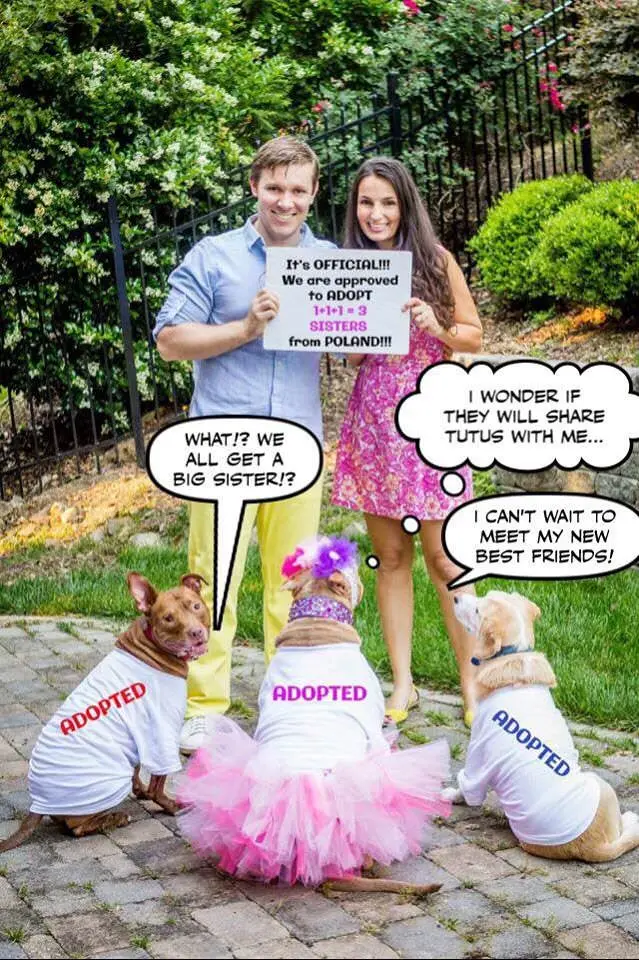
To announce the adoption publicly and mark the milestone for their home environment, the Griners conducted a formal photographic campaign featuring their three rescue dogs. Max, Maggie, and Red were fitted with thematic apparel—including custom printed T-shirts, tutus, and floral headpieces—holding signs that announced their upcoming roles as "big brothers and sisters" to human siblings.

Following the announcement, Curtis and Roberta embarked on a six-week residency in Poland over the winter holiday season. This mandatory period allowed the couple to complete local judicial proceedings, satisfy international child welfare compliance protocols, and establish baseline attachment bonds with Jessica, Victoria, and Veronica.
Phase IV: Domestic Arrival and Household Integration
On January 19, the airplane carrying the expanded Griner family landed in the United States. The sisters were introduced to their new environment, which included immediate exposure to extended family networks, novel educational resources, clothing, and personal belongings.

Concurrently, the home integration strategy prioritized immediate, supervised introductions between the three girls and the three resident rescue dogs. The pairings formed organically:
- Victoria and Max: Victoria claimed the blond Lab mix, gravitating toward his gentle demeanor and steady energy.
- Jessica and Maggie: Eldest sister Jessica selected Maggie, establishing an immediate rapport with the broad-chested Pit Bull mix.
- Veronica ("Sunshine") and Red: Youngest sister Veronica bonded directly with Red, responding to the dog’s soft nature and unique physical appearance.
+-----------------------------------------------------------------------------------+
|                           CANINE-HUMAN PAIRING MATRIX                             |
+-------------------+----------------------+----------------------------------------+
| Sister            | Assigned Canine      | Background / Connection Dynamic        |
+-------------------+----------------------+----------------------------------------+
| Victoria (Middle) | Max (Lab Mix)        | Neighborhood stray; gentle & steady    |
| Jessica (Eldest)  | Maggie (Pit Bull)    | Former breeding dog; protective & calm |
| Veronica (Young)  | Red (Pit Bull Mix)   | Abuse survivor; high-empathy bond      |
+-------------------+----------------------+----------------------------------------+
Supporting Context & Metrics
The Landscape of Sibling Group International Adoptions
International adoptions involving sibling trios present complex logistical and psychological dynamics. According to data from international child welfare organizations, sibling groups face significantly higher rates of institutionalization and separation due to the financial and spatial demands placed on prospective adoptive families.

+-----------------------------------------------------------------------------------+
|                KEY METRICS: THE GRINER FAMILY EXPANSION MODEL                     |
+-----------------------------------------------------------------------------------+
| Metric Description                                                | Value         |
+-------------------------------------------------------------------+---------------+
| Total Canine Fosters Managed by the Griners                       | 70+           |
| Total Resident Rescue Dogs Prior to Adoption                      | 3             |
| Total Biological Sisters Adopted from Poland                      | 3             |
| Duration of Mandatory In-Country Polish Residency                 | 6 Weeks       |
| Arrival Date in the United States                                 | January 19    |
+-------------------------------------------------------------------+---------------+
The decision to preserve biological sibling units yields measurable long-term benefits:
- Reduction in Attachment Trauma: Sibling presence serves as a stabilizing psychological buffer during cross-cultural transitions.
- Accelerated Language Acquisition: Multi-child peer dynamics within the home encourage rapid communicative adaptation.
- Shared Cultural Identity: Retaining biological family members helps maintain home-country heritage while integrating into a new culture.
Canine Rehabilitation and Human Co-Regulation
The integration of rescue animals into homes with adopted children is supported by an emerging body of anthrozoological research. Canines that have survived chronic stress—such as Maggie’s history in a commercial breeding operation or Red’s history of physical trauma—often exhibit acute sensitivity to emotional environments.

       CANINE TRAUMA HISTORY                     HUMAN TRANSITION TRAUMA
     (Abandonment, Abuse, Exploitation)        (Institutional Care, Relocation)
                    │                                      │
                    └───────────────────┬──────────────────┘
                                        ▼
                             [RECIPROCAL REASSURANCE]
                        • Shared vulnerability
                        • Non-verbal safety signaling
                        • Shared daily care routines
                                        ▼
                           [MUTUAL EMOTIONAL STABILITY]
When paired with children who have experienced institutional care or major life transitions, the reciprocal dynamic often yields therapeutic gains:
- Non-Verbal Reassurance: Dogs offer constant, non-judgmental companionship that does not demand immediate linguistic proficiency from non-native English speakers.
- Shared Vulnerability: Children often empathize with animals that possess physical or historical vulnerabilities, fostering a sense of mutual protection.
- Establishment of Duty and Routine: Involving children in structured pet maintenance (feeding schedules, grooming, walking) accelerates personal agency and domestic routine.
Official Statements and Perspectives
On Family Planning and Adoption Directives
Reflecting on the foundational decisions that shaped their household structure, Roberta Griner outlined the long-term clarity of their mission:

"Adoption was never a backup plan or a secondary consideration for us; it was a primary objective from day one. When Curtis and I met, I made sure he understood that building a family through adoption was a core requirement of our future together. When we were presented with Jessica, Victoria, and Veronica, any numerical limitations we had originally planned simply faded away. You do not leave family behind because of a headcount."
Curtis Griner echoed this sentiment, noting the parallel principles governing their animal rescue efforts and their human family expansion:

"Whether you are taking in a dog that has been beaten and discarded or bringing home three young girls who need a permanent foundation, the core principle is identical: you provide absolute safety, consistent structure, and unconditional patience. Our home was built on foster work, so expanding our table for these three girls was the most natural progression possible."
+-----------------------------------------------------------------------------------+
|                        SUMMARY OF KEY PERSPECTIVES                                |
+-----------------------+-----------------------------------------------------------+
| Source                | Core Assertion                                            |
+-----------------------+-----------------------------------------------------------+
| Roberta Griner        | Adoption was a non-negotiable life goal; preserving       |
|                       | sibling unity superseded initial head-count limits.       |
+-----------------------+-----------------------------------------------------------+
| Curtis Griner         | Trauma recovery principles apply universally across both  |
|                       | canine welfare and human integration.                     |
+-----------------------+-----------------------------------------------------------+
| Child & Animal Care   | Shared routines (feeding, walking) accelerate mutual      |
| Observational Metrics | trust and assist in cross-cultural transition.            |
+-----------------------+-----------------------------------------------------------+
On Canine-Child Bonding Observations
Commenting on the immediate behavioral alignment observed upon the girls’ arrival in the United States, Roberta noted the protective instincts manifested by the resident dogs—specifically the Pit Bull mixes, Red and Maggie:

"The transition was instantaneous. Red and Maggie, despite their own severe histories, immediately positioned themselves as guardians over the girls, particularly little Veronica. The dogs shifted their sleeping patterns within forty-eight hours—moving from our bedroom to sleeping directly on the floor and beds in the girls’ rooms. The mutual comfort they provide one another has streamlined what could have been a turbulent transition period."
Future Outlook
The expansion of the Griner family presents a long-term case study in domestic integration, multi-species rehabilitation, and biological sibling preservation. As Jessica, Victoria, and Veronica continue their educational and cultural adaptation in the United States, their daily environment remains underpinned by structured responsibilities and therapeutic canine companionship.

Long-Term Household Integration Objectives
+-----------------------------------------------------------------------------------+
|                       LONG-TERM INTEGRATION ROADMAP                               |
+-----------------------------------------------------------------------------------+
| Developmental Phase | Focus Areas & Objectives                                   |
+---------------------+-------------------------------------------------------------+
| Near-Term           | • Language acquisition & bilingual fluency consolidation    |
| (0–6 Months)        | • Medical and dental healthcare onboarding                  |
|                     | • Maintenance of predictable daily pet care routines        |
+---------------------+-------------------------------------------------------------+
| Medium-Term         | • Academic enrolment & community integration                |
| (6–18 Months)       | • Advanced behavioral/physical management for rescue dogs   |
|                     | • Cultural enrichment balancing Polish & US heritage        |
+---------------------+-------------------------------------------------------------+
| Long-Term           | • Potential resumption of temporary high-volume dog foster  |
| (18+ Months)        |   work with youth participation                            |
|                     | • Advocacy outreach for international sibling adoptions     |
+---------------------+-------------------------------------------------------------+- Educational and Linguistic Transition: The immediate focus remains on English language acquisition and school enrollment for all three sisters, supported by home literacy programs and bilingual assistance.
- Canine Care Management: Jessica, Victoria, and Veronica will remain fully integrated into the daily husbandry routines for Max, Maggie, and Red. This includes managing feeding schedules, participating in walking routines, and assisting with Red’s physical mobility care.
- Resumption of Rescue Operations: While temporary foster intake was paused during the six-week Polish residency and initial domestic integration phase, the Griners intend to resume their canine foster activities. Future foster operations will incorporate the three sisters, teaching them animal handling, rehabilitation protocols, and community advocacy.
By synthesizing international adoption with dedicated animal rescue, Curtis and Roberta Griner have built a household framework centered on restoration. Their experience highlights how shared recovery from neglect or disruption can form the bedrock of a stable, supportive family unit.