
Executive Overview
When nature enthusiasts or amateur naturalists happen upon a small, elongated, brown nugget resting quietly at the base of a dense conifer or tucked into the rafters of an abandoned barn, the initial assumption is almost universally the same: animal waste. Yet, this unassuming little object is not poop at all. Nor is it the result of sickness or spontaneous regurgitation. It is an owl pellet—a finely packed, highly sophisticated biological parcel composed of bones, fur, feathers, and occasionally insect exoskeletons that an owl could not break down during its complex digestive cycle.
Far from being mere refuse, owl pellets serve as miniature ecological archives. They provide researchers, conservationists, and students with a non-invasive, highly detailed window into the health of local food webs, population dynamics of small mammals, and the predatory habits of nocturnal raptors. Understanding how these pellets form requires stepping inside the sophisticated two-chambered stomach of an owl, contrasting regurgitation with defecation, and examining the physiological constraints that force these birds to package their meals and cast them back out into the world.
Whether you are an educator preparing a classroom dissection project, a backyard birdwatcher seeking the roost of a Great Horned Owl, or simply a curious mind wondering how nature recycles its refuse, this comprehensive guide explores the biology, identification, and fieldcraft surrounding owl pellets.
Detailed Chronology: The Journey From Prey to Pellet
To truly appreciate an owl pellet, one must trace its journey through the raptor’s anatomy. The process is a marvel of avian engineering, taking place over a predictable timeline that typically spans from dusk to dawn.
The Hunt and the Whole-Body Swallow
The cycle begins in the dead of night or during the twilight hours, when owls emerge from their daytime roosts to hunt. Equipped with asymmetrical ears that pinpoint the faint rustling of a vole beneath snow or leaf litter, and silent-flight feathers that mask the sound of their approach, owls strike with deadly precision.
Unlike many carnivorous birds—such as hawks or eagles—that systematically tear their prey apart with powerful talons and hooked beaks into manageable, bite-sized pieces, owls generally swallow their prey whole. A field mouse, a deer mouse, a shrew, or even a small bird goes down the raptor’s gullet in one continuous motion, complete with skull, ribs, fur, claws, and tail.
The Two-Chambered Digestive Engine
Once swallowed, the prey enters the owl’s specialized digestive tract, which features two distinct stomach chambers working in tandem:
- The Proventriculus (The Glandular Stomach): The first stop is the proventriculus, where digestive juices, enzymes, and mild acids begin to work on the soft tissues of the prey. Unlike the searing, highly corrosive acids found in the stomachs of scavengers like vultures, an owl’s gastric acids are relatively weak. They can easily dissolve muscle tissue, organs, and soft cartilage, but they are entirely incapable of melting down dense keratin (hair and feathers) and tough calcium phosphate (bones and teeth).
- The Gizzard (The Mechanical Stomach): Because birds lack teeth, they cannot chew their food. In owls, the muscular gizzard steps in to perform this mechanical processing. The gizzard grinds the material, squeezing out all usable nutrition and routing the soft, liquefied nutrients into the intestines for absorption.
The Sifting and Compacting Phase
As the soft parts pass deeper into the digestive tract, the indigestible hard parts—fur, feathers, skulls, and bones—are left behind in the gizzard. Interestingly, the gizzard plays a filtering role: it compresses and twists these stubborn remnants into a tight, cohesive, oval-shaped mass.
While the pellet is forming, it acts as a protective shield for the owl’s internal organs. Without this clever packaging mechanism, sharp splintered bones like ribs and skull fragments could easily puncture the lining of the owl’s stomach or intestines as they move through the digestive tract. By matting the sharp bones safely inside a dense blanket of fur or feathers, the gizzard shields the digestive tract from injury.
The Casting Process
Once the pellet is fully compressed—a process that takes roughly 6 to 10 hours—it moves backward from the gizzard up into the proventriculus, where it sits waiting to be expelled.
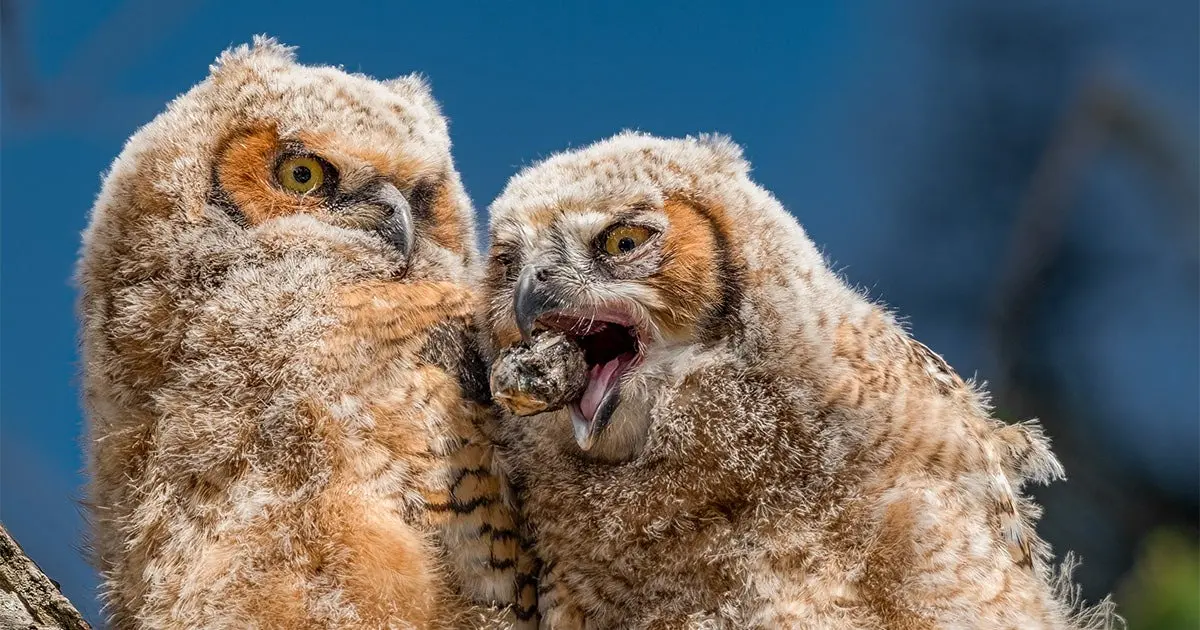
When the time is right, the owl experiences a distinct muscular contraction. The bird stretches its neck forward, opens its beak wide without retching or showing signs of illness, and effortlessly "casts" or regurgitates the pellet. The entire expulsion takes only a few moments. Following this, the owl returns to its normal state, ready to hunt again the following night. Most healthy owls cast one or two pellets every 24 hours, usually doing so while resting in their primary daytime roosting sites.
Supporting Context & Metrics: Pellets vs. Poop vs. Puke
Misidentifications in the wild are common, particularly when trying to interpret sign left behind by wildlife. To accurately read the forest floor beneath an owl roost, one must understand the distinct chemical, physical, and behavioral differences between an owl’s biological outputs.
Comparative Signage Matrix
| Wildlife Sign Type | Primary Composition | Physical Appearance | Ecological Implication |
|---|---|---|---|
| Owl Pellet | Indigestible fur, bones, feathers, chitin | Oval, solid, matted texture, often studded with bones; dark gray to off-white | Indicates a regular daytime roosting site and successful night hunting |
| Owl Scat (Poop) | Uric acid, digested waste, urea | Whitish, chalky, splattery Rorschach blot with dark central flecks | Signals active bird presence directly overhead; non-solid, liquid-like |
| Owl Vomit | Partially digested food, stomach lining, bile | Unplanned, wet, messy, foul-smelling, containing semi-digested meat | Occurs rarely due to illness, poisoning, or extreme stress; uncommon in the wild |
The Chemistry of Scat vs. Pellet
Avian urinary and digestive wastes exit through a single opening called the cloaca. Because birds do not produce liquid urine containing urea (instead excreting uric acid as a white, semi-solid paste), bird poop naturally appears as a combination of dark fecal matter and a chalky white splash. Owl scat is no different: it is runny, highly acidic, and splashes against tree trunks or the ground below a roost.
By contrast, an owl pellet completely bypasses the lower digestive tract and exits via the mouth. It is dry, structurally sound, and lacks the pungent, putrid odor associated with true vomit or fecal waste. Because it is bound together by thousands of individual hairs, a dry pellet can remain intact on the forest floor for weeks or months, slowly breaking down only when exposed to persistent moisture and soil microbes.
Variations Across Species
Not all pellets are created equal. The size, shape, and density of a pellet depend heavily on the bird’s species, size, and specific diet:
- American Barn Owl (Tyto alba): Known for producing dense, dark, tightly packed, and smooth pellets. Because Barn Owls swallow their rodent prey whole and digest efficiently, their pellets feature very few protruding bones through the exterior, making them the gold standard for classroom dissections.
- Great Horned Owl (Bubo virginianus): These apex nocturnal predators produce loose, bulky, highly brittle, grayish pellets. Large bones—such as rabbit or rat skulls and long leg bones—frequently jut out conspicuously from the sides.
- Eastern Screech-Owl (Megascops asio): Producing small, dark, compact pellets, screech-owls often consume a high volume of large insects alongside small mice. Consequently, their pellets may contain shiny insect exoskeletons mixed with mammalian fur.
- Red-tailed Hawk (Buteo jamaicensis): Although raptors other than owls also cast pellets, hawk pellets are distinct. They are large, dense, and composed almost entirely of matted fur with very few shattered bones, reflecting a hawk’s ability to crush bones more aggressively or digest them partially via stronger stomach chemistry.
- American Herring Gull (Larus argentatus): Gulls are opportunistic omnivores. Their pellets are large, highly variable, and frequently studded with crab shells, fish scales, and occasionally fragments of human refuse or plastic.
Official Statements & Expert Insights
Ornithologists, wildlife rehabilitators, and educational institutions emphasize that owl pellets are much more than biological curiosities—they are vital ecological indicators.
"When you open an owl pellet, you are holding a micro-history of a grassland or woodland ecosystem in your hands," notes Dr. Elena Vance, avian ecologist and professor of vertebrate zoology. "A single Barn Owl family can consume over a thousand rodents in a single year. By analyzing the frequency of vole skulls versus mouse skulls within a collection of pellets over successive seasons, researchers can map shifting small-mammal population booms and busts long before traditional trapping surveys reveal them."
Wildlife agencies also stress the importance of ethical engagement when searching for pellets in the natural world. Because pellets accumulate beneath daytime roosts, humans are naturally drawn to these locations to collect them. However, conservation groups issue clear warnings regarding habitat disturbance:
- Never approach or disturb active nesting sites. During the breeding season, owls are exceptionally sensitive to human presence. Entering a nesting territory can cause nest abandonment, leading to reproductive failure.
- Respect seasonal roosts. Winter roosts—where multiple owls may gather in dense evergreen stands to share body heat—must be approached with extreme quiet and caution. Constant human disruption forces owls to expend critical energy fleeing, compromising their survival during harsh winter months.
- Practice proper hygiene. Freshly cast owl pellets can harbor bacterial pathogens, molds, and parasites (such as Salmonella or histoplasmosis spores) associated with animal tissues and soil. Field collectors and educators should always wear gloves when handling wild pellets.
Future Outlook: The Role of Pellets in Modern Science and Education
As ecological monitoring becomes increasingly high-tech, traditional methods like pellet dissection might seem archaic. However, the future of pellet research is brighter and more innovative than ever before.
Environmental DNA (eDNA) and Metabarcoding
While visual identification of skulls and jawbones remains a beloved educational staple, modern molecular biology is unlocking hidden data within owl pellets. Researchers are now utilizing environmental DNA (eDNA) and high-throughput metabarcoding on the microscopic debris found in old pellets. By sequencing the DNA extracted from fur and intestinal sloughing embedded in the pellet matrix, scientists can identify cryptic species—such as shrews or mice that leave behind few diagnostic skeletal pieces—as well as trace amounts of avian parasites, plant matter, and even the dietary history of the prey species itself.
Climate Change and Diet Shifts
Long-term studies archiving owl pellets in natural history museums are providing unprecedented insights into climate change. By analyzing isotopic signatures locked within the bones and fur inside historical pellets collected decades ago, researchers can track how agricultural intensification, urban sprawl, and warming temperatures have shifted predator-prey dynamics across North America and Europe. These time capsules allow conservationists to model how raptors adapt their foraging strategies in response to rapidly fragmenting habitats.
Inspiring the Next Generation of Scientists
In classrooms worldwide, the humble owl pellet remains an irreplaceable pedagogical tool. Stripping away the matted fur to reveal a pristine rodent skull teaches students comparative anatomy, skeletal morphology, food web mechanics, and the scientific method in a hands-on, highly engaging format. Whether commercially sterilized and purchased from scientific supply houses or collected directly from the wild and baked safely at home in aluminum foil, the owl pellet continues to bridge the gap between abstract ecological theory and tangible, awe-inspiring discovery.
Ultimately, the next time you spot a furry little nugget beneath a pine tree, you will recognize it for what it truly is: a masterclass in biological efficiency, a window into the nocturnal world of silent hunters, and one of nature’s most remarkable packages.